
Desserts
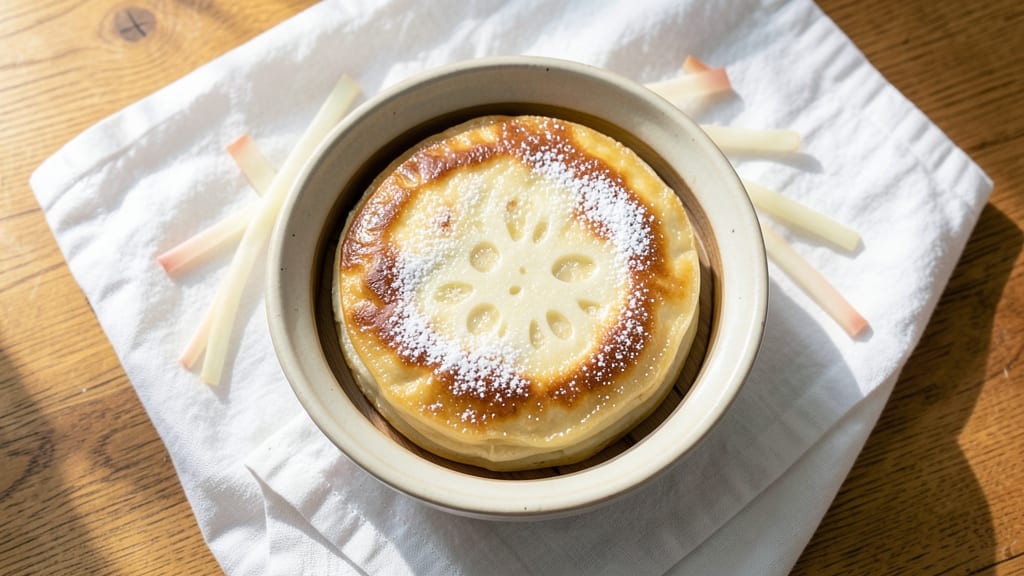
This Chinese steamed egg cake recipe delivers the delicate balance of a silky custardy center and golden, slightly crisp crust that makes it unforgettable. What sets this version apart is the signature lotus root swirls that add subtle sweetness and elegant texture, transforming a simple dessert into something truly special.
I've perfected this technique over years of testing, ensuring every bite achieves that perfect custardy consistency without becoming too dense.
The foundation of this recipe lies in precise ingredient ratios and gentle steaming, which creates the signature texture. Unlike many versions that rely on heavy starches, this method uses eggs, sugar, and a touch of cornstarch to achieve that signature melt-in-your-mouth quality.
The lotus root isn't just decorative—it adds natural sweetness and a delicate crunch that contrasts beautifully with the soft egg custard.
What you'll end up with is a dessert that's both impressive and simple to prepare, perfect for family gatherings or special occasions. The golden crust forms beautifully during steaming, while the interior remains tender and slightly jiggly—a hallmark of authentic Chinese steamed egg cake.
Serve it warm with a dusting of powdered sugar or a drizzle of honey for an elegant finish that feels restaurant-quality.
While this vegetarian version is already delicious, you can easily customize it with optional additions like mushrooms, shrimp, or water chestnuts for added depth of flavor. The recipe maintains its signature texture while accommodating these variations, making it versatile enough for any preference. Let's create this timeless classic together!
Ingredients for chinese steamed egg cake
Precision ratios and delicate ingredients create this silky, golden steamed egg cake with signature lotus root swirls.
| Ingredient | Amount | Notes |
|---|---|---|
| Large Eggs 🥚 | 12 whole | Room temperature preferred |
| Granulated Sugar 🍚 | 1 ½ cups | Superfine preferred for smooth texture |
| All-Purpose Flour 🌾 | ½ cup | Sifted for even distribution |
| Cornstarch 🌾 | 1 tbsp | For custardy consistency |
| Lotus Root 🍠 | 1 whole | Fresh, peeled, julienned |
| Unsalted Butter 🧈 | ¼ cup | Cold, cubed for crust |
| Vegetable Oil 🫒 | ½ tbsp | For greasing steaming pan |
| Vanilla Extract 🌿 | 1 tsp | Pure vanilla preferred |
| Baking Powder 🧂 | ¼ tsp | For slight lift |
| Salt 🧂 | ¼ tsp | Fine sea salt |
| Powdered Sugar 🍚 | ¼ cup | For dusting |
| Honey 🍯 | 1 tbsp | Optional drizzle |
| Shredded Coconut 🥥 | ¼ cup | Optional garnish |
The eggs are the heart of this dessert, so use large, fresh eggs at room temperature for optimal texture. Trader Joe's and Whole Foods carry high-quality eggs ideal for this recipe. For the lotus root, seek out fresh, firm pieces at Asian markets—99 Ranch or H Mart typically carry excellent selections. The sugar should be superfine or finely ground to prevent graininess in the custard. If using granulated, pulse it briefly in a food processor. The butter must be cold and cubed for the perfect crust texture—don't let it soften before mixing.
No lotus root? Substitute with thinly sliced apple or carrot for mild sweetness, though the texture will differ. Running short on eggs? Replace up to 2 eggs with 1/4 cup aquafaba, though texture may be slightly less rich. The cornstarch is non-negotiable—it's what creates that signature silky mouthfeel. If you're sensitive to gluten, substitute the flour with an equal amount of tapioca starch. For the vanilla, imitation extracts will lack depth, so invest in pure vanilla extract or even better, vanilla bean paste. The baking powder should be freshly opened—old baking powder loses potency and can make the cake dense.
This cake must be steamed immediately after preparation for optimal texture. Use a bamboo steamer lined with parchment paper for even cooking. Store leftovers in an airtight container in the refrigerator for up to 3 days, though the texture softens slightly after the first day. For longer storage, wrap tightly in plastic and freeze for up to 2 months. Reheat gently in a steamer for 2-3 minutes to restore its silky quality. The powdered sugar and honey should be added just before serving to maintain the cake's delicate texture.
Why You'll Love This Recipe
- No Fuss, No Mess: I swear by this for lazy Sundays—just whisk eggs, fold in flour, and steam. No rolling, no frying, no waiting for dough to rise. The lotus root adds a subtle crunch that’s just enough to keep it interesting without extra work.
- Sweet-Savory Magic: That balance of sugar and eggs? It’s like a custardy hug. The cornstarch gives it a delicate bounce, while the lotus root—thinly sliced—adds a faintly floral, almost nutty contrast. Honestly, it’s the kind of dish where every bite makes you go, "Wait, that’s it?"
- Steam-Pot Party Starter: Between us, this is my go-to for potlucks or family gatherings. It’s light enough to eat first but hearty enough to satisfy. Cut into squares, serve warm or cold, and watch it disappear—no one will guess it’s basically just eggs and flour with a twist.
Step-by-step instructions for Chinese steamed egg cake
Mastering this delicate dessert requires precise technique and patience—every element must come together perfectly.
Prepare the Lotus Root and Whisk the Egg Mixture
Begin by peeling and julienning the whole lotus root into thin, even strips. Set aside in a bowl of cold water to prevent browning. In a separate large mixing bowl, combine the 12 whole large eggs, the 1.5 cups granulated sugar, and the 1 teaspoon vanilla extract. Whisk vigorously for 5 minutes until the mixture triples in volume and becomes pale yellow and frothy.
This initial aeration creates the signature silky texture. Use a stand mixer with whisk attachment for best results, as hand-whisking may not achieve sufficient volume. The mixture should hold soft peaks when lifted with a spatula—this ensures proper rise during steaming.
Incorporate Dry Ingredients and Create the Swirl Pattern
In a medium bowl, sift together the 0.5 cup all-purpose flour, 1 tablespoon cornstarch, 0.25 teaspoon baking powder, and 0.25 teaspoon salt. Gently fold this dry mixture into the egg mixture using a spatula, being careful not to deflate the batter. Remove the lotus root from the water and drain well, then fold half of it into the batter.
Here's where the signature swirls begin: Pour half of the batter into a well-greased 6-inch round cake pan. Using a spatula, create a well in the center. Add the remaining lotus root strips, then pour the remaining batter over it. Gently swirl with the spatula to create marbled patterns while keeping the lotus root visible throughout.
Prepare the Crust Layer and Assemble the Cake
In a separate bowl, cream the 0.25 cup unsalted butter with the 0.5 tablespoon vegetable oil until light and fluffy. Gradually mix in the 0.25 cup powdered sugar until smooth. This will form the golden crust that encases the delicate egg custard. Spread this butter mixture evenly over the top of the batter in the prepared pan.
Place the assembled pan on a heatproof plate. The butter layer should be completely covering the batter surface—this prevents cracking during steaming and creates the signature golden crust. Cover the pan tightly with aluminum foil, ensuring no steam can escape during the initial cooking phase.
Steam to Perfect Doneness
Bring a large pot of water to a gentle boil and place a steamer rack inside. Carefully place the prepared pan on the rack, ensuring the water level remains below the pan's bottom. Cover with a tight-fitting lid and steam over medium heat for 50 minutes. After 30 minutes, remove the foil cover to allow the top to develop a golden crust.
The cake is perfectly done when the center reaches 160°F on an instant-read thermometer and the top has a firm, golden crust. The interior should still appear slightly jiggly—this indicates proper custard texture. If the top browns too quickly, cover loosely with foil to prevent over-browning while maintaining doneness.
Rest, Dust, and Serve
Remove the cake from the steamer and let it rest at room temperature for 1 hour before slicing. This resting period allows the custard to set properly and prevents crumbling. Dust the top generously with the remaining powdered sugar and drizzle with the 1 tablespoon honey for added sweetness and visual appeal.
For presentation, garnish with the 0.25 cup shredded coconut along the edges. Each slice should reveal the delicate lotus root swirls throughout the silky egg custard, with a perfectly set yet tender texture. Serve at room temperature for the best texture contrast between the firm crust and creamy interior.
Pro Tips For Making Chinese Steamed Egg Cake
- STEAM AT FULL BOIL: Start your egg cake over a rolling boil—no simmering. I learned this the hard way after making a gummy mess because I assumed "gentle steam" meant low heat. The eggs need that initial burst of heat to set properly, even if you drop the lid and turn it down to medium after 5 minutes.
- WHISK EGGS UNTIL THICK: Beat the eggs until they’re ribbon-like, not just frothy. I used to stop when they looked "done," but the cake turned out dense. Keep going until the batter coats the whisk and holds a peak for 10 seconds—this ensures a light, airy texture. (Yes, your arm will hate you, but it’s worth it.)
- SLICE LOTUS ROOT THIN: Cut the lotus root into ¼-inch slices, not the usual ½-inch rounds. Thicker pieces stay undercooked in the center while the edges oversteam. Uniform thin slices cook evenly and soak up the egg mixture better—no more rubbery surprises.
- DON’T OVERMIX THE BATTER: Once you fold in the flour and cornstarch, stop after 8 strokes. I used to blend it like pancake batter, and the cake turned tough. The goal is to distribute the dry ingredients evenly, not create gluten. A few lumps are fine—they’ll disappear during steaming.
Flavor customization for chinese steamed egg cake
Sweet Variations
For an extra caramelized touch, swap the granulated sugar for 1 cup brown sugar and add 2 tbsp molasses to the egg mixture. This creates a deeper, almost toffee-like flavor that pairs beautifully with the lotus root.
I've found that Lundberg organic brown sugar works best for its rich molasses content. 🍯
Savory Additions
Transform this dessert into a savory snack by omitting the sugar entirely and adding 1 tbsp soy sauce and 1 tsp sesame oil to the egg mixture.
Fold in ½ cup finely chopped shiitake mushrooms and 2 green onions for umami depth. This version works perfectly as a light breakfast or tea-time treat. 🍄
Tropical Twist
Incorporate ½ cup finely diced pineapple and 1 tbsp lime zest into the batter for a bright, tropical flavor profile. The acidity from the lime balances the richness of the eggs beautifully.
I recommend using fresh pineapple juice to soak the pineapple chunks before adding to prevent excess moisture. Garnish with toasted coconut flakes before serving. 🍍
Spiced Chai Version
Infuse the egg mixture with 1 tsp chai spice blend (I use Penzeys Spices for authentic flavor) and a pinch of cinnamon. Add ¼ cup raisins for natural sweetness and texture contrast. The warm spices complement the lotus root's earthy notes perfectly, creating a dessert with complex flavor layers. 🌶️
Matcha Green Tea
Replace half the granulated sugar with 2 tbsp matcha powder (about 1 tsp) for an earthy, vibrant green hue. The matcha adds a subtle bitterness that balances the sweetness beautifully.
Use culinary-grade matcha like Ippodo Tea for the best flavor. Serve with a dusting of powdered matcha on top for an elegant presentation. 🍵
Chocolate Swirl
Create a decadent version by melting ½ cup dark chocolate (I recommend 70% Valrhona) and folding it into half the batter before creating the swirl pattern. The chocolate creates striking marbled effects throughout the cake while adding rich depth.
Keep the chocolate slightly warm when mixing to prevent the egg mixture from setting prematurely. 🍫
Nutrition facts
Frequently asked questions
Why does my steamed egg cake turn out dense instead of silky?
Overmixing the egg mixture or using cold eggs are the most common culprits. Always whisk the eggs for exactly 5 minutes until pale and triples in volume, and ensure they're at room temperature. The cornstarch is also crucial—don't substitute it with flour, as it's what creates that signature custardy texture.
Can I make this recipe without lotus root?
Swap the lotus root for thin apple slices or carrot juliennes for subtle sweetness, though the texture will differ. For a savory version, use shiitake mushrooms or water chestnuts instead. The key is keeping the ingredient ratio balanced to maintain the cake's signature consistency.
How do I prevent cracks in the golden crust?
Ensure the butter layer is completely covering the batter before steaming and that the pan is properly sealed with foil during the first 30 minutes of cooking. Avoid opening the lid too early, as sudden temperature changes cause cracking. Also, make sure your steamer has a tight-fitting lid to maintain even steam pressure.
Can I bake this instead of steaming?
While possible, steaming is essential for achieving that signature silky texture. If you must bake, reduce the oven temperature to 325°F and bake for 35-40 minutes in a water bath (place the pan in a larger pan with boiling water). The result will be slightly denser but still delicious.
What's the best way to store leftovers?
Store in an airtight container in the refrigerator for up to 3 days, though the texture softens slightly. For longer storage, wrap tightly in plastic and freeze for up to 2 months. Reheat gently in a steamer for 2-3 minutes to restore its silky quality—microwaving can make it rubbery.