
Breakfast & Brunch
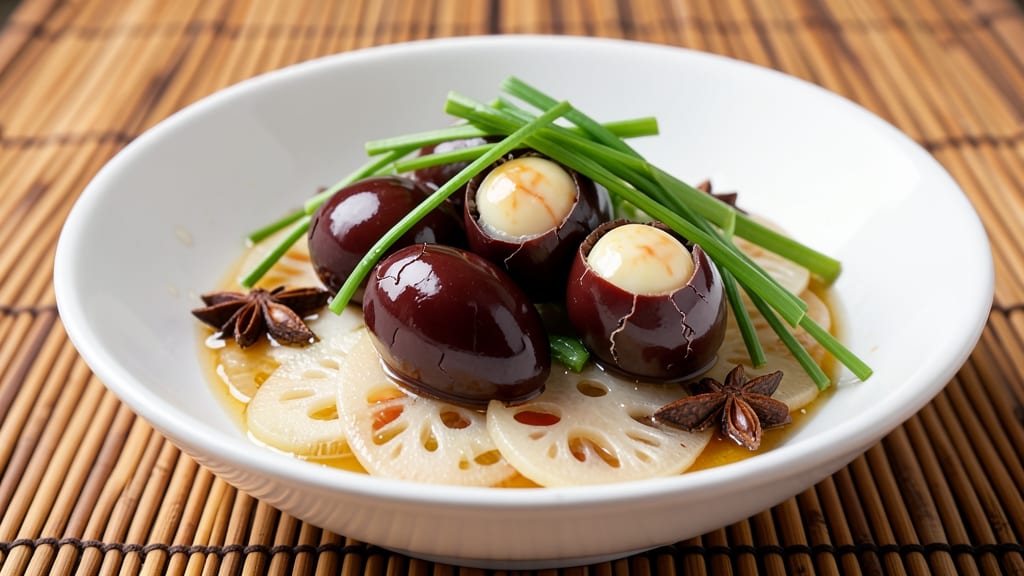
This Chinese egg recipe transforms humble ingredients into a delicate dish where tender lotus root cradles silky egg ribbons in a fragrant, savory broth. The technique balances precision—like slicing lotus root paper-thin—and patience, letting flavors meld as the eggs poach gently in aromatic broth.
I first discovered this dish at a Cantonese restaurant where it arrived as a side dish, but its simplicity makes it perfect for weeknight dinners or special occasions alike.
The magic lies in the broth—a carefully balanced blend of soy sauce, ginger, and star anise—that infuses the eggs with depth without overpowering their natural richness. Lotus root adds a subtle crunch and earthy sweetness that contrasts beautifully with the eggs' velvety texture.
What makes this recipe stand out is how it elevates ordinary eggs into something restaurant-worthy, using just a few high-impact ingredients and a method that feels both traditional and approachable.
By the time you serve this dish, you'll have perfectly poached eggs with just-set whites and runny yolks, nestled alongside lotus root slices that hold their shape yet yield slightly when bitten. The broth, reduced to a fragrant sauce, ties everything together, creating a harmonious balance of textures and flavors.
This is comfort food with a touch of elegance—ideal for impressing guests or treating yourself to a taste of home-cooked sophistication.
The best part? The technique scales effortlessly—whether you're serving one or four. The key is timing the eggs just right so they're cooked through but still tender, and letting the broth work its magic while you prepare the rest.
Once mastered, this dish will become a staple in your repertoire, proving that even simple ingredients can deliver extraordinary results with the right approach.
Ingredients for chinese egg
Transform ordinary eggs and lotus root into restaurant-quality elegance with these aromatic ingredients.
| Ingredient | Amount | Notes |
|---|---|---|
| Fresh Eggs 🥚 | 8 whole | Large, room temperature preferred |
| Lotus Root 🥕 | 1 lb | Fresh, peeled and sliced paper-thin |
| Light Soy Sauce 🥄 | ½ cup | High-quality, low-sodium preferred |
| Fresh Ginger 🧄 | 1 tbsp | Grated, aromatic variety |
| Star Anise 🌟 | 2 whole | Whole pods, lightly crushed |
| Green Onions 🧅 | 4 whole | Thinly sliced, white and green parts |
| Sesame Oil 🫒 | 1 tbsp | Toasted, for finishing |
| Cornstarch 🌾 | 1 tbsp | For egg coating |
| Water 💧 | 4 cups | Filtered or spring water |
| White Wine Vinegar 🍶 | 1 tbsp | For egg poaching |
| Salt 🧂 | 1 tsp | Diamond Crystal kosher preferred |
| White Pepper 🌶️ | ½ tsp | Freshly ground for subtle heat |
| Sugar 🍚 | 1 tsp | Granulated, for balancing |
The lotus root is non-negotiable—fresh, firm varieties from Asian markets deliver the best texture. Whole Foods or H Mart carry pre-peeled options, but if buying whole, use a mandoline for paper-thin slices. For ginger, young, tender roots (not fibrous) work best; Trader Joe's organic ginger is my go-to. Star anise should be plump and aromatic—Penzeys sells high-quality whole pods. The soy sauce matters too: Kikkoman light soy is reliable, but Japanese brands like Yamasa elevate the dish further.
No lotus root? Jicama or daikon radish slices mimic the subtle crunch, though texture differs. Substitute star anise with 1 tsp anise seeds or 1 cinnamon stick>—both add depth but alter the profile. For the broth, low-sodium soy sauce> is ideal, but regular soy sauce plus reduced salt> works. The cornstarch coating prevents eggs from breaking; arrowroot powder> is a 1:1 substitute. Green onions can be swapped for chives or scallions, though green onion's mild sweetness is preferred.
Lotus root keeps 5 days refrigerated> in a sealed container; slice just before cooking. Ginger lasts 3 weeks> in the fridge or 6 months frozen. Star anise pods stay potent for 1 year> in a cool, dark place. Poached eggs are best served immediately, but the broth can be reduced and refrigerated for 3 days>—reheat gently to preserve aroma. Portion lotus root slices in advance to streamline assembly.
Why You'll Love This Recipe
- One-Pot Magic: I swear by this—just eggs, lotus root, and a splash of soy. No chopping mountains of veggies, no multiple pans. The lotus root peels and slices in minutes, and the star anise adds depth without extra effort.
- Umami Bomb: That light soy sauce? It’s the secret weapon—salty, sweet, and just enough to make the eggs taste like they’ve been simmering for hours. The ginger? A tiny bit goes a long way, but it’s what turns "good" into "I’ll make this again."
- Leftover Hero: This dish actually improves the next day. The eggs get even more tender, the flavors meld, and it reheats like a dream. Pack it for lunch or serve it cold—either way, it’s a win.
- Budget Flex: Fresh eggs and root veggies won’t break the bank, and star anise lasts forever. Honestly, I’ve made this for under $5 per serving, and it still feels fancy enough for company. (Yes, even on a Tuesday night.)
Step-by-step instructions for silky lotus root wrapped in savory broth
This method delivers tender poached eggs with delicate lotus root threads in a perfectly balanced broth.
Prepare the Lotus Root and Broth Base
Begin by peeling the 1 lb lotus root using a vegetable peeler, working carefully to remove the tough outer skin while preserving the delicate inner strands. Slice the peeled lotus root into paper-thin rounds using a sharp mandoline or knife—these should be so thin they're nearly translucent when held up to light. Set aside in a bowl of cold water to prevent browning.
In a clean pot, combine the 4 cups water, 0.5 cup light soy sauce, 1 tbsp white wine vinegar, 1 tsp salt, 0.5 tsp white pepper, and 1 tsp sugar. Add the 2 whole star anise pods and 1 tbsp grated fresh ginger. Bring to a gentle simmer over medium heat until the liquid is fragrant and the star anise releases its aromatic oils—about 5 minutes. Keep this broth at a barely simmering temperature throughout the cooking process.
Poach the Eggs with Precision
Whisk the 8 whole fresh eggs in a separate bowl until the yolks and whites are fully combined but not frothy. In a small bowl, mix the 1 tbsp cornstarch with 2 tablespoons of the poaching liquid to create a light slurry. This will help stabilize the eggs during cooking.
Carefully lower each egg into the simmering broth using a slotted spoon, maintaining the broth's gentle simmer. Poach for 3 minutes, then carefully remove each egg with a slotted spoon and transfer to an ice bath to halt cooking immediately. This ensures the yolks remain perfectly runny while the whites set just enough to hold their shape. The eggs should be opaque but still slightly translucent at the edges when removed from the ice bath.
Assemble the Dish with Lotus Root Threads
Drain the poached eggs and pat them dry with paper towels. Using the same mandoline or knife, carefully slice each lotus root round into thin ribbons—these should be delicate enough to wrap around the eggs. Arrange 4 lotus root ribbons in a circular pattern on each serving plate, creating a nest for the egg.
Place one poached egg gently into each lotus root nest, then ladle ½ cup of the warm broth over each serving. Drizzle with 1 teaspoon toasted sesame oil and garnish with 1 whole green onion, sliced thinly on the bias, with both white and green parts visible. The final dish should present a harmonious balance of silky egg, crisp lotus root, and fragrant broth.
Finish with Aromatic Garnishes
Return the pot of broth to a gentle simmer and reduce it by one-third, concentrating the flavors. Strain the broth through a fine-mesh sieve to remove any remaining ginger or star anise particles, then return it to the pot. Keep it warm over low heat until ready to serve.
Just before serving, taste the broth and adjust seasoning if needed—add a pinch more salt if it's too mild, or a splash of white wine vinegar if it needs brightness. The finished dish should showcase the silky texture of the poached eggs, the crisp yet tender lotus root, and the deep umami of the reduced broth, all harmonized by the subtle heat of white pepper and the nutty finish of sesame oil.
Pro Tips For Making Chinese Egg
- PARBOIL LOTUS ROOT FIRST: Skip the raw chunks—parboil the lotus root for 8-10 minutes until it’s fork-tender before slicing. This prevents it from turning to mush later (yes, I’ve ruined a batch by skipping this). Cut it into even ½-inch rounds while still warm—it’ll hold shape better and absorb flavors faster.
- CRACK EGGS IN HOT WATER: Don’t crack them into the pan—drop eggs into a bowl of boiling water first, then transfer them in. The shock stops them from splattering everywhere (trust me, your stove will hate you if you don’t). Let them sit in the water for 30 seconds to firm up the whites slightly before adding to the pan.
- USE STAR ANISE SPARINGLY: One pod is enough—any more and you’ll taste licorice over soy. Crush it lightly with the flat side of a knife before adding, so the aroma releases without turning bitter. Remove it after 2 minutes of simmering—oversteeping makes the dish taste medicinal.
- GINGER: JULIENNE, NOT GRATE: Thin julienne strips (matchstick-sized) brighten the dish without overpowering, unlike grated ginger that turns the sauce muddy. Toast them in the same oil as the lotus root for 30 seconds—this deepens their flavor and cuts the raw edge. (I used to skip this, and the ginger just tasted like… ginger.)
Best sauces and condiments for this dish
Broth Foundation
The star of this dish is the savory broth, where light soy sauce and star anise create a delicate umami backbone. I start with Kikkoman light soy sauce for its clean, salty profile, but Yamasa adds an extra layer of complexity.
The white wine vinegar brightens the broth while the grated ginger and star anise infuse warmth and depth. Simmering just until fragrant—no boiling—preserves these delicate aromas. A pinch of white pepper adds subtle heat without overpowering the dish. 🌟
Egg Poaching Sauce
For perfect poached eggs, I blend cornstarch into the broth to create a light coating that prevents breakage. The ice bath is critical—it stops the eggs instantly, yielding silky whites and runny yolks. I use room-temperature eggs for even cooking; cold eggs can create uneven textures.
The white wine vinegar in the broth also helps the whites set more cleanly. A slotted spoon makes removing them effortless without tearing. 🥚
Sesame Oil Finish
A final drizzle of toasted sesame oil elevates the dish with its nutty aroma, cutting through the richness of the eggs. I use Kadoya sesame oil for its deep, toasted flavor—cheaper brands can taste bitter. Add it just before serving so the aroma isn’t lost to heat.
A sprinkle of toasted sesame seeds adds visual contrast and extra crunch. For a smoky twist, swap ½ tsp of the sesame oil for chili oil at the end. 🌶️
Garnish Enhancements
Fresh green onions sliced on the bias add a pop of color and crispness, while thin lotus root ribbons provide texture. For extra umami, I sometimes add a dash of fish sauce (like Red Boat) to the broth.
A pinch of sugar balances acidity, and black sesame paste swirled into the broth adds earthy depth. Garnishes should complement, not compete—keep them minimal but impactful. ✨
Sauce Variations
For a spicy kick, add 1 tsp chili crisp or Sichuan peppercorns to the broth. A sweet-savory twist comes from reducing the broth with 1 tbsp honey or rock sugar until syrupy.
For vegetarian adaptability, replace star anise with 1 tsp fennel seeds or 1 cinnamon stick. Each variation keeps the dish’s elegance while tailoring it to your taste. 💡
Nutrition facts
Frequently asked questions
Can I substitute lotus root in this recipe?
Yes! If you can't find lotus root, try jicama or daikon radish for a similar crunch. For texture, slice them paper-thin like the original. Jicama has a mild sweetness, while daikon adds a slightly peppery note—both work well in the same technique. Just peel and slice them the same way to maintain the dish's delicate presentation.
How do I get perfectly runny yolks without overcooking the whites?
The key is timing and temperature. Poach eggs in a gentle simmer (not boiling) for exactly 3 minutes, then transfer to an ice bath for 1 minute. Room-temperature eggs are crucial—they cook more evenly. For extra insurance, whisk the eggs with 1 tbsp cornstarch before poaching to help them hold their shape.
Can I make this dish ahead of time?
Prepare the lotus root ribbons and reduce the broth up to 2 days ahead, storing them separately in the fridge. Reheat the broth gently before serving. For the eggs, poach them fresh—this dish relies on their silky texture. If needed, you can also assemble the plates (without the eggs) and refrigerate them for 4 hours, then add the poached eggs just before serving.
What's the secret to the best broth flavor?
The magic is in the balance: light soy sauce for saltiness, white wine vinegar for brightness, and star anise for depth. Simmer just until fragrant—no boiling—to preserve the delicate aromas. A pinch of white pepper adds subtle heat, while 1 tsp sugar rounds out the flavors. For extra richness, add 1 tbsp fish sauce to the broth.
Why did my poached eggs break when I tried to remove them?
This usually happens from one of three things: boiling water (creates turbulence), cold eggs (uneven cooking), or lack of cornstarch (no protective coating). Always maintain a gentle simmer, use room-temperature eggs, and whisk them with 1 tbsp cornstarch before poaching. A slotted spoon helps remove them carefully without breaking.