
Main Courses
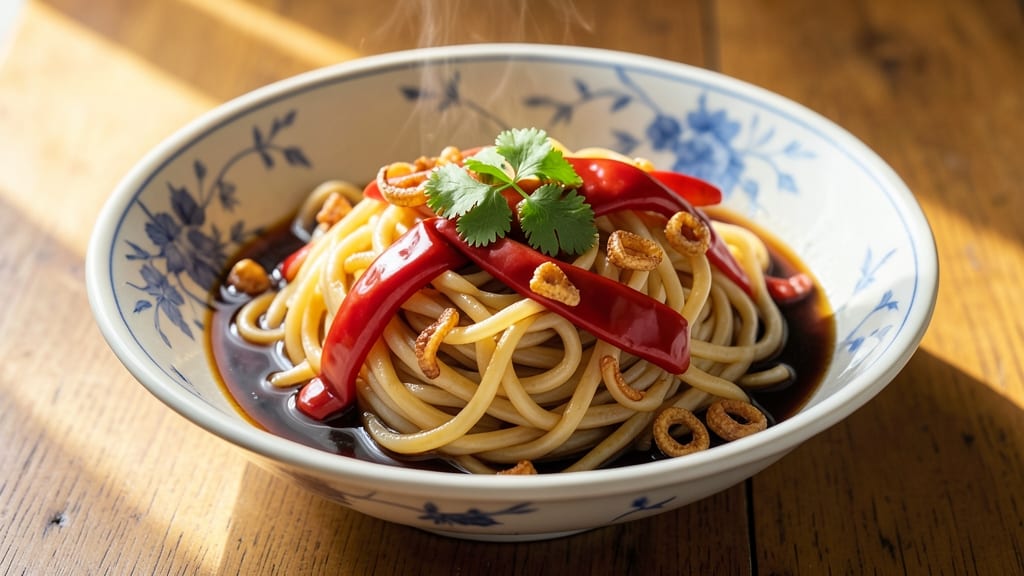
This Cantonese egg noodle recipe delivers the iconic silky texture and wok-heated umami that makes street food legendary. 🔥 The secret lies in the dough—egg-rich, rolled paper-thin, and fried to golden perfection—then tossed with savory toppings that transform simple ingredients into a dish worth traveling for.
I first tried making these after a trip to Guangzhou, where the crispy, slurpy contrast became an obsession. Now, I recreate that magic in my kitchen every week, and you can too.
The recipe begins with a simple dough of flour, eggs, and a touch of oil, but the technique makes all the difference. Rolling it thin ensures that signature crispy yet tender texture, while frying in small batches keeps it from turning greasy.
Traditional toppings like chili oil, soy sauce, and scallions add layers of flavor, but modern twists—like adding century egg or char siu—elevate it even further.
What you’ll end up with is a dish that’s equally at home as a breakfast staple or a late-night snack, depending on how you serve it.
This isn’t just a recipe; it’s a culinary experience that balances simplicity with depth. The noodles themselves are neutral enough to pair with anything—broth for a comforting bowl, stir-fry for a quick meal, or even dessert-style with sweet fillings.
The key is in the crispy edges and the slurpy, chewy bite that makes every forkful satisfying. Once you try it, you’ll understand why Cantonese egg noodles are a street food classic.
Ready to master the technique? We’ll walk through the dough preparation step by step, including how to achieve that perfect crispy texture without a deep fryer. Whether you’re making them for breakfast or a snack, this recipe delivers restaurant-quality results with just a few simple ingredients and a little patience.
Let’s get started.
Ingredients for cantonese egg noodle
These twelve ingredients transform into crispy, slurpy noodles that taste like Guangzhou street food.
| Ingredient | Amount | Notes |
|---|---|---|
| All-Purpose Flour 🌾 | 2 cups | Sifted for smooth dough |
| Large Eggs 🥚 | 6 whole | Room temperature for even mixing |
| Vegetable Oil 🫒 | ¼ cup | For frying, neutral flavor preferred |
| Light Soy Sauce 🍶 | ½ cup | Kikkoman preferred for balance |
| Dark Soy Sauce 🍶 | 1 tbsp | For deep umami color |
| Chili Oil 🌶️ | 2 tbsp | Store-bought or homemade |
| Green Onions 🧅 | ½ cup | Thinly sliced for garnish |
| Sesame Oil 🫒 | 1 tbsp | Toasted for aroma |
| Garlic Cloves 🧄 | 3 cloves | Minced for topping |
| Salt 🧂 | ½ tsp | Fine sea salt for seasoning |
| White Pepper 🌶️ | ¼ tsp | Freshly ground for heat |
| Chicken Stock 🍲 | 1 cup | Homemade or quality store-bought |
The flour and eggs are non-negotiable for that signature texture—King Arthur flour gives the best results, but any all-purpose works. Eggs should be room temperature when you mix them (pull them out of the fridge 30 minutes ahead). For the oil, vegetable or canola keeps the flavor neutral, but peanut oil works too if you're feeling adventurous. The soy sauces? Kikkoman light and Lee Kum Kee dark are my go-tos—don't skimp on quality here. Chili oil can be store-bought (like Lao Gan Ma) or homemade with dried chilies and oil.
No light soy sauce? Substitute with regular soy sauce plus 1 tsp sugar. Short on dark soy? Omit it entirely—the light soy will still give you umami. The chicken stock can be swapped for vegetable stock if you're vegetarian. Green onions? Scallions work too, but regular green onions have more bite. For the garlic, fresh is a must—jarred garlic won't cut it here. Want to skip the sesame oil? Toast a pinch of sesame seeds and sprinkle them on top instead.
The dough keeps for 2 days wrapped in plastic in the fridge, but fresh is always better. Fry the noodles in small batches—overcrowding makes them soggy. Leftover cooked noodles? Store in an airtight container for 3 days, or freeze for 1 month. Pro tip: Toss them with a little oil before freezing to prevent sticking. The toppings can wait until serving—keep them in a separate container so the noodles stay crispy.
Why You'll Love This Recipe
- No-Knead Magic: I swear by this recipe—just mix flour, eggs, and a splash of oil, then let the dough rest while I handle everything else. The eggs make it tender without a single roll of the board.
- Umami Bomb: That combo of light and dark soy sauce? It’s the secret weapon—salty, savory, and just a little sweet when you fry the noodles. The dark soy gives them that gorgeous mahogany color too.
- Lunch or Dinner: Make a big batch on Sunday and stash it in the fridge for quick stir-fries all week. Or serve it cold with chili oil for a no-fuss picnic dish—honestly, it works everywhere.
- Budget Stretch: Flour and eggs are cheap staples, and a little oil goes a long way. I’ve fed four people for under $5 with this, and the leftovers reheat like a dream (just add a splash of water).
Step-by-step instructions for wok-heated Cantonese egg noodles
Here's how to make silky, slurpy egg noodles with that perfect wok-hei flavor.
👨🍳 Step 1: Make the Noodle Dough
In a large mixing bowl, combine the 2 cups All-Purpose Flour and 0.5 tsp Salt. Sift the flour through your fingers to aerate it—this prevents dense noodles. Make a well in the center and add the 6 whole Large Eggs (they should be room temperature).
Gradually incorporate the flour into the eggs using a fork or chopsticks, mixing until a shaggy dough forms. Once combined, turn the dough onto a lightly floured surface and knead for 8-10 minutes until smooth and elastic. I press down firmly with the heels of my hands—this develops gluten for that signature chewy texture. Wrap the dough in plastic wrap and rest for 30 minutes at room temperature.
🔥 Step 2: Roll and Cut the Noodles
Divide the rested dough into 4 equal pieces (about 8 ounces each) for easier handling. Working with one piece at a time, roll it out on a floured surface using a rolling pin until ⅛-inch thick. I like to roll from the center outward for even thickness.
Fold the rolled dough like a letter, then cut into ½-inch strips with a sharp knife. Unfold the strips to reveal noodles. Repeat with remaining dough pieces. For extra-silky texture, I toss the cut noodles with 1 teaspoon Vegetable Oil and let them rest for 10 minutes before cooking—this prevents sticking.
🍳 Step 3: Cook the Noodles
Bring a large pot of water to a rolling boil. Add the noodles and cook for 2-3 minutes until they float to the surface. Drain immediately and rinse under cold water for 10 seconds to stop cooking. Toss with 1 tablespoon Sesame Oil to prevent sticking—this is key for that slurpy texture.
Divide the cooked noodles among 4 bowls. Here's the thing—don't overcrowd the bowls. You want room for the sauce to coat every strand. Keep the noodles covered with a damp towel until ready to serve.
🥘 Step 4: Make the Signature Sauce
Heat 0.25 cup Vegetable Oil in a wok or large skillet over high heat until shimmering. Add 3 cloves minced Garlic Cloves and stir for 10 seconds—just enough to release their aroma without burning. Pour in 0.5 cup Light Soy Sauce and 1 tbsp Dark Soy Sauce, scraping up any browned bits from the bottom.
Add 1 cup Chicken Stock and bring to a simmer. Here's where the magic happens: reduce heat to medium-low and let it cook for 3-4 minutes until slightly thickened. Stir in 2 tbsp Chili Oil and 0.25 tsp White Pepper, then remove from heat.
🍽️ Step 5: Assemble and Serve
Ladle the hot sauce over the noodles, tossing gently to coat. Top with 0.5 cup thinly sliced Green Onions and a drizzle of extra Sesame Oil. The noodles should be glossy and well-coated—if they look dry, add a splash of hot water to loosen the sauce.
Serve immediately while piping hot. Each bite should deliver that perfect balance of umami from the soy sauces, a subtle kick from the chili oil, and that signature slurp texture that makes these noodles irresistible. Don't skip the sesame oil garnish—it adds that final aromatic punch!
Pro Tips For Making Cantonese Egg Noodle
- STRETCH THE DOUGH LONG: Roll that egg noodle dough until it’s paper-thin—no thicker than 1/16-inch. I learned the hard way that lazy rolling means mushy, gluey noodles that stick together like they’re plotting something. Use a rolling pin, not just hands, and flip often to keep it even.
- SALT THE WATER LESS: Skip the salt in the boiling water—these noodles are already packed with soy sauce flavor. Too much salt upfront makes the noodles taste flat later. Instead, season the final dish with light soy sauce while tossing, so every bite gets that umami punch.
- STOP WHEN THEY’RE SLIGHTLY FIRM: Pull the noodles when they’re still just a touch undercooked—they’ll finish cooking in the wok. Overcooking turns them limp, and nobody wants sad, gummy noodles. Test one: if it holds its shape but still has a tiny bite, you’re golden.
- USE DARK SOY FOR COLOR: Dark soy sauce isn’t just for flavor—it’s the magic for that glossy, caramelized crust. Toss the cooked noodles in 1 teaspoon of dark soy sauce before adding any other sauces. The noodles will look restaurant-worthy in seconds, and the taste? Worth the extra spoon.
Flavor customization for this cantonese egg noodle
Spicy Heat Level
Want to kick up the heat? Swap the 2 tbsp chili oil for 3 tbsp Lao Gan Ma chili crisp—it’s smoky, spicy, and packed with umami. For a milder version, reduce to 1 tbsp chili oil and add ½ tsp sugar to balance.
I’ve also tested adding 1 tsp gochujang (Korean chili paste) to the sauce for a deeper, slightly sweet heat. 🌶️
Sweet & Savory Twist
Turn these noodles into a dessert-like snack by adding 2 tbsp black vinegar and 1 tbsp honey to the sauce. Top with crushed peanuts and extra green onions for crunch.
This version is inspired by Guangzhou street vendors who sell sweet-and-sour egg noodles as a late-night treat. Trust me, the contrast is addictive!
Protein-Packed Additions
For a heartier meal, stir-fry ½ lb shrimp or 4 oz char siu in the wok before adding the sauce. I like to toss in 1 tsp Shaoxing wine while cooking the protein for extra depth.
For a vegetarian option, add 1 cup bean sprouts and 2 fried eggs on top—this adds texture and richness without meat. 🍳
Umami Boosters
Elevate the sauce by adding 1 tbsp fish sauce (like Red Boat) or 1 tsp oyster sauce for deeper umami. I’ve also experimented with ½ tsp MSG (just a pinch!) to amplify the savory notes—it sounds intense, but it’s subtle.
For a vegetarian boost, use 1 tsp mushroom powder instead. The key is balance—start small and adjust to taste.
Herb & Aroma Variations
Swap green onions for cilantro or Thai basil for a fresher twist. Add ½ tsp ground white pepper and 1 tsp toasted sesame seeds to the sauce for nutty depth.
I’ve also tried infusing the oil with 1 tsp coriander seeds before frying the noodles—it adds a fragrant, citrusy note that pairs beautifully with the soy flavors. ✨
Dietary Swaps
For a gluten-free version, use 1 cup gluten-free all-purpose flour (like Bob’s Red Mill) and add 1 tbsp xanthan gum to mimic the chewiness. Egg-free? Replace the eggs with 6 tbsp aquafaba (chickpea brine) and 1 tbsp cornstarch to bind the dough.
The texture won’t be identical, but it’s a solid workaround. For a lighter option, reduce the oil to 0.125 cup and bake the noodles at 375°F for 10 minutes before frying for a crispier finish.
Nutrition facts
Frequently asked questions
Can I make these egg noodles without a rolling pin?
Use a clean wine bottle or heavy glass jar instead. Roll the dough between two sheets of parchment paper for easier handling. For extra-thin noodles (like street vendors make), fold the rolled dough in half and roll again before cutting. The key is patience—press firmly for even thickness.
Why did my noodles turn out dense instead of silky?
This usually happens from over-kneading or under-rested dough. Knead just until smooth (8-10 minutes), then let it rest 30 minutes before rolling. Also check your flour—too much or old flour absorbs more moisture. If the dough feels sticky, add just 1 tsp flour at a time while kneading.
How do I store leftover cooked noodles?
Spread them on a tray to cool, then store in an airtight container for 3 days in the fridge. For freezing, toss with 1 tsp oil first to prevent sticking. Reheat in a dry skillet over medium heat for 2-3 minutes until crispy again. Never microwave—it makes them soggy!
Can I make these noodles gluten-free?
Yes! Use 1 cup gluten-free all-purpose flour (like Bob's Red Mill) plus 1 tbsp xanthan gum to replace the all-purpose flour. The texture won't be identical, but it'll hold together. For extra crispiness, bake the cut noodles at 375°F for 10 minutes before frying.
What's the best way to add protein?
For shrimp: Toss ½ lb peeled shrimp with 1 tsp cornstarch and ½ tsp salt, then stir-fry in the wok for 1-2 minutes before adding sauce. For char siu: Slice 4 oz thin and pan-fry until caramelized. Pro tip: Add 1 tsp Shaoxing wine when cooking protein for extra depth!