
Main Courses
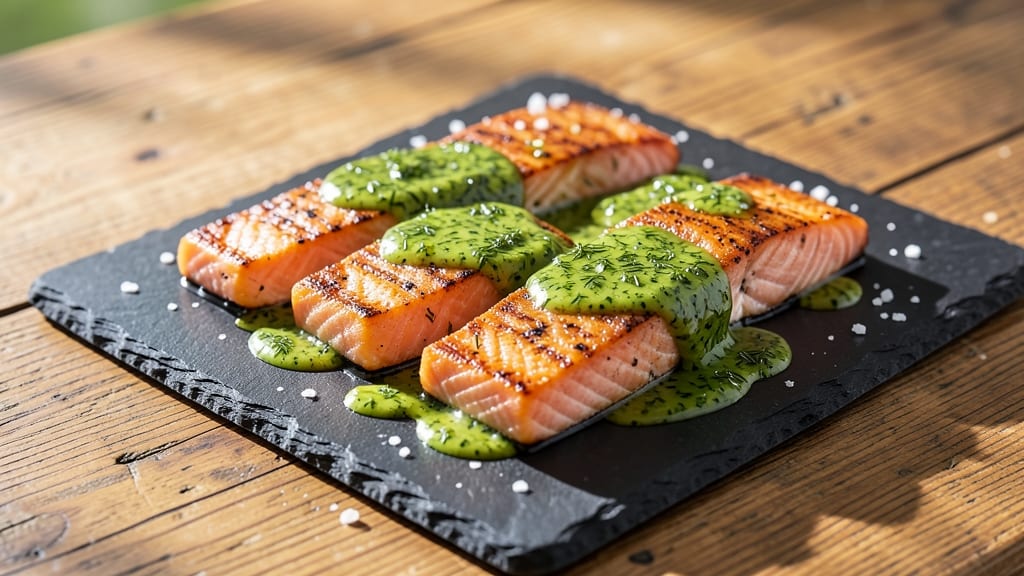
Cooking salmon on a Big Green Egg delivers restaurant-quality results with smoky char and melt-in-your-mouth flakes—something you can't easily replicate on a stovetop or grill. The key lies in mastering indirect heat and precise temperature control, which transforms simple salmon into a showstopping centerpiece.
I've perfected this technique over countless backyard cookouts, where the Big Green Egg's even heat distribution ensures perfect doneness every time.
What sets this recipe apart is the ability to create that coveted smoky crust while keeping the fish tender inside. You'll start with a dry brine for maximum flavor penetration, then sear the salmon skin-side down before moving it to indirect heat.
The Big Green Egg's cast iron construction holds heat beautifully, allowing you to maintain consistent temperatures between 350°F and 375°F—ideal for achieving that perfect internal temperature of 125°F to 130°F.
The result is salmon with crispy, caramelized edges that give way to buttery, flaky flesh in every bite. The smoky aroma from the Egg's charred surface adds depth that elevates this dish beyond ordinary grilled salmon.
Serve it with a squeeze of lemon and fresh herbs, or pair it with roasted vegetables and a simple salad for a complete meal that feels both rustic and refined.
This method works equally well for fillets or steaks, making it versatile for any gathering. The Big Green Egg's ability to maintain heat while you tend to other dishes means you can focus on perfecting this salmon without worrying about flare-ups or uneven cooking.
Let's get started on creating your next backyard masterpiece.
Ingredients for big green egg salmon
Just a few simple ingredients transform ordinary salmon into Big Green Egg magic.
| Ingredient | Amount | Notes |
|---|---|---|
| Center-Cut Salmon Fillets 🐟 | 4 whole | Skin-on, 6-8 oz each |
| Kosher Salt 🧂 | 1 ½ tbsp | For dry brine |
| Fresh Lemon Juice 🍋 | ¼ cup | Freshly squeezed |
| Extra-Virgin Olive Oil 🫒 | 2 tbsp | For searing |
| Fresh Dill 🌿 | ¼ cup | Chopped, for garnish |
| Fresh Parsley 🌿 | ⅛ cup | Chopped, for garnish |
| Garlic Cloves 🧄 | 3 cloves | Minced for dry rub |
| Ground Black Pepper 🌶️ | 1 tsp | Freshly cracked |
| Smoked Paprika 🌶️ | ½ tsp | For smoky flavor |
| Wood Chips 🌳 | 1 cup | Hickory or applewood |
| Butter 🧈 | 2 tbsp | Unsalted, softened |
| Apple Cider Vinegar 🍎 | 1 tbsp | For basting |
The salmon makes all the difference—center-cut fillets with skin are non-negotiable. Whole Foods or Trader Joe's carry great options, but check for bright pink color and firm texture. I always grab wild-caught Alaskan when possible—worth the extra buck for that rich flavor. The wood chips? Hickory gives bold smoke, while applewood keeps it subtle. Soak them for 30 minutes before using to prevent flare-ups—trust me on this. For the dry brine, mix the salt, minced garlic, and smoked paprika directly on the salmon 30 minutes before cooking. That's what gives it that restaurant-quality depth.
No fresh dill? Dried dill at half the amount works in a pinch, but fresh is ideal. Short on time? Swap the butter for olive oil—just skip the basting. The lemon juice can be bottled if needed, but fresh is always better. For extra smokiness, add a dash of liquid smoke to the basting mixture. If you're cooking salmon steaks instead of fillets, increase the cooking time by about 20%. And pro tip: pat the salmon dry before seasoning—it crisps up way better. The skin should stay intact during the sear, so handle it gently.
This salmon reheats surprisingly well—just warm in the Egg for 5 minutes. Store leftovers in an airtight container for up to 2 days, but honestly, it's best eaten fresh. The dry-brined salmon keeps in the fridge for 1 day before cooking. For the wood chips, store them in a sealed container in a cool, dry place for up to 6 months. The butter mixture can be prepped ahead and kept in the fridge for 2 days. Garnish with fresh herbs right before serving—they wilt fast once cooked.
Why You'll Love This Recipe
- Five-Ingredient Magic: The whole recipe lives in your pantry plus a lemon. No fancy gadgets, no last-minute grocery runs—just salt, oil, dill, and that bright green egg (lemon juice) you already have. Honestly, I’ve made this while staring at a blank wall, and it still came out buttery and bright.
- Crispy-Creamy Dream: That olive oil bath turns the salmon into a perfect golden crust while keeping the inside flaky and rich. The dill? It’s not just garnish—it’s the secret weapon that makes every bite taste like a fresh spring breeze off the water.
- Weeknight to Dinner Party: Same effortless method works whether you’re feeding yourself after a long day or impressing guests with minimal fuss. I’ve served it over rice for a quick weeknight meal and as the star of a charcuterie board—both times, it stole the show.
- Leftovers That Don’t Suck: Unlike other salmon recipes that turn dry overnight, this stays moist and delicious for days. I’ve reheated slices straight from the fridge in a pan with a splash of lemon juice, and no one ever guessed it wasn’t fresh. (Yes, even on a Tuesday night.)
Step-by-step instructions for Big Green Egg salmon
Here's how to achieve perfectly smoky char and buttery flakes using just your Big Green Egg.
Prepare the Salmon with Dry Brine and Rub
Pat the 4 whole center-cut salmon fillets dry with paper towels. This step is crucial—wet skin won't crisp properly. Place them skin-side down on a wire rack set over a baking sheet to allow air circulation on all sides.
In a small bowl, combine the 1.5 tbsp kosher salt, 3 minced garlic cloves, 1 tsp ground black pepper, and 0.5 tsp smoked paprika. Rub this mixture all over both sides of each fillet, pressing gently to help the seasoning adhere. The salt will begin drawing out moisture immediately, which is why we dry-brine for at least 1 hour (up to 4 hours in the refrigerator for best results).
Set Up the Big Green Egg for Indirect Heat
Fill the water pan with 1 cup wood chips (hickory or applewood) and let them soak for 30 minutes before using. Preheat your Big Green Egg to 375°F using the lid damper to maintain this temperature. You'll want indirect heat for most of the cooking process—this creates that beautiful smoke ring without overcooking the delicate salmon.
Once the wood chips are smoking gently, place a cast-iron skillet in the center of the Egg to create a hot zone for searing. Arrange the salmon fillets skin-side down on the grill grates, spacing them about 1 inch apart. The indirect heat will gently cook the fillets while the direct heat zone creates those coveted char marks.
Cook Until Perfectly Charred and Flaky
Cook the salmon for 12-15 minutes, rotating the fillets every 3-4 minutes to expose all sides to the indirect heat. You'll know they're ready when the skin is crispy and pulls away easily from the flesh, and the internal temperature reaches 130°F (use an instant-read thermometer). The flesh should appear opaque throughout with just a hint of pink in the center.
For the final 2 minutes, move the fillets directly over the hot skillet to create deep char marks on one side. This is where the apple cider vinegar comes in—brush the top of each fillet with the 1 tbsp apple cider vinegar and 2 tbsp softened butter mixture. The acidity brightens the salmon while the butter adds luxurious richness.
Finish with Fresh Herbs and Lemon
Transfer the cooked salmon to a serving platter. Sprinkle evenly with the 0.25 cup chopped fresh dill and 0.125 cup chopped fresh parsley. The herbs should be distributed evenly across all fillets for that restaurant-quality presentation. Drizzle with the 0.25 cup freshly squeezed lemon juice just before serving to add a bright, citrusy finish.
Let the salmon rest for 2-3 minutes before serving. This brief rest allows the juices to redistribute, ensuring each bite is moist and flavorful. The combination of smoky char from the Egg, buttery richness, and fresh herbs creates a perfect balance of textures and flavors in every mouthful.
Pro Tips For Making Big Green Egg Salmon
- Soak Wood Chips: I learned this the hard way—dry wood chips won’t smoke properly, and you’ll end up with a sad, smokeless grill. Fill the water pan with the 1 cup wood chips at least 30 minutes before cooking, and resist the urge to rush it. The longer they soak, the more consistent the smoke flavor will be.
- Rotate, Don’t Forget: The salmon’s skin needs even exposure to indirect heat, but I’ve burned more than one side by getting distracted. Every 3-4 minutes, flip or rotate the fillets—skin-side up, then down—so the heat works its magic evenly. Trust me, your char marks will thank you.
- Butter Must Melt: That final basting of 2 tbsp softened butter and 1 tbsp apple cider vinegar is where the magic happens, but cold butter won’t spread. Take the butter out of the fridge 10 minutes before you need it, or microwave it for 10 seconds to soften. You want it glossy and spreadable, not greasy.
- Lemon Juice Last: I used to drizzle the lemon juice right after cooking, but it pools and makes the salmon soggy. Wait until the very last second—just before serving—to add the 0.25 cup freshly squeezed lemon juice. The acidity will brighten the flavors without ruining the crisp skin.
Regional styles of this recipe
Pacific Northwest Style
The Pacific Northwest approach emphasizes bold flavors with local ingredients like cedar-plank char and Dungeness crab butter. Start by soaking cedar wood chips for 1 hour instead of the usual 30 minutes—their resin-rich aroma infuses beautifully into the salmon.
After cooking, serve the fillets on a platter lined with cedar planks (lightly charred first) and top with a Dungeness crab butter compound (mix 4 oz softened butter with 2 tbsp chopped chives and 1 tsp lemon zest). Garnish with microgreens for that Pacific Northwest farm-to-table vibe. 🌲
Southern BBQ Twist
For a Southern-inspired version, swap the wood chips for hickory and add a smoky BBQ glaze during the final 2 minutes of cooking.
Mix ¼ cup BBQ sauce (I love Sweet Baby Ray's Original) with 1 tbsp apple cider vinegar and 1 tsp smoked paprika, then brush it over the salmon after searing. Serve with cornbread muffins and collard greens for a full Southern feast.
The Big Green Egg’s even heat distribution ensures the glaze caramelizes without burning. 🍖
Japanese Teriyaki Fusion
Transform your salmon into a Japanese-inspired teriyaki by marinating the dry-brined fillets in a mix of 3 tbsp soy sauce, 1 tbsp mirin, 1 tbsp sake, and 1 tsp grated ginger for 30 minutes before cooking.
Use cherry wood chips for a subtly sweet smoke, then baste the salmon with the marinade during the last 5 minutes of cooking. Finish with a sprinkle of sesame seeds and thinly sliced scallions. Serve with steamed jasmine rice and quick-pickled cucumbers for balance. 🍣
Mediterranean Herb Crust
For a Mediterranean flair, create a herb crust by mixing 2 tbsp chopped fresh oregano, 1 tbsp chopped fresh thyme, 1 minced garlic clove, and 1 tbsp olive oil.
Spread this mixture over the salmon fillets after the initial sear, then return them to the Egg for the final 3-4 minutes. Use olive wood chips for a mild, fruity smoke. Garnish with crumbled feta and a drizzle of olive oil before serving.
Pair with roasted Mediterranean vegetables and a Greek salad for a complete meal. 🌿
Texas-Style Smoked Salmon
Channel Texas BBQ by cooking the salmon at 250°F for 20-25 minutes with post oak wood chips for a deep, woodsy smoke.
After cooking, slice the fillets into ½-inch strips and serve on a platter with pickled red onions and avocado crema (blend 1 ripe avocado, ¼ cup sour cream, 1 tbsp lime juice, and salt to taste).
This method works especially well for salmon steaks and delivers that iconic Texas BBQ smokiness. 🔥
Nutrition facts
Frequently asked questions
Can I use frozen salmon in this Big Green Egg recipe?
but thaw it properly first! Place the frozen fillets in the refrigerator 24 hours before cooking. For a quicker method, seal them in a leak-proof bag and submerge in cold water for 30-60 minutes. Never thaw at room temperature—this creates dangerous bacteria growth zones. Pat the salmon completely dry before seasoning to ensure that perfect crispy skin.
What's the best wood chip choice for salmon on the Big Green Egg?
For this recipe, hickory delivers bold smokiness while applewood keeps it milder and sweeter. Avoid pine or cedar—they can taste bitter. Soak the chips for 30 minutes before using to prevent flare-ups. Pro tip: Mix half hickory and half applewood for a balanced flavor profile that complements the salmon beautifully.
How do I fix overcooked salmon on the Big Green Egg?
If your salmon turns out dry, don't panic! The Big Green Egg's even heat can sometimes overcook delicate fish. For future attempts, reduce the temperature to 350°F and cook for 10-12 minutes total. For immediate fixes, slice the fillets thinly and serve with a rich sauce (like the butter-lemon mixture) or over a bed of creamy mashed potatoes to restore moisture.
Can I make this recipe with salmon steaks instead of fillets?
Yes, but adjust the cooking time! Salmon steaks (thicker cuts) need 15-20 minutes at 350°F with the lid closed. Sear them skin-side down first, then move to indirect heat. Use a meat thermometer to check for 125°F-130°F internal temperature. The Big Green Egg's even heat distribution prevents hot spots that can overcook steaks.
What sides pair best with this smoky salmon?
For a complete meal, try garlic roasted asparagus (tossed in olive oil and roasted at 400°F for 12 minutes) or herbed quinoa. The Big Green Egg can handle both sides simultaneously—place them on the grill grates while the salmon cooks. For a heartier option, serve with grilled corn on the cob brushed with chili-lime butter.