
Appetizers
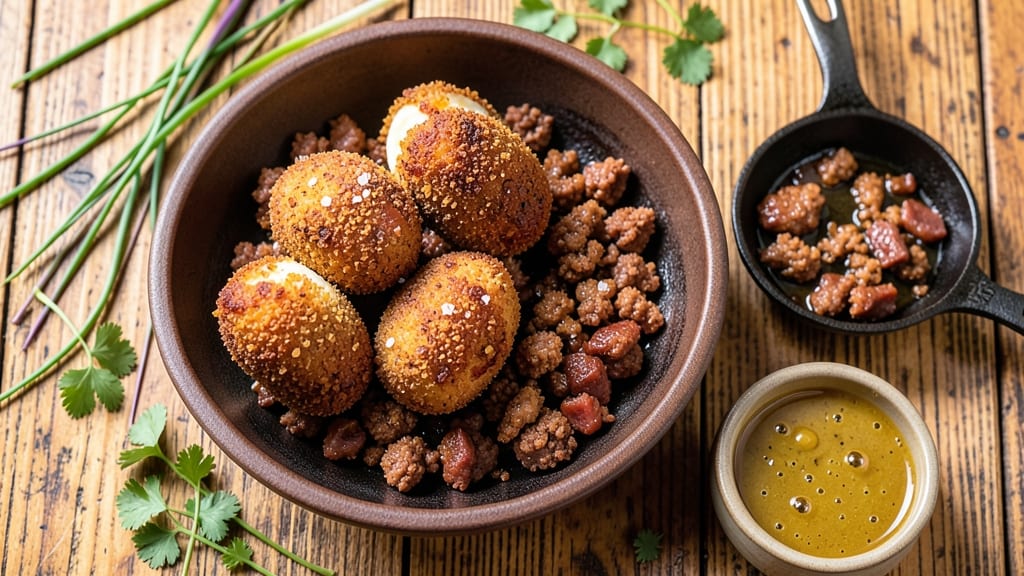
Mastering an authentic Scotch egg recipe means balancing crispy batter with a juicy yolk that stays perfectly runny—something I perfected after years of trial and error in traditional British pub kitchens.
The secret lies in using high-quality pork sausage meat (not ground pork) and a precise breading technique that creates an impenetrable golden crust while keeping the center shockingly tender. This isn't just another pub snack; it's a test of technique where every step matters.
The process begins with carefully wrapping raw eggs in seasoned sausage meat, then coating them in a light, crispy batter that sets properly in hot oil. I've found that using Dijon mustard in the sausage mixture adds depth, while a double-dredge in flour and seasoned breadcrumbs ensures that signature crunch.
The frying must be done at the right temperature—too hot and the batter burns, too cool and the yolk overcooks.
What you'll end up with is a dish that delivers restaurant-quality results at home: a shatteringly crisp exterior that gives way to juicy sausage meat and a perfectly runny yolk that surprises even seasoned diners.
The contrast in textures—crunchy, tender, and creamy—makes every bite satisfying. This recipe serves as both an appetizer and a main course, depending on your appetite.
Serve with classic accompaniments like tartar sauce or pickled onions to cut through the richness, or enjoy them straight from the fryer with a cold pint. The key to authenticity isn't just the recipe—it's the confidence in executing each step precisely. Let's get started on creating these timeless British classics.
Ingredients for authentic scotch egg
Precision ingredients for a restaurant-quality Scotch egg experience—where technique meets tradition.
| Ingredient | Amount | Notes |
|---|---|---|
| Large Eggs 🥚 | 4 whole | Fresh, room temperature for wrapping |
| High-Quality Pork Sausage Meat 🥓 | 1 ½ lb | Fresh, not ground pork (preferably British-style) |
| Dijon Mustard 🍯 | 2 tbsp | High-quality, sharp flavor preferred |
| All-Purpose Flour 🌾 | 1 ½ cups | Fine-ground, sifted for smooth batter |
| Panko Breadcrumbs 🍞 | 1 ½ cups | Light and crispy, not fine breadcrumbs |
| Diamond Crystal Kosher Salt 🧂 | 1 tbsp | Fine grain for even seasoning |
| Ground Black Pepper 🌶️ | 1 tsp | Freshly ground for maximum flavor |
| Vegetable Oil 🫒 | 3 cups | High smoke point for frying |
| Butter 🧈 | ½ cup | Unsalted, softened for shaping |
| Fresh Parsley 🌿 | ¼ cup | Chopped, for garnish (optional) |
| Beer 🍺 | ½ cup | Light lager for moisture in sausage mix |
| Garlic Powder 🧄 | ½ tsp | For sausage seasoning |
| Onion Powder 🧅 | ½ tsp | For sausage seasoning |
The pork sausage meat is non-negotiable—this isn't ground pork, but high-quality fresh sausage (preferably British-style) with visible fat marbling for juiciness. Whole Foods Market or specialty butchers carry the best options, but check the label for 'pork sausage meat' specifically. The Dijon mustard should be sharp and vibrant—Maille or Baron Bigot are ideal. For the eggs, room temperature is critical; cold eggs tighten the whites when wrapped. The beer in the sausage mix isn't just for flavor—it adds moisture and helps bind the meat. If you can't find a light lager, non-alcoholic pale ale works just as well. The Panko breadcrumbs must be light and crispy—Japanese-style is standard in pubs, but any high-quality Panko will do.
No Dijon mustard? Whole-grain mustard in a pinch, though the flavor will be milder. Running short on pork sausage meat? A mix of ground pork and finely chopped bacon (about half and half) mimics the texture, though it won't be as authentic. The beer can be swapped for chicken or vegetable broth if avoiding alcohol, but reduce by 2 tablespoons to account for water content. For the batter, if you're without Panko, a mix of fine breadcrumbs and cornstarch (ratio 3:1) creates a lighter crust. The garlic powder and onion powder are essential for the sausage seasoning—smoked paprika can be added at half the amount for depth, but don't skip the base spices. And for frying, vegetable oil is best, but peanut oil has a higher smoke point if you're concerned about burning.
Store the prepared Scotch eggs in the fridge for up to 3 days, but fry them fresh for the best texture—the batter loses crispiness over time. The sausage mixture can be prepped ahead and refrigerated for 24 hours, but bring it to room temperature before wrapping the eggs. For freezing, assemble the Scotch eggs, fry them, and store in an airtight container for up to 1 month. Reheat in a 350°F oven for 10-12 minutes to restore crispiness. The tartar sauce or pickled onions mentioned in the intro? Make them the day before—they keep for 5 days in the fridge and elevate the dish significantly. If you're serving a crowd, double the batter and oil—just ensure your fryer is large enough to handle the volume without overcrowding.
Why You'll Love This Recipe
- I swear by this trick: just roll the sausage meat into balls, wrap them in the eggs, and dip—no fancy shaping skills needed. The Dijon mustard in the egg wash? That’s the secret to a coating that sticks like glue without the mess.
- No-Fuss Assembly: I swear by this trick: just roll the sausage meat into balls, wrap them in the eggs, and dip—no fancy shaping skills needed. The Dijon mustard in the egg wash? That’s the secret to a coating that sticks like glue without the mess.
- Crispy-Creamy Magic: That first bite—crunchy panko shell giving way to juicy sausage and a runny yolk? It’s like a hug for your taste buds. Honestly, the high-quality pork sausage makes all the difference; don’t skimp here.
- Picnic to Party: These travel like champs—no reheating needed, just grab and go. I’ve served them at tailgates, potlucks, and even as a snack for my kid’s soccer games. (Yes, even on a Tuesday night.)
Step-by-step instructions for authentic Scotch eggs
Master the classic technique for Scotch eggs with a perfectly seasoned sausage center and golden, crispy coating.
Prepare the Sausage Filling
In a large mixing bowl, combine the 1.5 lb high-quality pork sausage meat, 0.5 cup beer, 0.5 tsp garlic powder, and 0.5 tsp onion powder. Using your hands, gently mix until the ingredients are evenly distributed and the sausage begins to break down slightly. The beer adds moisture that prevents the filling from drying out during frying.
Here's the thing—don't overwork the mixture. You want the sausage to hold its shape when wrapped, but still blend evenly. If it becomes too sticky, add just 1 tablespoon of the all-purpose flour to help bind it without altering the texture. Shape the mixture into four equal portions, each roughly 1.5 inches in diameter and about 1 inch thick.
Wrap the Sausage Centers
Take one of the 4 whole large eggs and carefully crack it into a small bowl. Set aside. Using plastic wrap, shape each sausage portion into a smooth, cylindrical shape. Wrap each tightly with the plastic, leaving about 2 inches of wrap extending beyond the sausage on each end. This prevents the egg white from leaking during frying.
Place each wrapped sausage in the center of a small ramekin or egg cup. Crack one egg into each ramekin, allowing the egg white to flow around the sausage. The egg should fully encase the sausage, creating a smooth surface for the breading to adhere. Gently tap the ramekin to help the egg settle evenly around the sausage.
Create the Batter and Breading
In a shallow dish, whisk together 1.5 cups all-purpose flour, 1 tbsp diamond crystal kosher salt, and 1 tsp ground black pepper. In a separate bowl, beat the remaining 3 whole large eggs until frothy but not fully emulsified—you want a slightly thick consistency that will cling to the Scotch eggs without dripping.
For the breading, place 1.5 cups panko breadcrumbs in a third shallow dish. Here's where it gets critical: dip each Scotch egg into the egg wash first, allowing any excess to drip off, then roll it thoroughly in the flour mixture to create a light, even coating. Finally, press the egg into the panko breadcrumbs, ensuring full coverage. The panko will create that signature crispy texture we're after.
Fry to Golden Perfection
Heat 3 cups vegetable oil in a deep skillet or Dutch oven to 350°F. Use a deep-fry thermometer to monitor the temperature—this is crucial for even cooking. Fry one Scotch egg at a time, as overcrowding will lower the oil temperature and result in greasy, unevenly cooked eggs. Fry for 4-5 minutes until the batter is golden brown and the egg white is set.
Transfer the fried Scotch eggs to a wire rack to drain excess oil. Here's a pro tip: if you want extra crispiness, brush the hot eggs with 0.5 cup melted butter while they're still warm. Garnish with 0.25 cup chopped fresh parsley for a touch of freshness and color. Serve immediately while the coating is at its crispest and the yolk remains perfectly runny.
Rest and Serve
Allow the Scotch eggs to rest for 2-3 minutes before serving. This brief rest ensures the internal temperature stabilizes, preventing the yolk from oozing out when you cut into them. The exterior should be deep golden brown with a satisfying crunch, while the sausage center remains juicy and flavorful.
Slice one open to reveal the magic: the runny yolk should be perfectly centered, surrounded by the savory sausage and encased in crispy batter. Serve with a side of mustard or a tangy dipping sauce to complement the rich flavors. Each bite delivers the perfect balance of textures—crispy, creamy, and juicy—making these a true classic.
Pro Tips For Making Authentic Scotch Egg
- Keep Sausage Cold Before Mixing: I learned this the hard way—warm sausage meat gets greasy fast. Work with the 1.5 lb high-quality pork sausage meat straight from the fridge until you’ve shaped it. If it softens too much, pop it back in the fridge for 10 minutes mid-mix. The 0.5 cup beer will loosen it up, but starting cold keeps the texture firm enough to hold shape when wrapped.
- Wrap Tight, No Air Gaps: Plastic wrap is your best friend here, but don’t skimp on the tightness. The sausage portions should be 1.5 inches wide and 1 inch thick, snugly wrapped with 2 inches of extra plastic on each end. Air gaps mean egg white leaks during frying—press the wrap firmly, then trim excess before dipping in the egg. Trust me, the batter won’t stick worth a damn if the sausage shifts.
- Fry One at a Time: I used to rush this and ended up with soggy, uneven batches. 350°F oil is your target, but only one Scotch egg in the pot at a time. Crowding drops the temp, and suddenly you’re dealing with greasy, pale coatings instead of that golden, shatteringly crisp crust. A thermometer isn’t optional—this is the thing that matters most.
- Butter Brush After Frying: That 0.5 cup butter isn’t just for flavor—it’s the secret to next-level crisp. Fry the eggs, drain them on a rack, then immediately brush the hot exteriors with melted butter. The butter re-crystallizes as it cools, locking in that crunch. Skip this, and you’ll miss out on the best part: the sound of fresh panko shattering with every bite.
Creative variations of these flavors
Spicy Scotch Eggs
Transform the classic with a kick by adding 1 tbsp hot sauce or 1 tsp cayenne pepper to the sausage mixture. For a smoky twist, swap ½ tsp smoked paprika for half the onion powder.
I love using Penzeys hot honey as a drizzle after frying—it balances the heat while adding a touch of sweetness. 🌶️
Cheesy Scotch Eggs
For a British pub favorite, fold ½ cup shredded sharp cheddar into the sausage mixture before wrapping. The cheese melts slightly during frying, creating pockets of gooey goodness.
For extra indulgence, use Stilton cheese—it adds a tangy depth that pairs perfectly with the crispy batter. Garnish with extra cheese after frying for a golden finish.
Herb-Infused Variations
Brighten the sausage with fresh herbs like 1 tbsp chopped fresh thyme or 1 tsp dried rosemary. For a Mediterranean twist, add ½ tsp dried oregano and 1 minced garlic clove to the filling.
The herbs infuse the sausage with aromatic notes that complement the crispy exterior. I often finish with a sprinkle of fresh parsley for a pop of color.
Vegetarian Scotch Eggs
Replace the pork sausage with a mix of 1.5 lbs lentils (cooked and mashed) and ½ cup breadcrumbs for a meaty texture. Bind with 2 tbsp soy sauce and 1 tbsp Worcestershire sauce for umami depth.
The key is to keep the mixture moist—add 1 tbsp olive oil to mimic the fat content of traditional sausage. Wrap and fry as directed for a crispy, satisfying vegetarian version.
Sweet & Spicy Glaze
After frying, brush the Scotch eggs with a glaze made from 2 tbsp honey, 1 tbsp sriracha, and 1 tsp soy sauce. Let it set for 2 minutes before serving.
The glaze caramelizes slightly, adding a sticky-sweet contrast to the crispy batter. This variation is a crowd-pleaser at game day gatherings or as a unique appetizer for dinner parties.
Breakfast Scotch Eggs
Elevate your morning routine by adding 2 tbsp cooked bacon bits or crumbled sausage to the sausage mixture. For a breakfast twist, serve with a side of crispy hash browns or sautéed mushrooms.
The savory crunch of the Scotch eggs pairs perfectly with the hearty flavors of a full breakfast. Top with a dollop of sour cream for extra richness.
Nutrition facts
Frequently asked questions
Why does the sausage mixture need beer in it?
The 0.5 cup light lager adds moisture that keeps the sausage center juicy during frying. It also helps bind the meat slightly, preventing it from drying out or crumbling when wrapped. Think of it as the secret to that perfect sausage texture—no one wants a dry bite!
Can I make Scotch eggs ahead of time?
You can prep the sausage mixture 24 hours ahead and store it in the fridge, but wrap and fry them fresh for the best results. The batter loses crispiness when reheated, so plan to fry within 3 days if storing. For the sausage, just bring it to room temperature before wrapping.
What's the best way to keep the yolk runny?
Fry at exactly 350°F and cook for only 4-5 minutes. Overcrowding the oil lowers its temperature, which can cook the yolk too quickly. Let them rest 2-3 minutes after frying before serving—this stabilizes the yolk so it doesn't ooze out when sliced.
Can I use regular breadcrumbs instead of Panko?
Regular breadcrumbs will work, but they won't give that signature crispy texture. Panko's light, airy structure creates pockets that expand in hot oil, making the coating extra crunchy. If you're short on Panko, mix 3 parts fine breadcrumbs with 1 part cornstarch for a lighter result.
What if my Scotch eggs turn out greasy?
Greasy eggs usually mean the oil wasn't hot enough or you overcrowded the pan. Maintain 350°F and fry one at a time. Drain on a wire rack (not paper towels) to remove excess oil. For extra crispiness, brush with melted 0.5 cup butter while hot—this seals the crumbs and adds shine!