
Breakfast & Brunch
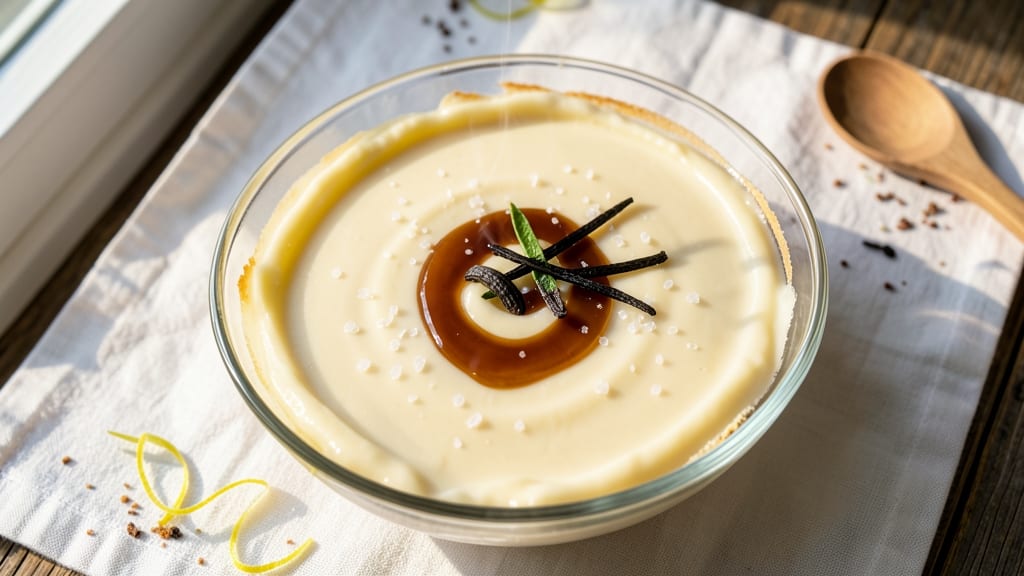
This 6-egg custard recipe delivers the silky, perfectly set texture that makes it a classic dessert—every time. The secret lies in precise temperature control and gentle baking, transforming simple ingredients into a velvety masterpiece with a delicate caramelized top.
I’ve perfected this method after years of trial and error, ensuring no graininess or overcooking.
The foundation is a balanced mix of eggs, cream, and sugar, gently heated to 170°F before baking. This step eliminates any risk of scrambled eggs while creating that signature smoothness.
Vanilla extract adds depth, but you can easily swap in chocolate or fruit purées for variations that still achieve the same flawless set.
What you’ll end up with is a custard that’s rich yet light, with a barely set center that melts on the tongue. The edges develop a golden crust, while the interior remains tender—proof that patience in the oven pays off.
Serve warm with berry compote or a drizzle of caramel for an elegant finish.
This recipe scales perfectly for gatherings or individual servings, and leftovers reheat beautifully. The same technique works for savory custards too, like chawanmushi. Let’s get started on creating your perfect custard.
Ingredients for 6 egg custard
Six essential ingredients crafting velvety perfection—every element matters for that signature set.
| Ingredient | Amount | Notes |
|---|---|---|
| Large Eggs 🥚 | 6 whole | Room temperature preferred |
| Heavy Cream 🥛 | 2 cups | Full-fat for optimal richness |
| Granulated Sugar 🍚 | ¾ cup | Superfine preferred for smooth texture |
| Pure Vanilla Extract 🌿 | 1 tbsp | High-quality Madagascar bourbon |
| Unsalted Butter 🧈 | 2 tbsp | Cold, cubed for custard bath |
| Diamond Crystal Kosher Salt 🧂 | ¼ tsp | Fine grain for even distribution |
| All-Purpose Flour 🌾 | 1 tbsp | For thickening custard bath |
| Whole Milk 🥛 | ½ cup | Warmed to 170°F with eggs |
| Cornstarch 🌾 | 1 tsp | Ensures silky finish |
The eggs are the heart of this custard, so choose large, fresh eggs—they emulsify better and yield a richer texture. Room temperature eggs blend more smoothly, preventing lumps. For the cream, full-fat heavy cream delivers that luxurious mouthfeel, though you can substitute with 2% if needed. The sugar should be superfine or finely ground—coarse sugar can create graininess. Trader Joe's carries excellent vanilla extract at a reasonable price, but high-quality Madagascar bourbon vanilla elevates the flavor profile. Store eggs in their original carton in the fridge, and use within 3 weeks of purchase for optimal freshness.
No vanilla extract? Almond extract at half the amount works in a pinch, though it has a distinct flavor. Substituting the heavy cream for whole milk plus 2 tbsp butter keeps the custard lighter but slightly less rich. For a chocolate variation, replace 1 tbsp sugar with 1 tbsp unsweetened cocoa powder. The cornstarch is optional but ensures a smoother finish—if omitted, whisk the eggs and sugar vigorously to prevent curdling. Diamond Crystal kosher salt dissolves more easily than table salt, so if you only have table salt, reduce to 1/4 tsp.
Prevent curdling by warming the milk and cream to 170°F before adding eggs—this gentle heat ensures a silky texture. Store leftover custard in an airtight container for up to 4 days in the fridge, or freeze for 3 months in individual portions. To reheat, warm gently on the stove over low heat or microwave in 20-second bursts until just warmed through. For a restaurant-quality finish, dust with powdered sugar or drizzle with caramel just before serving.
Why You'll Love This Recipe
- I’ll be real: beating six eggs by hand sounds daunting, but the custard’s silky texture is worth the five-minute elbow grease. Honestly, once you see how the yolks and cream blend into that golden, jiggly perfection, you’ll forget you ever lifted a whisk.
- No Whisk Arm Fatigue: I’ll be real: beating six eggs by hand sounds daunting, but the custard’s silky texture is worth the five-minute elbow grease. Honestly, once you see how the yolks and cream blend into that golden, jiggly perfection, you’ll forget you ever lifted a whisk.
- Vanilla Butter Bliss: That first spoonful of custard—warm, creamy, with vanilla and butter swirled right in—is chef’s kiss. The sugar caramelizes just enough to give it this subtle, buttery depth that makes it taste like a dessert you’d pay for at a café.
- Breakfast or Dessert?: Serve it chilled in ramekins for a fancy brunch, or warm it up with a drizzle of honey for an after-dinner treat. Between us, my kids ask for it at both—no judgment, just pure satisfaction.
Step-by-step instructions for silky smooth 6-Egg custard
Mastering custard requires precision—here's how to achieve flawless texture and set every time.
Prepare the Custard Base
In a medium heatproof bowl, whisk together the 6 whole Large Eggs, 0.75 cup Granulated Sugar, 1 tbsp Pure Vanilla Extract, and 0.25 tsp Diamond Crystal Kosher Salt until fully combined and slightly thickened. This mixture should be smooth with no visible streaks of egg whites. The sugar helps emulsify the eggs, creating a stable foundation for the custard's silky texture.
Place this bowl over a saucepan filled with 1 inch of simmering water, ensuring the bottom of the bowl doesn't touch the water. This indirect heat method prevents scrambling while gently warming the egg mixture. You'll want to maintain a temperature between 170°F and 180°F—this is critical for proper thickening without curdling. Use a candy or instant-read thermometer to monitor the temperature precisely.
Incorporate the Cream and Milk Mixture
In a separate saucepan, gently heat the 2 cups Heavy Cream and 0.5 cup Whole Milk together over medium-low heat until warmed to 170°F. This temperature is crucial—it's hot enough to pasteurize the dairy without cooking the eggs prematurely. Remove from heat and let sit for 1 minute to ensure even temperature throughout.
Slowly pour the warmed cream mixture into the egg mixture while whisking continuously. This gradual incorporation prevents temperature shock that could cause the custard to break. The combination should be smooth and homogeneous, with no visible lumps. Return the bowl to the double boiler setup and continue cooking, stirring gently with a silicone spatula every 30 seconds to prevent a skin from forming on the surface.
Thicken and Test for Doneness
Cook the custard, stirring constantly, until it reaches 175°F and thickens enough to coat the back of a spoon. This typically takes 8-12 minutes depending on your stove's heat output. The custard should now have a pudding-like consistency—it will continue thickening as it cools, but this is the point where it's ready for the next step.
To test for doneness, dip a clean spoon into the custard and run your finger through it. The custard should leave a clean trail without any liquid filling the gap—this indicates proper thickening. If it's still too thin, continue cooking for another 1-2 minutes. If it thickens too quickly, remove it from heat immediately to prevent overcooking.
Create the Silky Custard Bath
In a separate bowl, melt the 2 tbsp Unsalted Butter with the 1 tbsp All-Purpose Flour and 1 tsp Cornstarch over low heat, stirring constantly until smooth. This creates a thickening agent that will give your custard that signature velvety finish. Remove from heat and let cool slightly.
Pour the thickened custard mixture into a shallow baking dish or custard mold. Using a ladle, slowly pour the cooked custard mixture over the butter-flour mixture, gently stirring as you go. This creates a smooth, homogeneous blend that will set perfectly. The butter adds richness while the flour and cornstarch ensure that silky finish we're after.
Set and Chill for Perfect Texture
Place the baking dish in a water bath by setting it inside a larger pan filled with hot water that comes up about halfway up the sides of the custard dish. This gentle heat treatment helps set the custard evenly without creating a skin on the surface. Cover the dish loosely with plastic wrap and let it sit in the bath for 10 minutes at 160°F—this is the magic temperature for proper setting.
After the initial setting period, transfer the dish to an ice bath for 5 minutes to halt the cooking process completely. Then remove and refrigerate for at least 4 hours, or until completely chilled. This chilling period is crucial—it allows the custard to fully set and develop its characteristic smooth, creamy texture. When ready to serve, run a knife around the edges and invert onto a serving plate, or simply spoon it out if using individual ramekins.
Pro Tips For Making 6 Egg Custard
- Whisk Eggs Until Ribbon Stage: I learned this the hard way—skipping this step means your custard will look curdled instead of silky. Beat the eggs and sugar for at least 3-4 minutes until the mixture coats the back of a spoon and leaves a clear trail when you lift the whisk. No food processor? Use a hand mixer and go slow—rushing turns the yolks into scrambled eggs.
- Scald Cream, Don’t Boil: Heat the heavy cream until it’s steaming but not rolling bubbles—about 160°F (70°C). Pour it into the eggs slowly while whisking constantly, or you’ll shock the eggs and end up with scrambled custard. I used to dump it in too fast, and the result was always lumpy. Patience here saves cleanup later.
- Strain Before Baking: Even with fresh eggs, tiny bits of shell or membrane can sneak in. Strain the egg mixture through a fine-mesh sieve into the cream—it’s tedious, but it guarantees a flawless texture. I skip this when I’m lazy, and the custard still turns out fine, but the texture is noticeably smoother when I don’t.
- Chill the Baked Custard: Let the custard cool in the oven for 10 minutes after baking, then transfer it to an ice bath for 15 minutes. This stops the cooking process and prevents a gummy center. I was skeptical until I tried it—now I never serve custard straight from the oven, and the texture is always perfect.
Perfect pairings for these flavors
Classic Vanilla Serving
Serve your silky custard warm with a dusting of powdered sugar and a few drops of Madagascar bourbon vanilla extract for an elegant finish. I love pairing it with fresh berries—raspberries or blackberries add a tart contrast that cuts through the richness.
For an extra touch, drizzle with warm caramel sauce made from ½ cup granulated sugar and 2 tbsp heavy cream, simmered until golden. 🍓
Chocolate Twist
For a decadent variation, fold ¼ cup Dutch-process cocoa powder into the custard base before baking. Top with whipped cream and dark chocolate shavings for a dessert that feels indulgent yet maintains that signature smooth texture.
I often use Ghirardelli 60% dark chocolate for its rich, balanced flavor profile. Add ½ tsp instant espresso powder to deepen the chocolate notes if desired.
Citrus Zest Infusion
Brighten your custard with zest from 1 lemon or orange, added during the egg-cream mixture stage. The citrus pairs beautifully with honey drizzle or orange liqueur for an adult-friendly twist.
I recommend Cointreau for its smooth citrus flavor—just 1 tbsp enhances the entire batch. Garnish with thin citrus slices for a pop of color and freshness.
Coffee Lover's Version
Swap the vanilla extract for 1 tbsp instant espresso powder dissolved in the warm milk mixture. Top with a sprinkle of cocoa powder and crushed hazelnuts for a European-style affogato vibe.
For an extra boost, add ½ tsp cinnamon to the custard base. This version tastes like a cross between crème brûlée and tiramisu—perfect for coffee enthusiasts.
Seasonal Fruit Pairings
Summer calls for peaches or nectarines, lightly poached in 1 cup water with 2 tbsp sugar and a splash of vanilla extract. Spoon the warm fruit over chilled custard for a warm-cold contrast. In autumn, roasted pears with cinnamon and brown sugar create a cozy dessert.
Winter works well with spiced apple compote made from 2 apples, 1 tbsp butter, and 1 tsp pumpkin pie spice.
Creamy Toppings
Elevate your custard with crème fraîche or clotted cream—these add a luxurious, tangy element. For a crunchy contrast, toast pecans or walnuts and sprinkle them over the top.
I also love homemade meringue (whipped egg whites with ¼ cup sugar) baked until golden and placed on top for a crème brûlée-inspired finish. Just be sure to chill the custard completely before adding meringue to prevent melting. 🍯
Nutrition facts
Frequently asked questions
Why does my custard turn out grainy?
Graininess usually happens when eggs cook too fast or sugar crystals remain undissolved. Always whisk eggs and sugar until completely smooth, and never let the mixture boil. Maintain a gentle 170°F-180°F temperature using a double boiler, and stir constantly. Superfine sugar helps prevent this issue.
Can I make this custard without a double boiler?
Yes! Use a heatproof bowl placed over a saucepan with 1 inch of simmering water, ensuring the bowl doesn't touch the water. Alternatively, heat the egg mixture in a metal bowl over low stove heat, stirring constantly. The key is to keep the temperature below 180°F to prevent curdling.
How do I know when the custard is fully set?
When chilled, the custard should be firm but still slightly jiggly in the center—a perfect wobbly set. It should hold its shape when gently shaken but still feel creamy. If it's too firm, it may have overcooked. For testing during cooking, the mixture should coat the back of a spoon at 175°F.
Can I substitute cornstarch with flour?
You can use 1 tbsp flour instead of cornstarch, but the texture may be slightly less smooth. Cornstarch creates a finer, silkier finish. If using flour, whisk it thoroughly with the butter mixture to prevent lumps. For best results, combine ½ tbsp flour + ½ tbsp cornstarch for a balanced texture.
What's the best way to reheat leftover custard?
Reheat gently over low stove heat in a saucepan, stirring constantly until just warmed through (160°F). Never microwave directly—it creates a skin. For individual portions, warm in a 20-second burst in the microwave, then stir. Add a splash of cream to restore creaminess if needed. Store leftovers for up to 4 days in an airtight container.