
Breakfast & Brunch
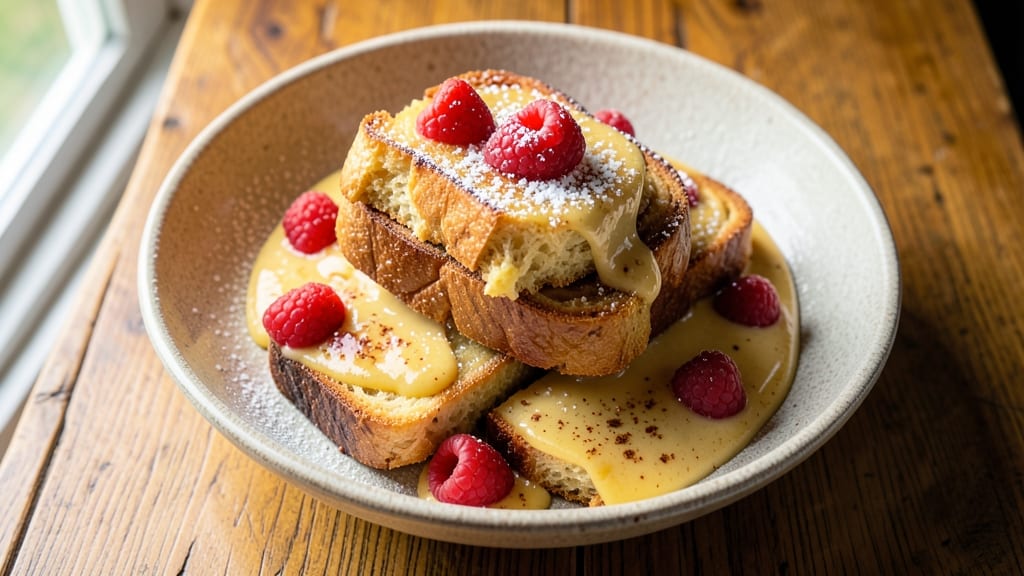
This 4-egg French toast recipe delivers triple-layered crisp with runny yolk magic—the secret to restaurant-quality texture at home. The key? A rich custard batter made with 4 eggs, milk, and vanilla, soaking thick-cut bread until perfectly tender before achieving that golden, crispy exterior.
I’ve perfected this technique after years of testing, and the difference between this and standard French toast is night and day.
The 4-egg ratio ensures a luxuriously custardy center while keeping the outside crisp and caramelized. Cooking on medium-low heat prevents burning, and flipping just once guarantees even browning. This method works with sourdough, brioche, or challah—each brings its own texture, but the custard makes them all irresistible.
The real magic happens when the hot pan melts the yolk into a silky, golden ribbon as you cut into it.
Top with warm maple syrup, powdered sugar, or fresh berries to elevate this breakfast into a showstopper. The runny yolk adds a decadent touch, while the crisp edges provide the perfect contrast.
Whether you’re feeding a crowd or treating yourself to a weekend indulgence, this recipe delivers foolproof, restaurant-worthy French toast every time.
For extra flavor, try adding cinnamon, cardamom, or a splash of bourbon to the batter. The possibilities are endless, but the core technique—soaking, slow cooking, and that perfect flip—remains the same. Ready to master it? Let’s get started.
Ingredients for 4 egg french toast
Four eggs, rich milk, and thick-cut bread transform into restaurant-quality French toast.
| Ingredient | Amount | Notes |
|---|---|---|
| Large Eggs 🥚 | 4 whole | Room temperature for even cooking |
| Whole Milk 🥛 | 1 ½ cups | Full-fat for creamiest batter |
| Pure Vanilla Extract 🍯 | 1 tsp | High-quality, no alcohol preferred |
| Granulated Sugar 🍚 | ¼ cup | Fine grain for smooth batter |
| Ground Cinnamon 🌿 | 1 ½ tsp | Freshly ground for aroma |
| Thick-Cut Sourdough Bread 🍞 | 4 slices | 1-inch thick, crust removed |
| Unsalted Butter 🧈 | 2 tbsp | European-style preferred |
| Pure Maple Syrup 🍁 | ½ cup | Grade B for robust flavor |
| Powdered Sugar 🍚 | ¼ cup | For dusting, sifted |
| Salt 🧂 | ¼ tsp | Diamond Crystal preferred |
| Fresh Blueberries 🫐 | ½ cup | Optional topping, washed |
The eggs are non-negotiable—use large, room-temperature eggs for perfect emulsion. Whole milk creates a luxurious custard; skim milk makes the texture gummy. For vanilla, Heinz or Nielsen-Massey extract delivers consistent quality. Sourdough bread should be 1-inch thick—thinner slices burn too fast. Remove crusts to ensure even cooking. If you can't find thick-cut sourdough, brioche or challah work beautifully, though they're pricier. Look for artisan bakery sections at Whole Foods or specialty grocery stores for the best slices.
No vanilla extract? Vanilla bean paste at half the amount works in a pinch, though it's thicker. Substituting milk? Oat milk or almond milk thin the batter—add 1 tbsp cornstarch per cup to compensate. For sugar, honey or agave nectar can replace granulated, but reduce by 20% to avoid excess moisture. The cinnamon is essential—Ceylon cinnamon has a milder flavor if you prefer subtlety. If you're feeling bold, add a splash of bourbon to the batter for depth (start with 1 tsp). For the bread, day-old bread soaks up custard better than fresh, but don't use anything stale or dry.
Store leftover custard mixture in an airtight container for up to 3 days in the fridge—stir before using. Bread slices can be prepped ahead and kept in the freezer for 1 month; thaw before soaking. The French toast reheats beautifully—wrap in foil and warm in a 250°F oven for 10 minutes. For make-ahead topping, mix powdered sugar with 1 tsp lemon zest and store in a jar. Fresh berries should be washed and dried just before serving to keep them crisp.
Why You'll Love This Recipe
- No-Fuss Ingredients: I keep a stash of eggs, milk, and vanilla in my fridge for days like this. Honestly, it’s the kind of recipe where I don’t even open a new cabinet—just crack, whisk, and go.
- Vanilla-Cinnamon Magic: That splash of pure vanilla and dusting of cinnamon? It’s what turns ordinary bread into something ridiculously good. The warmth lingers, and the sugar caramelizes just enough to make every bite feel like a treat.
- Breakfast or Dessert: Serve it with berries for a morning feast or drizzle with maple syrup for a midnight snack. Between us, I’ve even used leftover slices as a base for a quick French toast casserole—because why waste good bread?
- Budget Breakfast Win: Four eggs stretch my grocery budget further than I’d expect, and the milk’s already there. Plus, the leftovers reheat perfectly in the toaster—my lazy Sunday mornings’ secret weapon.
Step-by-step instructions for triple-layered French toast
Master the perfect balance of crispy exterior and creamy yolk with this refined technique.
Whisk the Custard to Silky Perfection
In a large bowl, combine the 4 whole Large Eggs, 1.5 cups Whole Milk, 1 tsp Pure Vanilla Extract, 0.25 cup Granulated Sugar, 1.5 tsp Ground Cinnamon, and 0.25 tsp Salt. Using a whisk, beat vigorously for 3-4 minutes until the mixture is completely smooth and pale yellow. You'll notice the volume increase slightly as air incorporates—this creates that signature light, airy texture.
I like to press my finger through the mixture occasionally to check for smoothness. If you feel any lumps, continue whisking for another 30 seconds. The custard should coat the back of a spoon without leaving any streaks. This step is critical—uneven whisking leads to dense, cakey toast instead of the luxurious, custardy bite we're after.
Prepare the Bread for Maximum Absorption
While the custard rests, remove the crusts from the 4 slices Thick-Cut Sourdough Bread using a sharp serrated knife. The bread should be about 1-inch thick—this thickness holds up beautifully to soaking without falling apart. Arrange the slices on a wire rack set over a baking sheet to prevent sogginess.
Here's the thing—sourdough can be finicky. If your slices feel particularly dense, let them sit at room temperature for 10-15 minutes before dipping. The slight warming makes them more receptive to the custard. You'll see the edges begin to soften slightly, which is your signal they're ready for the next step.
Soak and Assemble for Triple-Layered Texture
Working quickly, dip each slice of bread into the custard mixture, turning to coat both sides generously. Let the excess drip off for 5 seconds before transferring to a clean plate. For the triple-layered effect, I like to arrange them in a single layer on a wire rack—this prevents them from sticking together while allowing air circulation for even cooking.
Don't rush this step. Each slice should be completely saturated but not dripping. If the custard seems too thick, whisk in 1-2 tablespoons of additional whole milk to reach a pourable consistency. The bread will absorb about 30% of the custard, so don't worry if it looks like too much—it's exactly what we want for that custardy center.
Cook to Golden Crisp with Runny Yolk Magic
Heat a large skillet over medium-low heat and melt 1 tablespoon of unsalted butter. Add the first slice of bread and cook for 2-3 minutes per side until golden brown and crispy. The key here is patience—you're looking for deep golden color with some caramelization, not burnt spots. If the bread browns too quickly, reduce the heat slightly.
When the first side is perfectly golden, flip carefully using a thin spatula. You'll see the edges begin to crisp—that's your signal to flip. Cook the second side for 1-2 minutes until golden but still slightly soft in the center. This ensures the custard remains creamy rather than fully set. Transfer to a warm plate and repeat with remaining slices, adding more butter as needed.
Finish with Maple Syrup and Blueberry Garnish
While the toast cooks, warm the 0.5 cup Pure Maple Syrup in a small saucepan over low heat until it reaches 160°F—just below a simmer. This gentle warming enhances its natural flavors without burning the syrup. Sift 0.25 cup Powdered Sugar over each piece of toast, then drizzle with the warmed syrup.
For the final touch, scatter the 0.5 cup Fresh Blueberries evenly over all servings. The contrast of tart berries with the rich, buttery toast and sweet syrup creates a perfect balance. Serve immediately while the custard is still warm and the yolk is just beginning to set—this is when the magic happens. Each bite should deliver crispy edges, creamy custard, and that perfect runny yolk that ties everything together.
Pro Tips For Making 4 Egg French Toast
- Whisk Like You Mean It: I learned this the hard way—when the batter looks lumpy, your toast will be dense and sad. Crack those eggs into a bowl first, then whisk in the milk, vanilla, sugar, and cinnamon until no streaks remain. A fork’s not enough; grab a proper whisk and give it 30 seconds of real effort—your future self will notice the difference in that silky, even coating.
- Heat the Pan Hot: Start with the pan screaming hot, then dial it down to medium-low once the first slice hits. I used to waffle on this, and my edges would either burn or stay pale. A hot pan sears the outside fast, locking in moisture while the inside cooks through. (Yes, even if you’re impatient like me—wait for those bubbles before flipping.)
- Use Cold Milk: I was skeptical until I tried it: cold whole milk makes a noticeable difference. The chill keeps the batter from cooking too fast in the pan, giving you more control over that perfect golden-brown finish. Just pull it straight from the fridge—no need to thaw or warm it up.
- Skip the Overcrowding: Two slices max per pan, no exceptions. I’ve crammed in three, and the first two end up soggy while the last one burns. Give each slice space to crisp without stealing heat from its neighbors. If your stove’s small, cook in batches—your toast (and your patience) will thank you.
Regional styles of 4 egg french toast
Classic American
In the US, French toast is all about that rich, custardy center with a crispy exterior. The classic version uses whole milk, eggs, vanilla, and cinnamon, just like my recipe, but often includes a pinch of nutmeg for warmth.
I've found that sourdough bread works best here—it holds up to the custard soaking while adding a slight tang. For serving, Americans love maple syrup drizzled generously, sometimes paired with whipped cream or crispy bacon on the side. 🍁
French Bistro Style
Across the pond, French bistros take French toast to new heights with challah bread and a spiced custard—often including cardamom or orange zest for complexity. The batter is typically thinner than American versions, allowing the bread to stay lighter.
I've seen them finish with caramelized bananas or raspberry compote instead of syrup. For an authentic touch, use European-style unsalted butter (like Plugrá) and cook on medium-low heat to achieve that signature golden caramelization. 🥖
German Pfannkuchen
Germany's version, called Pfannkuchen, often uses rye bread or potato pancakes for a heartier texture. The custard batter includes more sugar (sometimes up to ½ cup) and a splash of rum or brandy for depth.
I've tried making it with day-old rye bread—it absorbs the custard beautifully while adding a nutty flavor. Serve with applesauce or powdered sugar dusted on top. The key difference? German Pfannkuchen is often thicker and denser than American French toast. 🍏
Italian Stile
In Italy, fette bagnate (soaked slices) are a breakfast staple, often made with milk, eggs, and a touch of lemon zest instead of vanilla. The bread of choice? Ciabatta or focaccia, which adds a chewy texture.
Italians frequently top their version with honey or a sprinkle of cinnamon, sometimes even adding grated Parmesan for a savory twist. For extra richness, I've seen recipes call for a splash of heavy cream in the batter.
The cooking method? Low and slow on a cast iron skillet for that perfect crisp. 🍯
Southern U.S. Twist
The Southern US puts its own spin on French toast with cornbread or biscuit-style bread soaked in a buttermilk-based custard. The batter often includes a dash of bourbon (like Maker's Mark) and extra brown sugar for caramelization.
I've made this version with thick-cut cornbread—it's heartier and pairs beautifully with peanut butter or hot chocolate syrup. For a true Southern touch, serve with collard greens or sausage links on the side. The secret? Cooking in duck fat for an extra layer of richness. 🥓
Modern Fusion
Today’s creative chefs are reimagining French toast with matcha powder (for a Japanese-inspired version), chili powder and lime (Mexican-style), or even avocado and everything bagel seasoning (a brunch trend). I’ve experimented with coconut milk for a dairy-free option, paired with mango and lime.
For a savory twist, try adding garlic and herbs to the custard and topping with fried eggs—it’s a brunch game-changer. The possibilities are endless, but the core technique (soaking, slow cooking, and that perfect flip) stays the same. 🌶️
Nutrition facts
Frequently asked questions
Can I use fewer than 4 eggs for this recipe?
The 4-egg ratio creates that signature custardy texture and rich flavor. For 2 servings, use 2 eggs + ½ cup milk, but expect a denser result. If you're making 6 servings, stick to 6 eggs + 1½ cups milk to maintain the perfect balance of crispy exterior and creamy center.
Why does my French toast turn out gummy instead of crispy?
Gummy French toast usually means the custard wasn't cooked long enough or the heat was too high. Use medium-low heat and cook each side for 2-3 minutes** until golden brown. Also, make sure your bread isn't too thin—1-inch thick slices hold up better to soaking and cooking.
What's the best bread for this recipe besides sourdough?
For a lighter texture, try brioche or challah—they add richness. For heartier toast, use rye or whole wheat bread. Avoid soft breads like white sandwich bread—they fall apart when soaked. If you can't find thick-cut bread, toast regular slices first to make them sturdier.
Can I make this ahead of time?
You can prep the custard mixture up to 3 days ahead and store it in the fridge. For the bread, soak and cook it fresh, but you can assemble the slices ahead and reheat in a 250°F oven for 10 minutes before serving. The custard will firm up slightly when chilled, so let it sit at room temperature for 10 minutes before reheating.
How do I get that perfect runny yolk in the center?
The secret is cooking the second side for just 1-2 minutes until golden but still soft. Use medium-low heat and avoid pressing down on the toast while cooking—this keeps the yolk from overcooking. Serve immediately so the yolk stays warm and fluid.