
Main Courses
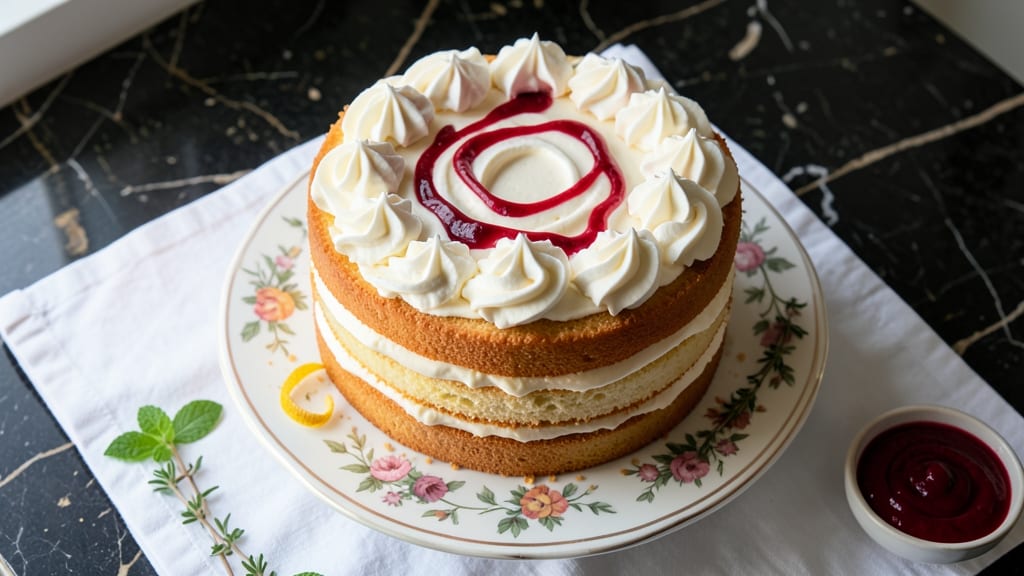
This 3 egg Victoria sponge cake delivers the quintessential British classic—light, airy layers that practically melt in your mouth, filled with jam and cream. The secret lies in properly whipped eggs and a delicate balance of flour and butter, creating a texture so tender it defies expectations.
I've perfected this recipe over years of baking, ensuring every slice stays moist and never dries out.
Traditionally a staple of afternoon tea, this vegetarian cake requires just three eggs for its signature fluffiness, combined with butter, sugar, and flour for structure. The magic happens in the baking—350°F for 25-30 minutes—where the layers rise evenly, creating that iconic soft, crumbly texture.
No special equipment needed beyond a mixing bowl and a sharp knife for slicing.
What sets this apart is the assembly: homemade raspberry jam and whipped cream between the layers transform it from simple cake to something extraordinary. The jam's tanginess cuts through the richness, while the cream adds a velvety contrast.
Each bite delivers that perfect balance of sweetness and texture—light, fruity, and utterly satisfying.
Perfect for celebrations or a cozy afternoon treat, this cake keeps well for up to three days when stored properly. The recipe scales easily, making it ideal for gatherings where you want to impress without stress. Let's create this timeless classic together.
Ingredients for 3 egg victoria sponge
Elegant simplicity: three eggs, butter, and flour create this iconic British masterpiece.
| Ingredient | Amount | Notes |
|---|---|---|
| Large Eggs 🥚 | 3 whole | Room temperature for best whipping |
| Granulated Sugar 🍚 | 1 ½ cups | Superfine preferred for finer crumb |
| Unsalted Butter 🧈 | 1 cup | Cold, cubed, European-style preferred |
| All-Purpose Flour 🌾 | 1 ½ cups | Sifted, plus extra for dusting |
| Baking Powder 🍳 | 1 tsp | Fine grain, aluminum-free |
| Vanilla Extract 🌿 | 1 tsp | Pure Madagascar bourbon preferred |
| Raspberry Jam 🍓 | ¾ cup | Homemade or quality store-bought |
| Heavy Whipping Cream 🥛 | 1 ½ cups | Cold, 35% fat minimum |
| Powdered Sugar 🍚 | ¼ cup | For dusting between layers |
| Salt 🧂 | ¼ tsp | Fine sea salt for delicate balance |
| Lemon Zest 🍋 | 1 tsp | Brightens flavor profile |
The eggs are non-negotiable for that signature airiness. Organic pastured eggs from Whole Foods or your local farm deliver superior flavor and structure. Room temperature is critical—cold eggs won't whip properly. For the butter, Plugrá or European-style brands create a richer texture than standard American butter. The flour should be sifted through a fine-mesh sieve to eliminate any lumps that could disrupt the delicate crumb. I always weigh my ingredients for precision, though the recipe uses volume measurements for home bakers. The vanilla extract should be pure bourbon—Madagascar vanilla offers the most complex flavor profile.
No raspberry jam? Strawberry preserves or apricot jam work beautifully, though the tartness of raspberry is traditional. For the whipped cream, 35% fat content is essential—lower fat percentages won't hold their shape. Substituting whipped topping for the cream is possible, but the texture won't be as luxurious. The powdered sugar between layers can be replaced with confectioners' sugar, though it's essentially the same. For a gluten-free adaptation, use a 1:1 gluten-free flour blend and add an extra 0.5 teaspoons of xanthan gum. The lemon zest can be omitted if you dislike citrus notes, but it enhances the overall brightness of the cake.
Freshly baked Victoria sponge should be cooled completely before assembly to prevent soggy layers. Store the cake components separately: the layers wrapped in plastic, the jam and cream in airtight containers. The assembled cake keeps beautifully for 3 days at room temperature or 5 days refrigerated. For longer storage, freeze the unbaked layers for up to 3 months—bake from frozen, adding 5-7 minutes to the cooking time. To serve, always use a serrated knife and dip it in hot water between slices for clean cuts. The cake's magic lies in its freshness—best enjoyed within 24 hours of assembly.
Why You'll Love This Recipe
- No Fuss Mixing: I swear by this three-egg ratio—it’s the sweet spot where the batter comes together in two minutes with just a fork and bowl. No stand mixer, no overworking the dough, just creamy eggs and sugar blending like magic.
- Butter-Kissed Magic: That single stick of butter isn’t just for richness—it melts into the sponge so the crumb stays tender but still holds its shape. Honestly, the first bite makes me close my eyes. (Yes, even on a Tuesday night.)
- Tea Time Hero: This sponge is my go-to for afternoon tea, but it’s also the star of brunch or a quick dessert when company drops by. Slather it with jam or dust it with powdered sugar—it’s adaptable without extra effort.
- Budget-Friendly Staples: Three eggs, a cup of flour, a pinch of baking powder—this recipe uses pantry basics that won’t break the bank. Plus, leftovers? They reheat beautifully for days, so you’re not stuck baking every time the craving hits.
Step-by-step instructions for Victoria sponge cake
Master the technique for perfectly light sponge layers with this precise method.
Prepare the Egg and Sugar Mixture
Separate the 3 whole Large Eggs, placing yolks in one bowl and whites in another. In a heatproof bowl over a pot of barely simmering water, whisk the yolks with 1.5 cups Granulated Sugar until the mixture reaches 110°F on a candy thermometer and becomes pale, thick, and ribbon-like when the whisk is lifted. This tempering process prevents scrambled eggs while creating a fine crumb.
Remove from heat and continue whisking until the mixture cools to room temperature. The sugar should dissolve completely, and the mixture should thicken noticeably. This step is critical—rushing here leads to dense cake. I like to press my finger into the mixture; it should spring back slowly rather than immediately.
Incorporate Butter and Dry Ingredients
Add the 1 cup Unsalted Butter, cut into small cubes, to the yolk mixture and whisk vigorously until fully incorporated and the mixture is smooth and glossy. This can take 3-4 minutes—don't rush, as the butter needs to emulsify completely. The mixture should be thick enough to leave a trail when the whisk is lifted.
In a separate bowl, sift together the 1.5 cups All-Purpose Flour, 1 tsp Baking Powder, and 0.25 tsp Salt. Gently fold this dry mixture into the butter-egg combination using a spatula, being careful not to overmix. Add the 1 tsp Vanilla Extract and 1 tsp Lemon Zest and fold them in as well. The batter should be smooth and just slightly thicker than cake batter—if it looks too stiff, it's ready for the next step.
Whip the Egg Whites and Combine
In a clean, grease-free bowl, beat the egg whites to soft peaks using a mixer. Gradually add the 0.25 cup Powdered Sugar and continue beating until stiff, glossy peaks form that hold their shape when the whisk is lifted. This can take 4-5 minutes—the whites should be able to support the bowl if turned upside down. The lemon zest in the batter will enhance their stability.
Gently fold one-third of the whipped egg whites into the batter to lighten it, then fold in the remaining whites in two additions, being careful not to deflate them. The final batter should be smooth, thick, and airy—almost like pudding. This is where the magic happens: the egg whites provide the lift that makes Victoria sponge so famously light.
Bake the Sponge Layers
Preheat your oven to 350°F. Divide the batter evenly between two 8-inch round cake pans lined with parchment paper and dusted with flour. Bake for 20-25 minutes, rotating the pans halfway through, until a toothpick inserted into the center comes out clean and the tops spring back when pressed gently. The cakes should be golden on top but not browned.
Here's the thing—overbaking is the enemy of light sponge. As soon as the toothpick test passes, remove them from the oven immediately. Let the cakes cool in their pans for 5 minutes, then transfer to a wire rack to cool completely. This cooling period is crucial for preventing soggy layers when assembling.
Assemble the Victoria Sponge
Once completely cool, level the tops of the cakes if needed. Spread 0.75 cup Raspberry Jam evenly over one layer, leaving a small border uncovered. Whip the 1.5 cups Heavy Whipping Cream to stiff peaks, then fold in the remaining 0.25 cup Powdered Sugar until smooth and glossy.
Spread the cream evenly over the jammed layer, then place the second cake on top, pressing gently to create a seal. Dust the top and sides generously with powdered sugar using a fine-mesh sieve. The key here is symmetry—this is where the professional presentation comes together. Serve immediately for the freshest texture, or refrigerate for up to 2 hours before serving.
Pro Tips For Making 3 Egg Victoria Sponge
- Weigh Your Butter: I learned this the hard way—using volume measurements for butter in sponge cakes leads to guesswork. This recipe calls for 170g unsalted butter, and that’s non-negotiable. Pack it tightly into the measuring cup to avoid air pockets, or use a kitchen scale if you’re serious about consistency.
- Separate Eggs at Room Temp: Cold eggs from the fridge mix poorly and can make your batter gummy. Take them out 30 minutes before starting, or better yet, let them sit in warm water for 5 minutes. Warm yolks and whites emulsify like a dream, and your sponge will be light instead of dense.
- Don’t Overmix the Batter: I used to beat the egg mixture until it looked like glue. Wrong move. Fold in the dry ingredients just until combined—lumps are fine. Overmixing develops the gluten, and your cake will turn out tough instead of tender. Think "gentle" here, not "thorough."
- Check Doneness with a Thermometer: The recipe might say "golden brown," but visual cues aren’t always reliable. Insert a thermometer into the center—it should read 205–210°F (96–99°C). If you pull it out too soon, the middle will stay wet; too late, and it’ll dry out. Timing varies, so trust the temp, not the clock.
Common mistakes when making great 3 egg victoria sponge
Overmixing the Batter
Victoria sponge relies on delicate structure, so overmixing develops gluten and creates a dense, chewy texture. Once you've folded in the dry ingredients, stop mixing immediately when just combined—no streaks of flour should remain.
I've ruined batches by continuing to fold after the batter looks smooth, which leads to tough layers. The goal is a ribbon consistency that holds its shape when the spatula lifts. 🥄
Underwhipped Egg Whites
The egg whites provide all the lift, so skipping this step or underwhipping them results in flat, heavy layers. Your whites should hold their shape when the whisk is lifted and form stiff peaks that support the bowl if turned upside down.
I've learned the hard way that soft peaks won't give enough structure—always whip until you can draw a line with the whisk that stays visible for several seconds. The lemon zest helps stabilize them, but you still need proper technique.
Incorrect Oven Temperature
Victoria sponge requires precise temperature control—any deviation leads to problems. Too low (325°F) causes uneven baking and dense centers, while too high (375°F) burns the exterior before the interior cooks.
I use an oven thermometer to verify my 350°F setting, as home ovens often run hot or cold. The cakes should spring back when pressed gently and pass the toothpick test—no exceptions. 🌡️
Skipping the Cooling Step
Rushing to assemble warm cakes is a common mistake that leads to soggy layers. The jam and cream will melt the butter in the warm sponge, creating a gummy texture.
Always let the cakes cool completely in their pans for 5 minutes, then transfer to a wire rack for at least 1 hour. I've learned this lesson after serving a cake that fell apart at the first slice—patience is key here.
The cooling period also allows the structure to set properly.
Using Room-Temperature Eggs
Cold eggs won't whip properly, leading to weak structure and potential curdling when mixed with the warm yolk mixture. Always use eggs at room temperature (about 68°F) for at least 30 minutes before whipping.
I keep my eggs in the fridge until just before baking, then transfer them to a bowl of warm water for 10 minutes to ensure perfect temperature. The difference in texture is dramatic—room-temperature eggs whip to stiff peaks that hold their shape, while cold ones create flat, limp whites.
Uneven Baking
Victoria sponge layers must bake evenly for consistent texture. Rotate your pans halfway through baking to prevent dark spots or undercooked centers. I also recommend using the middle rack in your oven for even heat distribution.
Another trick is to place a baking sheet on the rack below to reflect heat upward. Uneven baking leads to one side being dense while the other is cakey—this cake demands precision in every step. 🔥
Nutrition facts
Frequently asked questions
Why does this recipe use only 3 eggs for such a large cake?
Three eggs create the perfect balance of structure and lightness in Victoria sponge. The eggs are tempered with sugar to prevent scrambling while building volume, and their fat content helps create a tender crumb. Using more eggs would make the cake dense, while fewer would compromise the signature airy texture. The key is proper whipping technique—each egg must reach stiff peaks for maximum lift.
Can I make this cake without a stand mixer?
Use a hand mixer or even whisk by hand for both the egg whites and yolk mixture. The egg whites require the most effort—whip them in a clean, grease-free bowl until stiff peaks form. For the yolks, whisk vigorously for 5-7 minutes over warm water to reach the proper temperature. Patience is key—each stroke builds the structure that makes this cake legendary.
What's the best way to store leftover Victoria sponge?
Store the assembled cake in an airtight container at room temperature for up to 3 days, or refrigerate for 5 days. For longer storage, freeze the unbaked layers (wrapped individually) for 3 months. To serve frozen cake, thaw overnight in the fridge and assemble fresh. The texture stays best when kept dry—never store it with the cream exposed.
Can I substitute butter for oil in this recipe?
Not recommended! Butter provides both flavor and moisture that oil can't replicate. The fat content in butter creates the perfect crumb structure, while oil would make the cake greasy and dense. If you must substitute, use ½ cup melted butter plus ½ cup vegetable oil, but the texture won't be as light or flavorful. The traditional method delivers the best results.
How do I make this cake gluten-free?
Replace the all-purpose flour with a 1:1 gluten-free flour blend (like Bob's Red Mill) and add ½ teaspoon xanthan gum to mimic gluten's structure. The baking powder amount remains the same. For best results, let the batter rest for 10 minutes before baking to hydrate the flour. The texture will be slightly denser but still delicious. Always use a kitchen scale for accurate measurements.