
Breakfast & Brunch
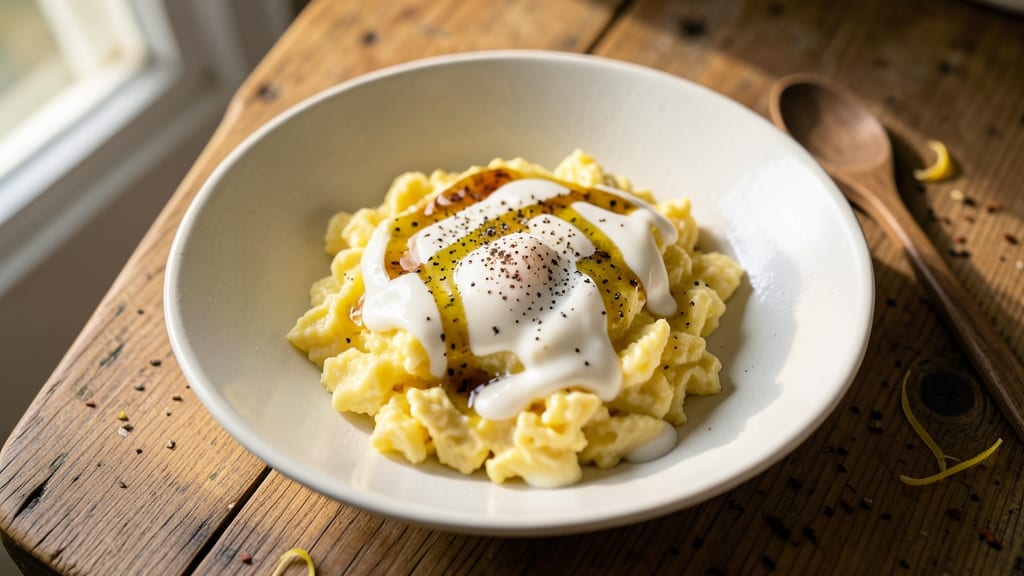
This 3-egg scrambled egg recipe delivers buttery fluff with that coveted runny yolk center every time—no rubbery texture in sight. The secret lies in precise heat control and constant motion, transforming simple eggs into a restaurant-worthy breakfast.
I've perfected this method after years of trial (and a few too many overcooked batches), and it now consistently delivers silky, creamy eggs with golden edges.
What makes this recipe foolproof is the technique: low-and-slow cooking on medium-low heat ensures tender eggs without drying them out. Quality butter adds richness that store-bought versions can't match, while a pinch of salt enhances every bite.
The result is eggs that are perfectly set on the outside while maintaining that luxurious, slightly runny center that makes each forkful worth the effort.
This versatile dish works for breakfast, brunch, or even a quick snack—pair it with toast, avocado, or fresh herbs for extra flavor. The high-protein content makes it ideal for meal prep or post-workout fuel, while the minimal ingredients keep it simple without sacrificing quality.
Whether you're feeding one or two, this recipe scales effortlessly while maintaining its signature texture.
For those watching their diet, this version is naturally vegetarian and packed with protein—no shortcuts, just perfectly cooked eggs that taste indulgent. The method adapts easily to add-ins like cheese, vegetables, or smoked salmon, making it customizable for any taste preference.
Let's get cooking—your ideal scrambled eggs are just minutes away.
Ingredients for 3 egg scrambled egg
Restaurant-quality scrambled eggs start with these seven essential ingredients—simple yet transformative.
| Ingredient | Amount | Notes |
|---|---|---|
| Large Eggs 🥚 | 3 whole | Freshly cracked, room temperature |
| Unsalted Butter 🧈 | 2 tbsp | European-style preferred for richness |
| Diamond Crystal Kosher Salt 🧂 | ¼ tsp | Fine grain for even distribution |
| Freshly Ground Black Pepper 🌶️ | ⅛ tsp | Cracked from whole peppercorns |
| Extra-Virgin Olive Oil 🫒 | ½ tsp | For non-stick finish if needed |
| Heavy Cream 🥛 | 1 tbsp | Optional for extra creaminess |
| Fresh Chives 🌿 | 1 tbsp | Chopped, for garnish |
The eggs are non-negotiable—farm-fresh from a local market or high-quality store-brand ensures optimal texture. For butter, European-style like Plugrá or Kerrygold melts smoothly without burning, creating that velvety finish. If you're using salted butter, omit the kosher salt or reduce to one-eighth teaspoon. The pepper should be freshly cracked for maximum aroma—pre-ground loses potency within weeks. For the olive oil, California Extra Virgin brands like Corto or Lucini work perfectly if you need extra slipperiness in your pan.
No heavy cream? Substitute with an extra tablespoon of butter—the fat content remains similar. Fresh chives can be swapped for green onions or parsley, though chives add a delicate oniony brightness. For a richer version, add a splash of whole milk (1 tablespoon) to the eggs before whipping. If your eggs are particularly runny when cracked, chill them slightly before cooking to tighten the proteins. The key to perfect scrambled eggs lies in the technique, but these ingredients set the foundation for success.
Eggs keep best at room temperature for 1-2 hours before cooking for even cooking. Store butter in a cool, dark place for up to 3 months, while fresh chives last 5-7 days in the fridge wrapped in damp paper towels. This recipe reheats beautifully—simply warm in a skillet over low heat with a splash of water or milk to restore moisture. For meal prep, cook the eggs just slightly underdone and finish them in the pan when serving to maintain that perfect runny center.
Why You'll Love This Recipe
- No-Fuss Mornings: I swear by this for days when I’m running late—just crack, whisk, and cook. The butter pools into little golden pockets while the eggs stay silky, and honestly? It’s the kind of breakfast that doesn’t judge if you eat it straight from the pan.
- Butter-Kissed Magic: That first bite of creamy eggs with crispy edges? The butter and olive oil combo makes it taste like a restaurant plate. I’ll be real: I’ve skipped toast for this alone, and my taste buds don’t regret it.
- Weeknight Flex: Throw it in a tortilla for breakfast burritos, serve it over toast for brunch, or pile it on avocado toast for a fancy-ish lunch. Three eggs stretch further than you’d think, and honestly? It’s the ultimate blank canvas for whatever you’re craving.
- Zero-Waste Win: Three eggs are the perfect portion—no leftovers to stress over, but enough to save me money without feeling like I’m skimping. Plus, the ingredients cost pennies, so my wallet and I both win. (Yes, even on a Tuesday night.)
Step-by-step instructions for 3 egg scrambled eggs
Master the delicate balance of texture and temperature for silky, runny-yolk perfection.
Whisk Eggs Until Fully Emulsified
Crack the 3 whole Large Eggs into a medium bowl, ensuring no shells slip in. Add the 0.25 tsp Diamond Crystal Kosher Salt and 0.125 tsp Freshly Ground Black Pepper immediately—this allows the seasoning to fully integrate. Using a fork or whisk, vigorously beat the eggs for 30 seconds until no streaks remain. The mixture should become noticeably lighter in color and slightly thicker in consistency.
For optimal results, I prefer room-temperature eggs—they scramble more evenly. If using cold eggs, let them sit at room temperature for 10 minutes before whisking. This step is critical for achieving uniform texture throughout the eggs. The emulsified mixture should coat the back of a spoon smoothly, indicating proper preparation.
Melt Butter on Low Heat
Place a non-stick skillet (8-inch diameter) over low heat and add the 2 tbsp Unsalted Butter. Allow it to melt completely, swirling the pan occasionally, until the butter foams but doesn't brown. This should take about 2 minutes. The butter should coat the entire pan surface evenly, creating a slippery, non-stick barrier that prevents the eggs from sticking.
European-style butter works best here due to its higher fat content, which creates a richer flavor and better texture. If you notice the butter starting to brown before the eggs are ready, reduce the heat slightly. The butter should be hot enough to coat a spoon but not smoking or changing color—this is your ideal cooking temperature.
Cook Eggs on Gentle Heat
Pour the whisked eggs into the skillet and let them sit undisturbed for 10-15 seconds until they begin to set at the edges. This initial waiting period allows the eggs to form a thin layer of curds along the pan's surface, which prevents them from sticking when you begin to stir. Use a silicone spatula to gently push the set edges toward the center, creating space for uncooked egg to flow underneath.
Continue stirring constantly in small circles, using the spatula to fold the eggs over themselves. The goal is to create soft, creamy curds rather than dry, rubbery ones. Remove the pan from heat when the eggs reach 150°F internally (use an instant-read thermometer) and the mixture has just begun to set but still appears slightly wet. This is the perfect moment—the eggs should be silky with a slight sheen, not fully cooked through.
Finish with Cream and Garnish
Return the pan to low heat and stir in the 1 tbsp Heavy Cream and 0.5 tsp Extra-Virgin Olive Oil. The cream will add luxurious richness while the olive oil ensures a non-stick finish. Continue stirring gently for 10-15 seconds until the cream is fully incorporated and the eggs reach 155°F. At this temperature, you'll achieve that coveted runny yolk texture in the center of each serving.
Remove from heat immediately and transfer to warmed plates. Garnish each serving with 1 tbsp Fresh Chives chopped into fine pieces. The chives add a bright, fresh contrast to the rich eggs and should be sprinkled evenly over the top. Serve immediately while the eggs are still warm and the yolk remains perfectly runny.
Pro Tips For Making 3 Egg Scrambled Egg
- Use Medium Heat—Not Low: I learned this the hard way—low heat makes scrambled eggs turn into glue. Crank the burner to medium (not high, or you’ll burn the butter) and keep the heat steady. The eggs should cook in 2-3 minutes, with just enough time to fold them gently before they’re done.
- Crack Eggs Directly Into the Pan: Skip the bowl. Crack the eggs straight into the hot, buttered pan—this prevents over-beating and keeps the yolks creamy. If you’re worried about shells, tap the egg gently against the edge of the pan first.
- Salt the Eggs Before Cooking: Adding salt at the end makes the eggs rubbery. Mix in ½ teaspoon of kosher salt with the eggs before they hit the pan. The salt dissolves evenly, and the eggs stay tender—no aftertaste, no texture issues.
- Finish with Olive Oil: Once the eggs are almost set, drizzle in ½ teaspoon of extra-virgin olive oil and stir once. It adds a silky finish and prevents dryness—no one will guess you didn’t use cream. (Yes, even if you’re impatient like me.)
Best sauces and condiments for this dish
Classic Hollandaise Sauce
This rich, buttery sauce elevates scrambled eggs to brunch-worthy status. Whisk 2 tbsp unsalted butter, 1 tbsp lemon juice, and 1 egg yolk over a double boiler until thickened to 160°F.
Drizzle over eggs just before serving—it melts beautifully into the creamy texture. For extra flair, add a pinch of cayenne pepper or white truffle oil to match the eggs' richness. 🍳
Spicy Sriracha Aioli
Mix 2 tbsp mayonnaise with 1 tsp sriracha, ½ tsp honey, and a squeeze of lime juice for a bold kick. Spread a thin layer on toasted sourdough before adding eggs, or dollop directly on top.
The heat cuts through the eggs' richness while adding a tangy contrast. I love this for a quick breakfast bowl with avocado slices.
Garlic-Herb Compound Butter
Blend 4 tbsp softened butter with 1 minced garlic clove, 1 tbsp chopped parsley, and ½ tsp lemon zest. Swirl dollops into the eggs during the final 30 seconds of cooking for pockets of garlicky goodness.
This works especially well with the heavy cream finish in the recipe—just fold it in gently at the end. 🧈
Smoky Chipotle Crema
Combine ¼ cup sour cream with 1 tsp adobo sauce (from canned chipotles) and ½ tsp lime juice. Let it sit for 10 minutes to meld flavors, then drizzle over eggs.
The smoky depth pairs perfectly with the eggs' buttery richness, especially if you add a sprinkle of crumbled queso fresco on top.
Sweet Maple-Glazed Option
For a breakfast dessert twist, drizzle 1 tsp pure maple syrup over the eggs in the final minute of cooking. The natural sweetness caramelizes slightly, creating a delicate glaze.
Finish with a pinch of flaky sea salt to balance the flavors. This works especially well with the chives garnish for a fresh-sweet contrast. 🍁
Nutrition facts
Frequently asked questions
Why do your scrambled eggs need to be cooked on low heat?
Low heat (medium-low) is crucial to prevent rubbery eggs. High heat causes the proteins to cook too quickly on the surface, creating a dry, grainy texture. The gentle heat allows the eggs to set gradually, forming soft curds while keeping the insides creamy. Think of it like melting butter—too much heat ruins the flavor and texture.
Can I make this recipe with 2 eggs instead of 3?
Just reduce the butter to 1.5 tablespoons and keep all other measurements the same. The technique remains identical—whisk, low heat, constant stirring. The 2-egg version works perfectly for a single serving or meal prep portions. Just adjust cooking time slightly (about 30 seconds less total).
What's the best way to reheat leftover scrambled eggs?
Reheat gently in a non-stick skillet over low heat with a splash of water or milk to restore moisture. Stir constantly for 1-2 minutes until warmed through. Microwaving works too—cover with a damp paper towel and heat for 20-30 seconds on 50% power to prevent drying out. Never reheat to a fully runny state—just until warm and creamy.
Can I add cheese without making the eggs too heavy?
Yes! For a 3-egg portion, use 1 ounce of shredded cheese (like cheddar or Gruyère) and fold it in during the final 30 seconds of cooking. The cheese melts quickly at this stage without overcooking. For extra creaminess, add ½ tablespoon heavy cream when you incorporate the cheese. The key is timing—cheese should melt but not brown.
What if my eggs turn out too dry?
This usually means the heat was too high or stirring was too aggressive. Next time, reduce heat to lowest setting and stir more gently with a silicone spatula. For immediate rescue, fold in 1 teaspoon heavy cream or milk while still in the pan, then cover for 30 seconds off heat to steam slightly. The extra fat and moisture will restore creaminess.