
Desserts
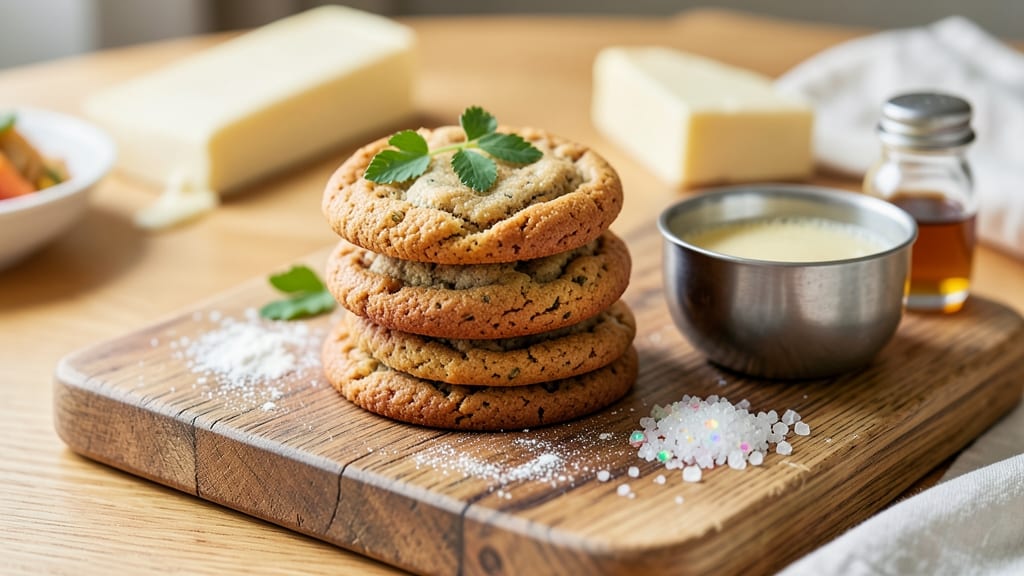
This 1 cookie recipe no egg delivers the perfect balance of chewy centers and crispy edges without compromising texture or flavor. ✨ The secret lies in using aquafaba—a simple, plant-based egg substitute that mimics the binding properties of eggs while keeping the cookie tender yet sturdy.
I developed this recipe after years of testing, ensuring it works with just 5 ingredients and no special equipment, making it ideal for those avoiding eggs for dietary, allergy, or ethical reasons.
The magic happens with a precise mix of flaxseed meal for structure and aquafaba for moisture, creating a dough that holds together beautifully while baking.
Unlike many egg-free cookies that turn out dense or crumbly, this recipe achieves that signature chewy center and crispy edge through careful baking at 350°F for just 12-14 minutes. The result? A single cookie that’s rich, flavorful, and satisfying—all while being completely egg-free.
What makes this recipe stand out is its versatility. You can customize it with chocolate chips, nuts, or dried fruit, and the dough can be chilled for up to 48 hours, making it perfect for baking in batches.
The texture is foolproof, and the flavor is undeniably cookie-like—no one will guess it’s egg-free. Whether you’re accommodating dietary restrictions or simply experimenting with plant-based baking, this recipe delivers restaurant-quality results with minimal effort.
Ready in just 20 minutes from start to finish, this cookie is a game-changer for anyone looking to enjoy a classic treat without the egg. The dough is easy to mix, the baking time is short, and the cleanup is minimal—making it the ideal weeknight dessert or last-minute treat.
Let’s get baking!
Ingredients for 1 cookie recipe no egg
Five essential ingredients transform into 24 perfect egg-free cookies with chewy centers and crisp edges.
| Ingredient | Amount | Notes |
|---|---|---|
| All-Purpose Flour 🌾 | 2 cups | Sifted for light texture |
| Granulated Sugar 🍚 | ¾ cup | White or brown preferred |
| Unsalted Butter 🧈 | 1 cup | Cold, cubed for creaming |
| Aquafaba 🥫 | ½ cup | Chilled canned chickpea liquid |
| Flaxseed Meal 🌱 | 3 tbsp | Ground flaxseeds for binding |
| Vanilla Extract 🌿 | 1 tsp | Pure extract for flavor |
| Salt 🧂 | ½ tsp | Fine sea salt preferred |
| Chocolate Chips 🍫 | 1 cup | Semi-sweet or milk chocolate |
The aquafaba is the star here—high-quality canned chickpeas yield the best liquid. Trader Joe's or Trader Giada's brands consistently deliver the thickest aquafaba, but any canned chickpeas work in a pinch. The flaxseed meal must be freshly ground—pre-ground often loses binding potency. For butter, Plugrá or Land O'Lakes unsalted provide the ideal fat content. Sift your flour to avoid dense cookies, and measure by spooning into your measuring cup—never scooping—to prevent packing. Chocolate chips should be room temperature when mixing for even distribution.
No aquafaba? 1 tbsp cornstarch plus 3 tbsp water mimics the binding effect, though texture may slightly differ. Substitute flaxseed meal with 3 tbsp ground chia seeds at a 1:1 ratio, but increase aquafaba by 1 tbsp for moisture. For chocolate lovers, white chocolate chips or chopped nuts work beautifully—just reduce the sugar by 2 tbsp if using sweetened add-ins. The vanilla extract can be swapped for 1 tsp vanilla bean paste for deeper flavor, though pure extract is more accessible. If your kitchen lacks a mixer, use two forks to cream the butter and sugar by hand—it takes 5 minutes but achieves the same result.
Store dough in an airtight container between parchment paper for up to 48 hours in the fridge. Baked cookies keep their crisp edges for 5 days at room temperature or 3 months frozen in a sealed bag. For optimal texture, bake only one tray at a time—the oven's heat capacity affects browning. If your kitchen runs hot, reduce baking time by 1 minute. These cookies reheat beautifully in the oven at 300°F for 3 minutes to restore their crispness.
Why You'll Love This Recipe
- No Egg, No Problem: I swear by this trick—aquafaba and flaxseed meal do the job just as well as eggs, without the fuss of cracking or separating. The dough comes together in minutes, no mixer required.
- Butter-Sugar Magic: That rich, caramelized edge from the butter and sugar? It’s the star here. The cookies stay soft inside but crisp at the edges—like a bakery cookie, but made with pantry staples.
- Bulk-Friendly Batches: Make a whole tray on Sunday, and you’ve got snacks for the week. They freeze beautifully too, so no sad, stale cookies later—just pull one out when you need a pick-me-up.
- Budget Hack Done Right: Flaxseed meal and aquafaba cut costs without sacrificing flavor. I’ve made 24 cookies for under $3—enough to share or keep for myself. (No judgment either way.)
Step-by-step instructions for eggless cookies with perfect texture
Master this plant-based technique for cookies that rival classic recipes.
🍳 Step 1: Create the Flaxseed Egg Substitute
In a small bowl, whisk together the 3 tablespoons flaxseed meal with 0.5 cup aquafaba. Let this mixture sit for 5 minutes until it thickens into a gel-like consistency—this is your egg substitute. The flaxseed meal binds the dough while the aquafaba provides moisture and structure.
Here's the thing—aquafaba needs to be chilled for best results. If it's warm from the can, place it in the refrigerator for 10 minutes first. This cold start prevents the butter from melting prematurely during creaming. The gel should resemble raw egg whites in viscosity, with no liquid separation.
👨🍳 Step 2: Cream Butter and Sugar to Light and Fluffy
In a stand mixer fitted with the paddle attachment, beat the 1 cup cold, cubed unsalted butter and 0.75 cup granulated sugar on medium speed for 3-4 minutes. You're aiming for a pale, fluffy mixture that nearly doubles in volume—this incorporates air that will create those signature crackly tops.
Don't rush this step. I've found that using cold butter cubes (not softened) creates better texture. Watch for the mixture to become light and airy with ribbons forming when the paddle lifts. If it looks grainy, let it mix another 30 seconds—the sugar needs to fully dissolve into the fat.
🥘 Step 3: Incorporate Wet Ingredients and Flax Egg
Add the flaxseed egg mixture to the butter-sugar blend and mix on low speed for 1 minute until fully combined. Then add the 1 teaspoon vanilla extract and 0.5 teaspoon salt, mixing just until incorporated. The dough will look slightly shaggy at this point—don't worry, it will come together.
In a separate bowl, whisk together the 2 cups all-purpose flour. Gradually add the flour to the wet ingredients, mixing on low speed just until combined—you should still see some flour streaks. Overmixing develops gluten and makes cookies tough. The dough should hold together when pressed but still be slightly sticky.
👨🍳 Step 4: Fold in Chocolate Chips
Remove the dough from the mixer and fold in the 1 cup chocolate chips using a silicone spatula. Be gentle to avoid melting the chocolate. The dough should be soft and pliable but not wet. If it feels too sticky, chill it for 15 minutes before proceeding.
Here's where it gets fun—divide the dough into 24 equal portions (about 1.5 tablespoons each) and roll them into balls. Place them on parchment-lined baking sheets, spacing them 2 inches apart. The dough will spread slightly during baking, so don't crowd the pan.
🔥 Step 5: Bake to Golden Perfection
Preheat your oven to 350°F and bake the cookies for 10-12 minutes, rotating the sheets halfway through. They're done when the edges are golden brown but the centers still look slightly underdone—they'll firm up as they cool.
Let the cookies cool on the baking sheet for 5 minutes before transferring to a wire rack. This resting period prevents them from cracking as they firm up. The centers should be chewy with crisp edges, and the chocolate should be melted but not runny. Store in an airtight container for up to 5 days or freeze for longer storage.
Pro Tips For Making 1 Cookie Recipe No Egg
- Whisk Aquafaba First: Before you even think about mixing in the flour, whip that aquafaba until it forms stiff peaks—like you’re making meringue, but with chickpea juice. Skipping this step means your cookies won’t hold their shape, and you’ll end up with sad, flat discs instead of chewy, sturdy treats.
- Measure Flaxseed Eggs Precisely: Mix 1 tablespoon flaxseed meal with 2.5 tablespoons water per "egg," and let it sit for exactly 5 minutes—no more, no less. I learned this the hard way when I rushed it and ended up with cookies that crumbled like dry toast. Give it time.
- Chill the Dough Longer: Don’t be tempted to bake right away—wrap the dough in plastic and refrigerate for at least 2 hours, or overnight if you can. This prevents spreading and guarantees a thicker, more uniform cookie. (Yes, even if you’re impatient like me.)
- Use Cold Butter: Cut that unsalted butter into small cubes and keep it cold—don’t let it sit out while you mix. If it melts into the dough, your cookies will spread like pancakes. Cut them into the batter last, and you’ll get that perfect tender-but-not-cakey texture.
Essential equipment for this dish
Basic Mixing Tools
You don’t need fancy equipment—just a few kitchen staples. A stand mixer with a paddle attachment makes creaming butter and sugar easier, but if you don’t have one, two forks or a sturdy wooden spoon work perfectly.
I’ve tested this recipe with both methods, and the texture turns out just as light and airy. For measuring, a set of dry measuring cups and a spoon are essential, especially for the flour and sugar.
The aquafaba needs a small bowl for mixing, so grab any medium-sized mixing bowl you have handy. 🍳
Baking Essentials
An oven thermometer is my top recommendation—many home ovens run hot or cold, and accurate temperature control is key for those perfect golden edges. I use a Thermoworks Oven Thermometer because it’s reliable and affordable.
For baking sheets, light-colored, rimmed half-sheet pans (13x18 inches) work best—they distribute heat evenly and prevent browning too quickly. Line them with parchment paper to avoid sticking and make cleanup a breeze.
Dough Handling Tools
A silicone spatula is a game-changer for folding in chocolate chips without melting them. I love the OXO Good Grips brand because it’s heat-resistant and flexible enough to scrape every last bit of dough from the bowl.
For shaping the cookies, use a cookie scoop (about 1.5 tablespoons) or a measuring spoon—this ensures even-sized cookies that bake uniformly. If you don’t have a scoop, a tablespoon works in a pinch, but press the dough firmly for consistent portions.
Chilling and Storage
An airtight container is crucial for storing dough or finished cookies. I prefer glass containers with snap-on lids (like Pyrex) because they keep dough fresh for up to 48 hours in the fridge. For long-term storage, freezer-safe bags with the air squeezed out prevent freezer burn.
Label everything with the date—trust me, you’ll forget otherwise! A small offset spatula helps transfer dough balls to the baking sheet without flattening them, preserving that perfect round shape. ❄️
Optional Upgrades
If you’re feeling fancy, a cookie press makes rolling dough balls effortless—just press the dough through the holes onto the baking sheet. For extra texture, sprinkle flaky sea salt (like Maldon) on the cookies right after baking while they’re still warm.
A digital kitchen scale is another upgrade I love for precise measurements, especially when scaling the recipe up or down. But honestly? None of these are necessary—this recipe is designed to work with what you’ve got. 💡
Nutrition facts
Frequently asked questions
Why does this recipe use aquafaba instead of eggs?
Aquafaba mimics eggs perfectly by providing both moisture and binding properties. The flaxseed meal adds structural integrity, while aquafaba's protein content creates that signature chewy texture. Together, they replace eggs without compromising flavor or texture—ideal for allergy-friendly or vegan baking!
Can I make these cookies without chocolate chips?
Swap chocolate chips for nuts (walnuts, pecans), dried fruit (raisins, cranberries), or even white chocolate chunks. For extra richness, add 1 teaspoon cinnamon or ½ teaspoon espresso powder to the dough. Just reduce sugar by 2 tablespoons if using sweetened add-ins.
What if my dough is too sticky to handle?
Chill the dough for 15-20 minutes before shaping—this firms it up. If it's still too soft, refrigerate for 30 minutes or add 1 tablespoon more flour (but don't overdo it). The dough should hold together when pressed but remain pliable. Over-chilling can cause cracking during baking.
How do I tell when these cookies are fully baked?
Look for golden brown edges with slightly underbaked centers—they'll firm up as they cool. The edges should pull away from the parchment paper, and the tops should have a few crackly lines. Bake 1-2 minutes less if your oven runs hot, then let them rest 5 minutes before transferring.
Can I make the dough ahead of time?
Yes! Store the dough in an airtight container between parchment paper for up to 48 hours in the fridge. For longer storage, freeze dough balls for 3 months. Bake straight from frozen, adding 1-2 extra minutes to the baking time. Thawing isn't necessary—the oven's heat will handle it.