
Appetizers
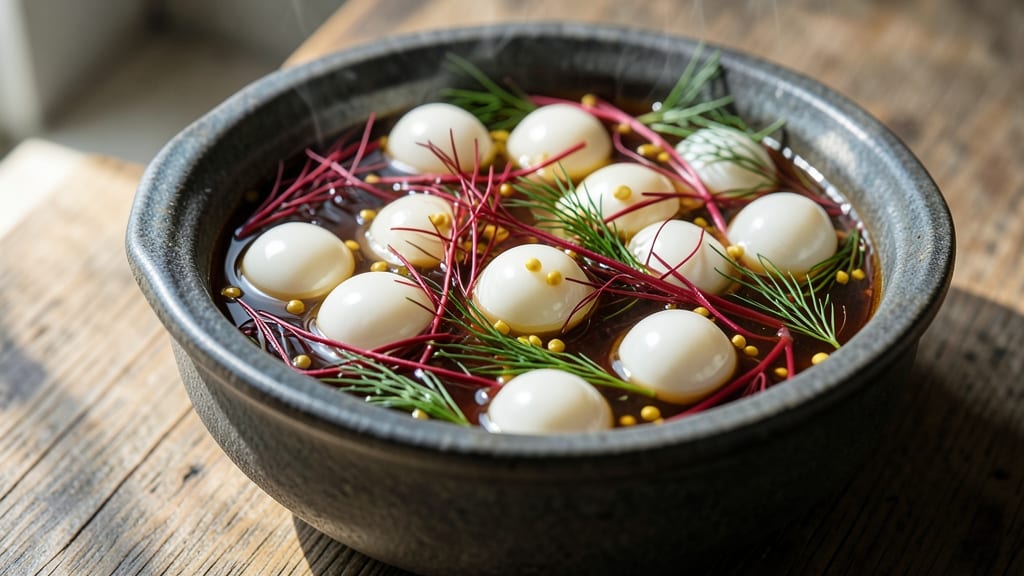
This world's best pickled eggs recipe delivers the perfect balance of briny crunch and silky yolk brilliance that transforms ordinary hard-boiled eggs into a restaurant-worthy appetizer.
After years of testing variations, I've perfected a method that preserves the yolk's creamy texture while infusing the whites with bold, tangy flavor through precise brine ratios and curing times. The secret lies in the vinegar-to-water ratio and the addition of aromatic spices that penetrate every layer.
The process begins with properly hard-boiled eggs cooled in ice water for easy peeling, then submerged in a carefully calibrated brine of white vinegar, water, salt, and spices like mustard seeds and dill.
This combination creates a flavor profile that's both vibrant and complex, with just the right amount of heat and freshness.
What makes this recipe truly special is how the brine transforms the eggs over time—starting with a sharp tang that mellows into a perfect balance of briny, herby, and slightly spicy notes.
By the time you're ready to serve, you'll have eggs with crisp whites that pop between your teeth and yolks that remain perfectly preserved—no rubbery textures here. The result is an appetizer that pairs beautifully with charcuterie boards, sandwiches, or as a refreshing snack on its own.
This method ensures every bite delivers that satisfying crunch and burst of preserved flavor that makes pickled eggs irresistible.
Whether you prefer classic dill, spicy mustard, or sweet variations, this recipe adapts effortlessly while maintaining its core brilliance. The curing process can be adjusted to suit your schedule, but patience pays off with deeper flavor development.
Let's get started on creating pickled eggs that will have everyone asking for seconds.
Ingredients for world's best pickled eggs
The perfect balance of briny, herby, and tangy ingredients that transform simple eggs into restaurant-quality bites.
| Ingredient | Amount | Notes |
|---|---|---|
| Large Eggs 🥚 | 8 whole | Fresh, organic preferred |
| White Vinegar 🍶 | 2 cups | Distilled, 5% acidity minimum |
| Water 💧 | 2 cups | Filtered or bottled preferred |
| Diamond Crystal Kosher Salt 🧂 | ½ cup | Not table salt, measure packed |
| Fresh Dill Weeds 🌿 | ½ cup | Packed, stems removed |
| Yellow Mustard Seeds 🌶️ | 1 tbsp | Whole, not ground |
| Black Peppercorns 🌶️ | 1 tbsp | Freshly cracked preferred |
| Garlic Cloves 🧄 | 4 cloves | Smashed, not minced |
| Red Wine Vinegar 🍷 | ½ cup | For depth of flavor |
| Granulated Sugar 🍚 | ¼ cup | Light brown preferred |
| Ice Cubes ❄️ | 4 cups | For rapid cooling |
| Fresh Bay Leaves 🍃 | 2 whole | For subtle aromatic depth |
The eggs are the foundation—organic or pasture-raised gives the best yolk quality, but any fresh eggs work. Costco or local farms are great sources for bulk eggs. The vinegar is non-negotiable—distilled white vinegar at 5% acidity ensures proper preservation without overpowering. For the dill, fresh is essential—dried just won't give that bright, herby punch. If you can't find fresh, dried dill at one-third the amount is your backup, but it won't be the same. The mustard seeds and peppercorns add that satisfying crunch, so don't skip these—Penzeys or bulk bins have great quality.
No fresh dill? Dried dill works in a pinch, but cut the amount to a third. Out of red wine vinegar? Extra white vinegar plus a splash of lemon juice mimics the depth. The sugar balances acidity—brown sugar adds subtle caramel notes, but white works fine. For the garlic, smashed cloves infuse flavor better than minced. Want extra heat? Add red pepper flakes or cayenne to the brine. The bay leaves? Don't skip them—they add a sophisticated background aroma that makes everything better.
This brine keeps for 3 months in the fridge, but the eggs develop their best flavor after at least 1 week. Store eggs in the brine container with heads submerged—no floating! For serving, drain and pat dry. The eggs stay crisp for 1 week in the fridge, but the flavor peaks after 3-5 days. Double the batch—pickled eggs disappear fast at parties. Freeze extras in brine for up to 3 months if you're really committed to stocking up.
Why You'll Love This Recipe
- No-Fuss Assembly: I swear by this recipe because it’s the kind of thing you can make while scrolling through your phone—just hard-boil eggs, toss them in a jar with vinegar, salt, and dill, and let time do the work. No peeling, no fancy tools, just pure simplicity that still delivers big flavor.
- Tangy Crunch Magic: That bright vinegar kick and fresh dill? It’s like a zesty hug for your taste buds. The eggs stay firm but develop this addictive briny edge—perfect for when you want something that’s not just good, but unexpectedly good.
- Party Snack Hero: Between us, these are my go-to for game day, potlucks, or just when I need a no-stress appetizer. They’re easy to grab, look impressive, and disappear fast—no one will guess they took 10 minutes to prep.
- Dollar Stretch Wonder: A dozen eggs and a few pantry staples? That’s it. No specialty ingredients, no waste—just a jar of flavor that keeps for weeks. I’ve fed a crowd for less than five bucks, and honestly, that’s a win I’ll take every time.
Step-by-step instructions for world's best pickled eggs
Here's how to create eggs with that perfect briny crunch and silky yolk brilliance.
Hard-Boil the Eggs to Perfect Doneness
Place the 8 whole large eggs in a saucepan and cover them completely with the 2 cups of cold water. Bring to a rolling boil over high heat, then immediately reduce to medium-high heat and boil vigorously for exactly 10 minutes. This timing ensures the yolks remain perfectly set without turning greenish or rubbery.
While boiling, prepare an ice bath by filling a large bowl with the 4 cups of ice cubes. When the 10 minutes are up, drain the hot water and transfer the eggs immediately to the ice bath. Let them cool for 10 minutes—this rapid cooling stops the cooking process and keeps the yolks tender. The eggs are now ready for peeling and pickling.
Prepare the Brining Solution with All Aromatics
In a large mixing bowl, combine the 2 cups of white vinegar, 0.5 cup of red wine vinegar, and 0.25 cup of granulated sugar. Stir until the sugar dissolves completely—this creates the perfect balance of tangy and slightly sweet brine. The vinegar mixture should be clear with no visible sugar crystals remaining.
Add the 0.5 cup of diamond crystal kosher salt, 1 tablespoon of yellow mustard seeds, 1 tablespoon of black peppercorns, the 4 smashed garlic cloves, and the 2 whole fresh bay leaves to the vinegar mixture. Stir gently to distribute all the spices and aromatics evenly. The bay leaves will infuse subtle earthy notes, while the mustard seeds add a delightful crunch.
Add Fresh Dill and Combine with Eggs
Gently pack the 0.5 cup of fresh dill weeds into the bottom of a clean, airtight quart-sized jar. This creates a fragrant bed for the eggs and ensures every bite carries that signature dill flavor. The dill should be tightly packed but not compressed—just enough to create a visible layer at the bottom of the jar.
Carefully place the peeled eggs into the jar, standing them upright. Pour the vinegar mixture over the eggs until they are completely submerged, leaving about 1 inch of headspace at the top. The liquid should cover the eggs by at least 1 inch to ensure proper preservation and flavor infusion.
Seal and Cure for Maximum Flavor
Seal the jar tightly and let it sit at room temperature for 24 hours. This initial curing period allows the flavors to begin melding together and the eggs to absorb the briny, aromatic solution. After 24 hours, transfer the jar to the refrigerator where the eggs will continue to develop their signature flavor and texture.
For best results, let the eggs pickle for at least 3 days before eating. The longer they cure, the more intense the flavor becomes. After 3 days, they'll have that perfect balance of briny, garlicky, and herby notes with a satisfying crunch. Store them in the refrigerator for up to 3 months, though they'll likely be gone much sooner!
Pro Tips For Making World'S Best Pickled Eggs
- Boil Eggs Like a Pro: That 10-minute boil at medium-high heat isn’t just a number—it’s the difference between perfect yolks and greenish rubber. I used to rush it, and the eggs turned out sad and overcooked. The ice bath isn’t optional either; skip it, and you’ll regret the mushy yolks later.
- Salt the Brine Correctly: Diamond Crystal kosher salt is not table salt—measure it packed, or your brine will taste weak. I learned this the hard way when my first batch ended up tasting like sad pickles. Stir it in fully, but don’t crush it; you want those mustard seeds and peppercorns to keep their crunch.
- Pack the Dill Right: The dill layer at the bottom isn’t just for looks—it’s where the flavor lives. Pack it tightly but not compacted; you want it to stay fragrant, not turn to mush. If it’s loose, the eggs will taste like they’re swimming in vinegar with a side of disappointment.
- Wait for the Flavor: Three days is the minimum, but resist the urge to dive in after 24 hours—your patience will pay off. The eggs develop their signature crunch and depth after a week, not sooner. I know, I know, but trust the process. Your future self will thank you.
Troubleshooting this dish
Eggs Floating?
If your eggs float to the surface during curing, it means air pockets formed under their shells. This happens when eggs aren't fully submerged or when the brine isn't acidic enough. To fix it, gently press the eggs down with a clean spoon or small plate.
For future batches, ensure the brine covers eggs by at least 1 inch and use distilled white vinegar at 5% acidity—this prevents floating and ensures proper preservation. 🌊
Brine Too Weak?
A weak brine (too little vinegar or salt) leads to bland, under-seasoned eggs. If your pickled eggs taste flat after 3 days, your brine ratio may be off. The ideal balance is 2 cups vinegar to 2 cups water with ½ cup kosher salt.
For extra tang, add ½ cup red wine vinegar to the mix. If the flavor is still lacking, let them pickle for 5-7 days—patience deepens the flavor profile.
Yolks Turning Greenish?
Overcooked yolks appear greenish-gray due to iron-sulfur reactions during boiling. To prevent this, never boil eggs beyond 10 minutes—stick to the exact timing in the recipe. If your yolks already look off, the eggs are still safe to eat but won't have that perfect creamy texture.
For future batches, use fresh, organic eggs and reduce heat to medium-high immediately after boiling begins.
Dill Losing Flavor?
Fresh dill loses its bright aroma quickly in brine. If your eggs taste dull after 1 week, the dill may have oxidized. To preserve its flavor, pack the dill tightly at the bottom of the jar before adding eggs.
For extra potency, add 1 teaspoon dried dill weed to the brine alongside the fresh. If using only dried dill, reduce the amount to ⅓ cup—too much can make the flavor bitter.
Mold or Fuzzies?
Mold or fuzzy spots indicate spoilage from improper storage or contamination. If you spot mold after 1 week, discard the entire batch immediately—vinegar preserves but doesn't sterilize. To prevent mold, always use clean, airtight jars and ensure the brine fully covers the eggs.
Store in the fridge at 40°F or below and check for mold weekly. If mold appears, it's a sign the brine's acidity dropped—boost vinegar to 3 cups for future batches.
Eggs Too Soft?
Undercooked eggs result in mushy whites or runny yolks. This happens if boiling time is too short or eggs aren't fully submerged in ice water post-boiling. For perfect firmness, boil eggs for exactly 10 minutes and cool them in ice water for 10 minutes.
If your eggs still feel soft, try adding 1 teaspoon baking soda to the boiling water—it helps set the whites faster while keeping yolks creamy. 💡
Nutrition facts
Frequently asked questions
How long should I wait before eating the pickled eggs?
The flavor develops over time, so wait at least 3 days for the best taste. After 5-7 days, the eggs will have that perfect balance of briny, garlicky, and herby notes with a satisfying crunch. Patience is key for maximum flavor infusion!
Can I use store-bought pickling spices instead of fresh ingredients?
Yes, but the flavor will be less vibrant. Store-bought pickling spice blends often lack fresh dill's bright aroma. For a shortcut, add 1 tablespoon dried dill weed to your brine alongside the mustard seeds and peppercorns. The texture won't be identical, but it'll still taste delicious.
What's the best way to store leftover brine?
Strain the used brine through a fine-mesh sieve to remove any solids, then store it in an airtight container in the fridge for up to 3 months. You can reuse it for future batches of pickled eggs or vegetables—just add fresh aromatics and vinegar to maintain proper acidity levels.
Why do some recipes call for apple cider vinegar?
Apple cider vinegar adds a subtle sweetness and complexity that white vinegar lacks. While it works well, the recipe uses white vinegar for its sharp acidity that penetrates the eggs more effectively. For a hybrid approach, substitute 1 cup of the white vinegar with apple cider vinegar—it'll give a slightly different flavor profile.
How do I make these spicy pickled eggs?
Add 1 teaspoon cayenne pepper or 2 tablespoons red pepper flakes to the brine for heat. For a smoky kick, include 1 chipotle pepper in adobo sauce (minced). The longer they pickle (7+ days), the more the heat will develop and mellow into a complex, spicy-sweet balance.