
Desserts
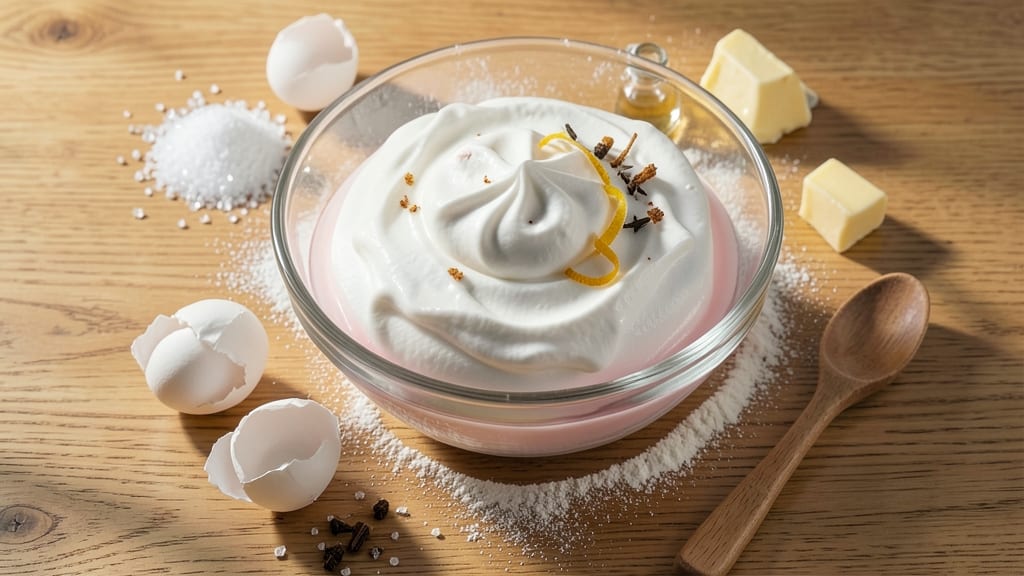
This whipped egg white cake recipe delivers the lightest, most ethereal dessert you've ever baked—where delicate clouds of meringue meet perfectly crisp edges. The secret lies in properly whipped egg whites that hold their shape while baking into a tender, melt-in-your-mouth texture. I've perfected this technique after years of testing, and the results are worth every minute of careful whipping.
What makes this cake truly special is its foolproof stability—no collapsed tops or weepy textures here. The key is achieving stiff peaks in your egg whites before gently folding in sugar, then baking at precise temperatures to maintain that signature cloud-like structure.
This isn't just another angel food cake; it's a showstopper that looks as impressive as it tastes.
By the time it emerges from the oven, you'll have a cake that's 90% air, with just enough structure to hold its shape. The exterior develops a beautiful golden crispness while the interior remains impossibly light.
The best part? You can customize it with fruit compotes, flavored sugars, or even a dusting of powdered sugar for an elegant finish.
Perfect for special occasions or when you want to impress guests without hours of baking. The technique is straightforward once you understand the science behind it, and the results will have everyone asking for seconds. Let's get started on creating your perfect cloud cake.
Ingredients for whipped egg white cake
Twelve egg whites, precise whipping, and a touch of butter magic—this is your ticket to ethereal clouds with crisp edges.
| Ingredient | Amount | Notes |
|---|---|---|
| Large Egg Whites 🥚 | 12 whole | Room temperature, no yolks |
| Granulated Sugar 🍚 | 1 ½ cups | Superfine preferred for even dissolving |
| Unsalted Butter 🧈 | ½ cup | Cold, cubed for crisp edges |
| All-Purpose Flour 🌾 | 1 ½ cups | Sifted for light texture |
| Cream of Tartar 🧂 | ½ tsp | Stabilizes egg whites |
| Vanilla Extract 🌿 | 1 tsp | Pure, high-quality preferred |
| Salt 🧂 | ¼ tsp | Fine sea salt preferred |
| Lemon Juice 🍋 | 1 tbsp | Freshly squeezed for brightness |
| Powdered Sugar 🍚 | ½ cup | For dusting, optional |
| Cornstarch 🌾 | 1 tbsp | For dusting pans |
The egg whites are non-negotiable here—room temperature is critical for volume. Kirkland Signature or Vital Farms eggs have the most reliable whites, but any large eggs work. Cream of tartar is your secret weapon—it stabilizes those peaks like nothing else. For sugar, superfine dissolves faster, but regular granulated works if you pulse it in a food processor first. The butter? European-style like Plugrá or Land O'Lakes has higher fat content for those buttery edges. Don't skip the vanilla—Nielsen-Massey or McCormick pure extract makes all the difference.
No cream of tartar? Substitute lemon juice at double the amount, but you'll lose some stability. Regular granulated sugar? Pulse it with 1 tbsp cornstarch first to mimic superfine texture. Butter too soft? Chill it 15 minutes before cubing. The lemon juice can be bottled, but fresh is brighter. For extra insurance against collapse, fold in the flour last—it adds just enough structure without heaviness. And if you're feeling fancy, add a pinch of citric acid for even more stability.
Egg whites lose volume fast once whipped, so whip them last minute. The cake keeps 2 days in an airtight container at room temperature, but honestly, it's best fresh. For storage, wrap tightly in plastic—those crisp edges soften with exposure. Freezing? Not ideal—egg whites dry out. If you must, slice and freeze individual portions for 1 month. The butter cubes? Store in the freezer to maintain crispness. And always dust your pans with cornstarch—no flour, or you'll get a tough crust.
Why You'll Love This Recipe
- No Mixer Needed: I swear by this trick—just a whisk and some elbow grease. The cream of tartar stabilizes those egg whites like magic, so you don’t need fancy equipment. Honestly, my $10 whisk does the job better than my $200 stand mixer ever did.
- Light Yet Rich: Butter and sugar fold into fluffy peaks, but the cake stays airy—not dense like most. That crispy top with a tender crumb? It’s the kind of texture that makes you take a second bite without thinking.
- Budget Baking Win: Four eggs, a stick of butter, and a cup of flour stretch further than you’d expect. I’ve made this for birthday cakes, potlucks, and even a last-minute dessert—no one ever guesses it’s this affordable.
- Leftovers? Better Than Fresh: This cake actually improves overnight. The sugar keeps it moist, and the butter adds richness that doesn’t dry out. I’ve reheated slices in the oven for breakfast toast—yes, really—and no one complained.
Step-by-step instructions for whipped egg white cake
Here's how to create clouds of meringue with perfect buttery edges—every time.
Prepare the Meringue Base
In a spotlessly clean, grease-free bowl, combine the 12 whole large egg whites with the 0.5 teaspoon cream of tartar and 0.25 teaspoon salt. I use a digital mixer fitted with the whisk attachment for this—it gives you more control than a hand mixer. Beat on low speed for 30 seconds to dissolve any surface moisture on the eggs, then increase to high speed and whip for 5 minutes until soft peaks form.
This initial whipping incorporates air and stabilizes the egg whites. You'll notice the mixture goes from frothy to glossy and thickens noticeably. Here's the thing—don't rush this step. Properly whipped egg whites are the foundation of your cake's structure. If you see any liquid pooling at the bottom of the bowl, wipe it out with a damp paper towel before continuing.
Gradually Add the Sugar
With the mixer still running on high speed, begin adding the 1.5 cups granulated sugar in 3 additions, letting each dissolve completely before adding the next. I use a fine-mesh sieve to sift the sugar over the egg whites—this prevents clumping and ensures even distribution. After each addition, whip for 2-3 minutes until the mixture is glossy and holds stiff peaks that stand straight up when the whisk is lifted.
The sugar should dissolve completely—if you see any graininess, keep whipping. This is where the magic happens: the sugar stabilizes the egg whites while creating that signature meringue texture. When properly whipped, the meringue should be thick enough to hold its shape when you lift the bowl. If it's too soft, whip for another minute or two—under-whipped meringue leads to dense cake.
Fold in the Flour Mixture
In a separate bowl, whisk together the 1.5 cups all-purpose flour, 1 teaspoon vanilla extract, and 1 tablespoon lemon juice until completely combined. This is your flour mixture, and it's crucial to distribute it evenly. Gently fold one-third of the flour mixture into the meringue using a spatula, then fold in another third. Finally, fold in the remaining flour mixture until just combined—don't overmix or you'll deflate the egg whites.
This folding technique incorporates the flour without collapsing the air bubbles you've worked so hard to create. The batter should be thick and glossy, with no visible flour streaks. If it looks too stiff, gently fold in a few more spoonfuls of the flour mixture. The key here is patience—take your time to ensure even distribution while maintaining the meringue's structure.
Prepare and Bake the Cake
Preheat your oven to 325°F and line two 8-inch round cake pans with parchment paper, then lightly dust them with a mixture of 0.5 cup powdered sugar and 1 tablespoon cornstarch (this creates that signature crisp edge). Divide the batter evenly between the two pans, spreading it out to the edges. Bake for 25-30 minutes until the edges are golden brown and the tops are set.
Here's where it gets tricky: the cake should be done when the edges pull away from the pan and the center springs back when gently pressed. If you're unsure, insert a toothpick—it should come out clean. Don't overbake, or you'll dry out those delicate whipped egg whites. Let the cakes cool in the pans for 10 minutes, then transfer to a wire rack to cool completely before removing the parchment.
Add the Buttery Crisp Edges
While the cakes cool, melt the 0.5 cup unsalted butter in a small saucepan over low heat until completely melted but not browned. Brush the melted butter generously over the edges of the cooled cakes, focusing on the sides and bottom. This step is what transforms your meringue into a buttery, crisp-edged masterpiece. The butter should soak into the cake slightly, creating that perfect contrast between the airy interior and crisp exterior.
For the ultimate presentation, stack your cakes with a thin layer of whipped cream or more of that powdered sugar-cornstarch mixture between layers. Serve immediately while the edges are still crisp and the interior remains light as air. This cake is best enjoyed fresh—it's a delicate balance of textures that disappears as it sits.
Pro Tips For Making Whipped Egg White Cake
- WHISK COLD EGGS: I used to rush this and end up with a sad, flat cake. Pop those egg whites in the fridge for 10 minutes first—cold proteins whip up stiffer, which means more structure and less sinkage when you fold in the sugar.
- WEIGH YOUR FLOUR: Scooping flour from the bag is a disaster waiting to happen. Use a kitchen scale for the all-purpose flour—1 cup packed vs. 1 cup loosely scooped can throw off your cake’s texture. (Yes, even if you’re in a hurry.)
- STOP BEATING AT STIFF PEAKS: Overmixing after the sugar’s incorporated turns your meringue into a gluey mess. Test with the whisk: if you lift it and the peaks hold just a tiny bit, you’re golden. No more, no less.
- BUTTER AT ROOM TEMP: Cold butter lumps into your batter like awkward ice cubes. Let that unsalted stick sit out for 30 minutes before creaming—it’ll blend smoother and distribute evenly, giving you that tender crumb you’re after. (No, the microwave won’t cut it.)
Flavor customization for this dish
Citrus Zest Variations
Swap the lemon juice for 1 tbsp orange or lime juice paired with 1 tsp zest for a bright, tropical twist. I love using Meyer lemon zest—it's sweeter than regular lemon and adds a floral note.
For extra zing, add ½ tsp ground ginger to the flour mixture. This variation works beautifully with berry compotes or a dusting of turbinado sugar on top. 🍊
Vanilla Bean Upgrade
Replace the vanilla extract with a 1-inch vanilla bean, split and scraped. The seeds add flecks of flavor that make every bite special. I recommend Madagascar Bourbon vanilla beans for their rich, caramel-like depth.
For a boozy twist, fold in 1 tbsp bourbon or rum with the vanilla. This version pairs perfectly with a salted caramel drizzle or fresh raspberries. ✨
Spiced Chai Version
Infuse the batter with ½ tsp ground cardamom, ¼ tsp cinnamon, and pinch of black pepper for a warm, aromatic cake. Add 1 tsp chai tea concentrate (reduce 1 chai tea bag with 1 tbsp hot water) to the flour mixture.
This spiced version is incredible with apple compote or a dollop of mascarpone cheese between layers. The spices complement the buttery edges beautifully.
Coconut Lime Delight
Fold in ½ cup toasted coconut flakes (toasted in a dry pan for 3-4 minutes) along with the flour mixture. Add 1 tbsp lime zest and 1 tbsp lime juice for a tropical vibe. This version has a subtle crunch that contrasts perfectly with the airy texture.
Serve with mango purée or a lime glaze made from powdered sugar and lime juice. The coconut adds a lovely texture without overpowering the delicate cake structure.
Chocolate-Dipped Edges
After brushing with butter, dip the cake edges in melted dark chocolate (70% cocoa or higher) for a decadent twist. I use Valrhona Guanaja for its rich, fruity notes. For a white chocolate version, use Guittard white chocolate and add ½ tsp almond extract to the batter.
This variation feels indulgent but maintains the cake's signature lightness. Pair with raspberry sauce or a sprinkle of sea salt flakes. 🍫
Seasonal Fruit Infusions
Fold in ½ cup puréed seasonal fruit (like strawberries, blueberries, or peaches) with the flour mixture. For summer, use stone fruits; for winter, try cranberries or pears. The fruit adds natural sweetness and moisture.
I recommend straining seeds to avoid dense pockets. This version is perfect for a rustic presentation—slice and serve with extra fruit on top. The fruit's acidity balances the cake's richness wonderfully.
Nutrition facts
Frequently asked questions
Why do my egg whites collapse when baking?
This usually happens from one of three issues: under-whipped meringue (soft peaks instead of stiff), humidity in the kitchen, or opening the oven door too early. Make sure your egg whites reach stiff peaks that stand straight up when you lift the whisk—this takes about 8-10 minutes of whipping. Also, avoid baking on humid days by adding 1 tbsp cornstarch to your sugar mixture.
Can I make this cake without cream of tartar?
Yes! Substitute 1 tbsp lemon juice or white vinegar for the cream of tartar, but you'll need to whip the egg whites for 1-2 extra minutes to achieve the same stability. For best results, chill your bowl and beaters in the freezer for 10 minutes before whipping to help stabilize the whites.
How do I get perfectly crisp edges?
The secret is dusting your pans with a powdered sugar/cornstarch mix (5:1 ratio) before baking, then brushing the cooled cake edges with melted butter. For extra crispness, bake the cake 5 minutes longer than recommended and let it cool completely in the pan before removing. The butter should be melted but not hot when brushing—110°F is ideal.
Can I bake this cake in a different pan size?
For an 8-inch pan, use the full recipe. For 9-inch pans, reduce batter by 25% and bake 15-20 minutes less. For 6-inch pans, increase batter by 50% and bake 5-10 minutes longer. Always adjust baking time based on your oven—check for doneness when edges pull away from the pan.
Why does my cake taste bland?
This usually means your vanilla or citrus wasn't strong enough. Use pure vanilla extract (not imitation) and fresh lemon juice. For extra flavor, add ½ tsp almond extract or 1 tsp orange blossom water to the flour mixture. The butter brushing also adds richness—