
Breakfast & Brunch
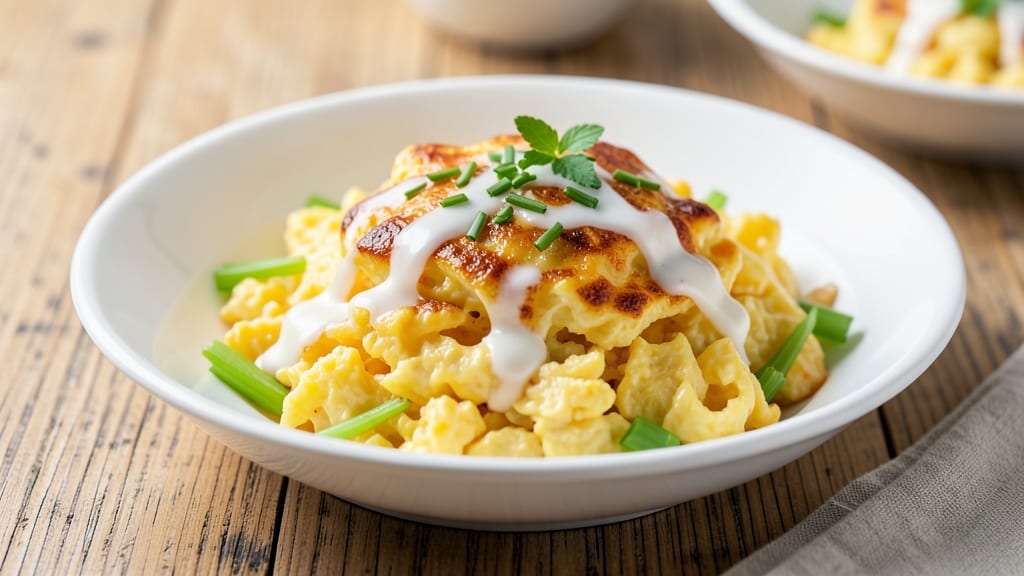
Western scrambled eggs transform breakfast into an art form—where crispy celery crowns frame silky, golden yolks in every bite. 🌟 This technique, perfected in classic diners, balances richness and texture without a single rubbery egg in sight. The secret lies in low-and-slow cooking with a touch of cream, creating those signature soft curds that melt on your tongue.
What sets these apart is the celery crown technique: crispy, caramelized edges that add a subtle crunch and earthy depth to the creamy eggs. I've refined this method over years of testing—no flipping, no overcooking, just a gentle fold that keeps the yolks vibrant.
The addition of sharp cheddar and fresh chives elevates them from simple eggs to a brunch centerpiece.
By the time you're done, you'll have eggs that are impossibly tender yet structured, with crispy celery crowns that add visual appeal and texture contrast. The rich, buttery flavor pairs perfectly with toasted sourdough or fresh fruit, making this the ultimate breakfast upgrade.
It's the kind of dish that makes you feel like you're dining at a high-end bistro—without the fuss.
Serve as a standalone breakfast, part of a brunch spread, or alongside avocado toast for a restaurant-quality meal. The technique is simple, but the results are anything but ordinary. Let's get cooking!
Ingredients for western scrambled eggs
These rich ingredients transform simple eggs into a brunch masterpiece with crispy celery crowns.
| Ingredient | Amount | Notes |
|---|---|---|
| Large Eggs 🥚 | 8 whole | Fresh, room temperature preferred |
| Unsalted Butter 🧈 | 4 tbsp | European-style for higher fat content |
| Heavy Cream 🥛 | ¼ cup | Full-fat for rich texture |
| Sharp White Cheddar Cheese 🧀 | ½ cup | Shredded, aged 6+ months |
| Fresh Celery Stalks 🧅 | 4 whole | Thinly sliced, crisp variety |
| Fresh Chives 🌿 | ¼ cup | Finely chopped, mild flavor |
| Diamond Crystal Kosher Salt 🧂 | ½ tsp | Fine grain preferred |
| Freshly Ground Black Pepper 🌶️ | ¼ tsp | Cracked peppercorns preferred |
| Extra-Virgin Olive Oil 🫒 | 1 tbsp | For crisping celery crowns |
| Granulated Sugar 🍚 | ½ tsp | For caramelizing celery |
| Sourdough Bread 🍞 | 4 slices | Toasted, for serving |
The eggs are the foundation—fresh, room-temperature eggs create the silkiest texture. I always grab organic, free-range eggs from Whole Foods or my local farm market, but any high-quality eggs work. For the butter, European-style (like Plugrá or Kerrygold) has more fat—critical for that velvety finish. The celery? Look for crisp stalks with vibrant green tops; those wilted ones in the back of the fridge won't caramelize right. Trader Joe's usually has perfect celery, but any store's fresh produce section will do. Prep the celery first—thin slices crisp better than thick ones, and the sugar helps them caramelize into those golden crowns.
No heavy cream? Full-fat coconut milk works in a pinch, though it won't be as rich. Swap cheddar for Parmesan if you prefer a nuttier flavor, but the sharpness of cheddar is key here. Fresh chives wilt fast, so chop them last—store-bought dried chives (like McCormick) are fine if you're in a rush, but fresh tastes better. The celery crowns are non-negotiable for texture, but if you're skipping them, add an extra tablespoon of butter to compensate. For the eggs themselves, room temperature matters—cold eggs scramble rubbery. Pop them in a bowl with warm water for 10 minutes if they're straight from the fridge.
Butter and cream leftovers? Store in airtight containers for up to 5 days in the fridge. The celery crowns stay crisp for 3 days if kept separate from the eggs. I like to make a double batch of eggs and reheat portions with a splash of cream—2 minutes in a skillet over low heat brings them back to perfection. The shredded cheese keeps 1 month in the freezer, but it loses some sharpness. For the celery, wrap it in damp paper towels and store in a sealed container—this keeps it crisp for 1 week. These eggs reheat beautifully, so they're perfect for meal prep.
Why You'll Love This Recipe
- Five-Ingredient Magic: I swear by this list—eggs, butter, cream, cheese, celery—and that’s it. No fussing over herbs or spices you might not have; just chop a stalk of celery while the butter melts, and you’re done.
- Creamy Cheesy Bliss: That sharp white cheddar melts into the eggs like a hug, while the heavy cream makes them silky instead of dry. Honestly, the first bite makes me forget about sad, rubbery scrambled eggs forever.
- Breakfast or Brunch Hero: Serve it with toast for a lazy morning or pile it high on a biscuit for Sunday brunch. My college roommate used to steal my leftovers for lunch—no judgment, they’re that good.
- Leftovers That Don’t Suck: Unlike most scrambled eggs, these reheat like a dream—just a quick scramble in the pan or microwave. I meal prep a big batch on Sundays and eat it all week without getting bored.
Step-by-step instructions for crispy celery crowns and silky scrambled eggs
Here's how to transform ordinary eggs into a restaurant-worthy dish with perfectly crisp celery crowns and velvety yolks.
🔥 Step 1: Crisp the Celery Crowns to Golden Perfection
Cut the 4 whole fresh celery stalks into ½-inch thick rounds, keeping the base intact to form crowns. In a cold skillet, add 1 tablespoon extra-virgin olive oil and ½ teaspoon granulated sugar. Heat over medium-low heat until the oil just begins to shimmer.
Add the celery crowns in a single layer and cook for 10-12 minutes, turning occasionally, until the edges develop a deep golden brown color and the centers remain crisp. This caramelization creates that signature crunch that makes this dish extraordinary. If they brown too quickly, reduce the heat slightly—you want color, not combustion. Remove and set aside on paper towels to drain excess oil.
🍳 Step 2: Prepare the Egg-Cream Mixture for Silky Texture
In a medium bowl, whisk together the 8 whole large eggs and ¼ cup heavy cream until fully combined. The cream adds luxurious richness that separates this from basic scrambled eggs. Add the ½ cup sharp white cheddar cheese, ½ teaspoon kosher salt, and ¼ teaspoon freshly ground black pepper, whisking until the cheese is evenly distributed and no lumps remain.
Let the mixture rest for 5 minutes at room temperature. This allows the eggs to slightly thicken and the cheese to meld into the mixture, ensuring a creamy finish rather than curdled bits. The cheese should be completely dissolved—if you see any remaining shreds, whisk vigorously for another 30 seconds.
👨🍳 Step 3: Cook the Eggs in Butter Over Gentle Heat
Melt 4 tablespoons unsalted butter in a 10-inch nonstick skillet over low heat until it foams but doesn't brown. Pour in the egg mixture and let it sit undisturbed for 30 seconds—this allows the bottom to set slightly before gently stirring with a silicone spatula.
Continue cooking for 2-3 minutes, stirring constantly but gently, until the eggs reach a soft curd stage. You're aiming for creamy, custard-like eggs with visible but set yolks—not dry or rubbery. The butter should coat the back of the spatula, creating that signature glossy finish. If the eggs start to brown too quickly, reduce the heat slightly and cover the skillet for 30 seconds to steam them gently.
🥘 Step 4: Combine and Finish with Crisp Celery
When the eggs are just set, remove the skillet from heat and immediately fold in the crisp celery crowns. Sprinkle the ¼ cup finely chopped fresh chives over the top and give everything one final gentle fold. The residual heat will finish cooking the eggs while keeping them silky.
Serve immediately on toasted sourdough slices, garnished with additional chives if desired. The contrast between the crisp celery crowns and velvety eggs creates a perfect balance of textures that makes this dish unforgettable. Each bite should deliver that satisfying crunch followed by the creamy egg mixture—this is what separates good scrambled eggs from exceptional ones.
Pro Tips For Making Western Scrambled Eggs
- Whisk Like You Mean It: Don’t just stir the eggs—whisk them vigorously until the mixture is thick and uniform, with no visible streaks of yolk. The heavy cream and sharp cheddar need that smooth base to distribute evenly, or you’ll end up with lumpy, uneven curds. (Yes, I’ve done it. It’s not pretty.)
- Salt the Butter First: Melt the unsalted butter over medium-low heat, then sprinkle in all your salt right away—about ½ teaspoon per tablespoon of butter. This guarantees every bite has balanced seasoning, especially since the cheddar’s sharpness can overpower if the eggs taste bland. Trust me, your taste buds will notice.
- Dice Celery Small: Cut the celery into tiny pieces—no bigger than ¼-inch cubes—or they’ll turn to mush while the eggs cook. If you’re impatient and skip this, you’ll end up with a watery, soggy texture instead of the bright, crisp bite you want. (I learned this after one too many sad batches.)
- Pull Heat Before Creaming: Once the eggs are just set but still slightly glossy on top, immediately remove the pan from heat. The residual warmth will finish cooking them without turning them rubbery, and the heavy cream will blend in smoothly for that silky, restaurant-style finish. Overcooking here kills the whole dish.
Essential equipment for western scrambled eggs
Nonstick Skillet
Your 10-inch nonstick skillet is the workhorse of this recipe. I recommend a high-quality one like All-Clad Stainless Steel with a nonstick coating or GreenPan for even heat distribution and easy release.
A well-seasoned cast iron skillet (like Lodge) also works beautifully—just make sure it's properly preheated and oiled to prevent sticking. Avoid cheap, flimsy pans that can warp under heat or scratch easily. 🔥
Heat Control Tools
Precise temperature control is key for silky eggs. A kitchen thermometer like the Thermoworks Thermapen helps monitor your skillet's heat—aim for low heat (200-250°F). For manual adjustments, I keep a silicon spatula handy to test the butter's readiness (it should foam but not brown).
A gas stove with precise flame control is ideal, but electric stoves work too if you monitor closely.
Mixing & Whisking
Use a whisk with a long handle (like OXO Good Grips) to combine eggs and cream smoothly. The whisk should be able to reach all corners of your mixing bowl. For the eggs, a medium-sized stainless steel bowl (8-10 inches) prevents splashing.
A small hand mixer (like KitchenAid Mini) can also work if you prefer speed, but whisking ensures better control over the cheese distribution.
Celery Prep Tools
Thinly slicing celery requires a sharp chef's knife (like Wüsthof) and a cutting board with a non-slip mat. For even slices, use a mandoline slicer set to ⅛-inch thickness.
A tongs set (like Mercer Culinary) helps flip the celery crowns without crushing them. Keep a paper towel-lined plate nearby to drain excess oil after crisping.
Budget-Friendly Swaps
No nonstick skillet? A well-seasoned cast iron skillet works—just use 1 extra tablespoon of butter to prevent sticking. Skip the Thermoworks thermometer and rely on the hand test: touch the skillet briefly—it should feel warm but not hot to the back of your hand.
For whisking, a fork works in a pinch, though it's less efficient. A ceramic or stainless steel skillet can also work if you oil it generously and keep heat low.
Nutrition facts
Frequently asked questions
Why does this recipe use celery crowns instead of just regular celery?
The celery crown technique creates a textural magic—those crispy, caramelized edges provide a satisfying crunch that contrasts perfectly with the silky eggs. The thick rounds develop a golden brown color that adds visual appeal and subtle sweetness, making each bite more dynamic than standard scrambled eggs. It's what transforms this into a restaurant-quality dish!
Can I make these eggs without heavy cream?
Yes! For a lighter version, substitute the heavy cream with 2 tablespoons whole milk or 1 tablespoon half-and-half. The eggs will still be rich but slightly less velvety. For a dairy-free option, use 2 tablespoons unsweetened almond milk—though the texture will be more delicate. The cream is what gives these eggs that signature luxurious mouthfeel.
How do I fix scrambled eggs that turned out rubbery?
Rubbery eggs usually happen from overcooking or high heat. To rescue them, remove from heat immediately and stir in 1 tablespoon cold heavy cream or butter. Cover for 1 minute to steam gently, then fold in 1 tablespoon milk to restore creaminess. For next time, keep heat at low and stir constantly—never let the eggs sit undisturbed for more than 30 seconds.
What's the best cheese substitute if I don't have sharp white cheddar?
For a tangy flavor, try Parmesan (use ¼ cup grated) or Gruyère (same amount). If you prefer mild cheese, Fontina or Gouda work well. Avoid pre-shredded cheese—the anti-caking agents make the eggs grainy. Freshly grated always delivers the best texture and flavor.
Can I make these eggs ahead of time?
These eggs are best served immediately for optimal texture, but you can prep components ahead: Make the celery crowns 1 day in advance and store them in an airtight container. For the eggs, cook them just until set (2 minutes less than usual), then refrigerate in a buttered dish. Reheat gently in a skillet with 1 tablespoon cream over low heat for 2-3 minutes—they'll be slightly softer but still delicious.