
Breakfast & Brunch
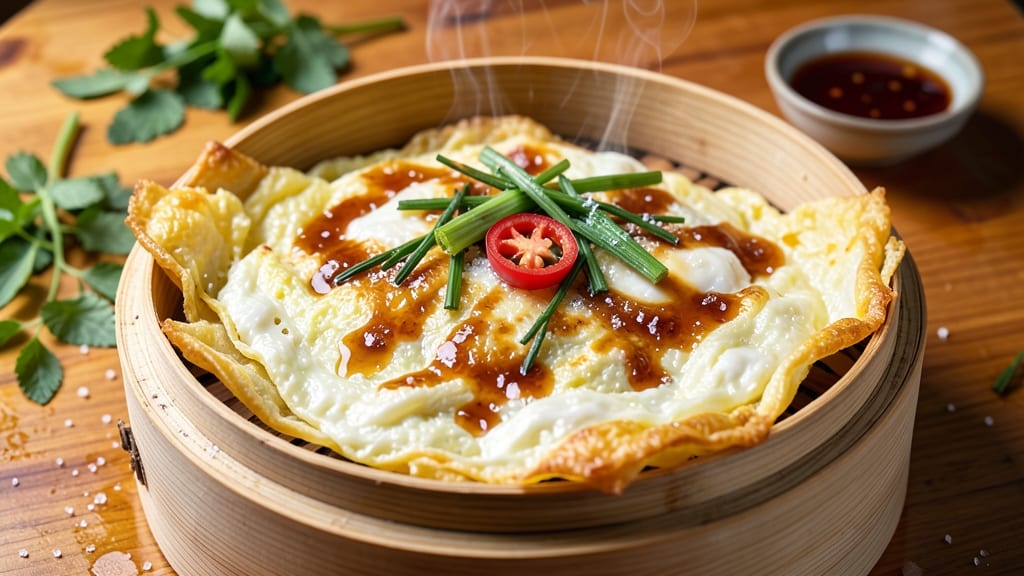
This Vietnamese egg omelette recipe transforms simple eggs into a fragrant, aromatic masterpiece with just a few key ingredients and techniques. The secret lies in balancing the bright citrus of lemongrass, the subtle heat of chili, and the umami depth of fish sauce—creating a dish that's both comforting and exciting.
What starts as a basic omelette becomes something extraordinary through careful folding and precise timing, resulting in a dish that's crisp at the edges yet tender inside.
The process begins with a light, fragrant oil base infused with lemongrass and chili, which imparts its signature aroma before the eggs even enter the pan. As the eggs cook, they're folded into neat, golden layers that reveal the fragrant filling with every bite.
This isn't just breakfast—it's a flavor experience that transports you to the bustling streets of Hanoi, where street vendors craft these omelettes with practiced ease. The dish is naturally vegetarian but can be elevated with optional ingredients like shrimp or scallions for added texture.
What makes this recipe particularly impressive is how it delivers restaurant-quality results with minimal effort. The key is maintaining medium-low heat throughout the cooking process to ensure even cooking without browning, while the folding technique creates those characteristic layers that make this omelette instantly recognizable.
Each bite offers a perfect harmony of textures—crisp edges, creamy filling, and delicate layers that melt together.
Perfect for breakfast, brunch, or even as a light dinner, this Vietnamese egg omelette serves as both a comforting staple and an impressive dish to share. The recipe scales easily, making it ideal for feeding a crowd or prepping ahead for busy mornings.
With just a few simple ingredients and techniques, you'll achieve a dish that's as beautiful as it is delicious—ready in under 15 minutes.
Ingredients for vietnamese egg omelette
Eight essential ingredients transform ordinary eggs into Hanoi street-style omelette perfection.
| Ingredient | Amount | Notes |
|---|---|---|
| Large Eggs 🥚 | 8 whole | Fresh, room temperature preferred |
| Vegetable Oil 🫒 | ½ cup | Light, neutral flavor preferred |
| Lemongrass Stalk 🌿 | 1 whole | Bruised, lower stalk only |
| Red Chili Pepper 🌶️ | 1 whole | Thai bird's eye or serrano |
| Fish Sauce 🍶 | 1 tbsp | Red Boat preferred |
| Sugar 🍚 | ½ tsp | White granulated |
| White Peppercorns 🌶️ | ¼ tsp | Freshly ground |
| Salt 🧂 | ½ tsp | Diamond Crystal kosher |
| Scallions 🧅 | 2 whole | Green parts only, finely chopped (optional) |
The lemongrass and chili form the aromatic foundation—bruise the lemongrass stalk with the side of your knife to release oils before adding to oil. For authentic flavor, Red Boat fish sauce is non-negotiable; its deep umami bridges the citrus and heat. Thai bird's eye chilies deliver the signature heat without overpowering. If you can't find fresh lemongrass, substitute 1 tbsp lemongrass paste (like Maesri) or 1 tsp lemongrass powder, but fresh is ideal. Whole Foods or Asian markets typically stock fresh lemongrass in the produce section, often near the ginger and galangal.
No fish sauce? Soy sauce or Worcestershire (ensure vegetarian version) works in a pinch, though flavor will differ slightly. Diamond Crystal kosher salt dissolves more cleanly than table salt—never use iodized. For the eggs, room temperature ensures even cooking; whisk vigorously for 30 seconds to create air pockets that help with folding. Scallions are optional but add freshness; if omitted, increase sugar slightly to balance the dish. The white peppercorns provide subtle warmth without the color of black pepper, which could alter the omelette's visual appeal. Pre-ground pepper loses potency quickly, so grind fresh if possible.
Store fish sauce and sugar in a cool, dark pantry for up to 1 year. Fresh lemongrass keeps wrapped in damp paper towels in the fridge for 1 week. Whole eggs last 3 weeks in the fridge; separate whites and yolks if prepping ahead. Chili peppers stay fresh in the fridge for 2 weeks or freeze for 6 months. For best results, fold the omelette immediately after cooking—delayed folding causes layers to separate. Reheat gently in a dry skillet over medium-low heat to maintain crisp edges.
Why You'll Love This Recipe
- Few Ingredients, Big Payoff: I swear by this recipe—just eggs, oil, lemongrass, chili, and fish sauce. That’s it. No grocery store run needed; I’ve made it with whatever was in my fridge.
- Umami Bomb: The fish sauce and chili work magic—salty, spicy, and perfectly balanced. Honestly, the first time I tasted it, I thought, "Why haven’t I done this sooner?"
- Breakfast or Snack: Serve it with rice for a full meal or as a quick bite with crusty bread. My kids grab it for school lunches, and I eat it cold the next day—no complaints.
- Budget Breakfast Winner: Eggs are cheap, and the other ingredients last forever. I make a batch on Sundays, and it’s gone by Wednesday. Plus, it’s way better than takeout.
Step-by-step instructions for Vietnamese egg omelette
Master this delicate balance of textures and flavors with precise technique and aromatic ingredients.
Prepare the Lemongrass and Chili Base
Using a chef's knife, cut the whole lemongrass stalk in half lengthwise, then pound both halves lightly with the flat side of your knife to bruise the fibers. This releases the fragrant oils without breaking the stalk apart. Remove the tough outer leaves and cut each half into 2-inch pieces, discarding any fibrous ends.
Next, prepare the whole red chili pepper by removing the seeds and membranes (keep them for extra heat if you prefer). Finely mince the pepper flesh using a sharp knife or microplane—you want a paste-like consistency that will dissolve completely into the egg mixture. The combination of lemongrass and chili creates the signature aromatic foundation of this dish.
Whisk the Egg Mixture to Perfect Consistency
In a large mixing bowl, combine the 8 whole large eggs with the 0.5 cup vegetable oil, 1 tbsp fish sauce, 0.5 tsp sugar, 0.25 tsp freshly ground white peppercorns, and 0.5 tsp salt. Using a wire whisk, beat the mixture vigorously for 3-4 minutes until completely homogeneous and slightly thickened—this creates the signature silky texture of Vietnamese omelettes.
Add the prepared lemongrass pieces and minced chili pepper to the egg mixture. Gently fold these ingredients in using a silicone spatula, being careful not to overmix. The lemongrass should be evenly distributed throughout the egg mixture, infusing it with its citrusy aroma. Let the batter rest for 5 minutes at room temperature before cooking—this allows the flavors to meld and the mixture to reach optimal consistency.
Cook the Omelette in Thin Layers
Heat a 10-inch non-stick skillet over medium-low heat until just warm to the touch. Add the egg mixture in thin, even layers—about ¼ cup at a time—spreading it quickly with a silicone spatula to create a ⅛-inch thick omelette. The key is working quickly but deliberately to maintain even thickness throughout.
Cook for 2-3 minutes until the bottom is set but still slightly translucent at the edges. You'll notice small bubbles forming on the surface—this indicates the egg is cooking properly. Using a thin spatula, carefully loosen the omelette from the edges and gently fold it in half. Transfer to a wire rack and repeat with the remaining egg mixture, stacking the omelettes as you go.
Finish with Scallions and Serve Immediately
While the omelettes rest for 1-2 minutes, finely chop the green parts of 2 whole scallions into small, even pieces. Sprinkle the scallions evenly over each omelette just before serving. The freshness of the scallions cuts through the richness of the egg and adds a bright contrast to the aromatic lemongrass and chili flavors.
Serve the Vietnamese omelettes immediately while still warm, cutting each into 4 equal wedges with a sharp knife. The exterior should be delicate yet slightly crisp, while the interior remains tender and custard-like. Pair with fresh herbs, pickled vegetables, or a side of steamed rice to complete the traditional Vietnamese meal experience.
Pro Tips For Making Vietnamese Egg Omelette
- Use Medium-High Heat: The oil should shimmer, not smoke—if it’s burning your nose, you’re too hot. A Vietnamese omelette needs a quick, hot sear to set the edges crisp while keeping the center tender. Too low heat? You’ll end up with a sad, greasy mess instead of that perfect golden crust.
- Blanch Lemongrass First: Slice the stalk lengthwise, then smack it hard against your cutting board to bruise the fibers—this releases the aroma. After that, quickly blanch it in boiling water for 10 seconds to soften it without turning to mush. Cold, unblanched lemongrass just sits there like a bitter afterthought.
- Salt the Eggs Before Whisking: Add a pinch of salt directly to the eggs while they’re still in the bowl—this distributes evenly and seasons the whole thing, not just the surface. Skipping this step means your omelette will taste bland no matter how much fish sauce you add later.
- Fold, Don’t Roll: After cooking, grab the omelette with a spatula, fold it in half like a letter, then press gently to seal the edges. Rolling it risks tearing the delicate layers and letting the filling spill out—this isn’t a burrito, it’s a precise little package. A sharp fold keeps everything intact.
Perfect pairings for this dish
Herbal Tea Pairings
Balance the dish's bold flavors with a fragrant Vietnamese herbal tea like trà chanh (lemon tea) or trà bưởi (pomelo tea). The bright citrus notes complement the lemongrass while cleansing your palate between bites.
For a caffeine-free option, try trà sen (lotus tea)—its delicate floral aroma enhances the dish's aromatic profile. Brew with hot water at 200°F for 3-4 minutes to avoid bitterness. 🌿
Spicy Dipping Sauces
Serve with tương chấm (Vietnamese dipping sauce) for extra depth. Mix 2 tbsp fish sauce, 1 tbsp lime juice, 1 tsp sugar, and ½ tsp minced chili for a tangy, spicy contrast.
For a milder option, blend 1 avocado, 2 tbsp Greek yogurt, 1 tsp lime juice, and salt to create a creamy avocado dip that cools the heat. Both pair beautifully with the crisp edges of the omelette.
Fresh Herb Garnishes
Add a handful of thinly sliced mint or cilantro as a garnish to brighten each bite. The fresh herbs cut through the richness while echoing the dish's Vietnamese roots.
For extra flair, sprinkle crushed peanuts (about 1 tbsp) over the top—their crunch contrasts the omelette's delicate texture. Serve immediately to preserve freshness. 🌱
Side Dish Combinations
Pair with steamed jasmine rice to soak up any extra sauce or juices. For a complete meal, add pickled vegetables like đồ chua (carrot and daikon salad) or grilled shrimp for protein.
The acidity of pickled veggies balances the dish's umami, while shrimp adds a seafood twist. Keep sides simple to let the omelette shine as the star.
Beverage Contrasts
A cold Vietnamese iced coffee (cà phê sữa đá) with its bold, sweet, and creamy profile creates a perfect contrast to the omelette's savory-spicy notes. For a lighter option, try soda chanh (Vietnamese lemon soda)—its effervescence refreshes the palate.
Avoid heavy wines or beers, as they can overpower the dish's delicate flavors. ☕
Breakfast Plating
Arrange the omelette on a white ceramic plate with 4 wedges fanned slightly apart. Place a small bowl of tương chấm beside it and garnish with scallions and herbs.
For a rustic touch, serve on a banana leaf to enhance the dish's Vietnamese authenticity. The presentation should feel warm, inviting, and ready to enjoy immediately. ✨
Nutrition facts
Frequently asked questions
What's the secret to getting that signature crispy-yet-tender texture?
Cooking at medium-low heat is key—it creates a delicate crisp on the edges while keeping the inside silky. Use a 10-inch non-stick skillet and spread the eggs in a ⅛-inch thick layer. The secret also lies in folding immediately when bubbles form (after 2-3 minutes), then letting it rest just 1-2 minutes before serving.
Can I make this without fish sauce?
Yes! Substitute with 1 tbsp soy sauce or Worcestershire sauce (vegetarian version). The flavor will be slightly different but still delicious. For extra umami, add ½ tsp MSG or a pinch of mushroom powder. Just note the dish won't have the same depth as traditional fish sauce.
How do I make it less spicy?
Remove the seeds and membranes from the chili before mincing, or use only half a chili instead of a whole one. For milder heat, substitute with ½ tsp mild paprika or skip the chili entirely—just boost the sugar to 1 tsp to balance the flavors. The lemongrass will still provide the signature aroma without the heat.
Can I make this ahead of time?
Fresh is best, but you can prepare the egg mixture (without cooking) up to 8 hours ahead and store it in the fridge. For cooked omelettes, they're best eaten immediately, but you can reheat in a dry skillet over low heat for 1-2 minutes to restore crispness. The texture suffers if stored longer than 30 minutes after cooking.
What's the best way to fold the omelette?
Use a thin, flexible spatula to gently lift one-third of the omelette and fold it over the center. Then fold the remaining third over that. The goal is neat, even layers—don't press too hard or the layers will stick. Practice makes perfect, and the key is working quickly while maintaining control. For extra help, watch videos of Vietnamese street vendors folding theirs!