
Breakfast & Brunch
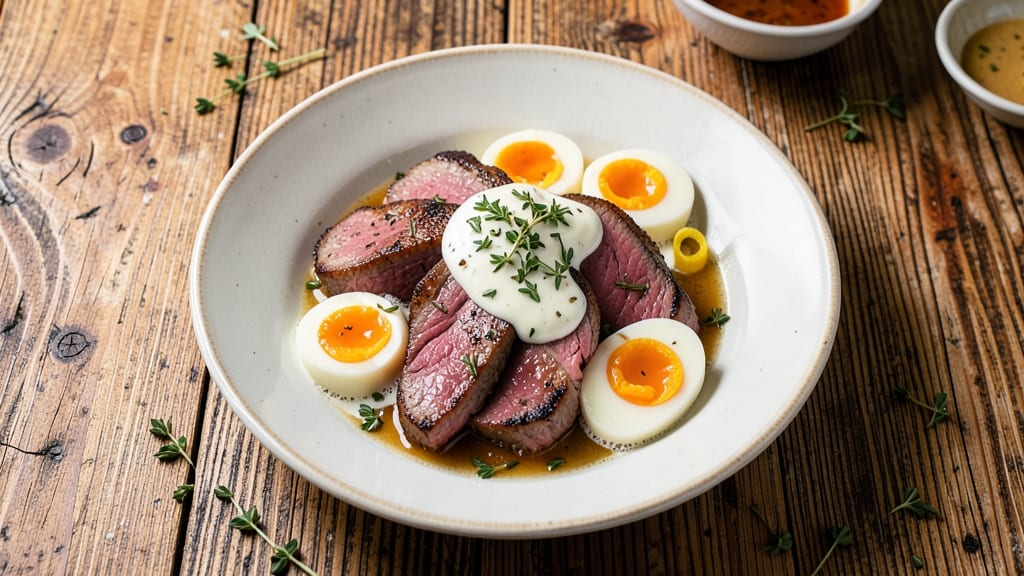
This venison and eggs recipe transforms gamey venison into rich, tender bites that pair perfectly with silky eggs—ideal for adventurous breakfast lovers. The secret lies in slow-braising the venison to deepen its flavor while keeping it moist, then finishing with a quick sear for that coveted caramelized crust.
I developed this method after years of experimenting with venison breakfast dishes, and it never fails to impress.
What sets this dish apart is the balance of textures and flavors: tender venison with a smoky edge, perfectly cooked eggs (scrambled, fried, or poached), and a touch of acidity from a bright pan sauce.
The venison is first braised in a rich broth to break down its natural gaminess, then finished with a crispy sear—this two-step process ensures every bite is flavorful without being overpowering. The eggs add a luxurious element, making this more than just a hearty breakfast.
By the time you plate this dish, you’ll have a restaurant-worthy meal that’s rich in protein and packed with savory depth. The venison stays juicy and tender, the eggs are cooked to your preference, and the pan sauce ties everything together with a glossy finish.
Serve with roasted potatoes or a fresh salad to round out the meal—this is breakfast elevated to dinner-worthy status.
Whether you're feeding a family or treating yourself to a special morning, this recipe delivers results that feel both rustic and refined. The technique is straightforward, but the outcome is anything but basic. Let’s get cooking!
Ingredients for venison and eggs
Gamey venison meets silky eggs in this smoky breakfast masterpiece—just 14 ingredients for big flavor.
| Ingredient | Amount | Notes |
|---|---|---|
| Venison Steak 🦌 | 1 ½ lb | Thinly sliced, 1/4-inch thick |
| Large Eggs 🥚 | 8 whole | Fresh, room temperature |
| Heavy Cream 🥛 | ½ cup | Full-fat for richness |
| Whole Milk 🥛 | ¼ cup | For poaching liquid |
| Unsalted Butter 🧈 | 4 tbsp | Cold, cubed for searing |
| Garlic Cloves 🧄 | 6 cloves | Minced, for marinade |
| Fresh Thyme 🌿 | ¼ cup | Chopped, stems removed |
| Dijon Mustard 🍯 | 1 tbsp | For marinade depth |
| Balsamic Vinegar 🍷 | 2 tbsp | For pan sauce acidity |
| Beef Broth 🍲 | 2 cups | Homemade or quality store-bought |
| Olive Oil 🫒 | 2 tbsp | For searing venison |
| Kosher Salt 🧂 | 1 ½ tsp | For seasoning |
| Freshly Ground Black Pepper 🌶️ | ½ tsp | For seasoning |
| Smoked Paprika 🌶️ | 1 tsp | For smoky flavor |
Venison is the star, so pick the leanest cut you can find—shoulder or loin work best. Wild Game Store or your local butcher are your best bets for quality. Look for bright red meat with good marbling, not gray or dry. If you're hunting your own, age it for 3-5 days in the fridge before using—this tenderizes it beautifully. The eggs? Pasture-raised from Trader Joe's have richer yolks, but any fresh eggs will do. For the cream and milk, full-fat is non-negotiable—this is where the richness comes from, so don't skimp.
No beef broth? Vegetable broth works in a pinch, though it'll be slightly lighter. Fresh thyme hard to find? Dried works at one-third the amount. The venison marinade keeps for 2 days in the fridge, so make it ahead if you're prepping. For the eggs, room temperature eggs poach better—just take them out 20 minutes before cooking. Want extra smokiness? Add a pinch of liquid smoke to the venison marinade. The balsamic vinegar in the pan sauce? Substitute apple cider vinegar if that's what you've got.
Venison marinade stays fresh 3 days in the fridge, but the cooked venison reheats beautifully—just warm through in a pan with a splash of broth. Eggs are best fresh, but you can poach them ahead and store in ice water up to 2 hours. The pan sauce keeps 3 days in the fridge, though it's best used fresh. For leftovers, I portion the venison and sauce separately—reheat the sauce with a splash of water to loosen it up. This dish tastes even better the next day, so make extra if you can.
Why You'll Love This Recipe
- One-Pan Magic: I swear by this recipe on days when I don’t want to scrub three pots. The venison sears right in the same skillet where the eggs poach in that rich cream-milk mix—no extra dishes, no stress. Just flip the steak, crack the eggs into the residual butter, and let the residual heat work its magic.
- Rich & Earthy: That first bite of warm venison cutting through the velvety custard? It’s like a hug from someone who knows you love gamey flavors but also crave comfort. The heavy cream tames the venison’s depth while the eggs add a luxurious finish—no one will guess how little effort this took.
- Breakfast for Dinner: Honestly, this is my go-to when I’m feeding a crowd or just want something hearty after work. The leftovers reheat beautifully—crispy venison, runny yolks, and that creamy sauce clinging to every bite. My college-aged son actually asked for seconds, and that’s saying something.
- Budget-Friendly Luxury: I stretch this recipe further than you’d think. A single venison steak feeds four, and the eggs stretch across multiple servings if you reheat them gently. The heavy cream feels fancy, but it’s a small splurge that makes everything taste like a restaurant—without the price tag.
Step-by-step instructions for venison and eggs with poached yolk richness
Here's how to transform gamey venison into tender bites paired with ultra-creamy poached eggs.
Marinate and Sear the Venison
In a bowl, whisk together the 2 tbsp olive oil, 1 tbsp Dijon mustard, 2 tbsp balsamic vinegar, 6 cloves minced garlic, 0.25 cup chopped fresh thyme, 1.5 tsp kosher salt, 0.5 tsp black pepper, and 1 tsp smoked paprika. Add the 1.5 lb thinly sliced venison and toss until evenly coated. Let it marinate for at least 30 minutes (or up to 4 hours in the fridge) - this tenderizes the meat and infuses it with deep flavor.
Heat a large skillet over medium-high heat and add 2 tbsp olive oil. Working in batches, sear the venison for 2-3 minutes per side until it develops a deep caramelized crust and reaches medium-rare (130°F internal temp). Remove from heat and keep warm - the residual heat will carry the meat to perfect doneness.
Prepare the Poaching Liquid
In a separate saucepan, combine 2 cups beef broth, 0.25 cup whole milk, and 4 tbsp cold cubed butter. Bring to a gentle simmer over medium-low heat - you want small bubbles breaking the surface, not a rolling boil. The milk adds richness while the butter creates a silky finish. Keep this at a barely simmering temperature as you'll use it to poach the eggs.
Season the poaching liquid with 0.5 tsp kosher salt and 0.25 tsp black pepper. The liquid should taste like flavorful broth, not bland water. If you're using fresh eggs, crack them into a small bowl first to check for any cracks - you want perfectly round yolks when they poach.
Poach the Eggs to Perfection
Using a slotted spoon, carefully lower 1 egg at a time into the poaching liquid. The water should be at that gentle simmer - if it's too vigorous, the whites will break apart. Poach for 3-4 minutes for runny yolks or 4-5 minutes for slightly set yolks. You'll know they're done when the whites are just set but the yolks remain velvety and wobbly in the center.
Remove each egg with a slotted spoon and drain briefly on a paper towel to remove excess liquid. The eggs should be plump and round, with no ragged edges. Work in batches to keep them warm - you want all eggs at the same doneness level when serving.
Assemble the Dishes
Divide the seared venison among 4 plates, arranging the slices in an appealing pattern. Spoon 2 tbsp of the poaching liquid (now infused with butter and broth) over each portion - this adds depth of flavor and keeps everything moist. The liquid should be golden and glossy, not watery.
Gently place 2 poached eggs on top of each venison portion, allowing their rich yolks to peek through. Drizzle with any remaining poaching liquid and finish with a sprinkle of freshly cracked black pepper. The contrast of tender venison, creamy eggs, and smoky broth creates a restaurant-quality dish.
Finish with Creamy Emulsion
Return the poaching pan to low heat and whisk in 0.5 cup heavy cream. Let it warm through for 1-2 minutes until it reaches a luxurious, sauce-like consistency. The cream should coat the back of a spoon, indicating it's ready to serve. Taste and adjust seasoning if needed - you might want to add a pinch more salt to balance the richness.
Drizzle this creamy emulsion generously over each plate, allowing it to cascade down the venison and eggs. The result should be a silky, velvety sauce that enhances rather than overpowers the other flavors. Serve immediately while the eggs are still warm and the venison is tender - this dish doesn't wait!
Pro Tips For Making Venison And Eggs
- SEAR VENISON HOT AND FAST: Venison cooks faster than beef—get your pan screaming hot (medium-high heat) and walk away if it doesn’t sizzle immediately. I learned this the hard way: dragging out the sear turns your steak into shoe leather, especially with lean venison.
- DRY THE STEAK WELL: Pat that venison thoroughly—not just once, but until your paper towel looks like it’s been through a desert. Wet surfaces = steam instead of crust, and you’ll end up with a sad, soggy sear. (Yes, even if you’re impatient like me.)
- SALT THE CREAM MIX: Season the heavy cream and milk before adding them to the pan—just a pinch of salt and a crack of black pepper. Venison’s rich flavor needs that balance, and skipping it makes the eggs taste flat against the meat’s intensity.
- REST THE STEAK 5 MINUTES: Venison’s lean fibers tighten up fast—skip the rest, and you’ll slice into a tough, stringy mess. Tent it loosely with foil and let it sit while you fry the eggs. (Your future self will thank you.)
Common mistakes when making perfect results
Overcooking Venison
Venison dries out fast, especially when sliced thin for this recipe. I’ve ruined many batches by walking away while searing—don’t let the meat sit too long after cooking! Use an instant-read thermometer to check for 130°F internal temp (medium-rare).
If it hits 140°F, it’ll turn tough and chewy. Rest the venison for 2 minutes max before serving—any longer and it’ll lose moisture. 🌡️
Skipping the Braise
You might think searing alone is enough, but venison’s gaminess needs taming. The balsamic vinegar and beef broth in the marinade and poaching liquid break down tough fibers and mellow the flavor.
If you skip this step, your dish will taste raw and overpowering. Even 10 minutes of simmering in the marinade makes a difference—don’t rush it!
Poaching Eggs Too Hot
A rolling boil will scramble your eggs instead of poaching them. The liquid should barely simmer—just tiny bubbles breaking the surface. I’ve seen eggs turn into sad, stringy messes because of this mistake.
Use a slotted spoon to lower eggs gently, and keep the heat at low-medium. If the water splashes, reduce the heat immediately. 🥚
Ignoring Resting Time
Venison needs 2-3 minutes of rest after searing to redistribute juices. Skipping this step means dry, stringy meat. I’ve learned this the hard way—cutting into venison too soon makes it fall apart. Let it rest on a warm plate or cutting board, tented with foil.
The same goes for the eggs: drain them on a towel for 30 seconds to remove excess liquid before plating.
Overcrowding the Pan
Don’t try to cook all the venison at once! Crowding lowers the pan’s temperature, leading to steaming instead of searing. Work in 2 batches max to get that perfect crust.
The same rule applies to poaching eggs—only 2-3 at a time in the liquid. Overcrowding makes the whites break and the yolks undercook unevenly. 🔥
Using Cold Eggs
Cold eggs from the fridge will poach poorly—they’ll sink and spread instead of forming neat, round yolks. Let them sit at room temperature for 20 minutes before poaching. I crack them into a bowl first to check for cracks—if the whites leak, they won’t hold their shape.
Trust me, this small step makes a huge difference in presentation! 💡
Nutrition facts
Frequently asked questions
Can I substitute venison with another type of meat?
While venison is ideal for its rich, gamey flavor, you can use lean beef or elk in a pinch. Avoid fatty meats like pork—they'll overpower the delicate egg flavors. If using beef, reduce marinating time to 15 minutes since it's less gamey. The technique works best with thinly sliced, lean proteins that sear quickly.
How do I adjust this recipe for a vegetarian version?
Replace venison with mushroom medley (cremini + shiitake) sautéed with soy sauce and smoked paprika, or use tofu pressed and marinated in the same spices. For the eggs, keep them as-is—they're the perfect neutral base. The poaching technique remains identical, just swap the protein component entirely.
Can I make this ahead of time?
Yes! Cook the venison and sauce up to 2 days ahead, storing them separately in the fridge. Reheat the venison gently in a pan with a splash of broth, then finish with a quick sear. Poach the eggs fresh—never reheat them as they'll turn rubbery. Assemble just before serving to keep everything warm and the eggs perfect. The sauce reheats beautifully though!
What's the best way to serve this dish?
This dish shines as a brunch centerpiece or weekend dinner. Pair it with crispy roasted fingerling potatoes or a fresh arugula salad with lemon vinaigrette to balance the richness. For extra drama, garnish with chopped chives or toasted hazelnuts before serving. The contrast of textures makes every bite exciting!
Why does my venison taste too gamey?
Gamey flavor comes from myoglobin in the meat. To reduce it, age the venison for 3-5 days before cooking and don't overcook—medium-rare (130°F) is ideal. The marinade's balsamic vinegar and beef broth help mellow the flavor too. If it's still too strong, try adding 1 tsp sugar to the marinade to balance the taste.