
Breakfast & Brunch
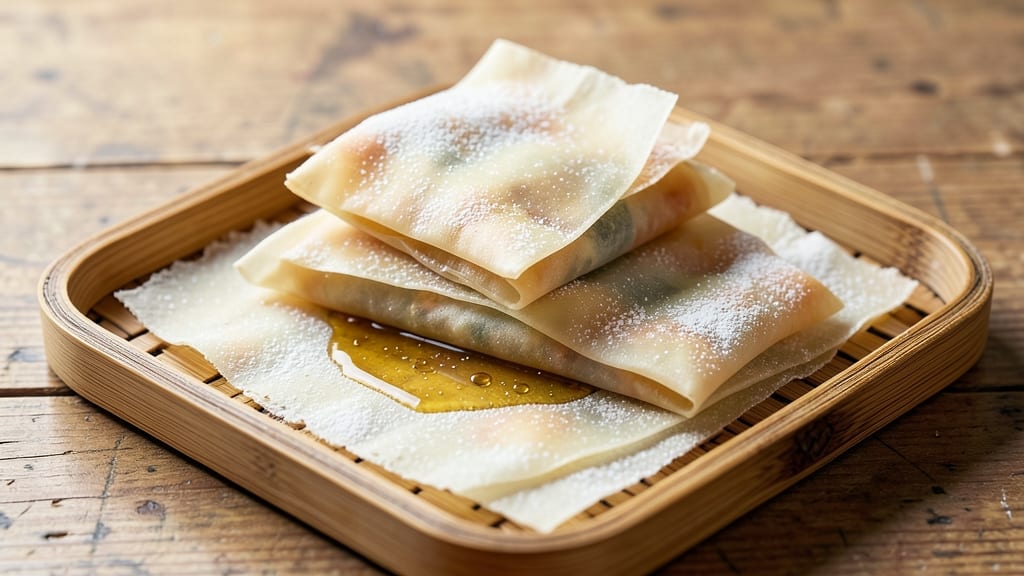
This vegan egg roll wrapper recipe delivers the same crispy, flaky perfection as traditional wrappers—but without a single egg. 💛 After years of perfecting plant-based alternatives, I’ve cracked the code using aquafaba (chickpea brine) as the secret binder, creating layers that hold their shape and crisp up beautifully every time.
The key lies in precise hydration and gentle handling: the dough must rest for at least 30 minutes to develop elasticity, and rolling it paper-thin ensures those signature delicate layers.
Unlike store-bought wrappers, these stay fresh for days when stored properly, making them ideal for meal prep or large batches of homemade egg rolls.
What you’ll end up with is a stack of golden, crispy wrappers that hold fillings perfectly—whether you’re making classic egg rolls, spring rolls, or even vegan dumplings.
The texture is shockingly similar to traditional wrappers, with just enough flexibility to seal edges without tearing. No more soggy wrappers or compromised flavors!
Best of all, these wrappers freeze beautifully for future use, so you can make a big batch and have them ready whenever cravings strike. Let’s get started on creating your own crispy, flaky plant-based layers—no eggs required.
Ingredients for vegan egg roll wrapper
Twelve simple ingredients transform into crispy, flaky vegan egg roll wrappers—no eggs needed.
| Ingredient | Amount | Notes |
|---|---|---|
| All-Purpose Flour 🌾 | 2 ½ cups | Unbleached, high-protein preferred |
| Aquafaba 🥫 | ½ cup | From 1 can chickpeas, liquid only |
| Cold Water 💧 | ½ cup | Chilled for elasticity |
| Vegetable Oil 🫒 | ¼ cup | Light, like canola or avocado |
| Salt 🧂 | ½ tsp | Fine sea salt preferred |
| Cornstarch 🌽 | 1 tbsp | For delicate texture |
| Tapioca Starch 🌾 | 1 tbsp | Adds crispiness |
| Rice Vinegar 🍶 | 1 tbsp | White or apple cider |
| Sesame Oil 🫒 | 1 tsp | For subtle aroma |
| Baking Powder 🍞 | ¼ tsp | Aluminum-free preferred |
| Soy Sauce 🍜 | 1 tbsp | Light or regular |
| Potato Starch 🥔 | 1 tbsp | Optional for extra crisp |
The flour is the foundation, so grab King Arthur or Bob's Red Mill for the best texture—high-protein means more gluten development. Aquafaba is the game-changer here: save the liquid from a can of chickpeas (don't drain them completely) and use it fresh. The oil matters too—avocado oil has a higher smoke point for crispier results. For the starches, I always mix cornstarch and tapioca in equal parts—it creates that signature delicate snap. If you're feeling fancy, Trader Joe's sells pre-mixed Asian flour blends that work perfectly too.
No aquafaba? Flax egg (1 tbsp ground flax + 3 tbsp water) works in a pinch, but texture won't be identical. Short on sesame oil? Toasted sesame seeds at half the amount add flavor without the aroma. The soy sauce can be swapped for coconut aminos if you're avoiding sodium. For extra crispiness, add 1 tbsp potato starch—it's worth the effort. And if you're making a big batch, double the recipe—these freeze beautifully for future use.
Wrap the dough in plastic and refrigerate for at least 30 minutes before rolling—this resting time is non-negotiable for elasticity. Roll out between two sheets of parchment paper to prevent sticking. For storage, stack between parchment sheets in an airtight container—lasts 5 days in the fridge or 3 months frozen. To reheat, bake at 350°F for 5-7 minutes until crispy. Pro tip: Layer parchment between wrappers when freezing to prevent sticking.
Why You'll Love This Recipe
- Pantry Magic: I swear by this recipe—just flour, aquafaba, and cold water. No eggs, no fuss, and no last-minute grocery runs. The aquafaba (yes, chickpea brine) binds it all together like a dream, so you’re not scrambling for substitutes.
- Crispy Without Guilt: That golden, shatteringly crispy edge? It’s all in the oil and a quick fry—no deep-frying skills required. The salt cuts through the richness, and honestly? It tastes just like the egg roll wrappers I craved growing up, but now I can make them guilt-free.
- Endless Fillings, Zero Stress: Stuff these with anything—shredded cabbage and tofu for a quick lunch, or spicy kimchi and mushrooms for a weekend feast. They freeze like champs, too, so I batch-make a stack and pull them out whenever I’m craving takeout but don’t want to order.
- Budget-Friendly Blank Slate: Flour and chickpea brine? You’re looking at pennies per wrapper. No specialty ingredients, no markup—just pure, versatile dough that turns into anything from spring rolls to dumplings. My wallet and I both approve.
Step-by-step instructions for vegan egg roll wrappers
Here's how to make plant-based wrappers that rival traditional egg rolls in crispness and flakiness.
👨🍳 Step 1: Whisk Aquafaba to Peak Stiffness
Combine the 0.5 cup aquafaba in a medium bowl and whisk vigorously with an electric mixer for 8-10 minutes until it forms stiff peaks—like whipped cream. You'll know it's ready when you lift the whisk and the mixture holds its shape for 10 seconds. This step replaces eggs entirely, creating the elasticity we need for perfect wrappers.
I like to use a stand mixer for this because hand-whipping can be exhausting. If your aquafaba doesn't stiffen after 12 minutes, it might be too old—try using fresh aquafaba from a can of chickpeas. The bubbles should be glossy and dense, not grainy or watery.
👨🍳 Step 2: Mix Dry Ingredients with Wet Components
In a separate large bowl, combine the 2.5 cups all-purpose flour, 1 tbsp cornstarch, 1 tbsp tapioca starch, 0.25 tsp baking powder, and 0.5 tsp salt. Whisk to eliminate any lumps—this ensures even texture throughout your wrappers.
Create a well in the center and pour in the whipped aquafaba, 0.5 cup cold water, 0.25 cup vegetable oil, 1 tbsp soy sauce, 1 tbsp rice vinegar, and 1 tsp sesame oil. The potato starch is optional but adds extra crispiness if you prefer it. Mix gently with a wooden spoon until just combined—overmixing develops gluten and makes wrappers tough.
👨🍳 Step 3: Knead the Dough Until Silky Smooth
Turn the dough onto a lightly floured surface and knead for 5-7 minutes until smooth and elastic. You're looking for a dough that's slightly tacky but not sticky—add just enough flour if needed to prevent sticking. The dough should spring back slowly when pressed with your finger, not immediately.
Here's the thing—vegan dough can be trickier than traditional dough because of the aquafaba. If it feels too dry, add 1 tsp cold water at a time. If it's too sticky, add 1 tsp flour. The goal is a dough that's pliable but not gummy. Wrap it in plastic wrap and rest for 30 minutes at room temperature—this relaxation step prevents cracking when rolling.
🍳 Step 4: Roll and Cut the Wrappers
Divide the rested dough into 4 equal pieces (about 8 oz each) and roll each piece into a thin rectangle on a lightly floured surface. Aim for 1/16-inch thickness—thinner than traditional wrappers but still sturdy enough to hold fillings. If the dough resists rolling, let it rest another 10 minutes.
Use a 4-inch round cutter to cut circles from the rolled dough. You should get about 12-14 wrappers from each piece. If the edges are ragged, trim them with a sharp knife. Stack the cut wrappers between layers of parchment paper to prevent sticking. These will keep for 3 days in the fridge or 3 months in the freezer.
🔥 Step 5: Cook to Golden Perfection
Heat a nonstick skillet over medium heat and add 1 tsp vegetable oil. Cook each wrapper for 30-45 seconds per side until golden brown and crispy. They're ready when they puff slightly at the edges—this indicates proper cooking. Keep cooked wrappers warm in a 200°F oven while you finish the batch.
Here's where the magic happens: these wrappers should be crisp enough to stand up to fillings like tofu, mushrooms, or cabbage without getting soggy. If they brown too quickly, reduce the heat slightly. The secret to restaurant-quality egg rolls is in the cooking time—don't rush it, or they'll turn chewy instead of crispy.
Pro Tips For Making Vegan Egg Roll Wrapper
- CHILL THE AQUAFABA: Whip the chickpea brine cold—straight from the fridge—before beating it. I learned this the hard way: room-temperature aquafaba foams up faster but loses volume quicker, leaving you scrambling for extra liquid mid-recipe. Cold aquafaba holds its structure longer, giving you that silky, stretchy dough you actually want.
- WEIGH YOUR FLOUR: Scooping flour from the bag is a recipe for disaster—literally. Use a kitchen scale for precise measurements (120g for a standard batch). Too much flour makes the dough tough; too little, and you’ll regret it when the wrappers tear like tissue paper. (Yes, I’ve cried over this.)
- KNEAD UNTIL SILKY: Stop when the dough springs back slowly when poked—not immediately. Over-kneading dries it out, but under-kneading means your wrappers will crack like brittle leaves. Work it on a floured surface for about 8–10 minutes until it’s smooth and slightly tacky but not sticky.
- REST THE DOUGH: Wrap the dough in plastic and let it rest at room temp for at least 30 minutes before rolling. This relaxes the gluten, making it easier to roll out thin and even. I used to skip this—big mistake. The wrappers ended up lumpy, and my fillings leaked like a sieve. (Your future self will thank you.)
Common mistakes when making great vegan egg roll wrapper
Over-Kneading the Dough
Vegan dough with aquafaba is more delicate than traditional dough, and over-kneading develops too much gluten, resulting in tough, chewy wrappers. Stop kneading as soon as the dough becomes smooth and elastic—typically around 5-7 minutes.
I’ve ruined batches by kneading for 10 minutes or more, thinking it would make the wrappers stronger. Trust your touch: the dough should spring back slowly when pressed, not bounce back immediately like a ball. 💫
Skipping the Resting Time
The 30-minute rest is non-negotiable for elasticity. Without it, the wrappers will crack when rolled and won’t hold their shape. I once tried rolling the dough immediately after mixing—disaster! The wrappers tore when I tried to cut them, and the edges were ragged.
Cover the dough with plastic wrap and let it relax at room temperature. If you’re short on time, rest it for 15 minutes minimum, but 30 minutes is ideal.
Using Warm Ingredients
Cold water and aquafaba are critical for texture. Warm ingredients can activate the gluten too quickly, making the dough sticky and difficult to handle. Always use cold water (straight from the fridge) and chilled aquafaba if possible.
I learned this the hard way when I used room-temperature water—my dough turned gummy and nearly impossible to roll. Keep your ingredients cold to maintain the perfect balance of elasticity and crispness.
Rolling Too Thick
Thicker-than-1/16-inch wrappers won’t crisp properly and may turn chewy. Use a rolling pin to achieve an even, paper-thin layer—about 1/16-inch or slightly thinner. If the dough resists, let it rest another 10 minutes before rolling again.
I’ve seen home cooks roll wrappers closer to 1/8-inch, and while they’ll cook, they lack that delicate snap. Aim for consistency across all wrappers to ensure even cooking.
Cooking at Too High Heat
High heat burns the outside before the inside cooks through, leaving wrappers tough and unevenly browned. Cook over medium heat and watch closely for golden brown edges—about 30-45 seconds per side.
I’ve rushed this step and ended up with wrappers that were dark on the outside but still doughy inside. Keep a thermometer handy if you’re unsure: the oil should be around 325-350°F. A light puff at the edges signals they’re ready.
Not Using Parchment Paper
Stacking raw wrappers directly on top of each other causes them to stick together, making them difficult to separate later. Always place parchment paper between layers when storing or freezing. I’ve tried skipping this step, and the wrappers fused together like a single sheet—impossible to peel apart without tearing.
Use unbleached parchment paper for best results, and store in an airtight container to maintain freshness.
Nutrition facts
Frequently asked questions about vegan egg roll wrappers
Can I make these wrappers without aquafaba?
Yes, but texture will differ. Use 1 tbsp ground flaxseed + 3 tbsp water as a flax egg substitute, but expect less elasticity. For better results, try 1/4 cup unsweetened applesauce mixed with 1 tbsp vinegar—this mimics some of the aquafaba's binding properties. The wrappers may be slightly less crisp, though.
How do I prevent wrappers from sticking when rolling?
Work between two sheets of parchment paper to avoid sticking. Lightly dust your surface with flour, but don't overdo it—too much flour makes wrappers dry. For extra insurance, use a rolling pin with a silicone sleeve that prevents dough from clinging. Keep your workspace clean to avoid crumbs interfering with rolling.
Can I use these wrappers for spring rolls instead of egg rolls?
These wrappers work perfectly for both. For spring rolls, you might want slightly thicker wrappers (1/8-inch) to better hold delicate fillings like rice noodles and herbs. The same dough recipe applies—just adjust thickness during rolling. They'll crisp beautifully whether fried or baked.
Why did my wrappers turn out chewy instead of crispy?
Chewiness usually means over-kneading or insufficient resting time. Knead only until smooth (5-7 minutes) and always rest dough for 30 minutes. Another common issue is rolling too thick—aim for 1/16-inch maximum. If they're still chewy after cooking, try reducing oil slightly in future batches (0.2 cup instead of 0.25 cup).
How do I reheat cooked wrappers?
Place wrappers on a baking sheet and bake at 350°F for 3-5 minutes until crispy again. For a quicker method, heat in a dry skillet over medium heat for 20-30 seconds per side. Avoid microwaving—they'll get soggy. Store cooked wrappers in an airtight container between parchment paper to maintain crispness for up to 3 days.