
Breakfast & Brunch
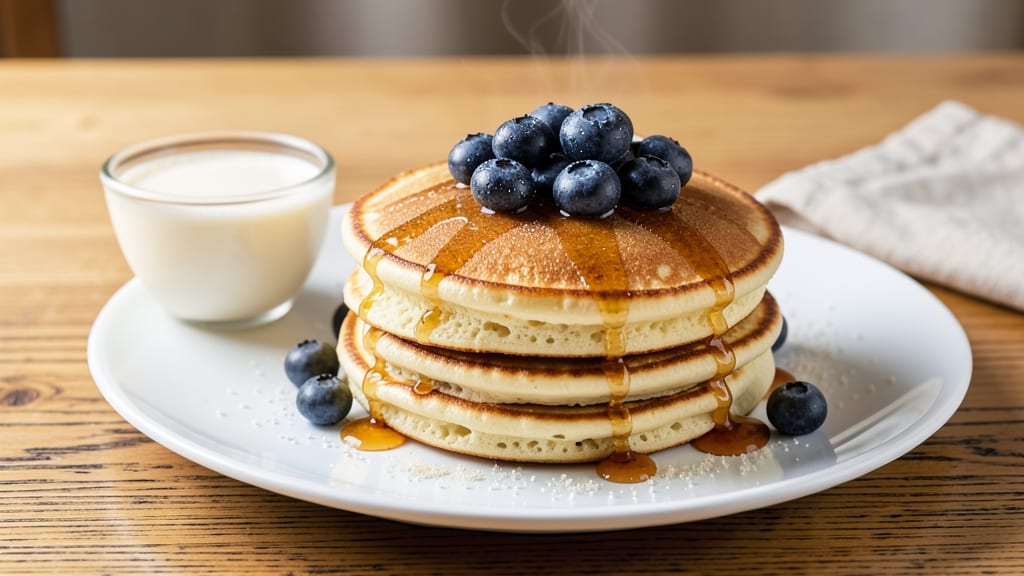
This US egg protein pancakes recipe transforms breakfast into a high-protein powerhouse without sacrificing fluff or flavor. 💛 The secret lies in blending egg protein powder with traditional pancake batter, creating a lighter yet satisfying stack that keeps you energized all morning.
Unlike dense protein pancakes, these rise beautifully with crispy edges and a tender interior—perfect for meal prep or a weekend brunch. What sets these apart is the balance of protein and texture.
The egg protein adds structure while keeping the batter light, and a touch of baking powder ensures that signature fluffy rise. You won’t miss the heaviness of traditional pancakes, but you’ll love the way they hold up to toppings like fresh berries, nut butter, or a drizzle of sugar-free syrup.
The result? A stack of golden, protein-packed pancakes that taste indulgent but deliver on nutrition. Each bite is crisp at the edges, soft in the center, and packed with plant-based protein—ideal for fitness goals or anyone craving a guilt-free breakfast.
Ready in under 15 minutes, they’re the ultimate solution for busy mornings. Pair them with a side of turkey sausage or a Greek yogurt parfait for a complete, balanced meal. The recipe scales effortlessly, so you can make a batch for the week and reheat without losing texture.
Let’s get flipping!
Ingredients for us egg protein pancakes
High-protein staples meet classic pancake fluff—here's what you'll need for breakfast that fuels.
| Ingredient | Amount | Notes |
|---|---|---|
| Egg Protein Powder 🥚 | ½ cup | Unflavored, vanilla or plain |
| All-Purpose Flour 🌾 | 1 cup | Sifted for smooth batter |
| Large Eggs 🥚 | 2 whole | Room temperature for best mixing |
| Unsweetened Almond Milk 🥛 | 1 cup | Vanilla or plain preferred |
| Baking Powder 🍞 | 1 tbsp | Aluminum-free for best rise |
| Granulated Sweetener 🍯 | 2 tbsp | Sucralose or stevia blend |
| Vanilla Extract 🍶 | 1 tsp | Pure, not imitation |
| Salt 🧂 | ½ tsp | Fine sea salt preferred |
| Coconut Oil 🫒 | 1 tbsp | Melted for cooking |
| Fresh Blueberries 🫐 | ½ cup | Optional for topping |
| Pure Maple Syrup 🍁 | 2 tbsp | For serving |
| Unsalted Butter 🧈 | 1 tbsp | For topping (optional) |
Egg protein powder is the star here. Naked Nutrition or Orgain are my go-tos—they blend smoothly and don't leave a chalky aftertaste. Grab the unflavored version if you want full control over the flavor profile. Flour matters too—King Arthur all-purpose gives the best texture, but any sifted flour works in a pinch. The almond milk? Silk brand is my secret weapon—it's thin enough to blend perfectly without making the batter too runny. If you're using vanilla almond milk, cut the vanilla extract to half a teaspoon since it's already flavored.
No egg protein powder? Unflavored whey protein isolate works in a bind, but it'll make the pancakes denser. Running low on almond milk? Oat milk or soy milk both work, but oat milk can make the batter slightly thicker. The baking powder is non-negotiable for that fluffy rise—Bob's Red Mill is my preferred brand. For the sweetener, I use Swerve granulated because it measures like sugar, but any zero-calorie sweetener will do. Fresh blueberries are optional, but if you use frozen, don't thaw them first—they'll make the batter too watery.
Make the batter ahead and store it in the fridge for up to 2 days—just give it a quick whisk before cooking. Leftover pancakes reheat beautifully in a toaster or air fryer for 2-3 minutes at 350°F. Freeze cooked pancakes between parchment paper for up to 3 months. Pro tip: keep the coconut oil in a small jar on your stovetop for quick melting—no more digging through the fridge during breakfast chaos. The maple syrup keeps indefinitely in the pantry, but the butter should be used within 6 months for best flavor.
Why You'll Love This Recipe
- I’ll be real: protein powder isn’t cheap, but this recipe stretches it further than most. A single batch feeds my family of four, and the leftovers freeze like a champ. Plus, using almond milk instead of heavy cream cuts costs without sacrificing taste—smart for my wallet and my macros.
- Five-Ingredient Magic: I swear by this list—just blend, pour, repeat. No measuring cups cluttering your counter, no last-minute grocery runs for weird ingredients. The egg protein powder does the heavy lifting while keeping it fluffy, and the almond milk gives that subtle richness without the dairy mess.
- Fluffy Yet Subtle: Honestly, I wasn’t sure about the protein powder at first, but the baking powder and eggs create this perfect lift—light as a cloud but with enough structure to handle toppings. The almond milk keeps it from tasting like a health-food lecture, which is a win in my book.
- Breakfast Reinvented: Between us, these pancakes are my go-to for lazy Sundays and post-workout fuel. Stack them with peanut butter for a protein boost, or keep it simple with a drizzle of honey—no judgment either way. They even reheat like a dream, so you’re not stuck making fresh batches.
Step-by-step instructions for high-protein fluffy pancakes
Here's how to make light, protein-packed pancakes that taste indulgent but fit your goals.
👨🍳 Step 1: Whisk Wet Ingredients for Smooth Batter
In a large bowl, combine the 0.5 cup egg protein powder, 2 whole large eggs, 1 cup unsweetened almond milk, and 1 tbsp granulated sweetener. Whisk vigorously for 2-3 minutes until completely smooth and free of lumps. This step is crucial—the protein powder needs time to fully dissolve and create a uniform batter.
Add the 1 tsp vanilla extract and 0.5 tsp salt, then whisk again for 30 seconds to fully incorporate. The batter should be slightly thicker than traditional pancake batter due to the protein powder, but still pourable. If it looks too thick, add 1-2 tablespoons more almond milk until it reaches a smooth, creamy consistency.
👨🍳 Step 2: Gently Fold in Dry Ingredients
In a separate bowl, sift together the 1 cup all-purpose flour and 1 tbsp baking powder. This sifting step prevents lumps and ensures even rising. Gradually add the dry mixture to the wet ingredients while gently folding with a spatula, being careful not to overmix.
Stop mixing as soon as the dry ingredients are just combined—you should still see a few small flour streaks. Overmixing develops gluten, which can make your pancakes tough. The ideal batter should be thick but still flow smoothly when poured. If needed, use a rubber spatula to scrape down the sides and ensure everything is evenly incorporated.
🔥 Step 3: Cook on Medium Heat for Perfect Texture
Heat a non-stick skillet over medium heat and melt the 1 tbsp coconut oil evenly across the surface. Pour ¼ cup batter for each pancake (this makes about 4 pancakes total). You'll know the heat is right when small bubbles form around the edges of the pancake after 2-3 minutes.
Once bubbles appear and the edges look set, flip carefully using a spatula. Cook for another 1-2 minutes on the second side until golden brown. The pancakes should be cooked through but still tender in the center. If they brown too quickly, reduce the heat slightly—we want fluffy, not crispy.
🥘 Step 4: Assemble and Serve Warm
Stack the warm pancakes on a plate and top with 0.5 cup fresh blueberries (if using) and a dollop of the 1 tbsp unsalted butter (optional). Drizzle with 2 tbsp pure maple syrup for serving. The blueberries add a nice pop of color and freshness that balances the richness of the pancakes.
Serve immediately while still warm and fluffy. These pancakes are best enjoyed right out of the pan—you'll notice how light and airy they are compared to traditional pancakes. The egg protein powder gives them a satisfying density without the heaviness, making them perfect for a protein-packed breakfast.
Pro Tips For Making Us Egg Protein Pancakes
- WHISK LIKE MAD: Mix the wet ingredients—eggs, almond milk, and egg protein powder—until the batter looks smooth and thick, like a thick pudding. I used to skimp on this step, and the pancakes turned out dense or lumpy. The protein powder doesn’t dissolve like regular flour, so give it 30 seconds of vigorous whisking.
- SIFT THE DRY STUFF: Combine the flour and baking powder in a separate bowl, then sift them together before folding into the wet mix. This keeps the baking powder evenly distributed, so your pancakes rise instead of puffing in random spots. (Yes, even if you’re impatient like me—just do it.)
- MEDIUM-HEAT ONLY: Start the pan over medium heat, not high. Too hot, and the outside burns before the inside cooks through. Medium gives you time to adjust—if the edges brown too fast, lower the heat. I learned this the hard way after flipping rubbery pancakes off a screaming-hot griddle.
- FOLD DON’T STIR: After mixing the wet and dry ingredients, fold them together with a spatula in two additions—don’t stir like you’re making soup. Overmixing develops gluten, and these pancakes will turn out tough instead of fluffy. Gentle folds keep the texture light, like a cloud with protein.
Essential equipment for perfect results
Non-Stick Skillet
Your non-stick skillet is the MVP for these pancakes—it prevents sticking and ensures that crispy edge we all love. I swear by a 10-inch cast iron skillet with a non-stick coating like Made In or GreenPan—they handle heat beautifully and last for years.
If you don’t have one, a well-seasoned cast iron works too, but you’ll need to use ½ tbsp coconut oil per pancake to prevent sticking. Avoid cheap non-stick pans; they release toxic fumes when overheated. 🔥
Mixing Bowls
Use a large mixing bowl (at least 2-quart capacity) for the wet ingredients and a smaller bowl (about 1-quart) for the dry ingredients. I recommend stainless steel or glass—they’re durable and easy to clean.
A whisk with silicone handles (like OXO Good Grips) makes blending the egg protein powder smooth without splatters. Avoid plastic bowls—they can retain flavors and wear out faster.
Measuring Cups & Spoons
Precision matters here! Use liquid measuring cups for the almond milk and dry measuring cups for the flour and egg protein powder. I keep a set of nested stainless steel measuring cups (like KitchenAid) on hand—they’re accurate and stack neatly.
For the 1 tbsp baking powder, a coffee spoon works perfectly. Pro tip: Sift your dry ingredients through a fine-mesh strainer to avoid lumps—this makes all the difference in texture. 🥄
Spatula & Tongs
A heat-resistant silicone spatula (like OXO Good Grips) is essential for folding the batter gently and flipping pancakes without tearing. For serving, tongs help stack pancakes neatly without crushing them. I also keep a small offset spatula handy to scrape up any leftover batter from the bowl—every bit counts!
Avoid metal spatulas when the pan is hot to prevent scratching the non-stick coating.
Electric Mixer (Optional)
While whisking works fine, an immersion blender or hand mixer (like Ninja or KitchenAid) can save time and effort, especially if you’re making a larger batch. The blender attachment ensures the egg protein powder dissolves completely, giving you a silky-smooth batter.
If you don’t have one, a strong whisk and 2-3 minutes of arm work will do the trick—just don’t rush it! 💪
Nutrition facts
Frequently asked questions
Can I substitute egg protein powder with regular protein powder?
You can try, but results may vary. Egg protein powder dissolves smoothly and creates a lighter texture, while whey or plant-based powders can make pancakes denser. For best results, use unflavored egg protein powder—brands like Naked Nutrition or Orgain blend perfectly without chalkiness. If you must substitute, reduce the batter by 1-2 tablespoons to account for extra thickness.
Why are my pancakes coming out dense instead of fluffy?
Overmixing the batter develops gluten, which makes pancakes tough. Whisk wet ingredients first until smooth, then gently fold in dry ingredients—just until combined. Also, ensure your baking powder is fresh (test with the vinegar test: mix 1 tsp baking powder with 1 tbsp vinegar—it should bubble vigorously). Heat should be medium, not high, to allow even cooking.
How do I make these pancakes without coconut oil?
Use butter, olive oil, or avocado oil instead. Melt 1 tbsp butter or use ½ tbsp neutral oil per pancake. Avoid vegetable oils with strong flavors (like sesame) unless you enjoy that taste. For extra crispiness, add ½ tsp baking powder to the batter—it enhances browning without affecting texture.
Can I add chocolate chips or mix-ins to these pancakes?
Yes, but keep portions small—too many mix-ins can make pancakes gummy. Use ¼ cup dark chocolate chips or chopped nuts (like walnuts or pecans) per batch. Fold them in gently after combining wet and dry ingredients. For a protein boost, stir in 1 scoop vanilla whey protein (reduce almond milk by 2 tbsp to balance thickness).
How do I reheat leftover pancakes without making them soggy?
Reheat in a toaster or air fryer for 2-3 minutes at 350°F—this preserves crispiness. For a stovetop method, cook over low heat in a dry non-stick pan for 1-2 minutes per side. Avoid microwaving—it steams pancakes, making them rubbery. Store leftovers in an airtight container for up to 4 days or freeze for 3 months.