
Salads
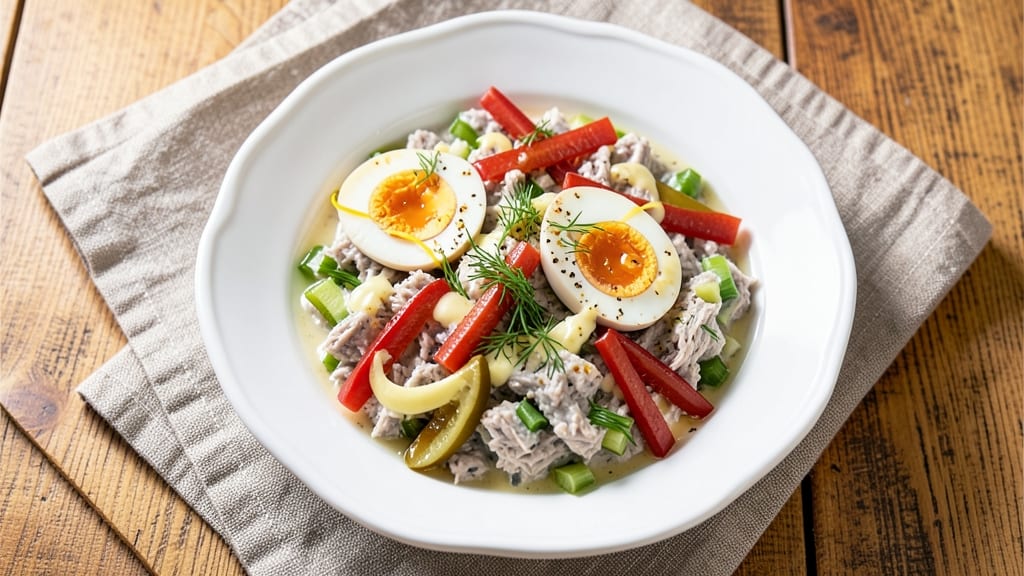
This tuna salad recipe with egg and pickles delivers a creamy, tangy twist that stands apart from classic versions. The secret lies in hard-boiled eggs for rich yolk magic and crisp pickles for that essential crunch, transforming simple canned tuna into a restaurant-worthy dish.
I developed this after years of perfecting texture—chunky enough for satisfaction, smooth enough for elegance—and the balance of flavors makes it ideal as a standalone meal or elegant side.
The egg acts as a natural binder, creating that luxurious creaminess without mayo, while pickles cut through the richness with bright acidity. Celery adds fresh crunch, and a touch of Dijon mustard elevates the flavor profile.
What you'll end up with is a salad that's rich yet balanced, with each bite offering a perfect harmony of textures and tastes—creamy, crunchy, and tangy all at once.
This recipe works beautifully for lunches, sandwiches, or as a starter for dinner parties. The preparation is straightforward but yields professional results, and the ingredients list is simple yet transformative. Whether you're feeding a crowd or packing a lunch, this tuna salad delivers on every level.
Ready in just 15 minutes, this dish proves that restaurant-quality meals can be achieved with minimal effort. The key is attention to texture—properly chopped ingredients and the right ratio of mayo to egg ensure that perfect balance. Let's get started!
Ingredients for tuna salad recipe with egg and pickles
This elegant tuna salad balances creamy richness with crisp, tangy contrast for a restaurant-worthy dish.
| Ingredient | Amount | Notes |
|---|---|---|
| Canned Tuna in Water 🐟 | 2 cans | High-quality, drained well |
| Large Eggs 🥚 | 2 whole | Hard-boiled, chopped finely |
| Dijon Mustard 🍯 | 1 tbsp | For depth of flavor |
| Celery Stems 🧅 | 2 whole | Finely chopped, fresh preferred |
| Dill Pickle Spears 🥒 | ½ cup | Chopped finely for texture |
| Mayonnaise 🥫 | ¼ cup | High-quality, full-fat preferred |
| Extra-Virgin Olive Oil 🫒 | 1 tbsp | For richness and balance |
| Fresh Dill 🌿 | 1 tbsp | Chopped, for freshness |
| Lemon Juice 🍋 | 1 tsp | Freshly squeezed, brightens flavors |
| Kosher Salt 🧂 | ½ tsp | Diamond Crystal preferred |
| Freshly Ground Black Pepper 🌶️ | ¼ tsp | For subtle heat |
The tuna should be premium—Wild Planet or Vital Choice brands deliver the best texture and flavor. Eggs are non-negotiable for that luxurious creaminess; organic, free-range eggs from the grocery store's deli counter (like Pasture Raised at Whole Foods) make all the difference. Fresh dill is ideal, but dried dill at one-third the amount works in a pinch. For pickles, dill spears
No Dijon mustard? Yellow mustard at half the amount works, though it lacks depth. Substituting mayo with Greek yogurt (same quantity) lightens the texture slightly but requires extra lemon juice for brightness. For a vegan twist, use vegan mayo and flax eggs, though texture will differ. The olive oil should be extra-virgin, fruity, and peppery—California Avocado Ranch or Colavita are excellent choices. If you can't find fresh dill, tarragon or parsley can substitute, though flavor will shift. Always chop ingredients uniformly for that professional, restaurant-quality texture. This salad keeps beautifully in an airtight container for 3-4 days in the fridge, though flavors peak within the first 24 hours. For longer storage, portion into small containers and freeze for up to 3 monthsfreshly cracked black pepper and a drizzle of extra-virgin olive oil just before eating enhances flavor. Leftovers make excellent sandwich fillings or can be served with crackers for a light appetizer.
Why You'll Love This Recipe
- No Chopping Needed: I just dump the canned tuna, dice the pickles (two minutes max), and chop celery into fat sticks—no knife skills required. The eggs? Hard-boiled ahead or soft-boiled fresh—either way, it’s done before the kettle boils.
- Pickle-Powered Kick: That tangy pickle juice cuts through the richness of the tuna and mayo, while the Dijon mustard adds depth without overpowering. Honestly, the contrast of creamy egg and crisp pickle spear? It’s the secret weapon in my lunchbox.
- Lunchbox Legend: Pack it in a thermos for work or slather it on crackers for a picnic—it holds up for days without getting soggy. My kids even ask for it in their school lunches (yes, even on a Tuesday).
- Pantry Staple Magic: Three ingredients cost me $5 total: a can of tuna, a dozen eggs, and a jar of pickles. Leftovers? I turn them into tacos, sandwiches, or just eat them straight from the jar. Budget-friendly doesn’t get much better.
Step-by-step instructions for tuna salad with egg and pickles
This method delivers a perfectly balanced tuna salad with rich texture and vibrant flavors.
Prepare the Hard-Boiled Eggs
Place the 2 whole large eggs in a small saucepan and cover them with cold water by about 1 inch. Bring to a boil over high heat, then immediately remove from heat, cover, and let sit for 12 minutes. This timing ensures fully set yolks that will create that signature creamy texture when chopped. Transfer eggs to an ice bath for 5 minutes to stop cooking, then peel and chop them finely.
Here's the thing—finely chopped eggs make all the difference. When you're done, the pieces should be almost paste-like. This ensures they blend seamlessly with the tuna, creating that luxurious creamy base that defines this salad. Don't rush this step; precision pays off in texture.
Finely Chop All Vegetable Components
Using a sharp chef's knife, finely chop the 2 whole celery stems and 0.5 cup dill pickle spears. I like to stack the celery stems and slice them crosswise into ⅛-inch pieces for maximum crunch. For the pickles, remove any seeds and chop them into similar small pieces—this prevents large, unappetizing chunks in your salad.
The key here is uniformity. You want all your chopped ingredients to be roughly the same size so they distribute evenly throughout the salad. If you're using very fresh celery, you might want to soak the chopped pieces in ice water for 5 minutes to remove any bitter juices that can develop when celery oxidizes.
Combine Wet Ingredients for the Base
In a medium mixing bowl, combine the 2 cans drained tuna in water, 0.25 cup mayonnaise, 1 tbsp Dijon mustard, 1 tbsp extra-virgin olive oil, 1 tsp lemon juice, 0.5 tsp kosher salt, and 0.25 tsp freshly ground black pepper. Use a fork to gently break up the tuna flakes while mixing everything together. This creates a smooth, cohesive base without over-mixing that could make the salad dense.
Don't skip the lemon juice—it brightens the flavors and cuts through the richness of the mayonnaise. The Dijon mustard adds depth that regular mustard can't match. At this stage, the mixture should look moist but not soupy. If it seems too dry, add 1 teaspoon of water to help everything bind together properly.
Fold in Chopped Ingredients
Add the finely chopped eggs, celery, dill pickle spears, and 1 tbsp chopped fresh dill to the tuna mixture. Using a silicone spatula, gently fold everything together just until combined. Be careful not to overmix—you want to preserve the texture of each ingredient while creating a cohesive salad. The dill should be distributed evenly throughout for that fresh herbaceous note.
Here's where the magic happens: the combination of creamy eggs, crunchy celery, tangy pickles, and fresh dill creates layers of texture and flavor. Taste as you go and adjust seasoning if needed. If the salad seems too dry, add another teaspoon of mayonnaise to bind everything together. The final mixture should be moist but still hold its shape when scooped.
Rest and Serve for Optimal Texture
Cover the bowl and refrigerate the tuna salad for at least 30 minutes before serving. This resting period allows all the flavors to meld together and the textures to settle. The eggs will absorb some of the moisture from the other ingredients, creating that perfect creamy-yet-light consistency that makes this salad so special.
When ready to serve, give the salad one final gentle fold with your spatula. The flavors should now be harmoniously balanced with no single ingredient overpowering. Serve immediately on toasted bread, crackers, or alongside your favorite sandwiches. This salad keeps well in the refrigerator for up to 3 days, though the texture may firm up slightly after the first day.
Pro Tips For Making Tuna Salad Recipe With Egg And Pickles
- Drain and Press the Tuna: Drain the tuna in a fine-mesh strainer, then press it gently with the back of a spoon to remove excess water—this keeps the salad from turning soggy. I used to skip this, and the texture always suffered.
- Chop Pickles Tiny: Cut the dill pickle spears into ¼-inch dice instead of leaving them in spears—they’ll distribute flavor evenly and prevent big crunchy surprises. Sounds tedious, but it’s worth the 30 seconds.
- Mix Eggs Last: Add the chopped hard-boiled egg right before serving so the yolk stays intact and creamy, not turning into a sad, watery mess. I learned this after one disastrous batch where the egg dissolved into the salad.
- Use Cold Mustard: Keep the Dijon mustard in the fridge until you’re ready to mix it in—cold mustard blends smoother and doesn’t overpower the other flavors. Warm mustard makes the whole salad taste sharp and uneven.
Storing and reheating your tuna salad recipe with egg and pickles
Fridge Storage Tips
Store your tuna salad in an airtight container with a tight-fitting lid to preserve freshness. I use glass Pyrex containers because they keep flavors vibrant longer than plastic.
The salad stays best at 40°F or below for up to 3-4 days, though the texture becomes slightly firmer after day 1. For maximum flavor retention, press plastic wrap directly on the surface before sealing the lid to minimize air exposure. 🥫
Freezing for Later
Portion your tuna salad into single-serving containers before freezing to prevent freezer burn and make thawing easier. I recommend quart-sized freezer bags with the air squeezed out—this preserves texture better than rigid containers.
Label with the date and freeze for up to 3 months. When ready to eat, thaw overnight in the fridge for even texture distribution. 🧊
Reheating Methods
For best results, reheat tuna salad gently in the microwave. Place a portion in a microwave-safe bowl, cover with a damp paper towel, and heat on 50% power for 1-2 minutes. Stir halfway through to redistribute moisture.
Alternatively, warm in a small saucepan over low heat with 1 tablespoon water to prevent drying. Never boil—the eggs will curdle and the texture will suffer. 🔥
Reviving Texture
If your stored salad seems dry, revive it by adding 1 teaspoon mayonnaise or olive oil and gently folding it in. For extra moisture, mix in 1 teaspoon lemon juice or a splash of water.
The chopped eggs and pickles will absorb this quickly, restoring that creamy-yet-crunchy texture. Avoid adding too much liquid at once—start with small amounts and adjust as needed. ✨
Egg Handling
If freezing the salad with eggs, the yolks may become slightly grainy upon thawing. To prevent this, remove the eggs before freezing and add them fresh when ready to serve. Alternatively, store the eggs separately in the fridge for up to 1 week and mix them in just before eating.
This keeps the yolks perfectly creamy and prevents texture breakdown. 🥚
Serving Leftovers
Use leftovers creatively! Spread on toasted sourdough, stuff into pita pockets, or serve with cucumber slices for a refreshing lunch. For a gourmet touch, top with fresh dill and a drizzle of olive oil right before serving.
The pickles and celery retain their crunch beautifully even after storage, making this salad perfect for meal prep. 🥖
Nutrition facts
Frequently asked questions
Can I use oil-packed tuna instead of water-packed?
Oil-packed tuna adds richness that pairs beautifully with the pickles and eggs. Use the same amount (2 cans), but drain it thoroughly and pat it dry with paper towels to remove excess oil. You may need to reduce the mayo by 1 tablespoon since the tuna will already be quite moist.
What if I don't have Dijon mustard?
No problem! Use 1 tablespoon yellow mustard instead, but know it lacks the depth of Dijon. For a tangy alternative, add an extra ½ teaspoon lemon juice to compensate. The salad will still taste great—just slightly less complex.
How can I make this salad vegan?
Swap the eggs for 2 tablespoons flax eggs (2 tbsp ground flax + 6 tbsp water, mixed and rested for 5 mins) and use vegan mayo. Add 1 extra teaspoon lemon juice to brighten flavors. The texture will be lighter, but the crunch from celery and pickles remains delightful.
Why does my tuna salad get watery?
Overmixing or using too much mayo/water are common culprits. For a quick fix, drain excess liquid by placing the salad in a fine-mesh strainer for 5 minutes. To prevent this, fold ingredients gently and let the salad rest 30 minutes before serving—this helps bind the moisture.
Can I add other vegetables?
Yes! Try finely diced red onion (2 tbsp) for sharpness or red bell pepper for sweetness. Just chop them very small to maintain the salad's texture. Avoid watery veggies like tomatoes—they can dilute the flavors.