
Breakfast & Brunch
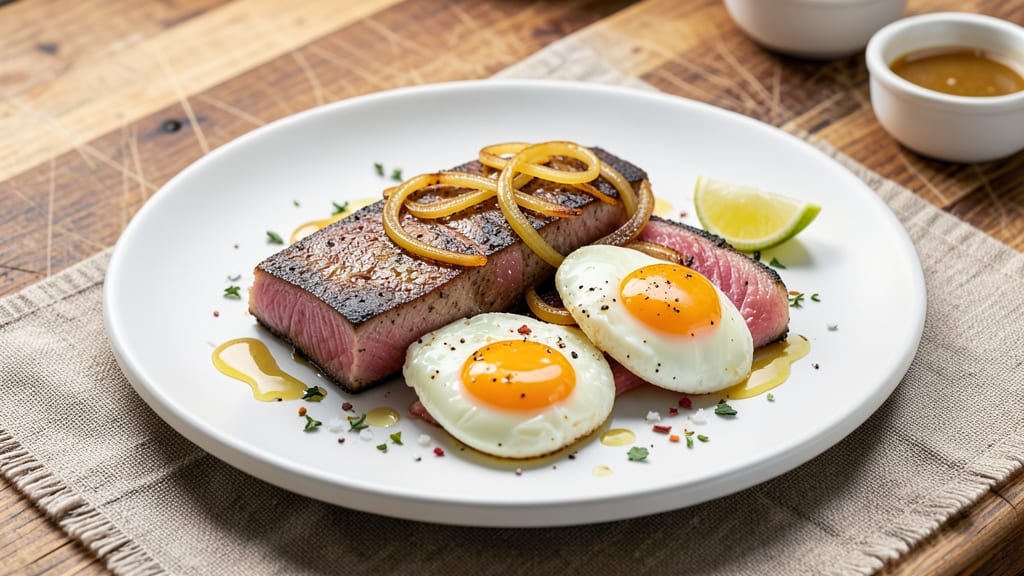
This tuna egg onion recipe delivers a fast, protein-packed breakfast that balances creamy textures with crispy edges and bright, fresh flavors. The secret lies in perfectly seared tuna steaks—juicy and tender—paired with silky scrambled eggs and caramelized onions that add natural sweetness.
I developed this dish after realizing how often simple ingredients could create something restaurant-worthy with minimal effort. What makes this recipe stand out is the harmony of textures: creamy egg strands wrap around flaky tuna, while crispy onion bits add contrast.
The dish comes together in under 20 minutes, making it ideal for busy mornings or weekend brunches. A squeeze of lemon at the end brightens the flavors, cutting through the richness while keeping everything balanced.
The result is a dish that feels indulgent yet light—perfect for pescatarians or anyone craving a satisfying breakfast without heavy carbs. Each bite delivers umami from the tuna, richness from the eggs, and a touch of sweetness from the onions.
This is the kind of meal that makes you feel nourished without sacrificing flavor. Serve with a side of toast or fresh greens for a complete plate. The best part? Leftovers reheat beautifully, so you can meal prep without sacrificing texture. Let's get cooking!
Ingredients for tuna egg onion
Twelve ingredients transform into a restaurant-quality breakfast with perfect texture balance.
| Ingredient | Amount | Notes |
|---|---|---|
| Sushi-Grade Ahi Tuna Steaks 🐟 | 1 lb | 1-inch thick slices, patted dry |
| Large Eggs 🥚 | 6 whole | Fresh, cold, room temperature |
| Yellow Onions 🧅 | 1 whole | Thinly sliced, caramelized |
| Extra-Virgin Olive Oil 🫒 | ½ cup | High smoke point for searing |
| Unsalted Butter 🧈 | 2 tbsp | Cold, cubed for eggs |
| Fresh Lemon Juice 🍋 | 2 tbsp | Freshly squeezed, bright flavor |
| Diamond Crystal Kosher Salt 🧂 | 1 tsp | Fine grain for delicate seasoning |
| Freshly Ground Black Pepper 🌶️ | ½ tsp | Cracked peppercorns preferred |
| Fresh Flat-Leaf Parsley 🌿 | ¼ cup | Chopped, for garnish |
| Garlic Cloves 🧄 | 2 cloves | Minced, aromatic base |
| Sesame Oil 🫒 | 1 tbsp | Toasted, finishing touch |
| Soy Sauce 🍶 | 1 tbsp | Light, for glaze |
The ahi tuna is non-negotiable for this dish—sushi-grade quality ensures safety and optimal texture. Look for bright red, firm fillets at Whole Foods or your local seafood counter. Costco often has pre-sliced steaks that save time. Pat them completely dry before searing to achieve that perfect crust. For the onions, yellow onions caramelize best, but red onions add color if you prefer. Thinly slice them yourself—pre-shredded won't caramelize properly. The eggs should be fresh (within a week of purchase) for the creamiest texture, and room temperature for even scrambling.
No fresh parsley? Dried parsley at half the amount works in a pinch, though fresh is ideal. Substitute avocado oil for olive oil if you're concerned about smoke point during searing. For the soy sauce, tamari offers a gluten-free alternative. The sesame oil can be swapped for toasted peanut oil if you're avoiding sesame. If you're short on time, pre-minced garlic from a jar works, but fresh minced has far more flavor. The butter should be unsalted to control seasoning precisely—salted butter can make your dish too salty. For extra richness, consider adding a splash of heavy cream to the eggs, though the recipe stands strong without it.
Store the tuna steaks in an airtight container with a paper towel to absorb moisture—keeps for up to 2 days in the fridge. Prep the onions ahead and store them in the fridge for 3 days before they lose their caramelized sweetness. The scrambled eggs can be made in advance and reheated gently in a skillet with a splash of water to restore creaminess. This dish reheats beautifully—microwave 30 seconds for quick servings or reheat in a skillet for crispier edges. Portion into meal prep containers for 3 days of grab-and-go breakfasts. The lemon juice should be freshly squeezed before serving to maintain bright acidity.
Why You'll Love This Recipe
- Three-Ingredient Magic: I swear, this is the kind of dish where you look at your pantry and think, "Wait, I already have this?" Sushi-grade tuna, eggs, and onions—just three things that somehow become something richer than takeout.
- Crispy-Creamy Contrast: That caramelized onion butter? Chef’s kiss. The onions turn sweet and jammy while the eggs stay runny-yolked, then the tuna sears to that perfect pink edge—every bite balances heat, richness, and a bright, briny finish.
- Weeknight to Date Night: Honestly, it’s my go-to when I don’t want to slave over dinner but still want to impress. Serve it over toast for a lazy Sunday brunch or plate it fancy with a drizzle of olive oil for when your partner’s over—same effort, totally different vibes.
Step-by-step instructions for tuna egg onion breakfast bites
Master this fusion recipe combining delicate tuna with rich eggs and caramelized onions.
Prepare the Tuna Steaks with Perfect Seasoning
Pat the 1 lb sushi-grade ahi tuna steaks completely dry with paper towels—this ensures maximum sear and prevents steam from interfering with the cooking process. Season both sides generously with 1 tsp diamond crystal kosher salt and 0.5 tsp freshly ground black pepper, pressing the seasoning into the meat to ensure even distribution.
Let the seasoned tuna sit at room temperature for 15 minutes while you prepare the onions. This brief resting period allows the meat to cook more evenly and develop a better crust. The key here is to work efficiently—tuna cooks quickly and loses its delicate texture if overworked.
Caramelize the Onions for Sweet Depth
Heat 0.5 cup extra-virgin olive oil in a large skillet over medium-low heat. Add the 1 whole yellow onion, sliced thinly, and cook slowly for 20-25 minutes until deeply golden brown and caramelized. Stir occasionally, resisting the urge to crank up the heat—patience is crucial here for that sweet, jammy texture.
When the onions reach the perfect caramel stage, they should be dark amber with a syrupy consistency. Remove them from the pan and set aside, reserving 2 tablespoons of the caramelized onion oil for later use. This oil is packed with flavor and will elevate the final dish.
Sear the Tuna to Medium-Rare Perfection
Increase the heat to medium-high and add the reserved caramelized onion oil to the same skillet. Once shimmering, add the tuna steaks and sear for 2-3 minutes per side until they develop a deep golden crust and reach an internal temperature of 125-130°F—this ensures medium-rare doneness while maintaining tender texture.
Remove the tuna from the skillet and let it rest for 5 minutes on a wire rack. This resting period allows the juices to redistribute, preventing them from running out when sliced. The tuna should be warm but not hot to the touch when ready to serve.
Prepare the Egg Mixture for Silky Texture
In a separate bowl, whisk together the 6 whole large eggs with 2 tbsp fresh lemon juice, 1 tbsp soy sauce, and 2 cloves minced garlic cloves until fully combined. The lemon juice brightens the flavors, while the soy sauce adds umami depth. Keep this mixture cold until ready to use—this ensures the eggs cook gently and maintain their creamy consistency.
Melt 2 tbsp unsalted butter in a non-stick skillet over low heat, then pour in the egg mixture. Cook gently for 3-4 minutes, stirring constantly with a silicone spatula, until the eggs reach a soft curd stage—still slightly runny in the center. This gentle cooking method creates the creamy texture promised in the recipe.
Assemble and Finish with Garnishes
Slice the rested tuna into 1-inch thick pieces and arrange them on a serving platter. Spoon the creamy egg mixture over the tuna, then scatter the caramelized onions evenly on top. Drizzle with 1 tbsp toasted sesame oil and garnish with 0.25 cup chopped fresh flat-leaf parsley for a pop of color and freshness.
Serve immediately while the tuna is still warm and the eggs maintain their silky texture. Each bite should deliver a perfect balance of seared tuna, creamy eggs, and sweet caramelized onions, with the sesame oil adding a nutty finish. This dish is designed to be fast yet impressive, perfect for breakfast or brunch with friends.
Pro Tips For Making Tuna Egg Onion
- Use Two-Pan Heat Control: The tuna needs a screaming-hot pan for that first sear—cast iron or stainless steel, no nonstick—then finish over medium-low to avoid overcooking. I learned this the hard way after turning my first batch into rubber; the onions can wait for the residual heat.
- Slice Onions Paper-Thin: A mandoline or sharp knife makes all the difference here—aim for slices so delicate they’re almost translucent. Thick rings won’t caramelize evenly, and you’ll end up with chewy bits instead of sweet, buttery strands. (Yes, even if you’re impatient like me.)
- Salt the Tuna Immediately: Toss the ahi steaks with flaky salt and let them sit for 10 minutes before cooking—this draws out moisture so they develop a perfect crust instead of steaming in their own juices. Skip this, and you’ll get a sad, greasy sear.
- Poach Eggs in Butter, Not Water: Cold eggs straight from the fridge? Poach them in a mix of melted unsalted butter and a splash of water (about 1:1 ratio) for a richer yolk and cleaner whites. The butter adds fat-soluble flavor that water just can’t match—trust the process.
Essential equipment for this recipe
Skillet Essentials
Your 10-inch cast iron skillet is the MVP for this recipe—it retains heat beautifully and develops a natural non-stick surface over time. I swear by my Lodge Pre-Seasoned Cast Iron Skillet because it handles both the delicate tuna sear and the creamy eggs without sticking.
For a budget-friendly alternative, a well-seasoned stainless steel skillet works too, but you'll need to use a bit more oil to prevent sticking. 🔥
Heat Control Tools
A kitchen thermometer is non-negotiable for perfect tuna doneness. I use a Thermoworks Thermapen One to monitor both the skillet temperature and the tuna's internal temp—it's worth the investment for precision.
For caramelizing onions, a silicon spatula helps scrape up those flavorful browned bits without scratching your pan. A small offset spatula also comes in handy for flipping the tuna steaks cleanly.
Prep Station Setup
Set up a three-zone prep station: one for the tuna (with a wire rack and paper towels), one for the onions (with a sharp chef's knife and cutting board), and one for the eggs (with a whisk and small mixing bowl).
I keep my Diamond Crystal kosher salt and freshly cracked black pepper within arm's reach—this recipe demands quick seasoning. A small bowl for lemon juice and soy sauce keeps everything organized while you cook.
Finishing Touches Kit
Gather your garnishes in advance: chopped parsley in a small bowl, toasted sesame oil in a squeeze bottle, and fresh lemon wedges on a plate. I like to use a microplane for the lemon zest if I want extra brightness.
A small serving platter with compartments helps keep components separate until assembly. Don't forget a tongs for easy tuna transfer and a ladle for the egg mixture—it makes plating cleaner and more professional-looking.
Optional Upgrades
For the ultimate experience, invest in a smoking gun to add subtle smoke notes to the tuna before searing—just a quick pass with applewood chips elevates the dish. A digital scale ensures precise tuna portioning, and a garlic press speeds up prep time.
If you're feeling fancy, a clear glass serving dish lets guests see the beautiful layers of flavor in each bite. These extras aren't essential, but they make the process smoother and the results even more impressive. ✨
Nutrition facts
Frequently asked questions
Can I substitute canned tuna for fresh ahi tuna in this recipe?
Yes, but the texture will be different. Canned tuna works best if you drain it well and gently press out excess moisture with a paper towel. For a closer match to fresh ahi, choose high-quality canned albacore in water (not oil) and season it with a pinch of 1/4 tsp soy sauce and 1/8 tsp sesame oil to mimic the umami depth. The dish will still be delicious, but the delicate sear from fresh tuna won't be replicated.
How do I prevent the eggs from becoming rubbery?
Keep the heat low and stir constantly with a silicone spatula—this creates small, soft curds rather than large, rubbery ones. Start with cold eggs and butter, and remove the pan from heat just before the eggs reach your desired doneness. For extra creaminess, whisk in 1 tbsp cold heavy cream at the end of cooking. Also, avoid overcrowding the pan with too many eggs at once.
What's the best way to reheat leftovers?
Reheat gently in a skillet over low heat with a splash of water or 1 tsp olive oil to restore moisture and prevent drying. For microwave reheating, cover with a damp paper towel and heat for 20-30 seconds at 50% power. Never reheat tuna past 165°F—it's best enjoyed fresh, but this method preserves texture when necessary. Store leftovers in an airtight container for up to 2 days.
Can I make this recipe ahead of time?
Prep components separately for best results. Caramelize the onions and cook the tuna up to 2 days ahead, storing them separately in the fridge. Scramble the eggs fresh or reheat gently as needed. The key is keeping the tuna and eggs separate until serving—this maintains their individual textures. Assemble just before eating for the perfect balance of warm, creamy, and crispy elements.
What's the secret to perfectly caramelized onions?
Patience and consistent heat are everything! Cook the onions over medium-low heat for 20-25 minutes, stirring occasionally to prevent burning. Use a wide skillet so they don't overcrowd. The magic happens when they turn deep amber and develop a syrupy consistency. Add a pinch of salt halfway through to draw out moisture, then remove it before serving to avoid over-salting the dish.