
Breakfast & Brunch
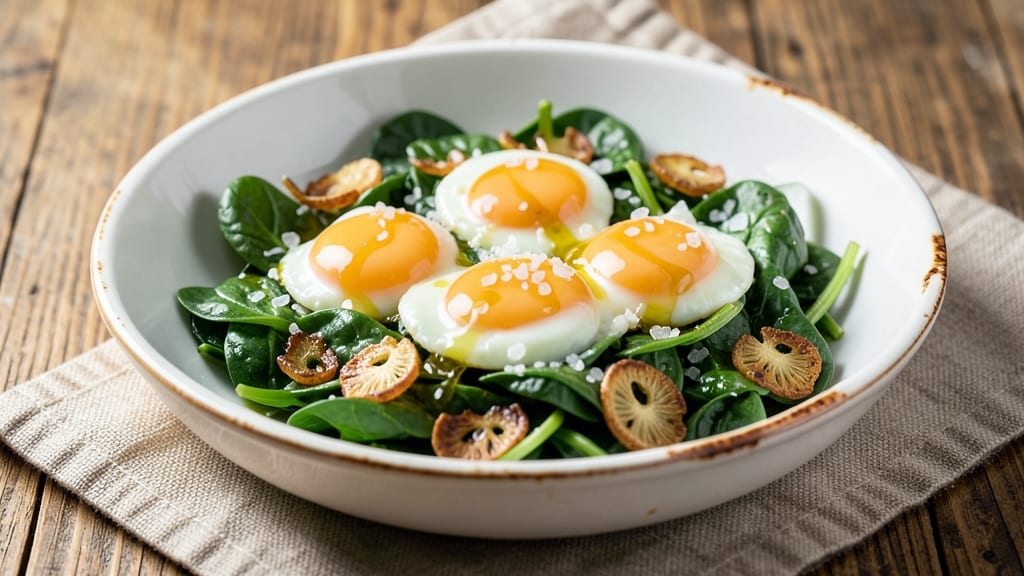
This three egg spinach recipe transforms simple ingredients into a luxurious breakfast that feels like a five-star brunch. The secret lies in crispy celery crowns—thinly sliced, pan-fried until golden—and silky poached eggs that rest on a bed of wilted spinach.
I developed this dish after realizing how often restaurant-quality breakfasts could be recreated at home with just a few key techniques.
The foundation starts with perfect spinach—sautéed until just wilted, retaining its vibrant green color and tender texture. Meanwhile, the celery crowns achieve that coveted crispy edge through careful timing: high heat and minimal oil for maximum crunch.
Three eggs poach to perfection, their yolks staying runny and vibrant, ready to crown the dish like edible jewels.
What makes this recipe special is the balance of textures: the crispy celery contrasts with the creamy eggs and tender spinach, while the bright flavors shine without overpowering. A sprinkle of flaky salt and a drizzle of high-quality olive oil elevate it further, making every bite feel intentional and indulgent.
Serve this dish on warm toast or alongside roasted potatoes for a heartier meal. The technique is approachable yet impressive, perfect for weekend brunches or when you want to start your day with something that feels truly special. Let's get cooking—this breakfast will change how you think about simple ingredients.
Ingredients for three egg spinach
Twelve ingredients transform a simple breakfast into a restaurant-worthy brunch experience.
| Ingredient | Amount | Notes |
|---|---|---|
| Baby Spinach 🌿 | 4 cups | Fresh, packed, stems removed |
| Celery Stalks 🧅 | 2 whole | Thinly sliced into crowns |
| Large Eggs 🥚 | 3 whole | Fresh, cold for poaching |
| Extra-Virgin Olive Oil 🫒 | ¼ cup | High-quality, fruity variety |
| Unsalted Butter 🧈 | 2 tbsp | Cold, cubed for crispy celery |
| Flaky Sea Salt 🧂 | ½ tsp | Diamond Crystal preferred |
| Freshly Ground Black Pepper 🌶️ | ¼ tsp | Freshly cracked for brightness |
| White Vinegar 💧 | 1 tbsp | For poaching liquid |
| Sourdough Bread 🍞 | 4 slices | Crust removed, toasted |
| Garlic Cloves 🧄 | 2 cloves | Minced for spinach flavor |
| Lemon Zest 🍋 | 1 tsp | Brightens the dish |
| Chives 🌱 | 2 tbsp | Finely chopped, for garnish |
The spinach and celery are the backbone of this dish—baby spinach for its tender texture and celery crowns for that coveted crispy edge. For the spinach, Trader Joe's or Whole Foods carry the freshest, vibrant green varieties. Look for celery with tight stalks and no browning at the base—organic celery from local markets often delivers the best flavor. The eggs should be cold and fresh for perfect poaching, so grab them the day you plan to cook. Pre-sliced celery crowns exist, but thinly slicing your own ensures maximum crispiness.
No baby spinach? Regular spinach works fine—just chop it finely. Swap celery for thinly sliced fennel for a different but equally crisp texture. For the poaching liquid, white wine or apple cider vinegar can replace white vinegar. If you're short on time, pre-toasted sourdough from a bakery section is a game-changer—just reheat briefly before serving. The olive oil matters here; avoid cheap supermarket brands—look for extra-virgin with a distinct fruity aroma. And if you're out of chives, parsley or basil will work in a pinch, though chives offer that perfect oniony brightness.
Store fresh spinach in a sealed container with a paper towel for up to 5 days, but use it within 2-3 days for optimal texture. Celery crowns crisp best when made fresh, but you can prep them 1 day ahead and store in an airtight container. Poached eggs hold their shape for 2 hours if kept warm in a water bath, making this dish perfect for brunch gatherings. The remaining olive oil and butter can be refrigerated for up to 2 weeks, while the sourdough will stay fresh for 3-4 days if wrapped tightly.
Why You'll Love This Recipe
- No-Fuss Assembly: This comes together faster than you can say "clean the pan." Just wilt the spinach, chop celery into sticks (no dicing needed), and fry the eggs in butter—minimal chopping, zero fuss. I’ve made it while scrolling through emails, and somehow, it still tastes like I cared.
- Butter-Kissed Magic: That butter and olive oil combo? It turns the eggs into little golden clouds with crisp edges, while the celery adds a subtle crunch. Honestly, the first bite makes me pause—it’s the kind of simple dish that sneaks up on you and becomes a favorite.
- Lunchbox Hero: Pack it cold for work or school—eggs hold up surprisingly well, and the spinach stays vibrant. My college-aged son used to take it with crusty bread, and he’d always come back for seconds. (Yes, even on a Tuesday night.)
- Pantry Stretch: Three eggs, a handful of greens, and celery from the back of the fridge? This is my go-to when I’m low on ingredients but still want something satisfying. It feeds two for under $3, and leftovers reheat like a dream—just add a splash of water to the pan.
Step-by-step instructions for crispy celery crowns over poached yolk luxury
Transform simple ingredients into an elegant dish with perfectly poached eggs and crispy celery.
Prepare the Crispy Celery Crowns
Slice the 2 whole celery stalks into thin crowns, discarding any tough strings. In a large skillet, melt the 2 tablespoons unsalted butter over medium-high heat until it foams. Add the celery crowns in a single layer and cook undisturbed for 4-5 minutes until golden brown and crispy.
Here's the thing—don't move them during the first 2 minutes. You want maximum contact with the butter for even browning. Once golden, transfer the celery to a paper towel-lined plate to drain excess fat. Season immediately with ½ teaspoon flaky sea salt and ¼ teaspoon freshly ground black pepper. The celery should remain crisp—if it softens, cook in smaller batches.
Sauté the Garlicky Spinach
In the same skillet (no need to clean it—the fond adds flavor), heat ¼ cup extra-virgin olive oil over medium heat. Add the 2 minced garlic cloves and sauté for 30 seconds until fragrant, being careful not to let them brown. Add the 4 cups baby spinach and stir gently for 2-3 minutes until just wilted.
Remove from heat and stir in the 1 teaspoon lemon zest. The spinach should retain vibrant color and a slight crispness—overcooking turns it mushy. Season with an additional pinch of flaky sea salt if needed. Keep the spinach warm while you prepare the poached eggs.
Poach the Eggs to Perfection
Fill a deep saucepan with 4 cups water and bring to a gentle simmer over medium-low heat. Add the 1 tablespoon white vinegar—this helps the eggs hold their shape. Crack the 3 large eggs into a small bowl, then carefully slide each egg into the simmering water. Poach for 3-4 minutes for runny yolks or 4-5 minutes for slightly firmer yolks.
Use a slotted spoon to remove the eggs and drain on a paper towel. The whites should be set but still tender, with perfectly round yolks. If the water boils vigorously, reduce heat immediately—violent bubbles make the eggs break apart. Work in batches if needed to maintain water temperature.
Toast the Sourdough and Assemble
Toast the 4 slices sourdough bread lightly until golden and crisp. Spread each slice with a thin layer of the sautéed spinach mixture, leaving a border for the eggs. Place one poached egg on top of each slice, then arrange the crispy celery crowns around the eggs.
Drizzle any remaining olive oil from the skillet over the top for extra richness. Garnish with the 2 tablespoons finely chopped chives and an additional sprinkle of flaky sea salt and black pepper. Serve immediately while the eggs are still warm and the celery remains crisp.
Pro Tips For Making Three Egg Spinach
- Wilt Spinach Fast: DESCRIPTION: Baby spinach wilts in seconds—don’t let it turn to mush. Toss it in a cold pan with a pinch of salt first, then crank the heat to medium-high and stir constantly until just softened, about 30 seconds. Overcooking kills the bright green color and makes it bitter.
- Crack Eggs Directly In: DESCRIPTION: Skip the bowl. Crack eggs straight into the pan with the spinach and celery, so the heat starts cooking them immediately. The spinach’s moisture will help create a silky, custardy texture instead of scrambled eggs—just stir gently until set.
- Salt the Celery: DESCRIPTION: Celery absorbs water like a sponge. Toss the chopped stalks in a pinch of salt and let them sit for 5 minutes before cooking to draw out bitterness and excess moisture. Rinse briefly, pat dry, and you’ll avoid a soggy, watery pan.
- Use Butter First, Oil Last: DESCRIPTION: Melt 1 tablespoon of butter in the pan until foamy, then add olive oil. The butter adds richness, while the oil prevents burning. If you add oil first, the butter will burn before it browns—ruining the flavor.
Make-ahead tips for this three egg spinach
Prep Ahead
Celery crowns are the star of this dish, but they can be made 1 day ahead—just store them in an airtight container at room temperature. Reheat in a 350°F oven for 3-4 minutes until crisp again.
The spinach mixture stays fresh in the fridge for 2 days, so sauté it in advance and reheat gently in a skillet with 1 teaspoon olive oil over low heat. 🌿
Egg Prep Shortcut
Poached eggs are tricky to prep ahead, but you can make them 2 hours before serving if you keep them warm. Place them in a shallow dish and cover with warm water at 160°F—this mimics the gentle heat of a water bath.
Reheat in 1 minute of simmering water just before serving to maintain that perfect runny yolk. 🥚
Toast Storage Hack
Toast your sourdough slices 30 minutes ahead and store in a paper bag at room temperature to keep them crisp. Reheat in a 250°F oven for 2-3 minutes before assembling. For extra flair, brush with melted butter and sprinkle with flaky salt right before serving. 🍞
Fridge Assembly
Keep components separate until ready to serve: store spinach in one container, celery in another, and eggs in a sealed dish. Assemble on plates just before eating to maintain crispness.
If you're hosting, set up a warm holding station with a slow cooker filled with 140°F water to keep everything ready. ✨
Freezer-Friendly Spinach
Sautéed spinach freezes beautifully for up to 3 months—just pack it in a single layer on a tray, freeze solid, then transfer to a bag.
Thaw overnight in the fridge and reheat gently. The texture won't be perfect, but it's great for quick breakfasts when fresh spinach isn't an option. 💫
Brunch Party Prep
For gatherings, pre-cook all components except eggs. Set up a poaching station with simmering water and vinegar, and let guests poach their own eggs. Provide extra celery, spinach, and toast so everyone can customize their plates. This keeps things interactive and stress-free! 💛
Nutrition facts
Frequently asked questions
Can I use regular spinach instead of baby spinach?
Yes! Regular spinach works perfectly—just chop it finely before sautéing to mimic the tender texture of baby spinach. The key is cooking it for 2-3 minutes over medium heat until just wilted, not mushy. For extra flavor, add a pinch of garlic powder if you skip fresh garlic.
How do I keep the celery crowns crispy?
The secret is high heat and patience! Cook the celery in a single layer over medium-high heat with butter for 4-5 minutes without stirring the first 2 minutes. Use a nonstick skillet and avoid overcrowding. If they soften, reheat briefly in a 350°F oven for 2-3 minutes to restore crispness.
What if I don't have sourdough bread?
Any sturdy bread works—try brioche, baguette, or even English muffins! Toast until golden and crisp, then spread with the spinach mixture. For a gluten-free option, use toasted gluten-free bread or crispy roasted potatoes as a base. The key is a sturdy foundation to hold the eggs.
Can I make this recipe without poached eggs?
Swap the poached eggs for fried eggs (sunny-side up) or scrambled eggs cooked to your preference. For a vegetarian twist, add crumbled feta or goat cheese to the spinach mixture. The crispy celery and garlicky spinach still shine as the star components.
Why did my poached eggs break apart?
Boiling water is the #1 culprit! Keep the water at a gentle simmer (195°F), not a rolling boil. Add 1 tablespoon white vinegar to help the whites coagulate faster. Crack eggs into a small bowl first to avoid shell fragments, and use room-temperature eggs for easier sliding into the water.