
Breakfast & Brunch
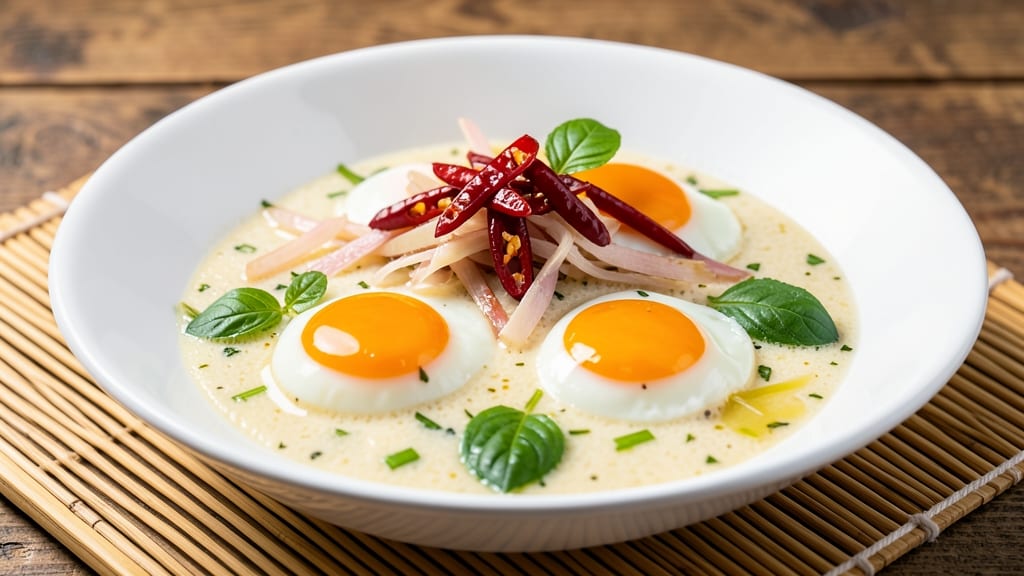
This Thai egg recipe transforms simple scrambled eggs into a silky coconut curry scramble that delivers restaurant-quality flavor in just 15 minutes. The secret lies in balancing creamy coconut milk with aromatic Thai spices, creating a dish that's rich yet light—perfect for breakfast or brunch.
I developed this version after years of testing traditional Thai egg dishes, focusing on achieving that signature velvety texture and bright, tangy depth.
The foundation of this recipe is a fragrant paste made from lemongrass, galangal, and kaffir lime leaves—key ingredients that give Thai cuisine its distinctive aroma. Unlike heavy Western-style scrambled eggs, this version incorporates coconut milk for creaminess while keeping the eggs tender and fluffy.
The dish comes together in one pan, making it both efficient and impressive for weeknight meals or weekend brunches.
What you'll end up with is a dish that's creamy yet not overly rich, with a subtle heat from Thai chilies and a bright finish from fish sauce. The eggs maintain their soft, custardy texture while absorbing all the aromatic flavors, creating a balance that's both comforting and exciting.
Serve it with steamed jasmine rice or crusty baguette slices to soak up every last bit of the silky curry sauce.
This recipe works equally well as a main dish or a side—doubling the ingredients makes it perfect for feeding a crowd. The technique is simple but precise, ensuring you achieve that authentic Thai restaurant taste at home without any shortcuts. Let's get started on creating this flavorful breakfast masterpiece.
Ingredients for thai egg
The aromatic trio of lemongrass, galangal, and kaffir lime leaves forms this dish's soul.
| Ingredient | Amount | Notes |
|---|---|---|
| Large Eggs 🥚 | 6 whole | Fresh, room temperature preferred |
| Coconut Milk 🥥 | 1 cup | Full-fat, canned preferred |
| Lemongrass 🌿 | 3 inches | Lower stems, finely minced |
| Galangal 🌿 | 2 inches | Fresh, peeled, minced |
| Kaffir Lime Leaves 🍋 | 2 whole | Fresh, thinly sliced |
| Thai Bird's Eye Chilies 🌶️ | 2 whole | Seeds removed for mild heat |
| Garlic Cloves 🧄 | 4 cloves | Peeled, minced finely |
| Shallots 🧅 | 2 whole | Peeled, minced finely |
| Fish Sauce 🍶 | 1 tbsp | Red Boat preferred |
| Lime Juice 🍋 | 1 ½ tbsp | Freshly squeezed |
| Vegetable Oil 🫒 | 1 tbsp | High smoke point |
| Salt 🧂 | ½ tsp | Diamond Crystal preferred |
| White Pepper 🌶️ | ¼ tsp | Freshly ground preferred |
| Thai Basil Leaves 🌿 | ¼ cup | Fresh, chopped |
For authentic Thai flavors, source lemongrass, galangal, and kaffir lime leaves from Asian markets—they carry fresher, more potent versions than most grocery stores. Costco or H Mart consistently stock these staples at reasonable prices. Galangal should smell citrusy and peppery (not musty), and lemongrass should be vibrant green with no brown spots. The Red Boat fish sauce is non-negotiable here—its umami depth elevates the dish beyond basic fish sauce substitutes. Thai bird's eye chilies add the signature heat; adjust quantity based on your tolerance, but include them for authenticity.
No galangal? Ginger works in a pinch, though it lacks the citrusy depth—use half the amount. Substitute kaffir lime leaves with lime zest plus 1 tsp lime leaf extract (found in Asian markets). For coconut milk, light coconut milk reduces richness but works if you prefer a lighter texture. The Thai basil is crucial—regular basil won't cut it. If unavailable, holy basil at half the amount provides a similar aromatic profile. Always mince garlic and shallots finely; they should nearly disappear during cooking for that restaurant-quality smoothness.
Fresh galangal and lemongrass keep for 1 week in sealed containers in the fridge. Kaffir lime leaves freeze beautifully for up to 3 months—wrap them in damp paper towels first. The finished dish reheats best in a skillet over medium-low heat, adding a splash of coconut milk if it dries out. Portion into containers with a layer of rice to keep eggs tender. Leftovers keep for 3 days refrigerated, though they're best enjoyed fresh for peak texture.
Why You'll Love This Recipe
- One-Pot Magic: I swear by this recipe—just crack eggs into simmering coconut milk with lemongrass and galangal, then let it do the work. No flipping, no fussing, and the kaffir lime leaves infuse that bright, citrusy aroma without a single mess.
- Creamy-Citrus Balance: That first bite—silky eggs swimming in coconut milk with the zing of galangal and the floral lift of kaffir lime? It’s like a hug for your taste buds, especially when the lemongrass adds that herbal depth. Honestly, I reach for this when I need something comforting but still exciting.
- Weeknight or Weekend: Make a big batch on Sunday and reheat it all week—it’s my go-to for lazy mornings or when friends drop by unannounced. The flavors only get better as it sits, and the coconut milk keeps it rich without drying out.
- Budget-Friendly Luxury: Eggs and coconut milk are cheap staples, but the lemongrass and galangal make it feel special. I’ll be real: I buy galangal in bulk because it’s worth the splurge, and a single stalk stretches across multiple meals. Plus, leftovers taste just as good cold in rice bowls.
Step-by-step instructions for silky coconut curry scramble
Here's the method—quick, aromatic, and packed with authentic Thai flavors.
Prepare the Aromatic Base
Heat the 1 tablespoon vegetable oil in a large skillet over medium heat. Add the 2 whole Shallots and 4 cloves Garlic Cloves, cooking for 2 minutes until the shallots soften and become translucent. This foundational step ensures the flavors meld before adding the more delicate ingredients.
Next, add the 3 inches Lemongrass and 2 inches Galangal, both finely minced. Stir for 1 minute until fragrant—this releases their essential oils, which are the backbone of the dish. Here's the thing: don't rush this step. The galangal, with its peppery bite, needs time to infuse the oil properly.
Add the 2 whole Thai Bird's Eye Chilies and 2 whole Kaffir Lime Leaves, sliced thinly. Cook for an additional 30 seconds until the chilies darken slightly. This brief cooking intensifies their heat while preserving the citrusy brightness of the lime leaves. Remove the pan from heat and set aside for now—we'll return to it once the eggs are ready.
Build the Coconut Curry Sauce
Return the skillet to medium heat and pour in the 1 cup Coconut Milk. Bring to a gentle simmer, stirring occasionally, until the mixture thickens slightly and coats the back of a spoon—about 3-4 minutes. This step is critical: the coconut milk should reduce just enough to create a velvety sauce without curdling.
Reduce heat to low and stir in the 1 tablespoon Fish Sauce, 1.5 tablespoons Lime Juice, 0.5 teaspoon Salt, and 0.25 teaspoon White Pepper. Taste and adjust seasoning—this is where the balance of salty, sour, and umami comes together. The sauce should be vibrant, with a bright acidity cutting through the richness of the coconut.
Simmer for 2 minutes to let the flavors marry. Here's what I do: I whisk continuously to prevent the sauce from separating. If it starts to thicken too much, add 1-2 tablespoons of water to maintain the desired consistency. The goal is a smooth, glossy sauce that will beautifully coat the eggs.
Scramble the Eggs to Perfection
In a separate bowl, whisk the 6 whole Large Eggs until the yolks and whites are fully combined—no streaks should remain. This ensures a silky, uniform scramble rather than a dry, grainy texture. I like to add a pinch of salt here as well, though we've already seasoned the sauce.
Pour the eggs into the skillet with the coconut sauce. Using a silicone spatula, gently fold and stir the eggs over low heat for 2-3 minutes. The key is to keep the heat low—this prevents the eggs from cooking too quickly on the outside while remaining runny inside. You're aiming for soft, custardy curds that hold their shape when folded.
As the eggs cook, fold in the 0.25 cup Thai Basil Leaves at the very end. This ensures the basil retains its vibrant color and fresh aroma, rather than wilting in the heat. The basil should be evenly distributed throughout the scramble, adding a bright, herbal finish to every bite.
Serve Immediately for Maximum Freshness
Once the eggs are just set to your liking—soft and slightly runny in the center—remove the skillet from heat. The residual heat will continue to cook the eggs slightly, so don't overcook them. Transfer the scramble to serving plates and garnish with an additional sprinkle of Thai Basil Leaves if desired.
This dish is best served immediately while the eggs are still warm and the sauce retains its silky texture. The contrast of the creamy coconut, the heat from the chilies, and the fresh basil creates a harmonious balance that's both comforting and vibrant. Pair it with steamed jasmine rice to soak up every last bit of the luscious sauce.
Pro Tips For Making Thai Egg
- CHAR THE COCONUT MILK: Heat the coconut milk until it smells like toasted coconut—just before it starts to bubble. I used to pour it in cold and wondered why the flavors never hit right; this step unlocks the creamy, nutty depth that makes the dish sing.
- SLICE GALANGAL THIN: Cut the galangal into paper-thin slices, not chunks. Thick pieces stay woody and undercooked; thin slices release their ginger-like punch into the sauce faster and more evenly. (Yes, it looks like you’re making sushi, but trust me.)
- CRACK EGGS INTO HOT OIL: Drop the eggs into the oil when it’s smoking hot, not simmering. The high heat seals the whites instantly, keeping them tender and preventing that sad, rubbery texture. If you’re impatient and lower the heat, just wait—rushing this ruins everything.
- TEAR LIME LEAF, DON’T CHOP: Rip the kaffir lime leaves with your hands instead of slicing them. The uneven edges release more aroma into the broth, and you avoid the bitter pulp that comes from chopping. (This is the one upgrade that makes the dish taste like a Thai street stall.)
Serving suggestions for leftovers
Rice Pairings
Steamed jasmine rice is the classic pairing for this dish—its delicate floral aroma complements the creamy coconut sauce beautifully. I use 1 cup uncooked jasmine rice per serving, steamed to perfection in a rice cooker for even texture.
The rice soaks up the rich curry sauce while providing a neutral base that highlights the dish's vibrant flavors. 💛
For a heartier option, try Thai fragrant rice (like Khao Tom Mat) with its nutty undertones. Cook it with ½ cup coconut milk in the water for extra richness. This works especially well if you're serving the scramble as a main dish rather than a side.
Bread Options
Crusty baguette slices toasted with garlic butter are perfect for mopping up any leftover sauce. I like to brush the bread with 1 tbsp melted butter and a pinch of salt before toasting in a skillet for 1-2 minutes per side. The crispy texture contrasts nicely with the soft eggs.
For a Thai-inspired twist, serve with pandan waffles—these fragrant, slightly sweet waffles pair wonderfully with the savory-sweet balance of the scramble. Look for them at Asian markets or make your own with pandan extract and coconut milk.
Vegetable Sides
A simple steamed bok choy with a sprinkle of sesame seeds adds freshness and color to the plate. Blanch 2 whole baby bok choy in boiling water for 1 minute, then finish with a drizzle of 1 tsp toasted sesame oil.
The mild bitterness cuts through the richness of the coconut.
For extra crunch, serve with quick-pickled cucumbers—slice ½ English cucumber into rounds, toss with 1 tbsp rice vinegar, ½ tsp sugar, and a pinch of salt. Let sit for 10 minutes before serving. The tangy crunch balances the creamy eggs perfectly.
Protein Additions
Add crispy Thai-style pork belly (or chicken) for a protein boost. I pan-fry 4 oz pork belly slices until golden, then toss with 1 tsp fish sauce and ½ tsp sugar before serving. The smoky-sweet flavor complements the coconut beautifully.
For a vegetarian option, stir-fry 1 cup mushrooms (like oyster or shiitake) with 1 tbsp soy sauce and 1 tsp oyster sauce until tender. The umami depth enhances the dish's savory profile without overpowering it.
Garnish Ideas
Finish with crushed peanuts for texture—toss 2 tbsp roasted peanuts with ½ tsp salt before sprinkling on top. The nutty crunch contrasts the silky eggs wonderfully. 🌟
Add lime wedges on the side for a bright finish. The acidity cuts through the richness, and guests can squeeze fresh lime over their portion. I also like to garnish with extra Thai basil leaves for a pop of color and fresh aroma.
Nutrition facts
Frequently asked questions
Can I make this Thai egg dish with regular basil instead of Thai basil?
While regular basil will work in a pinch, it lacks the anise-like sweetness and peppery notes that Thai basil brings to the dish. For the most authentic flavor, use Thai basil—its unique aroma is essential for that true Thai taste. If you can't find it, holy basil (at half the amount) is the next best substitute.
What if I don't have galangal? Can I substitute it?
Galangal adds a citrusy, peppery depth, but ginger works in a pinch—use about half the amount (1 inch instead of 2). For best results, combine it with a pinch of lime zest to mimic galangal's brightness. The dish will still be delicious, though slightly less complex.
How do I prevent the coconut milk from curdling when cooking?
Keep the heat at medium-low and stir gently to prevent scorching. Never let the sauce boil vigorously—simmer it just until it thickens slightly. If it starts to separate, whisk in 1-2 tablespoons of water to restore smoothness. Adding the eggs last also helps maintain the sauce's integrity.
Can I make this dish ahead of time?
This scramble is best enjoyed fresh, but you can prep components ahead. Make the aromatic paste (lemongrass, galangal, etc.) and store it in the fridge for 2 days. For leftovers, reheat gently in a skillet with a splash of coconut milk to restore creaminess. Texture may change slightly, so it's ideal for serving immediately.
Why does my Thai egg scramble taste too salty?
Fish sauce is salty, so taste as you go! Start with ½ tablespoon and adjust gradually. The coconut milk and lime juice also contribute to the flavor balance. If it's too salty, stir in 1-2 tablespoons of coconut milk to dilute the saltiness while keeping the dish creamy.