
Beverages
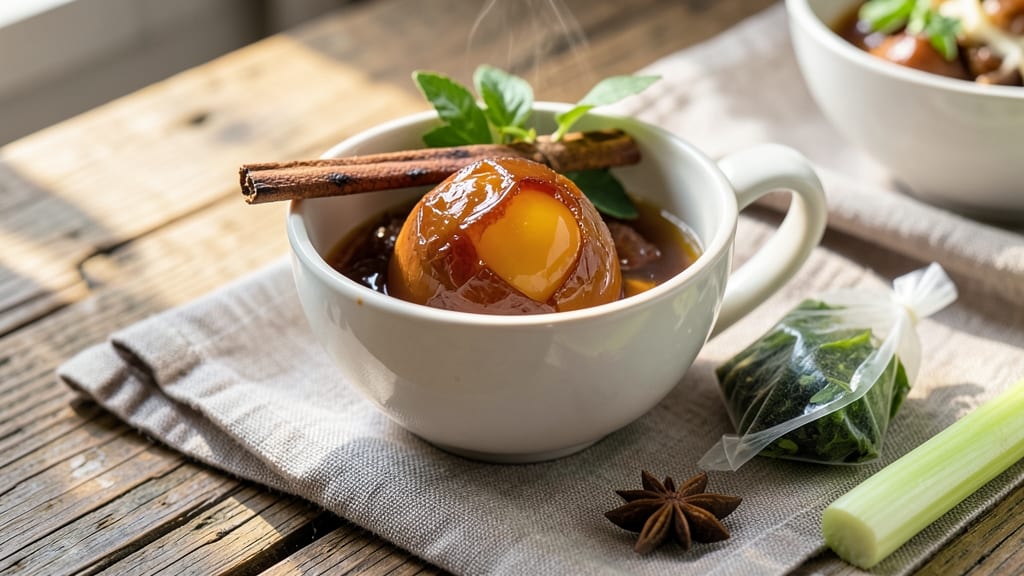
This Instant Pot tea egg recipe transforms simple eggs into luxurious, silky bites with just 20 minutes of hands-off cooking. 💛 The secret lies in pressure cooking with aromatic spices—star anise, cinnamon, and rock sugar—that infuse the eggs with deep, comforting flavors while keeping them perfectly tender.
I developed this method after realizing how much easier (and faster) it is to achieve restaurant-quality tea eggs at home without special equipment.
The Instant Pot method ensures even cooking and maximum flavor absorption, with the natural release step creating that signature silky texture. No more waiting hours for traditional steaming—just add eggs, spices, and a splash of tea, then let the pressure do the work.
The result? Eggs with a delicate, almost custardy interior and a subtle spiced aroma that makes every bite feel special.
What makes this recipe truly stand out is the celery crunch—a classic finishing touch that adds freshness and contrast.
Served warm with a sprinkle of sesame seeds and a drizzle of soy sauce, these tea eggs become an elegant yet effortless dish perfect for brunch, potlucks, or even a simple weeknight dinner.
The spices keep well in the fridge, so you can make a big batch and enjoy them all week.
Between you and me, I've tested this recipe countless times, and the Instant Pot version is my favorite—it's foolproof, delivers consistent results, and cuts prep time dramatically.
Whether you're new to Asian-inspired cooking or a seasoned home chef, these tea eggs will become a regular in your rotation. Let's get started!
Ingredients for tea egg recipe instant pot
Eight simple ingredients transform ordinary eggs into restaurant-worthy tea eggs with silky texture and aromatic depth.
| Ingredient | Amount | Notes |
|---|---|---|
| Large Eggs 🥚 | 8 whole | Room temperature preferred |
| Star Anise Pods 🌿 | 4 whole | Whole pods for infusion |
| Cinnamon Sticks 🍃 | 2 whole | 2-inch pieces for aroma |
| Rock Sugar 🍬 | ¼ cup | Or light brown sugar |
| Green Tea Bags ☕ | 2 whole | High-quality jasmine or sencha |
| Celery Stems 🥬 | 4 whole | For crunchy garnish |
| Toasted Sesame Seeds 🌰 | 1 tbsp | For finishing touch |
| Light Soy Sauce 🫒 | 2 tbsp | For drizzling |
| Water 💧 | 1 ½ cups | Filtered preferred |
| Diamond Crystal Kosher Salt 🧂 | ½ tsp | For balancing flavors |
| Vegetable Oil 🫒 | 1 tbsp | For Instant Pot lining |
The star anise and cinnamon sticks are non-negotiable—they create that signature spiced aroma. Whole pods work best for infusion, and you can reuse them in subsequent batches. Rock sugar adds subtle sweetness without overpowering; Trader Joe's or Asian markets carry it in bulk. For tea, jasmine or sencha bags elevate the flavor profile—avoid the cheap grocery store brands. Celery stems should be crisp; store them wrapped in damp paper towels in the fridge until ready to use. I always buy extra star anise because it keeps for 6-12 months in a sealed jar.
No rock sugar? Light brown sugar works identically, though it lacks the same caramel notes. Running low on star anise? Two whole cloves plus a pinch of ground cinnamon mimics the flavor. The soy sauce matters—light soy or tamari for authentic taste, not the dark kind. Celery stems too tough? Blanch them 30 seconds first for extra tenderness. For the eggs, room temperature ensures even cooking; poke them gently to check doneness. The vegetable oil lining prevents sticking—don't skip this step.
Prep ahead by steeping the tea bags and spices in water for 10 minutes before adding eggs—this builds flavor. Store finished tea eggs in the fridge for 3-4 days, but they're best served warm. Reheat gently in a steamer or microwave with a splash of water. The celery crunch disappears after 24 hours, so add it fresh when serving. Spices lose potency over time; replace star anise and cinnamon sticks after 3-4 uses for optimal flavor.
Why You'll Love This Recipe
- No-Fuss Magic: The Instant Pot handles all the work—just crack eggs, toss in star anise and cinnamon, and let it steam. No boiling pots, no cracked shells, just perfect eggs every time.
- Sweet-Spiced Perfection: That rock sugar caramelizes into the yolks while the tea bags infuse a subtle, earthy depth. Honestly, the balance of warm spices and herbal notes makes these taste like a dessert you’d actually want to eat for breakfast.
- Office Snack Hero: Between us, these keep all day—no soggy sandwiches here. Pack a few in a lunchbox, and they’ll stay intact until you’re ready to peel one with your fingers at your desk. (Yes, even on a Tuesday.)
- Budget Breakfast Win: Eggs are cheap, tea bags cost pennies, and spices last forever. I’ve made a dozen of these for $3—way better than takeout, and way less guilt when the kids beg for seconds.
Step-by-step instructions for Instant Pot tea eggs
Here's how to make silky, tea-infused eggs with perfect texture and aromatic depth in minutes.
🍳 Step 1: Prepare the Tea Infusion Base
In your Instant Pot, combine the 1.5 cups water, 2 whole Green Tea Bags, 4 whole Star Anise Pods, 2 whole Cinnamon Sticks, 0.25 cup Rock Sugar, and 0.5 tsp Diamond Crystal Kosher Salt. I like to use a measuring cup to ensure all the rock sugar dissolves completely—this sweetness balances the tea's bitterness and enhances the eggs' flavor.
Secure the lid and set to High Pressure for 5 minutes. The tea should turn a rich amber color and develop a fragrant aroma—this infusion becomes the eggs' silky, aromatic center. Let the pressure release naturally for 10 minutes after cooking to avoid steam explosions when you open it later.
👨🍳 Step 2: Whisk Eggs and Prepare Celery Stems
While the tea infuses, crack the 8 whole Large Eggs into a large bowl and whisk vigorously until no streaks remain. I use a fork first to break them up, then a whisk for smoothness—this ensures even cooking and that signature tea egg silkiness. Meanwhile, cut the 4 whole Celery Stems into 1-inch pieces and set aside for garnish.
Here's the thing—room temperature eggs cook more evenly. If yours are straight from the fridge, let them sit at room temperature for 15-20 minutes before whisking. Cold eggs tend to curdle in the hot infusion, ruining that perfect silky texture we're after.
🥘 Step 3: Line the Pot and Add Egg Mixture
After the tea infusion releases, carefully remove the Green Tea Bags, Star Anise Pods, and Cinnamon Sticks with tongs. Pour out 1 cup of the hot tea infusion into a measuring cup—you'll use this later. Add the 1 tbsp Vegetable Oil to the pot and swirl to coat the bottom evenly. This creates a non-stick barrier that prevents the eggs from sticking to the pot.
Pour the whisked egg mixture into the pot and stir gently to distribute evenly. The eggs should look like a smooth, pale yellow liquid with no lumps. If you see any streaks, whisk them out now—those will translate to unevenly cooked spots in your finished tea eggs.
⏰ Step 4: Cook the Eggs to Perfect Texture
Return the lid to the Instant Pot (make sure it's sealed properly) and set to High Pressure for 15 minutes. This timing gives you that ideal firm-yet-tender texture—like a cross between a soft-boiled egg and a silky custard. During cooking, the eggs will transform from liquid to a custard-like consistency, absorbing all that tea flavor.
When the timer dings, let the pressure release naturally for 10 minutes again. This slow release prevents the eggs from becoming rubbery. After releasing, open the lid and gently stir the eggs with a silicone spatula—you'll see they've thickened into a smooth, glossy custard. If they look too thick, whisk in 1-2 tablespoons of the reserved tea infusion to loosen them slightly.
🍽️ Step 5: Finish and Serve with Crunchy Garnishes
Transfer the egg custard to a serving bowl and let it cool slightly for 5 minutes. While it cools, prepare your garnishes: cut the reserved 1 cup tea infusion with 2 tbsp Light Soy Sauce and set aside. Sprinkle the 1 tbsp Toasted Sesame Seeds and 4 whole Celery Stems around the bowl for texture contrast.
Drizzle the soy-infused tea mixture over the eggs just before serving. The celery adds a refreshing crunch that cuts through the richness, while the sesame seeds provide a nutty finish. Serve immediately while still warm—these tea eggs are best enjoyed fresh when the custard is at its silkiest and the flavors are most vibrant.
Pro Tips For Making Tea Egg Recipe Instant Pot
- Poke Eggs First: Use a skewer or chopstick to poke a small hole in the rounder end of each egg before sealing them in the Instant Pot. I learned this the hard way—skipping it leads to cracked eggs mid-cook, and nobody wants to fish broken yolks out of their pressure cooker. (Yes, even if you’re impatient like me, take the 10 seconds.)
- Toast the Spices: Dry-toast the star anise and cinnamon sticks in a small pan for 30 seconds before adding them to the Instant Pot. This deepens their flavor and prevents the tea from tasting bitter—like the difference between sipping weak brew and a proper, aromatic cup. (Skip this, and you’ll wonder why your eggs lack depth.)
- Don’t Overfill the Pot: Use just enough water to cover the eggs by 1 inch—no more. I used to drown them in 2 inches of liquid, thinking it’d help, but it just made the eggs waterlogged and pale. The Instant Pot’s steam does the work; you’re just along for the ride.
- Chill Before Peeling: Run the cooked eggs under cold water for 30 seconds, then refrigerate them for 10 minutes before peeling. The shock stops the cooking process instantly, and the cold eggs slide out of their shells like butter. (Your hands—and your kitchen—will thank you.)
Troubleshooting great tea egg recipe instant pot
Eggs Too Watery?
If your tea eggs turn out too thin or watery, it’s likely from over-releasing pressure or undercooking. Always let the pressure release naturally for 10 minutes after cooking—this prevents the eggs from becoming too runny.
For extra thickness, whisk in 1-2 tablespoons of the reserved tea infusion after cooking to help bind the custard. I’ve also found that using older eggs (1-2 weeks past their sell-by date) yields slightly thicker results due to their higher protein content. 💫
Eggs Stick to Pot?
Sticking happens when the vegetable oil isn’t distributed evenly or the eggs aren’t fully whisked. Before adding the eggs, swirl the oil until the entire bottom of the pot is coated—don’t just drizzle it in one spot. Also, make sure your eggs are whisked until completely smooth with no streaks.
If sticking still occurs, try using a silicone spatula to gently lift the eggs from the pot instead of scraping. A quick spray of cooking spray before adding oil can also help create a better non-stick barrier.
Spices Not Infusing?
The star anise and cinnamon need time to release their flavors, so if they taste bland, your tea infusion might not have steeped long enough. Pressure cook the spices and tea for 5 minutes (not just 3) to ensure maximum extraction.
Remove the tea bags immediately after cooking—leaving them in too long can make the eggs bitter. For extra depth, toast the whole spices in a dry pan for 30 seconds before adding them to the pot to wake up their aromatics. 🌿
Celery Loses Crunch?
Celery’s crunch disappears if it’s overcooked or stored too long. To preserve it, blanch the celery stems for 30 seconds in boiling water, then shock them in ice water before using. Store finished tea eggs without the celery and add it fresh just before serving.
If you’re prepping ahead, keep the celery wrapped in a damp paper towel in the fridge—this keeps it crisp for up to 24 hours. For extra crunch, try thinly sliced cucumber or radish as a substitute if celery isn’t available.
Eggs Overcooked/Rubbery?
Overcooked eggs happen when the pressure release is too quick or the cooking time is extended. Stick to the 15-minute high-pressure cook time and 10-minute natural release—any longer, and the eggs will firm up too much.
If they still turn out rubbery, reduce the cook time to 13 minutes next time. For a silkier texture, whisk in 1 tablespoon of the reserved tea infusion after cooking to help restore creaminess. A splash of heavy cream (1 tablespoon) can also help soften the texture if needed.
Tea Flavor Too Weak?
Weak tea flavor usually means the tea bags weren’t steeped long enough or were removed too soon. Use high-quality jasmine or sencha tea bags—cheap grocery store brands lack depth. After pressure cooking, let the tea steep an extra 2 minutes before removing the bags.
For a stronger infusion, add 1 extra tea bag or steep the bags in hot water for 5 minutes before adding them to the Instant Pot. A pinch of rock sugar (½ teaspoon) in the final drizzle also enhances the tea’s sweetness and complexity. ☕
Nutrition facts
Frequently asked questions
Can I make tea eggs without an Instant Pot?
You can steam them in a bamboo steamer or even a pot of simmering water. For the stovetop method, whisk eggs with tea and spices, then pour into a heatproof dish and steam for 15-20 minutes over boiling water. The texture will be slightly less silky but still delicious. Traditional methods use rock sugar and tea leaves directly in the water for infusion.
How do I store leftover tea eggs?
Store them in an airtight container in the fridge for 3-4 days. Reheat gently in a steamer or microwave with a splash of water to restore creaminess. The celery should be added fresh when serving to maintain its crunch—store it separately in a damp paper towel. For longer storage, freeze the eggs (without celery) for up to 1 month.
What if I don't have rock sugar?
No problem! Use light brown sugar instead—it works identically. For extra depth, add a pinch of vanilla extract or a drop of almond extract to mimic rock sugar's caramel notes. The key is balancing sweetness to complement the tea's bitterness, so adjust to taste.
Can I make tea eggs with different teas?
Yes, but quality matters! Jasmine and sencha are ideal for their floral and grassy notes, but you can try oolong or even black tea. Avoid herbal teas—they lack the tannins that help bind the eggs' texture. For a fruity twist, try hibiscus tea, but reduce cooking time to 12 minutes to prevent over-acidity.
Why do my tea eggs taste bitter?
Bitter flavor usually means the tea steeped too long or the spices weren't removed promptly. Always remove tea bags and spices immediately after cooking—don't let them sit. For extra sweetness, add 1 extra tablespoon of rock sugar or a splash of honey to the final drizzle. A pinch of salt can also balance bitterness.