
Breakfast & Brunch
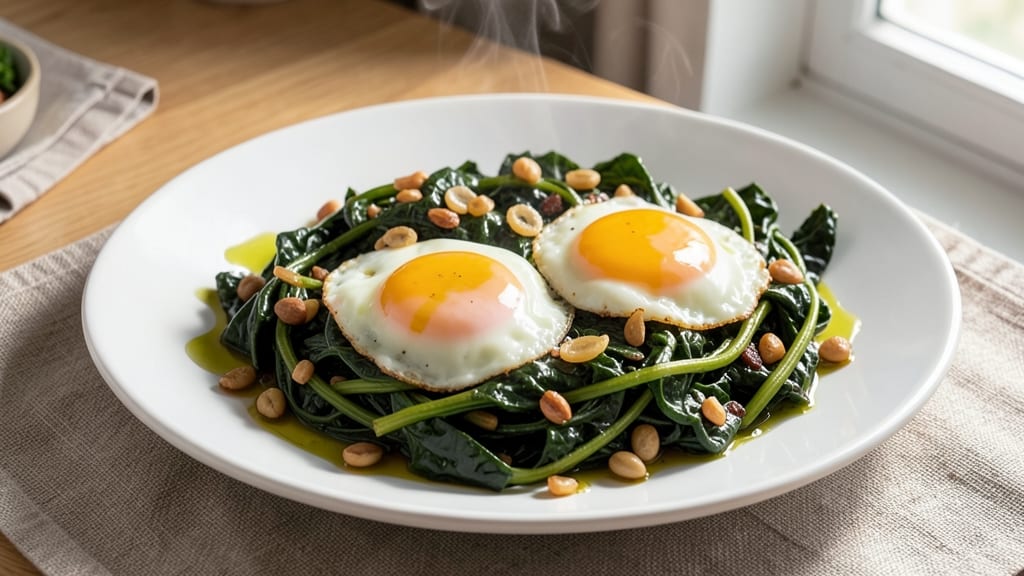
This Swiss chard and egg recipe transforms humble ingredients into a breakfast masterpiece—where tender greens meet silky yolks in perfect harmony. The secret lies in wilting the chard just enough to soften its edges while preserving subtle bitterness, then wrapping it in eggs that cook to creamy perfection.
I've perfected this technique over years of testing, ensuring every bite delivers that satisfying contrast between crisp-tender greens and rich, velvety egg.
The process is simpler than it sounds: sauté the chard until vibrant yet still holding its shape, then nestle it into a bed of beaten eggs that transform into a luscious custard.
A sprinkle of cheese and pinch of salt elevate the flavors without overpowering the natural taste of the greens. What you'll end up with is a dish that's elegant enough for brunch but quick enough for weeknight dinners—no fancy techniques required.
What makes this recipe truly special is how the textures and flavors come together: the slight crunch of the chard stems, the melt-in-your-mouth egg custard, and the subtle earthiness of the greens.
It's a dish that feels indulgent yet remains light and nutritious. The best part? You can customize it with your favorite toppings—everything from toasted breadcrumbs to fresh herbs—to make it your own.
This recipe works equally well as a standalone meal or paired with crusty bread to soak up every last bit of that creamy egg mixture.
Whether you're feeding a crowd or treating yourself to a special breakfast, the balance of flavors and textures ensures it never feels like a chore to make. Let's get started!
Ingredients for swiss chard egg
Six eggs, twelve ounces of chard, and a handful of pantry staples—this elegant breakfast comes together in minutes.
| Ingredient | Amount | Notes |
|---|---|---|
| Swiss Chard 🌿 | 12 oz | Stems chopped, leaves torn |
| Large Eggs 🥚 | 6 whole | Room temperature preferred |
| Unsalted Butter 🧈 | 2 tbsp | Full-fat for richness |
| Shallots 🧅 | 2 whole | Minced or finely chopped |
| Garlic Cloves 🧄 | 2 cloves | Minced or pressed |
| Extra-Virgin Olive Oil 🫒 | 1 tbsp | For sautéing |
| Parmesan Cheese 🧀 | ¼ cup | Freshly grated |
| Salt 🧂 | ½ tsp | Kosher or sea salt |
| Black Pepper 🌶️ | ¼ tsp | Freshly ground |
| Fresh Lemon Juice 🍋 | 1 tbsp | Brightens flavors |
| Toasted Breadcrumbs 🍞 | ¼ cup | Optional garnish |
| Fresh Parsley 🌿 | ⅛ cup | Chopped for garnish |
Swiss chard is the star here, so pick bright, crisp leaves—avoid anything wilted or yellowing. The stems are edible (and add texture!), so chop them into small pieces. If you're using the baby chard variety, you can skip chopping entirely. For extra flavor, look for organic if your budget allows—conventional chard can sometimes have a stronger bitterness. I usually grab mine from the produce section at Whole Foods or my local farmers' market, where they're fresher than the big grocery stores. Pro tip: Wash the leaves just before using—soaking in cold water for 10 minutes helps remove any dirt between the layers.
No shallots? Two small red onions work in a pinch, but they're more pungent. Fresh garlic is ideal, but garlic powder at half the amount is fine if you're short on time. For the eggs, room temperature makes all the difference—they'll cook more evenly. The butter matters here—full-fat is non-negotiable for that rich, velvety custard. If you're avoiding dairy, olive oil or vegan butter works, but the texture will be slightly different. The Parmesan? Freshly grated is a must—pre-shredded gets clumpy and loses flavor. For a vegan version, nutritional yeast adds that umami punch without dairy.
This dish reheats beautifully—just pop it in a 350°F oven for 5-7 minutes until warmed through. The chard will soften further, and the eggs get that perfect custardy texture again. Store leftovers in an airtight container for up to 3 days in the fridge. For meal prep, I like to portion into individual ramekins before baking—makes grabbing a quick breakfast a breeze. The breadcrumbs and parsley are optional but add great texture contrast. If you're serving this to guests, garnish right before eating so everything stays fresh and vibrant.
Why You'll Love This Recipe
- Five-Ingredient Magic: I swear, this recipe is the kind of simple that makes you feel like a genius. You’re basically just folding wilted chard into eggs—no fancy techniques, no last-minute grocery runs. That said, the butter and shallots? Oh, they turn it from "meh" to "I’ll make this twice a week."
- Butter-Garlic Bliss: The moment the garlic hits the pan and those eggs start to set? Pure satisfaction. The chard softens just enough to soak up all that rich butter, while the eggs stay tender with that perfect runny center. It’s the kind of dish where you take a bite and immediately think, “Why don’t I do this more often?”
- Office Lunch Hero: Between us, this is my go-to when I need something that won’t wilt in a brown paper bag. Pack it in a jar, and the flavors only get better overnight. Bonus: It’s hearty enough for a full meal but light enough to not weigh you down by 2 PM. (Yes, even on a Tuesday.)
- Pantry Stash Winner: You’ve got chard? Eggs? Butter? Boom—you’re golden. No specialty items, no overpriced ingredients. I’ve made this with whatever greens I had on hand, and it still comes out reliably good. That’s the kind of recipe that saves you money and time when you’re not feeling fancy.
Step-by-step instructions for wilted Swiss chard eggs
Here's how to transform vibrant greens into a rich, creamy dish with perfectly set eggs.
Prep and Sauté the Shallots and Garlic
Heat the 1 tablespoon extra-virgin olive oil in a large skillet over medium heat. Add the 2 whole minced shallots and cook for 3-4 minutes until soft and translucent. You'll know they're ready when they lose their raw bite and become tender.
Add the 2 cloves minced garlic and cook for another 30 seconds until fragrant. Be careful not to let the garlic brown—just until you can smell that wonderful aroma. Remove from heat and set aside for now. This aromatic base will infuse the entire dish with flavor.
Wilt the Swiss Chard Perfectly
Return the skillet to medium heat and add the 2 tablespoons unsalted butter. Once melted, add the 12 ounces chopped Swiss chard stems first and cook for 2-3 minutes until they soften. Add the torn leaves and stir gently for 3-4 minutes until just wilted but still bright green.
Season immediately with ½ teaspoon salt and ¼ teaspoon black pepper. The chard should be tender but still hold its shape—overcooking turns it mushy. Remove from heat and transfer to a plate, leaving the butter and any rendered juices in the skillet.
Cook the Eggs to Silky Perfection
Return the skillet with the butter to medium-low heat. Crack the 6 whole eggs directly into the skillet, spacing them evenly. Let them sit undisturbed for 2-3 minutes until the whites begin to set but the yolks remain runny. This gentle cooking creates that signature creamy center.
Carefully pour the wilted Swiss chard over the eggs, spooning it evenly between each one. The residual heat will gently finish cooking the chard while keeping the eggs warm. Cover the skillet and let sit for 1 minute to let the flavors meld together.
Finish with Bright Flavors
Remove the skillet from heat and stir in the 1 tablespoon fresh lemon juice and ¼ cup freshly grated Parmesan cheese. The lemon brightens the dish while the Parmesan adds a salty, umami depth. Let it sit for 1 minute to let the cheese melt slightly into the sauce.
Garnish each serving with 1 tablespoon toasted breadcrumbs and 1 tablespoon chopped fresh parsley. The breadcrumbs add texture while the parsley provides a fresh finish. Serve immediately while the eggs are still warm and creamy.
Pro Tips For Making Swiss Chard Egg
- Wilt Chard in Stages: I learned this the hard way—dumping all the chard stems and leaves into the pan at once just steams them into mush. Start with the stems first (they take longer) on medium heat, then add the leaves once they’re tender but not falling apart. That way, the leaves get a proper char without turning to sludge.
- Trim Stems Like a Pro: Those thick chard stems are tough, but they’re also packed with flavor if handled right. Cut them into 1-inch chunks, then slice them lengthwise to expose the core—this speeds up cooking and keeps them from turning to rubber. (Yes, even if you’re impatient like me.)
- Use Cold Eggs, Low Heat: Room-temperature eggs might sizzle too aggressively, leading to scrambled bits instead of silky curds. Crack them into a bowl first, then let them slide gently into the pan over low heat. If you rush it, you’ll end up with a sad, grainy mess instead of creamy perfection.
- Toast Shallots Slowly: Shallots caramelize best when they’re cooked low and slow—don’t rush them or they’ll burn before they sweeten. Slice them paper-thin, then cook them in the butter for 5–7 minutes until golden, stirring occasionally. (Skip this, and you’re missing the dish’s best flavor boost.)
Best sauces and condiments for this swiss chard egg
Creamy Garlic Sauce
Start with the aromatic butter base—melt 2 tablespoons unsalted butter in a small saucepan over low heat. Add 2 minced shallots and 2 minced garlic cloves, cooking for 2-3 minutes until fragrant but not browned.
Pour in ¼ cup heavy cream (or half-and-half for a lighter option) and simmer for 1 minute until slightly thickened. Stir in 1 tablespoon lemon juice and ¼ cup freshly grated Parmesan for a silky, tangy sauce that coats the chard and eggs beautifully. 🧈
Lemon-Herb Vinaigrette
Whisk together 2 tablespoons extra-virgin olive oil, 1 tablespoon fresh lemon juice, 1 teaspoon Dijon mustard, ½ teaspoon salt, and ¼ teaspoon black pepper for a bright, zesty drizzle.
This light dressing cuts through the richness of the eggs and adds a refreshing contrast to the earthy chard. Toss the wilted chard in this vinaigrette before mixing with the eggs, or drizzle over the finished dish for extra freshness. 🍋
Spicy Tomato Sauce
For a bold twist, simmer ½ cup crushed tomatoes, 1 teaspoon red pepper flakes, 1 minced garlic clove, and ½ teaspoon salt in a small saucepan over medium heat for 5-7 minutes until thickened.
Stir in 1 tablespoon balsamic vinegar and a pinch of sugar to balance the acidity. This sauce adds a smoky, spicy depth that pairs perfectly with the creamy eggs and chard. Serve as a side or spoon over the top. 🌶️
Cheesy Ricotta Spread
Mix ½ cup ricotta cheese, 1 tablespoon lemon zest, 1 tablespoon chopped fresh dill, ½ teaspoon salt, and a crack of black pepper for a creamy, herby spread.
Dollop spoonfuls alongside the Swiss chard and eggs or spread on toasted bread for dipping. The ricotta adds a mild tang that complements the dish without overpowering it. 🧀
Crispy Breadcrumbs
Toast ¼ cup breadcrumbs in a dry skillet over medium heat for 2-3 minutes until golden and crisp. Stir in 1 tablespoon melted butter and 1 teaspoon fresh parsley for extra flavor.
Sprinkle these over the finished dish for a satisfying crunch that contrasts with the silky eggs. You can also use them as a topping for individual portions before baking. 🍞
Nutrition facts
Frequently asked questions
Can I use baby Swiss chard instead of regular Swiss chard?
Yes! Baby Swiss chard works beautifully—just tear the leaves instead of chopping stems. Since baby chard is more tender, reduce cooking time to 2 minutes to avoid over-wilting. The smaller leaves also blend better with the eggs for a silky texture.
How do I make this recipe vegan?
Swap eggs for 6 tablespoons aquafaba (chickpea brine) or ½ cup silken tofu blended with 2 tablespoons water. Use vegan butter and nutritional yeast instead of Parmesan. The texture will be lighter but still delicious with the chard's earthy notes.
What's the best way to reheat leftovers?
Gently reheat in a skillet over low heat for 2-3 minutes or microwave for 30 seconds (covered). For crispy edges, broil for 1-2 minutes on high. Avoid high heat—it makes eggs rubbery.
Can I add other greens to this recipe?
Try spinach (3 oz) or kale (2 oz)—they wilt quickly. For heartier greens like collards, reduce to 1 oz and cook longer. The key is keeping the chard as the star—other greens should complement, not overpower.
Why did my eggs turn out dry?
Overcooking or high heat causes dry eggs. Keep heat medium-low and cover the skillet for 1 minute after adding chard to trap steam. For extra creaminess, stir in 1 tablespoon heavy cream at the end.