
Side Dishes
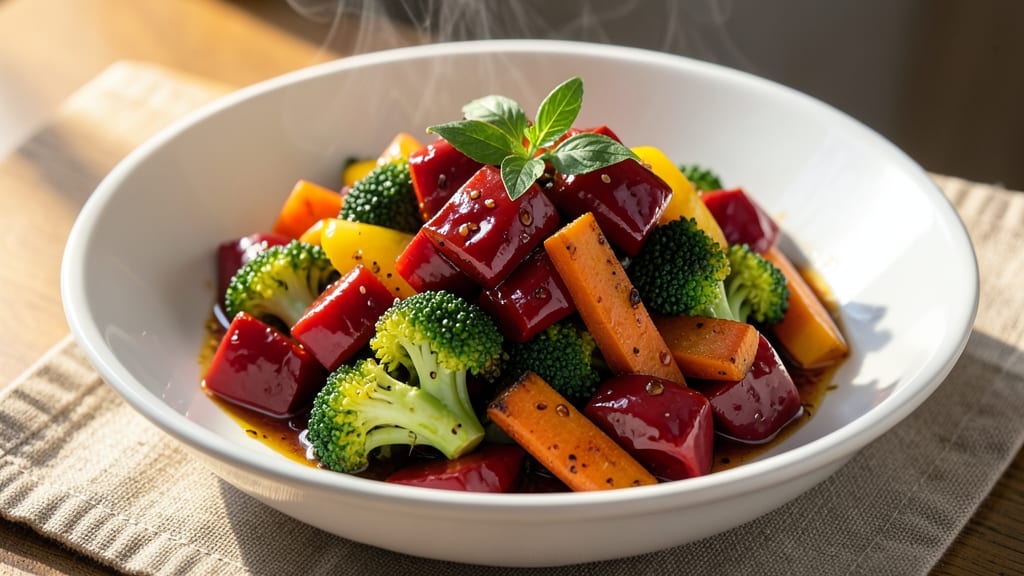
This sweet and sour veggies recipe delivers restaurant-quality flavor with minimal effort—crisp-tender bites coated in a tangy, glossy sauce that balances sweet and sour perfectly. The secret lies in high-heat cooking to maintain texture while building layers of flavor through a simple yet transformative sauce.
I developed this version after testing countless methods, and it consistently delivers results that taste like they simmered for hours, not minutes.
The foundation is a classic stir-fry technique that preserves the natural crunch of vegetables while creating caramelized edges. You'll work with a mix of bell peppers, carrots, and broccoli (or any vegetables you prefer), cut into uniform pieces for even cooking.
The sauce comes together in just 5 minutes with pantry staples—vinegar, sugar, ketchup, and a touch of cornstarch for that signature glossy finish. This method works equally well on the stovetop, in an air fryer, or even on a sheet pan for hands-off cooking.
What you'll end up with is a vibrant, flavorful dish that's tender yet still holds its shape, all coated in a sauce that's perfectly balanced between sweet and tangy.
The vegetables retain their natural colors while absorbing the sauce's rich flavors, creating a dish that's as visually appealing as it is delicious. It's the kind of side that transforms simple weeknight dinners into something special without requiring advanced skills.
This recipe serves as a versatile base—pair it with rice for a complete meal, use it as a topping for noodles, or serve it alongside grilled proteins. The sauce keeps well in the fridge for up to a week, so you can make extra for future meals.
Whether you're feeding a family or meal prepping for the week, this dish delivers consistent, crowd-pleasing results every time.
Ingredients for sweet and sour veggies
Pantry staples plus fresh veggies—this sweet and sour combo delivers restaurant-style flavor in minutes.
| Ingredient | Amount | Notes |
|---|---|---|
| Bell Peppers (Red, Green, Yellow) 🧅 | 1 ½ lb | Cut into 1-inch pieces |
| Carrots 🥕 | 1 ½ lb | Baby or regular, sliced diagonally |
| Broccoli Florets 🥦 | 1 ½ lb | Cut into even-sized pieces |
| White Vinegar 💧 | ½ cup | Distilled preferred for tang |
| Granulated Sugar 🍚 | ½ cup | White or brown sugar |
| Ketchup 🍅 | ½ cup | No sugar added preferred |
| Cornstarch 🌾 | 1 tbsp | For sauce thickening |
| Vegetable Oil 🫒 | 2 tbsp | High smoke point preferred |
| Garlic Cloves 🧄 | 4 cloves | Minced for sauce |
| Ginger Root 🌿 | 1 tbsp | Freshly grated |
| Salt 🧂 | 1 tsp | Kosher or sea salt |
| Black Pepper 🌶️ | ½ tsp | Freshly ground preferred |
| Sesame Oil 🫒 | 1 tsp | For finishing |
| Toasted Sesame Seeds 🌾 | 1 tbsp | For garnish |
The vegetables are the stars here. Bell peppers should be firm and vibrant—skip the soft spots. Broccoli and carrots can be pre-cut for convenience, but if you're prepping ahead, store them separately in airtight containers to prevent browning. I always grab organic bell peppers from Trader Joe's or the local farmers market—they hold up better during cooking. For the carrots, baby carrots are perfect since they're already uniform in size, but regular carrots work too if you slice them diagonally for extra surface area.
No sesame oil? Toasted peanut oil gives a similar nutty depth. Running out of ketchup? Tomato paste plus a splash of vinegar works in a pinch. The cornstarch is non-negotiable for that glossy finish—it's what makes the sauce cling to the veggies. Fresh ginger is ideal, but dried ginger at half the amount gets you close. For the garlic, minced is best, but if you're using a garlic press, give it a good smash first to break up the cloves. And if you're feeling adventurous, swap half the bell peppers for snap peas or green beans—they hold up beautifully too.
This sauce keeps for 5-7 days in the fridge, but the veggies are best eaten fresh. If you're prepping ahead, cook the vegetables first and store them separately, then toss with the sauce when ready to serve. The sauce thickens as it cools, so you might need to add a splash of water when reheating. For meal prep, I portion the veggies into containers with a little sauce on top—it reheats perfectly in the microwave or air fryer. Leftovers? Double the sauce recipe and freeze half for next time.
Why You'll Love This Recipe
- One-Pan Magic: I swear by this recipe when I’m too tired to wash extra dishes—just toss the chopped veggies (no fancy prep needed) into a hot pan with a splash of vinegar and sugar, and let it all caramelize together. The broccoli and peppers soften just enough to soak up that tangy-sweet sauce while keeping their crunch.
- Tangy-Sweet Fixation: Between us, the balance of white vinegar and sugar is chef’s kiss—sharp enough to cut through the sweetness, but not so harsh it ruins the veggies. The carrots turn glassy-sweet, the bell peppers get a little char, and that sauce? Sticky, glossy, and impossible to stop dipping into.
- Meals for Days: This is my secret weapon for lunches—make a big batch on Sunday, and you’ve got flavorful leftovers for salads, rice bowls, or even stuffed into wraps all week. Honestly, I’ve reheated this stuff three times and it’s still better than takeout.
- Pantry Staple Power: You’re probably already stocked for this: a few peppers, a bag of carrots, and a head of broccoli won’t break the bank, and vinegar and sugar are always lurking in my cupboards. It’s the kind of recipe that turns “what’s for dinner?” into “oh, I can do that.”
Step-by-step instructions for sweet and sour veggies
Here's how to achieve perfectly crisp-tender veggies with a glossy, tangy sauce every time.
Prep and Parboil the Vegetables
Start by cutting the 1.5 lb bell peppers into 1-inch pieces, the 1.5 lb carrots diagonally into ½-inch slices, and trim the 1.5 lb broccoli florets to even sizes. This ensures they cook uniformly and absorb the sauce beautifully.
Bring a large pot of salted water to a boil and add the vegetables in batches to avoid crowding. Parboil for 3-4 minutes until they're bright green (bell peppers) or just tender (carrots and broccoli). Drain immediately and rinse under cold water to stop the cooking process. This step removes excess starch that can make the veggies mushy during stir-frying.
Stir-Fry Until Crisp-Tender
Heat 2 tablespoons vegetable oil in a large wok or skillet over high heat until shimmering. Add the parboiled vegetables in a single layer and stir-fry for 5-6 minutes, working in batches if needed. You want them to develop a light golden color and become crisp-tender—just slightly resistant when pierced with a fork.
Here's the thing—don't overcrowd the pan. If the veggies steam instead of sear, they'll turn soggy. I like to spread them out and cook in two batches if necessary. Once they reach that perfect texture, remove them to a plate and set aside, covering lightly with a kitchen towel to keep warm.
Make the Tangy Sauce
In the same wok, reduce the heat to medium and add the 4 minced garlic cloves and 1 tablespoon freshly grated ginger root. Sauté for 30 seconds until fragrant—this is where the sauce gets its depth of flavor. Be careful not to let the garlic burn; it should just turn golden, not dark brown.
Add the 0.5 cup ketchup, 0.5 cup granulated sugar, 0.5 cup white vinegar, and 1 teaspoon salt. Stir well and let the mixture simmer for 3-4 minutes until it thickens slightly. If it's too thin, sprinkle in the 1 tablespoon cornstarch mixed with 1 tablespoon water and stir until the sauce reaches a glossy, slightly thick consistency.
Combine and Finish
Return the crisp-tender vegetables to the wok and toss them gently in the sauce for 2-3 minutes until everything is evenly coated. The sauce should cling beautifully to each vegetable piece, creating that signature glossy finish. If the veggies seem dry, add 1-2 tablespoons water to loosen the sauce.
Finish with 0.5 teaspoon black pepper and 1 teaspoon sesame oil, then garnish with 1 tablespoon toasted sesame seeds. The sesame oil adds a nutty aroma, while the seeds give a delightful crunch. Taste and adjust seasoning if needed—you might want to add a touch more sugar or vinegar to balance the sweet and sour flavors.
Serve Immediately
Transfer the sweet and sour veggies to a serving platter and serve while still warm. The contrast of crisp-tender vegetables with the glossy, tangy sauce is what makes this dish so special. I like to pair it with steamed rice or noodles to soak up all that delicious sauce. Enjoy right away—the flavors will meld beautifully in your mouth!
Pro Tips For Making Sweet And Sour Veggies
- CUT PEPPERS IN EVEN STRIPS: Bell peppers are stubborn—uneven slices mean some burn while others stay raw. Use a sharp knife and cut them into ¼-inch strips (about the width of your pinky). I learned this the hard way when my green peppers turned into charred leather.
- STIR-FRY IN BATCHES: Crowding the pan steams the veggies instead of searing them. Cook broccoli and carrots first (they’re denser), then remove them to make space for the peppers. Your future self will thank you when the peppers stay crisp-tender, not soggy.
- USE CORNSTARCH, NOT FLOUR: Flour makes the sauce clumpy and dull. Mix 1 tablespoon cornstarch with 2 tablespoons cold water, then whisk it into the vinegar-sugar sauce at the end. It thickens instantly without turning gluey—I skip this step sometimes, and the sauce always feels off.
- SALT THE VEGGIES FIRST: Raw veggies need a 5-minute salt bath before cooking. Toss them with ½ teaspoon salt and let them sit while you prep the sauce. This draws out moisture, so they crisp up better and don’t turn to mush when stir-fried. (Yes, even if you’re impatient like me.)
Storing and reheating this dish
Fridge Storage Tips
Store your cooked sweet and sour veggies in an airtight container for up to 4 days in the refrigerator. The sauce will thicken slightly as it cools, so add 1-2 tablespoons water when reheating to restore its glossy consistency.
I always portion mine into glass containers—they keep the veggies vibrant longer than plastic. 🥗
Freezer-Friendly Sauce
Make extra sauce and freeze it in ice cube trays for easy portioning. Once frozen, transfer cubes to a freezer bag and store for up to 3 months. When ready to use, thaw overnight in the fridge and reheat gently with the veggies.
The sauce will be slightly thicker after freezing, so thin it with a splash of water or vinegar.
Reheating Methods
For best results, reheat in a non-stick skillet over medium heat with 1 tablespoon water to prevent sticking. Stir frequently for 3-4 minutes until warmed through. Microwave reheating works too—cover with a damp paper towel and heat in 1-minute intervals on 70% power until steaming hot.
Avoid overcooking to preserve that crisp-tender texture. 🔥
Meal Prep Strategy
Prep the veggies and sauce separately for easy assembly later. Store cooked vegetables in one container and sauce in another. When ready to eat, toss them together in a hot pan or microwave-safe bowl.
This method keeps the veggies crispier longer than storing them fully coated. I double the sauce recipe when prepping for the week—it's perfect for stir-fries or as a quick topping. ✨
Reviving Day-Old Veggies
If your veggies lose some crunch after a day in the fridge, give them a quick 30-second blast in the air fryer at 350°F to revive their texture. Toss with a little extra sauce and sesame oil for a flavor boost.
For extra crispiness, spread them on a baking sheet and broil for 2-3 minutes—just watch closely to avoid burning. This trick works wonders for leftovers! 💫
Sauce Refresh Tips
If your sauce tastes flat after reheating, boost its brightness with ½ teaspoon fresh ginger juice or a splash of rice vinegar. For extra depth, add 1 teaspoon soy sauce or a pinch of red pepper flakes.
The sauce's balance of sweet and sour can shift after storage, so taste and adjust before serving. A little extra cornstarch slurry can help restore that signature gloss if it's too thin. 💡
Nutrition facts
Frequently asked questions
Can I use frozen vegetables for this recipe?
Frozen veggies work perfectly—just avoid thawing them first. Toss them directly from frozen into the hot wok and stir-fry for 1-2 minutes longer to ensure they're fully cooked and crisp-tender. The key is to maintain high heat so they don't steam. I recommend using peas, green beans, or corn as frozen substitutes for bell peppers or carrots.
How do I adjust the sweetness or sourness?
Start by tasting the sauce before adding the vegetables. For more sweetness, add 1-2 teaspoons sugar at a time. Need extra tang? Add ½ teaspoon vinegar or a splash of lemon juice. Remember, the sauce will thicken as it cools, so adjust while it's still warm for the most accurate balance. The veggies will also absorb some flavors, so don't be afraid to tweak it!
What's the best way to make this dish in an air fryer?
Air fry the parboiled vegetables at 375°F for 6-8 minutes, shaking the basket halfway through, until they're crisp-tender. Make the sauce separately, then toss the hot veggies with it in the air fryer for 2-3 minutes to coat evenly. This method keeps the veggies extra crispy while still delivering that signature glossy finish. Just watch closely—they can dry out faster than on the stovetop!
Can I add protein to this recipe?
Yes! Toss in ½ lb firm tofu (pressed and cubed) or ½ lb shrimp (peeled and deveined) with the vegetables during stir-frying. For tofu, pan-fry it first until golden before adding the veggies. Shrimp cooks in just 2 minutes, so add it last. Both options pair beautifully with the sweet and sour flavors. Just reduce the sauce by 1 tablespoon to account for the extra moisture.
Why did my veggies turn mushy?
Mushy veggies usually mean one of two things: overcrowding the pan or undercooking them. Always stir-fry in batches over high heat to ensure proper browning. If you parboiled too long (over 4 minutes), the veggies will lose their structure. For extra crispiness, try broiling for 2-3 minutes at the end or giving them a quick air fryer blast after reheating. The sauce should cling to crisp-tender veggies, not soggy ones!