
Breakfast & Brunch
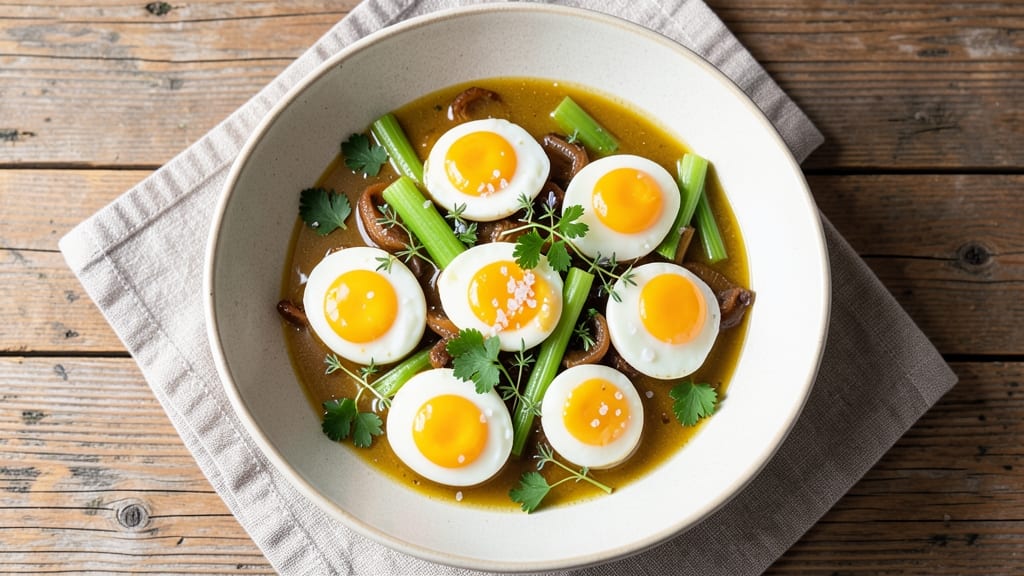
This stewed eggs recipe transforms simple eggs into a luxurious, herb-infused dish that feels like a restaurant breakfast. The secret lies in simmering eggs gently in a rich broth with celery, shallots, and fresh herbs—creating tender whites and yolks that stay perfectly runny.
I developed this version after craving something heartier than scrambled eggs but lighter than a full brunch spread, and it became an instant weekday favorite.
The beauty of this method is its versatility—it works as a standalone dish or pairs beautifully with buttered toast and fresh greens.
Unlike traditional œufs en cocotte, this recipe uses a lighter broth base (vegetable or chicken) and incorporates celery for subtle earthiness that balances the richness of the eggs.
The herbs—thyme, parsley, and bay leaf—infuse the liquid with aromatic depth, while a touch of cream at the end adds velvety texture without overpowering.
What you’ll end up with is a dish that’s elegant yet approachable, with eggs that stay tender and yolks that melt into the fragrant broth. The celery adds a satisfying crunch, while the herbs brighten every bite.
It’s the kind of recipe that elevates a simple breakfast into something special—perfect for lazy mornings or when you want to impress without fuss.
For omnivores, crispy bacon or smoked salmon can be added, but the vegetarian version stands strong on its own. The method is foolproof, and the results are consistently restaurant-quality. Let’s get cooking!
Ingredients for stewed eggs
Twelve ingredients transform humble eggs into a restaurant-worthy herb-infused breakfast masterpiece.
| Ingredient | Amount | Notes |
|---|---|---|
| Large Eggs 🥚 | 8 whole | Room temperature for even cooking |
| Vegetable Broth 💧 | 2 cups | Low-sodium preferred for balance |
| Celery Stalks 🧅 | 2 whole | Trimmed, cut into 1-inch pieces |
| Shallots 🧅 | 2 whole | Minced, about 2 tbsp total |
| Fresh Thyme Sprigs 🌿 | 4 whole | Or 1 tsp dried thyme |
| Fresh Parsley 🌿 | ¼ cup | Chopped leaves only |
| Bay Leaves 🍃 | 2 whole | Dried, standard size |
| Heavy Cream 🥛 | ¼ cup | Full-fat for richness |
| Unsalted Butter 🧈 | 1 tbsp | For finishing, cold |
| Diamond Crystal Kosher Salt 🧂 | ½ tsp | Adjust to taste |
| Freshly Ground Black Pepper 🌶️ | ¼ tsp | Cracked over eggs |
| Extra-Virgin Olive Oil 🫒 | 1 tbsp | For broth enrichment |
The eggs are the star, so room temperature is critical—cold eggs cook unevenly. Whole eggs (not separated) maintain perfect runny yolks. For broth, low-sodium vegetable ensures you control seasoning. Celery adds subtle earthiness that balances the richness; avoid pre-cut—it loses flavor fast. Shallots provide delicate sweetness without overpowering. Fresh thyme and parsley bring aromatic depth, while bay leaves infuse subtle complexity. Trader Joe's carries excellent dried herbs if fresh aren't available.
No fresh thyme? Dried at one-third the amount works perfectly. Substitute leek greens for parsley if needed—they have a similar mild onion flavor. For a richer broth, add 1 tbsp tomato paste to the base. The cream should be full-fat for that velvety texture; half-and-half works in a pinch but lacks depth. If you prefer a lighter finish, reduce cream to 2 tbsp and add 1 tbsp vegetable stock instead. Diamond Crystal kosher salt dissolves cleanly—avoid table salt which can make eggs rubbery.
Broth and herbs can be prepped a day ahead—store in the fridge for up to 3 days. Eggs should be added just before serving to maintain perfect texture. The finished dish keeps 2 days refrigerated in an airtight container, though the yolks may firm slightly. For make-ahead convenience, poach eggs separately and add them to the warmed broth. Reheat gently—never boil—to preserve that silky texture. Portion into ramekins for elegant individual servings.
Why You'll Love This Recipe
- Here’s what sold me: that perfect balance where the eggs develop a golden crust while staying silky inside. The celery adds a subtle crunch, and the thyme? It’s like a whisper of herbal warmth cutting through the richness. Honestly, it’s the kind of dish that makes me slow down and savor every bite.
- I’ll be real: eggs and broth are about as affordable as it gets, but this tastes like a restaurant dish. The shallots and thyme elevate it without breaking the bank, and leftovers keep for days. It’s the kind of meal that makes me feel like I’m treating myself, even when I’m just feeding the family.
Step-by-step instructions for stewed eggs with celery and herbs
This method delivers tender, creamy eggs infused with aromatic herbs and vegetables.
Prepare the Aromatic Base
In a deep skillet or saucepan, heat the 1 tablespoon extra-virgin olive oil over medium-low heat until shimmering. Add the 2 whole shallots and 2 whole celery stalks cut into 1-inch pieces, cooking for 5-6 minutes until the vegetables soften and begin to release their natural juices. You'll notice the shallots turn translucent and the celery slightly wilted—this indicates they're ready for the next step.
Add the 4 whole fresh thyme sprigs and 2 whole bay leaves, stirring gently to combine. Cook for another 1 minute until the thyme leaves release their fragrant oils. This aromatic base forms the flavor foundation for your stewed eggs, so don't rush this step—proper development of these flavors is essential for depth.
Build the Broth and Simmer
Pour in the 2 cups vegetable broth and bring to a gentle simmer over medium heat. Once bubbling steadily, reduce heat to low to maintain a slow, steady simmer. This controlled temperature prevents the eggs from cooking too quickly on the outside while remaining undercooked inside.
Add the 0.5 teaspoon diamond crystal kosher salt and 0.25 teaspoon freshly ground black pepper to the simmering broth, stirring gently to dissolve. The broth should now have a rich, aromatic quality with visible steam rising—this indicates it's ready to accept the eggs. Keep the heat at this low setting throughout the cooking process to ensure even, gentle heat distribution.
Add the Eggs and Cook Gently
Carefully place the 8 whole large eggs into the simmering broth using a slotted spoon. Space them evenly so they don't overcrowd the pan, which could cause uneven cooking. Return the heat to low and let the eggs cook undisturbed for 10-12 minutes. You'll see the whites gradually become opaque while the yolks remain runny—this is the perfect texture for stewed eggs.
Occasionally lift the eggs with a spoon to ensure they're fully submerged in the broth. If any whites are exposed, gently press them back under the liquid. The eggs are done when the whites are completely set but the yolks still have a slight wobble when gently shaken. Overcooking will turn the yolks rubbery, so watch carefully during the last few minutes.
Finish with Cream and Butter
Remove the pan from heat and carefully transfer the eggs to a serving dish using a slotted spoon. In the same pan, reduce the heat to low and stir in the 0.25 cup heavy cream and 1 tablespoon unsalted butter. Simmer gently for 1-2 minutes until the sauce thickens slightly and coats the back of a spoon. This enriched broth will be your eggs' luxurious finishing sauce.
Strain the sauce through a fine-mesh sieve to remove any herb fragments, then pour it over the eggs. Garnish with the 0.25 cup chopped fresh parsley just before serving. The final presentation should show eggs nestled in a glossy, herb-infused cream sauce with vibrant green parsley scattered on top. Serve immediately while the sauce is still warm and the eggs are at their peak tenderness.
Pro Tips For Making Stewed Eggs
- Crack Eggs Directly In: DESCRIPTION: Skip the bowl—crack eggs straight into the simmering broth. The gentle heat keeps yolks intact and prevents that sad, rubbery texture when they hit cold liquid first. (Yes, it looks messy, but your eggs will thank you.)
- Sweat Shallots First: DESCRIPTION: Don’t just chop and toss—sauté shallots in a dry pan until they’re soft and translucent before adding broth. This builds flavor and keeps them from turning to mush later. I learned this the hard way when my stewed eggs tasted like celery soup.
- Cover Tightly, Low Heat: DESCRIPTION: Use a lid that seals snugly and reduce heat to a bare simmer. Eggs cook best when they’re gently bathed in liquid, not rolling around in a boiling frenzy. (Your future self will thank you for not rushing this.)
- Strain Broth Before Adding: DESCRIPTION: If your broth has chunks, strain it first—even if it’s homemade. Clean broth lets the eggs shine without competing textures. I skip this when I’m lazy, but the dish is noticeably better when I don’t. (Worth the extra 30 seconds.)
Essential equipment for perfect results
Deep Skillet Essentials
Start with a deep 10-inch cast iron skillet or stainless steel saucepan—both distribute heat evenly and handle the gentle simmering required. I use my Lodge 10-inch cast iron because it retains heat beautifully and develops a natural non-stick patina over time.
For a lighter option, a Le Creuset enameled Dutch oven works perfectly, especially if you plan to serve directly from the pan. Avoid non-stick pans for this recipe—they can't handle the prolonged low heat without warping or losing their coating. 🔥
Precision Thermometer
A candy or instant-read thermometer is your secret weapon for perfect eggs. I keep a Thermoworks Thermapen ONE on my counter—it reads temperatures in seconds and helps maintain that gentle 160-170°F simmer. The thermometer ensures you never overcook the yolks while keeping the whites perfectly set.
Without it, you risk either rubbery yolks or undercooked whites. For budget-friendly alternatives, the OXO Good Grips model works well too.
Fine-Mesh Strainer
For that silky, herb-free sauce, a fine-mesh strainer is essential. I reach for my Eberhardt Stainless Steel Conical Strainer—it removes even the tiniest herb fragments while preserving the aromatic broth. If you don't have one, a cheesecloth-lined colander works in a pinch.
The straining step elevates the dish from homemade to restaurant-quality, giving you that velvety texture without any bitterness from bay leaves or thyme stems. ✨
Slotted Spoon
A long-handled slotted spoon makes transferring eggs effortless and prevents breaking yolks. My OXO Good Grips model has a comfortable grip and wide slots that let the broth drain completely. The key is to lift eggs gently—never drag them across the pan.
For extra stability, I place a small plate under the slotted spoon to catch any stray yolks. This simple tool saves countless messy moments when plating.
Ramekins for Serving
For an elegant presentation, serve the stewed eggs in individual ramekins or small oven-safe dishes. I love Corelle stoneware ramekins—they're sturdy, heat-resistant, and come in beautiful patterns. If you're serving family-style, a large ceramic dish with shallow sides works beautifully.
The ramekins also make reheating easier—just pop them in the microwave for 30 seconds on low power to warm through gently. 💫
Optional: Egg Poacher
For a hands-off approach, an egg poacher like the OXO 4-Cup can be a game-changer. It cooks eggs perfectly every time with minimal effort, though you'll still need to finish them in the herb broth.
I use mine when I'm short on time but prefer the hands-on method for that restaurant-quality touch. The poacher works best for pre-cooking eggs separately before adding them to the finished broth and sauce.
Nutrition facts
Frequently asked questions
Why do the yolks need to stay runny in stewed eggs?
The runny yolks create a luxurious, velvety texture that blends beautifully with the herb-infused broth. When gently stirred into the warm sauce, they create a silky consistency that makes every bite feel indulgent. Overcooked yolks turn rubbery and lose their natural richness.
Can I make this recipe without fresh herbs?
Use 1 teaspoon dried thyme and ½ teaspoon dried parsley instead of fresh. For bay leaves, stick with the same quantity since they're already dried. The flavor will be slightly less vibrant but still delicious. If you have access to frozen herbs, they work well too—just thaw and drain them first.
How do I fix eggs that overcooked while simmering?
If the whites set too quickly, carefully transfer the eggs to a bowl and cover them with warm (not hot) broth to keep them moist. The yolks may be salvageable if they're only slightly firm—simmer them for 1-2 minutes in fresh warm broth to soften them. For severely overcooked eggs, serve them with extra sauce to mask the texture.
What's the best way to reheat stewed eggs?
Gently reheat in a low oven (200°F) for 10-15 minutes or microwave for 30 seconds on low power. Always use the original sauce to keep them moist. Never boil—this will make the yolks rubbery. For best results, reheat only what you plan to serve immediately to maintain perfect texture.
Can I substitute chicken broth for vegetable broth?
Yes, chicken broth works beautifully and adds deeper umami flavor. For a vegetarian version, use a high-quality vegetable broth with added mushrooms or soy sauce for extra depth. The herb combination will still shine through, though the broth's base flavor will differ slightly. Just