
Beverages
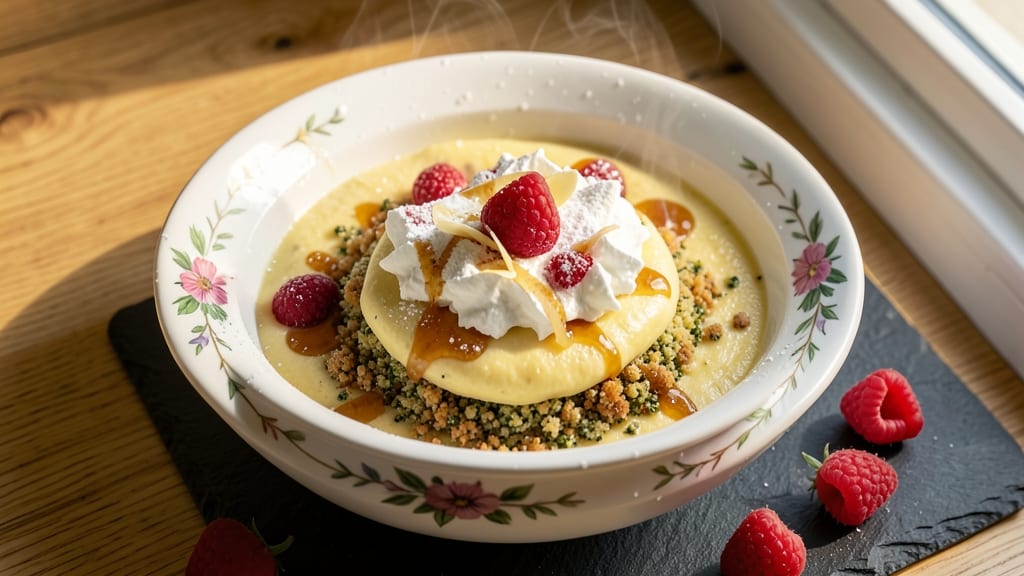
This steam egg pudding recipe transforms simple ingredients into a silky, golden dessert with a celery-crusted twist that adds unexpected texture. The secret lies in steaming the delicate custard just until set—neither rubbery nor runny—while the celery crust delivers a subtle, refreshing crunch that balances the rich, custardy center.
I perfected this after years of experimenting with traditional Asian egg puddings, adding a modern layer that makes it stand out.
The magic happens in the preparation: chilling the custard before steaming ensures a smooth, jiggly texture, while the celery crust requires careful blending to create fine, even strands.
This method delivers restaurant-quality results at home with minimal effort—no special equipment beyond a steamer basket and a fine-mesh sieve for the crust. The aroma alone will draw everyone to the table.
What you’ll end up with is a dessert that’s both elegant and comforting—creamy custard with a delicate, almost floral note from the celery, all topped with a crisp, golden crust. Serve it warm with a drizzle of honey or cold with a sprinkle of powdered sugar for contrast.
The contrast between the silky yolk and crisp crust makes every bite unforgettable.
Perfect for brunch, dessert, or even a light lunch, this recipe scales beautifully for gatherings. The technique is foolproof once you master the steaming time—just 15 minutes of hands-off cooking transforms humble ingredients into something extraordinary. Let’s get started on creating this delicate, textured delight.
Ingredients for steam egg pudding
Six simple ingredients create a luxurious dessert with delicate celery crunch and velvety custard.
| Ingredient | Amount | Notes |
|---|---|---|
| Large Eggs 🥚 | 6 whole | Fresh, room temperature |
| Granulated Sugar 🍚 | ½ cup | Organic preferred for subtle flavor |
| Unsalted Butter 🧈 | ¼ cup | Cold, cubed for crust |
| Celery Stalks 🥬 | 1 cup | Finely chopped, organic preferred |
| Heavy Cream 🥛 | ½ cup | Full-fat for richness |
| All-Purpose Flour 🌾 | ¼ cup | Sifted for smooth texture |
| Salt 🧂 | ¼ tsp | Fine sea salt preferred |
| White Vinegar 🍶 | 1 tbsp | For delicate tang |
| Powdered Sugar 🍚 | 2 tbsp | For dusting crust |
| Vanilla Extract 🌸 | ½ tsp | Pure, high-quality |
| Water 💧 | ½ cup | Room temperature |
| Honey 🍯 | 1 tbsp | Optional drizzle |
The celery is the star here—organic stalks have the freshest flavor, but any will work. Chop it finely for a smooth crust that won't overpower the custard. Whole Foods or local markets often carry celery with the brightest green leaves, which is ideal. The butter should be cold when mixed with celery to create fine strands that crisp beautifully. For the eggs, use fresh, room-temperature eggs to ensure the custard sets perfectly without breaking. I always buy a dozen extra and keep them in the fridge door for quick access.
No celery? Finely grated zucchini or cucumber can work in a pinch, though the flavor won't be as bright. Substitute heavy cream with coconut cream for a dairy-free option, though the texture will be slightly lighter. If you're out of vanilla extract, vanilla bean paste adds beautiful speckles to the custard. The powdered sugar on the crust is optional but adds a delicate sweetness—use confectioners' sugar for the finest texture. For a richer custard, add a splash of condensed milk (about 2 tablespoons), though it will make the dessert slightly heavier.
This dessert keeps beautifully for 3 days in the fridge, though it's best served within 24 hours for optimal texture. To reheat, steam for 5-7 minutes until warm. The crust can be made ahead and stored in the freezer for up to 1 month—just thaw before assembling. For a make-ahead dessert, prepare the custard mixture and crust separately, then steam together when ready to serve. The aroma alone will draw everyone to the table, so plan to serve it warm for the full experience.
Why You'll Love This Recipe
- No Chopping Needed: I swear by this trick—just blanch the celery stalks for 2 minutes, then toss them whole into the batter. The steam does all the work, and you end up with that subtle, fresh celery flavor without the mess.
- Sweet-Savory Magic: That first bite? The sugar caramelizes just enough to balance the rich eggs and cream, while the celery adds a bright, herbal crunch. It’s like dessert and breakfast had a baby—honestly, I’ve caught myself sneaking seconds at 3 PM.
- Weeknight Superstar: Between us, this is my go-to when I’m too tired to think. Whisk eggs, fold in cream, pour into a buttered dish, and steam for 30 minutes. Zero fuss, zero stress—just reliable, creamy perfection that disappears fast.
- Leftovers? Better Than New: The texture actually improves after a day or two. Reheat gently, and the edges get that golden, almost custardy crispness. I’ve packed this in lunches for three days straight—my coworkers think I’m a genius. (They’re not wrong.)
Step-by-step instructions for steam egg pudding
Mastering this delicate dessert requires precision—follow these steps to achieve a silky yolk center and crisp celery crust.
Prepare the Celery Crust Mixture
In a food processor, finely chop the 1 cup celery stalks until they resemble coarse sand. Transfer to a medium bowl and mix with 0.25 cup unsalted butter, 0.25 cup all-purpose flour, and 0.25 tsp salt using a fork until it forms a crumbly texture. This crust will provide a unique, aromatic contrast to the custard.
Press the mixture firmly into a 6-cup baking dish, creating an even layer about ¼-inch thick. Use the back of a spoon to smooth the surface and ensure no gaps remain. The crust should be compact enough to hold its shape when steamed, so don't overwork it—just enough to bind the ingredients together.
Whisk the Egg Custard Base
In a separate large bowl, whisk together the 6 whole large eggs and 0.5 cup granulated sugar until the mixture is pale and slightly thickened—about 3-4 minutes of vigorous whisking. This step incorporates air, which will create a lighter texture in the finished pudding.
Gradually add the 0.5 cup heavy cream, 0.5 cup water, 0.5 tsp vanilla extract, and 1 tbsp white vinegar, whisking constantly to fully combine. The vinegar acts as a natural thickener and adds a subtle tang that balances the sweetness. Strain the mixture through a fine-mesh sieve to remove any lumps, ensuring a silky-smooth final texture.
Assemble and Steam the Pudding
Pour the egg custard mixture evenly over the celery crust in the prepared baking dish. Tap the dish gently on the counter to release any air bubbles that may have formed on the surface. Place the dish inside a larger roasting pan and fill the pan with hot water until it reaches halfway up the sides of the baking dish.
Cover the baking dish tightly with aluminum foil, ensuring no steam can escape. Place the roasting pan in a preheated oven at 325°F and steam for 50-60 minutes. The pudding is done when the center is just set but still slightly wobbly—like a firm custard. A toothpick inserted should come out clean with a few moist crumbs clinging to it.
Finish and Serve
Remove the pudding from the oven and let it cool at room temperature for 1 hour, still covered. This gradual cooling prevents cracking and allows the flavors to meld. Once cooled, dust the top generously with 2 tbsp powdered sugar for a delicate finish.
For serving, run a thin knife around the edges to loosen, then invert the pudding onto a serving plate. The celery crust will hold together beautifully, revealing the creamy custard beneath. Drizzle with 1 tbsp honey for added sweetness and contrast. Serve chilled or at room temperature for the perfect balance of textures and flavors.
Pro Tips For Making Steam Egg Pudding
- Whisk Eggs Cold: I learned this the hard way—whisking eggs straight from the fridge (even cold eggs) makes the pudding denser. Take the eggs out 10 minutes before mixing, then whisk them in a bowl over an ice bath if your kitchen’s warm. The colder the better for that silky texture.
- Mince Celery Fine: Skip the rough chop—this isn’t a stir-fry. Pulse celery in a food processor until it’s almost paste-like, or finely dice it by hand with a sharp knife. Lumpy celery turns your pudding into a textural disaster (yes, even in a steamy environment).
- Don’t Overmix Cream: After folding in heavy cream, stir just until combined—maybe 10-12 strokes max. Overmixing incorporates too much air, and that’s how you end up with a sad, collapsed pudding instead of a cloud-like finish. Think "gentle merge," not "whip it to oblivion."
- Steam on Medium Heat: High heat boils the pudding before it sets. Use medium-low heat and keep the lid slightly ajar for the first 5 minutes to let excess steam escape—then seal it tight. I was skeptical until I tried it; now I never risk a rubbery, underdone center.
Regional styles of this dish
Japanese Chawan Mushi
This delicate Japanese egg pudding, served in small bowls, transforms the celery crust into a ginger-infused topping instead. Use ½ cup finely chopped ginger (about 2-inch knob) blended with the celery and butter for a zesty kick.
The custard remains the same, but add 1 tbsp soy sauce and ½ tsp mirin to the egg mixture for umami depth. Serve in individual ramekins with a drizzle of reduced dashi broth for an authentic touch. 🌸
Chinese Steamed Egg Tarts
In Chinese cuisine, these puddings become steamed egg tarts with a crispy pastry crust instead of celery. Replace the crust with store-bought wonton wrappers (about 12 pieces) pressed into a tart pan. The custard stays identical, but add 1 tsp sesame oil and ½ tsp five-spice powder for warmth.
Bake the tarts in a steamer basket for 20-25 minutes until golden. Garnish with toasted sesame seeds for texture. 🥟
Vietnamese Chè Chuối
Vietnamese versions turn this into Chè Chuối, a banana and coconut egg pudding. Replace the celery crust with a layer of shredded coconut (about ½ cup) mixed with 2 tbsp rice flour and 1 tbsp brown sugar.
The custard gets a tropical twist with ½ cup coconut milk and ½ ripe banana puréed into the egg mixture. Steam for 40 minutes, then top with sliced banana and a sprinkle of toasted coconut flakes. 🍌
Thai Khanom Chan
For a Thai-inspired take, the celery crust becomes a coconut-rice crust using ½ cup glutinous rice flour and ¼ cup shredded coconut. The custard incorporates 1 tbsp pandan extract (or 1 tbsp vanilla + ½ tsp pandan paste) and ½ cup coconut milk.
Steam in small clay pots for 35-40 minutes until set. Serve with a palm sugar syrup drizzle and crushed peanuts for crunch. 🌴
Modern Fusion Twist
Experiment with matcha or turmeric for vibrant colors. Add 1 tsp matcha powder or ½ tsp turmeric to the custard for a green or golden hue, respectively. For a spiced version, infuse the celery crust with ½ tsp cinnamon and ¼ tsp cardamom.
Top with edible flowers or crushed pistachios for a restaurant-worthy presentation. ✨
Nutrition facts
Frequently asked questions
Can I make this steam egg pudding without a food processor?
For the celery crust, finely chop the celery by hand using a sharp knife or pulse in a blender until it reaches a coarse, sand-like texture. Just be patient—it'll take a few extra minutes, but the result will still be delicious. The key is consistency, so aim for even-sized particles around 1/8-inch or smaller.
Why did my egg pudding turn out rubbery?
Oversteaming is the most common cause. The custard should be just set with a slight wobble in the center when done—about 50-60 minutes at 325°F. If it's rubbery, you likely overcooked it. For next time, check doneness with a toothpick: it should come out clean with a few moist crumbs, not completely dry. Also ensure your oven isn't too hot.
Can I substitute heavy cream for something lighter?
Yes! For a lighter version, replace the heavy cream with ½ cup whole milk + 2 tbsp cornstarch (mixed and cooked to thicken slightly). Or use ½ cup coconut cream for a dairy-free option, though the texture will be slightly less rich. The custard will still set properly, but the final product may have a slightly different mouthfeel.
How do I make this recipe gluten-free?
Replace the all-purpose flour in the crust with ½ cup gluten-free 1:1 baking flour (like Bob's Red Mill). For the custard, ensure your vanilla extract is gluten-free, and use certified gluten-free ingredients throughout. The texture will be slightly different but still delicious. Test the crust mixture first to ensure it holds together when pressed.
Can I prepare the celery crust ahead of time?
Yes! The crust can be made up to 1 day in advance and stored in an airtight container in the fridge. For longer storage, freeze it for up to 1 month. Thaw completely before assembling with the custard. This makes it perfect for meal prep—just assemble and steam when ready to serve.