
Breakfast & Brunch
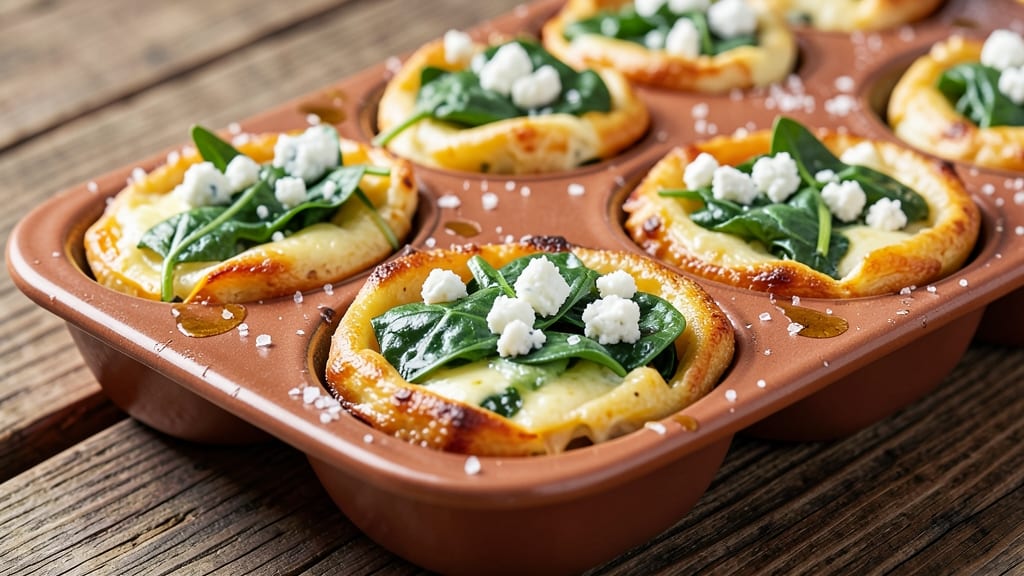
This spinach feta egg cups recipe delivers a fast, foolproof breakfast that transforms simple ingredients into golden, fluffy bites with every savory-spinach-feta flavor. The secret lies in a perfectly whisked egg mixture that bakes into tender, cloud-like cups—no flipping required.
I developed this recipe during a busy morning when I needed something both satisfying and effortless, and it’s become a weekday staple ever since.
What makes these egg cups special is their versatility and speed—ready in just 15 minutes with minimal prep. The combination of wilted spinach, crumbled feta, and sharp cheddar creates a filling that’s rich yet balanced, while the crispy edges add texture.
Unlike traditional frittatas, these bite-sized portions are perfect for meal prep or serving as an appetizer at gatherings.
By the time they emerge from the oven, you’ll have a tray of golden, fluffy egg cups that look impressive yet take almost no effort. The spinach adds freshness, the feta brings tangy depth, and the cheddar ensures each bite is satisfying.
Garnish with fresh herbs or a sprinkle of chili flakes for extra brightness, and you’ve got a breakfast that’s as beautiful as it is delicious.
These egg cups reheat beautifully, making them ideal for busy mornings or meal prep. Whether you’re feeding a family or hosting a brunch, this recipe delivers perfect results every time—no culinary experience required. Let’s get started!
Ingredients for spinach feta egg cups
Twelve simple ingredients transform into golden, fluffy egg cups with crispy edges and savory-spinach-feta filling.
| Ingredient | Amount | Notes |
|---|---|---|
| Large Eggs 🥚 | 6 whole | Room temperature for best blending |
| Fresh Baby Spinach 🌿 | 2 cups | Chopped, stems removed |
| Crumbled Feta Cheese 🧀 | ½ cup | High-quality, salty variety |
| Shredded Sharp Cheddar Cheese 🧀 | ½ cup | Freshly grated for best flavor |
| All-Purpose Flour 🌾 | ¼ cup | For crispy cup edges |
| Whole Milk 🥛 | ¼ cup | Full-fat for creaminess |
| Salt 🧂 | ½ tsp | Diamond Crystal preferred |
| Black Pepper 🌶️ | ¼ tsp | Freshly cracked preferred |
| Extra-Virgin Olive Oil 🫒 | 1 tbsp | For greasing ramekins |
| Garlic Cloves 🧄 | 2 cloves | Minced for subtle flavor |
| Fresh Dill 🌿 | 1 tbsp | Chopped, for garnish |
| Red Pepper Flakes 🌶️ | ½ tsp | Optional, for heat |
The spinach is the star here—baby spinach has the best texture, but any fresh variety works. Wilt it first in a dry pan or microwave to remove excess moisture, which keeps your egg cups light. For the cheeses, feta should be crumbled by hand (not pre-shredded) for that authentic tang, and sharp cheddar adds the perfect bite. I always grab Whole Foods or Trader Joe's for both—better quality, less salt. The eggs? Room temperature blends smoother, so pull them out 10 minutes before you start.
No fresh dill? Dried works at one-third the amount, but the flavor won't be the same. Pre-shredded cheese? Drain and dry it first—it has anti-caking agents that add moisture. Running short on milk? Heavy cream or half-and-half works in a pinch, but the texture gets richer. For a dairy-free version, swap the milk for unsweetened almond milk and use vegan cheese (though the flavor won't be identical). The red pepper flakes are optional, but a pinch of smoked paprika adds depth if you skip them. And if you're making these ahead, underbake slightly so they reheat perfectly.
These egg cups reheat beautifully—30 seconds in the microwave or 5 minutes at 350°F in the oven. Store leftovers in an airtight container for 3 days in the fridge or 1 month in the freezer. I always make a double batch on Sundays: half for breakfast, half for snacks. Portion into muffin tins for easy grab-and-go prep. Garnish with fresh dill and a sprinkle of red pepper flakes right before serving—that's when they look most impressive.
Why You'll Love This Recipe
- No-Fuss Assembly: I swear by this recipe because it’s the kind of meal that doesn’t demand your full attention. Just whisk eggs, mix in spinach and cheeses, pour into a muffin tin, and bake—no rolling dough, no intricate layering. Honestly, the hardest part is deciding whether to use a silicone liner or grease the tin.
- Salty-Savory Magic: That first bite? The sharp cheddar melts into a gooey hug while the feta crumbles like little salty surprises. The spinach wilts just enough to stay tender, not mushy, and the whole thing has this addictive contrast—creamy egg, crispy edges, and a tangy bite that makes you want another.
- Weeknight & Meal Prep Hero: Between us, this is my secret weapon for busy mornings or lazy Sundays. Make a batch ahead, and they reheat in seconds—no soggy bottoms, no fuss. I keep extras in the fridge for grab-and-go breakfasts or pack them for lunch when I’m too tired to think.
- Budget-Friendly Luxury: Eggs, cheese, and spinach stretch farther than you’d think, especially when you’re using basic pantry staples like flour for that golden crust. It’s the kind of dish that feels indulgent (hello, brunch-worthy vibes) but won’t break the bank—perfect when you want to impress without overspending.
Step-by-step instructions for spinach feta egg cups
Here's how to create these perfectly golden, bite-sized egg cups with crispy edges and creamy centers.
Prep Ingredients for Maximum Flavor
Begin by preheating your oven to 375°F—this temperature ensures even baking without drying out the eggs. While it heats, wash and thoroughly dry the 2 cups fresh baby spinach, then chop it finely, removing any tough stems. The smaller the pieces, the more evenly they'll distribute throughout each cup.
In a small bowl, combine the 0.5 cup crumbled feta cheese with the 0.5 cup shredded sharp cheddar cheese, breaking up any large clumps with your fingers. This blend gives you that perfect salty-tangy balance that makes these egg cups irresistible. Set aside the 2 cloves minced garlic and 0.5 tsp red pepper flakes—we'll add these to the egg mixture shortly for extra depth.
Whisk Eggs and Mix Wet Ingredients
In a large bowl, crack the 6 whole large eggs and whisk them vigorously until they're completely smooth and pale yellow. This aeration creates light, fluffy egg cups rather than dense ones. Add the 0.25 cup whole milk, 0.25 cup all-purpose flour, 0.5 tsp salt, and 0.25 tsp black pepper, whisking constantly until fully combined. The mixture should be uniform with no visible flour streaks.
Now stir in the chopped spinach, cheese mixture, minced garlic, and red pepper flakes. Gently fold everything together just until incorporated—overmixing can make the egg cups tough. The batter should look thick but pourable, with visible green spinach flecks throughout.
Grease and Prep Ramekins
Lightly grease 12 ramekins (about 4-ounce size) with 1 tablespoon extra-virgin olive oil, making sure to coat the bottom and sides thoroughly. This prevents sticking and helps create those crispy edges we're after. For extra insurance, I like to dip each ramekin in flour and tap out the excess—this creates a light crust that enhances the texture.
Divide the egg mixture evenly among the ramekins, filling each about ¾ full. The batter should mound slightly above the rim—this ensures we get that perfect dome shape when baked. Place the ramekins on a baking sheet for easy transfer.
Bake to Golden Perfection
Bake the egg cups for 15-18 minutes until the edges are deep golden brown and the centers have just set. You'll know they're ready when they spring back slightly when gently pressed in the center—no jiggling should remain. The tops should look slightly puffed with crisp edges that contrast beautifully with the creamy interior.
Here's the thing—don't overbake them. They'll continue cooking slightly as they cool, and you want that custardy center. If you see the tops browning too quickly, tent them loosely with foil for the last 2-3 minutes of baking to prevent over-browning while still allowing them to cook through.
Garnish and Serve Immediately
Remove the ramekins from the oven and let them cool for 2-3 minutes before carefully removing each egg cup. The edges should hold their shape when lifted. Sprinkle each cup generously with the 1 tablespoon chopped fresh dill—this adds a bright, herby contrast to the rich egg and cheese flavors.
Serve these bite-sized beauties immediately while they're still warm and the centers are creamy. They're perfect for breakfast parties, snacking, or even as an elegant appetizer. Store any leftovers in the refrigerator for up to 3 days—just reheat in the microwave for 20-30 seconds to restore that perfect texture.
Pro Tips For Making Spinach Feta Egg Cups
- STIR THE MIX WELL: Don’t just toss the spinach into the egg-cheese mix and call it done—fold it in gently but thoroughly, like you’re tucking in a blanket. The goal is even distribution, not bruised leaves at the bottom of your ramekins. I used to rush this, and half my egg cups ended up with a sad, spinach-free top layer.
- USE ROOM-TEMP EGG MIX: Cold eggs make for dense, rubbery egg cups. Whisk your eggs, milk (if using), and cheese mixture until it’s just warm to the touch—no need to heat it, just let it sit for 5 minutes after mixing. This small step guarantees a lighter, fluffier texture. (Yes, even if you’re impatient like me.)
- PRESS HARD ON FETA: Feta’s salty, crumbly magic disappears if you just sprinkle it on top. Press it firmly into the egg-spinach mix before baking—think of it like making tiny cheese-stuffed pockets. This keeps the feta from sliding to the bottom and ensures every bite has that tangy punch.
- BAKE AT 350°F, NOT HIGHER: Cranking the oven to 375°F or higher might speed things up, but your egg cups will turn out dry and overcooked on top before the centers set. Stick to 350°F for 20–25 minutes—they’ll hold together better when you unmold them, and the cheeses will melt just right. (Trust me, I’ve learned this the hard way.)
Troubleshooting perfect results
Eggs Too Runny?
If your egg cups turn out more like custard than a set texture, you likely underbaked them. Pull them out as soon as the edges are golden and centers have just set—no jiggling when gently pressed.
For next time, increase baking time by 1-2 minutes or check your oven temperature with an oven thermometer (many run hotter than set). 🌡️
Spinach Too Watery
Excess moisture from un-wilted spinach causes soggy egg cups. Always wilt spinach first by sautéing in a dry pan for 1-2 minutes until just wilted, then squeeze out any excess liquid with a clean towel. Pre-shredded cheese also adds moisture—always drain and dry it thoroughly before using.
Cheese Not Melting
Cold cheese blends won't melt properly. Take your cheeses out of the fridge 10 minutes before mixing, and warm the ramekins slightly by placing them in the oven for 2-3 minutes before adding the batter. For extra insurance, add 1 tablespoon hot milk to the egg mixture before baking.
Cups Sticking to Ramekins
Grease ramekins thoroughly with extra-virgin olive oil and dip in flour before adding batter. For stubborn sticking, use nonstick ramekins or line them with parchment paper circles cut to fit. If using parchment, cut circles slightly larger than the ramekin bottoms to create a lift-off effect.
Batter Too Thin
If your mixture looks too runny, whisk in 1-2 tablespoons additional flour until it reaches a thick but pourable consistency. The batter should coat the back of a spoon but still flow easily. For extra structure, add 1 tablespoon cornstarch to the dry ingredients before mixing.
Uneven Baking
Rack placement matters! Position your baking sheet on the middle rack for even heat distribution. If your oven has hot spots, rotate the tray halfway through baking. For extra evenness, use a light-colored baking sheet—dark pans absorb more heat and can cause uneven browning. 🔥
Nutrition facts
Frequently asked questions
Can I make these egg cups without ramekins?
Yes! Use 12 greased muffin cups or a 24-cup mini muffin tin for smaller portions. For a free-form approach, spoon 2-tablespoon portions of batter onto a parchment-lined baking sheet and bake at 375°F for 12-15 minutes. The edges will be slightly less crisp, but the creamy centers will still shine.
How do I store and reheat leftovers?
Store in an airtight container for up to 3 days in the fridge or 1 month in the freezer. Reheat individual cups in the microwave for 20-30 seconds or in a 350°F oven for 5-7 minutes until warm through. For best texture, avoid reheating more than once.
What can I substitute for feta cheese?
Use goat cheese (½ cup crumbled) for tangy depth or ricotta (½ cup blended smooth) for creaminess. For a dairy-free option, swap with vegan feta (like Violife) and add 1 tablespoon nutritional yeast for a cheesy flavor. The texture will be slightly different but still delicious!
Can I make these egg cups ahead for meal prep?
Bake them 1-2 days ahead and store in the fridge. For meal prep, bake a double batch and freeze half in a single layer before transferring to bags. Reheat frozen cups directly from the freezer in the oven at 350°F for 10-12 minutes with a splash of water in the ramekin for extra moisture.
Why did my egg cups turn out dense instead of fluffy?
Overmixing the batter or under-whisking the eggs creates dense texture. Whisk the eggs until completely smooth and pale yellow, then fold in fillings gently. Also, ensure your oven is at 375°F—lower temps can prevent proper rising. For extra fluffiness, add 1 tablespoon cornstarch to the dry ingredients.