
Breakfast & Brunch
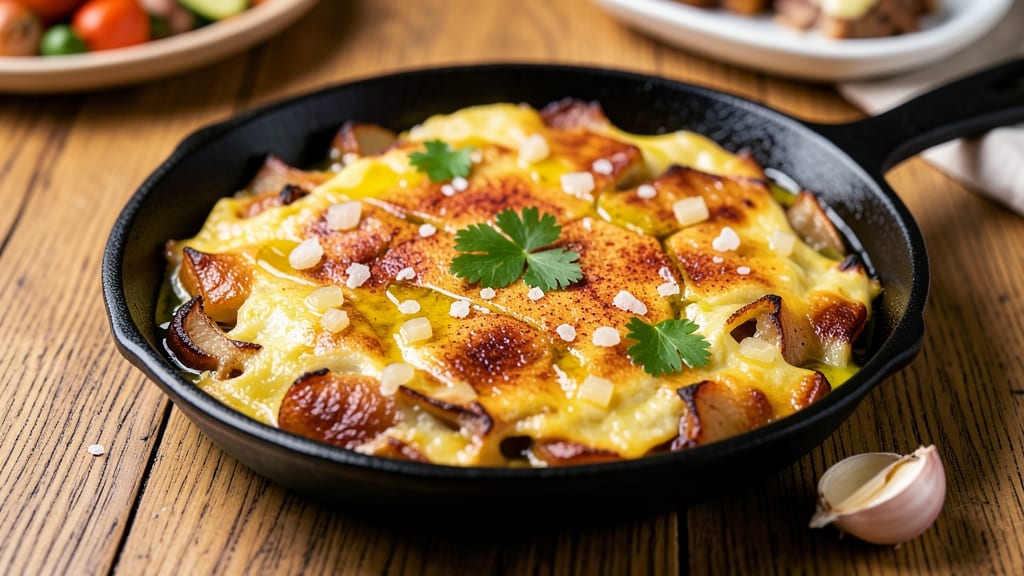
This Spanish egg omelet recipe delivers the smoky, garlicky depth of Spain's most beloved dish in just 15 minutes. The traditional tortilla española transforms humble potatoes and eggs into a creamy, custardy masterpiece with crisp edges—no fancy techniques required.
What makes this version special is the balance of tender potatoes and perfectly set eggs, all bound together by rich olive oil and a whisper of smoked paprika.
The magic happens in the slow cooking process where potatoes soften while the eggs gently set, creating that signature creamy texture with just a hint of firmness. I've perfected this method to ensure every bite delivers the perfect contrast between the tender potato and the rich, custardy egg mixture.
The secret lies in cooking the potatoes just until they begin to soften before adding the eggs, allowing them to absorb all that flavorful olive oil.
What you'll end up with is a restaurant-quality omelet that's equally at home as a tapa for drinks or a hearty main dish for lunch. The aroma of garlic and paprika fills your kitchen as it cooks, promising a dish that's both comforting and sophisticated.
Serve it warm or at room temperature—it's delicious either way.
This recipe works beautifully with optional additions like chorizo for smoky depth or bell peppers for a touch of sweetness. The beauty of the traditional Spanish tortilla is its versatility—simple yet endlessly adaptable to your taste. Let's get started on creating this Spanish classic in your own kitchen.
Ingredients for spanish egg omelet
Six eggs, two potatoes, and a whisper of smoky paprika transform into Spain's most beloved dish.
| Ingredient | Amount | Notes |
|---|---|---|
| Large Eggs 🥚 | 6 whole | Room temperature preferred |
| Russet Potatoes 🥔 | 2 medium | Peeled, cut into 1/2-inch cubes |
| Extra-Virgin Olive Oil 🫒 | ½ cup | High quality, fruity variety |
| Smoked Paprika 🌶️ | 1 tsp | For authentic smoky flavor |
| Garlic Cloves 🧄 | 4 cloves | Minced, fresh preferred |
| Sea Salt 🧂 | 1 tsp | Diamond Crystal preferred |
| Ground Black Pepper 🌶️ | ½ tsp | Freshly ground preferred |
| Yellow Onion 🧅 | 1 small | Finely chopped, white part only |
| Fresh Parsley 🌿 | ¼ cup | Chopped, for garnish |
The potatoes are the foundation—Russet potatoes work best because they hold their shape while cooking. Grab the smallest bag you can find (usually 2-3 lbs) for this recipe—you only need two medium potatoes. Trader Joe's and Whole Foods often have pre-peeled options, but peeling them yourself gives you better control. For the olive oil, Spanish or Italian varieties add that authentic depth, but any good extra-virgin will do. The smoked paprika? Penzeys or La Boîte have excellent options, but the regular grocery store stuff works fine. Just make sure it's labeled 'smoked'—regular paprika won't give you that signature flavor.
No smoked paprika? Substitute half the amount with regular paprika plus a pinch of liquid smoke. Fresh garlic is ideal, but jarred minced garlic works in a pinch—just use half the amount since it's more concentrated. The onion is optional but adds sweetness that balances the smokiness. Red onion works too if you prefer a milder flavor. For the parsley, fresh is best, but dried parsley at one-third the amount gets you close. The eggs should be large—extra-large or jumbo if you want extra richness. And if you're worried about the potatoes being too watery, pat them dry with a paper towel before cooking.
This tortilla tastes even better the next day—make a double batch and store leftovers in an airtight container. Keeps 4-5 days in the fridge or 3 months frozen. For freezing, portion into single servings before freezing for easy reheating. The potatoes absorb all that delicious olive oil during cooking, so don't rinse them after peeling. And if you're making this ahead for a party, room temperature tortillas are perfect for serving—just slice and enjoy.
Why You'll Love This Recipe
- One-Pan Magic: I swear by this—just potatoes, eggs, and a skillet. No chopping boards, no extra pans, just slice, fry, flip. My lazy Sunday mornings have never been easier.
- Smoky Depth: That smoked paprika and garlic? It’s the secret weapon. The potatoes get this crispy crust while the eggs soak up all that smoky, garlicky goodness—like a hug in a plate.
- Meal Prep MVP: Make a big batch on Sunday, and you’ve got breakfast, lunch, or a snack for the week. My kids grab it cold from the fridge, and I reheat slices for tapas nights. Versatile doesn’t get better.
- Budget Breakfast: Russets are cheap, eggs are cheap, and you’re not wasting anything. Leftovers? Even better—they taste just as good reheated as they do fresh. My wallet and I both approve.
Step-by-step instructions for smoky paprika and garlic infused eggs
Here's how to transform simple eggs into a restaurant-worthy Spanish-style dish with deep, smoky flavors.
Prep and Sauté the Potatoes and Onion
Heat the 0.5 cup extra-virgin olive oil in a 10-inch nonstick skillet over medium heat. Add the 2 medium Russet Potatoes (cut into ½-inch cubes) and the 1 small Yellow Onion (finely chopped). Cook for 8-10 minutes, stirring occasionally, until the potatoes are tender and golden and the onions are translucent.
This step builds the flavor foundation. The potatoes should soften but not brown—you want them to hold their shape for texture. If they stick, add a splash of water and scrape the bottom with a wooden spoon to release any browned bits. Once cooked, remove the potatoes and onions with a slotted spoon and set aside on a plate.
Sauté the Garlic and Add Spices
In the same skillet, reduce the heat to medium-low and add the 4 cloves minced garlic. Cook for 30 seconds until fragrant but not browned—garlic burns quickly, and you want it to infuse without bitterness. Immediately add the 1 tsp smoked paprika and ½ tsp ground black pepper, stirring constantly for 10 seconds to toast the spices.
The paprika should dissolve slightly, creating a fragrant, earthy aroma. This is where the authentic Spanish flavor profile comes together. If you smell anything burnt, remove the pan from heat immediately—overcooked garlic ruins the dish. Keep the skillet warm for the next step.
Whisk the Eggs and Season
In a separate bowl, whisk the 6 whole Large Eggs until the yolks and whites are fully combined and the mixture is smooth. Add the 1 tsp sea salt and whisk again for 10 seconds to distribute evenly. This step ensures the eggs cook uniformly and absorb the flavors from the skillet.
Here's the thing—room temperature eggs cook more evenly, but if yours are straight from the fridge, no worries. Just whisk them vigorously for an extra 10 seconds to help them warm up slightly. The eggs should be at a consistent temperature before hitting the skillet.
Cook the Eggs to Perfection
Return the skillet to medium heat and pour in the whisked eggs. Let them sit undisturbed for 5 seconds—this allows the bottom to set slightly before gently stirring with a spatula. Cook for 2-3 minutes, stirring constantly, until the eggs are soft but set and the edges begin to firm up.
You'll know it's ready when the eggs look like a thick, creamy custard with no visible liquid. The key is constant stirring to prevent any part from overcooking. If the eggs start to brown too quickly, reduce the heat to low. Once fully set, remove from heat.
Combine and Garnish
Return the sautéed potatoes and onions to the skillet with the eggs. Stir gently to combine, letting the residual heat warm everything through for 30 seconds. Taste and adjust seasoning if needed—Spanish omelets should be savory, slightly smoky, and well-balanced. Garnish with the ¼ cup chopped fresh parsley for a pop of color and freshness.
Serve immediately while still warm. The eggs should be creamy with a slight set, and the potatoes should be tender but hold their shape. This dish is best enjoyed right away—every bite delivers that perfect balance of smoky paprika, garlicky depth, and creamy eggs. Pair with crusty bread or a simple green salad for a complete meal.
Pro Tips For Making Spanish Egg Omelet
- CRISP THE POTATOES FIRST: Slice those russets thin—about 1/8-inch thick—and fry them in olive oil until they’re golden and slightly crispy before adding anything else. I learned this the hard way: soggy potatoes ruin the whole dish. Use a mix of medium and high heat, and don’t crowd the pan—give them space to sizzle.
- SALT THE EGGS LIKE THE SEA: Whisk your eggs with more salt than you think—about 1.5 teaspoons per 6 eggs—before cooking. The salt draws out moisture, which helps create that signature crispy bottom. And yes, even if you’re using smoked paprika, the eggs need their own seasoning first.
- LOW AND SLOW FOR THE TOP: Once the eggs are set but still slightly jiggly in the center, lower the heat to barely simmering and let them cook uncovered for 2-3 minutes. This prevents a rubbery top—trust me, your first attempt will either be undercooked or dry if you rush this.
- GARLIC: MINCE IT FINE: Skip the garlic press—mince those cloves with a knife until they’re almost paste-like. This ensures they blend smoothly into the eggs instead of sitting as chunks. And if you’re lazy, a quick pulse in the food processor works, but don’t overdo it or they’ll turn to mush.
Pro cooking tips for great spanish egg omelet
Skillet Selection
A 10-inch nonstick skillet is ideal for this recipe—it provides enough surface area for even cooking while keeping the tortilla manageable. I swear by All-Clad nonstick for its durability and heat distribution, but a good Cuisinart or even a Ceramic-coated skillet works too.
If you're using cast iron, preheat it for 5 minutes on medium heat to ensure even cooking. Avoid aluminum—it heats too quickly and can cause hot spots. 🔥
Potato Prep
Cutting potatoes into ½-inch cubes ensures they cook evenly without turning to mush. For the crispiest edges, I recommend soaking the cubes in cold water for 10 minutes before cooking to remove excess starch.
Drain well and pat dry with a paper towel—this prevents a soggy tortilla. If you're short on time, skip the soak but pat them extra dry to compensate. 🥔
Egg Temperature
Room temperature eggs cook more evenly, but if yours are straight from the fridge, whisk them vigorously for 30 seconds to help them warm up. The goal is to eliminate any cold spots that could cause uneven cooking.
I like to place my eggs in a bowl of warm water for 5 minutes before whisking if I'm in a rush. This small step makes a big difference in texture. 🥚
Heat Control
Maintaining medium heat throughout is critical—too high, and the eggs will brown before setting; too low, and they'll turn rubbery. I use a kitchen thermometer to monitor the skillet temperature, aiming for 325-350°F.
If your skillet lacks temperature control, watch the eggs closely and adjust heat as needed. A silicon spatula helps scrape the bottom without damaging nonstick coatings. 🌡️
Stirring Technique
Constant stirring is key during the egg-cooking phase—use a wide silicone spatula to gently fold the eggs every 10-15 seconds. This creates a creamy, custardy texture while preventing any part from overcooking.
I find it helpful to work in small sections, focusing on the edges first before moving to the center. Over-stirring can break the eggs too much, so aim for gentle, even movements. ✨
Final Rest
Let the tortilla rest for 2-3 minutes after combining the eggs and potatoes. This allows the residual heat to fully set the eggs and meld all the flavors together. I like to tent it loosely with aluminum foil during this time to keep it warm.
Serving it immediately gives the best texture, but it also holds up well at room temperature for 1-2 hours if needed. 💫
Nutrition facts
Frequently asked questions
Why does my Spanish omelet come out too watery?
This usually happens when potatoes release too much moisture or eggs aren't cooked long enough. First, pat potato cubes very dry before cooking. Second, cook the eggs for 2-3 minutes longer on low heat until completely set. Finally, avoid overcrowding the skillet—use a 10-inch pan for this recipe.
Can I make this without onions?
The onions add sweetness but aren't essential. Simply omit them and adjust the potato-to-egg ratio slightly (use 2.5 cups potatoes instead of 2 cups). The smoky paprika and garlic will still provide all the depth you need. For extra flavor, add ½ tsp sugar to balance the potatoes.
What's the best way to flip a Spanish omelet?
Traditional Spanish tortillas aren't flipped—they're served whole in the skillet. For a 10-inch pan, the omelet will naturally thicken enough to slide onto a plate. If you prefer flipping, use a 9-inch pan and flip carefully when the bottom is set but the center is still slightly runny (about 3 minutes in).
How do I reheat leftovers?
Reheat gently in a skillet over low heat with 1 tsp olive oil until warmed through (3-4 minutes). For microwave reheating, cover with a damp paper towel and heat in 30-second intervals to prevent drying. Avoid high heat—it makes the eggs rubbery. Leftovers taste best at room temperature or slightly warm.
What makes this different from a regular omelet?
Three key elements: potatoes (for texture), slow cooking (creamy custard), and smoked paprika (authentic flavor). Regular omelets use only eggs, cheese, and fillings cooked quickly. This Spanish version builds layers of flavor through gentle cooking and potato integration.