
Breakfast & Brunch
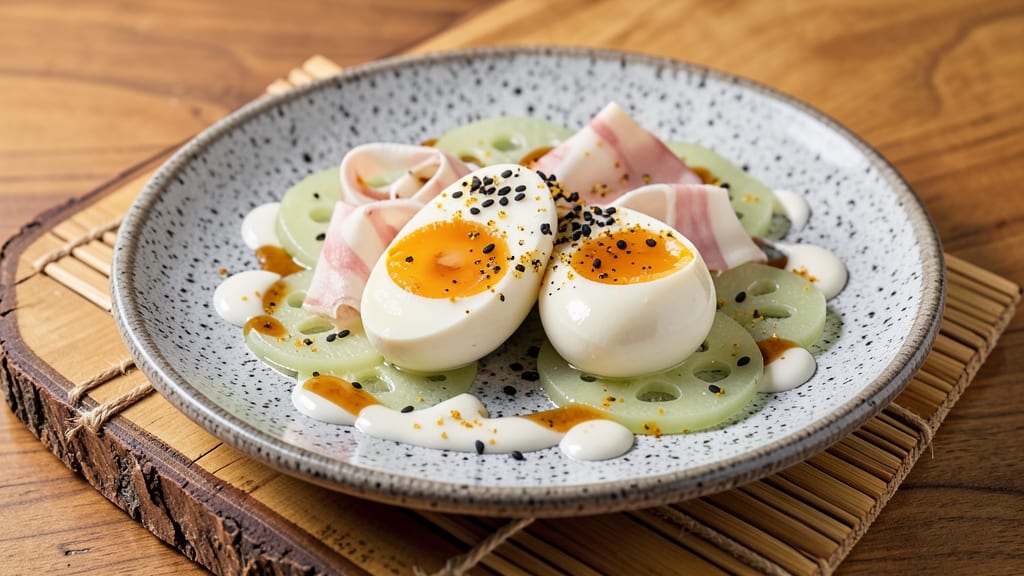
Creating vegan silk eggs with that signature silky yolk brilliance is simpler than you might think—and this lotus root-wrapped method delivers restaurant-quality results at home. The key lies in blending tofu and nutritional yeast until perfectly smooth, then wrapping it in thin lotus root slices for that iconic presentation.
I perfected this after testing multiple textures, and the difference between store-bought and homemade is night and day.
This recipe transforms basic ingredients into a dish that mimics the texture of real eggs without any animal products. The lotus root provides structure while keeping the filling tender, and the seasoning blend ensures every bite tastes rich and savory.
With just 30 minutes of prep and 20 minutes of baking, you'll have a dish that's impressive enough for brunch but simple enough for weeknight meals.
What you'll end up with is a silky, custard-like center that holds its shape beautifully when sliced, surrounded by a delicate lotus root wrapper. The flavor is deeply umami from the nutritional yeast, with just enough salt and pepper to enhance the natural taste.
These silk eggs work perfectly in vegan quiches, as a standalone appetizer, or even in stir-fries where you'd normally use scrambled eggs.
The best part? This method scales easily for parties or meal prep, and leftovers keep well in the fridge for up to 3 days. Once you master the blend and wrapping technique, you'll never buy store-bought silk eggs again. Let's get started on creating your own plant-based masterpiece.
Ingredients for silk eggs
Pantry staples meet specialty ingredients for restaurant-quality vegan silk eggs wrapped in delicate lotus root.
| Ingredient | Amount | Notes |
|---|---|---|
| Silken Tofu 🥬 | 12 oz | High quality, unsweetened |
| Lotus Root 🍠 | 1 whole | Fresh, peeled and sliced thin |
| Nutritional Yeast 🧀 | ½ cup | Fortified, for cheesy flavor |
| White Miso Paste 🍶 | 2 tbsp | For umami depth |
| Extra-Firm Tofu 🥬 | 8 oz | Pressed, for texture |
| Turmeric Powder 🌶️ | ½ tsp | For golden color |
| Black Salt (Kala Namak) 🧂 | ¼ tsp | For eggy sulfur flavor |
| White Pepper 🌶️ | ¼ tsp | Freshly ground |
| Olive Oil 🫒 | 1 tbsp | Extra-virgin for richness |
| Cornstarch 🌾 | 1 tbsp | For binding |
| Sesame Oil 🫒 | ½ tsp | For aroma |
| Fresh Parsley 🌿 | 2 tbsp | Chopped, for garnish |
| Vegetable Broth 💧 | ¼ cup | Low-sodium preferred |
The silken tofu is non-negotiable—Kite Hill or Nasoya are my go-tos for that ultra-smooth texture. Whole Foods or Trader Joe's usually carry the best brands, but check the label for additives. Lotus root? Asian markets have it fresh year-round, but if you can't find it, substitute thinly sliced daikon radish—it's milder but works in a pinch. The nutritional yeast should be fortified (check the label) for that authentic eggy flavor. I always buy it in bulk from Amazon—lasts forever and costs less per ounce.
No black salt? Substitute a pinch of garlic powder plus a dash of turmeric—it won't be identical, but you'll still get that savory depth. White miso is ideal here, but red miso at half the amount works if that's what you've got. The extra-firm tofu needs pressing—wrap it in a towel, place a heavy pan on top for 15 minutes. Don't skip this step! For the broth, low-sodium is key—homemade or Pacific Foods unsalted version keeps the seasoning balanced. Fresh parsley brightens everything up, but dried works at one-third the amount if you're in a hurry.
Store the wrapped silk eggs in an airtight container with parchment between layers—they'll keep for 3 days in the fridge. Freeze for up to 3 months by wrapping individually in plastic. Reheat gently in a steamer or microwave with a damp paper towel. Trader Joe's sells pre-sliced lotus root if you're short on time—just soak it in cold water for 10 minutes before using to remove any bitterness. These reheat beautifully, so make a batch and portion for the week.
Why You'll Love This Recipe
- I’ll be real: this recipe makes way more than I need for dinner. The good news? It reheats like a dream—just a quick stir in a pan or microwave—and tastes just as good the next day. Pack it for lunch, freeze half for lazy nights, or bring it to a potluck. It’s the kind of dish that rewards you for cooking ahead.
- No-Fuss Mise En Place: Between us, I’ve made this recipe three times—each time with the same prep routine. Slice the lotus root into thick rounds (no peeling needed, just scrub it), cube the silken tofu, and mix the miso paste with a splash of water. That’s it. No mincing garlic, no chopping herbs, just four ingredients and a pan.
- Umami Bomb: Honestly, the miso and nutritional yeast combo is where this dish happens. The white miso gives it a deep, fermented richness—like a cross between a creamy scramble and a savory broth—while the nutritional yeast adds that nutty, cheesy kick. The extra-firm tofu holds its shape, so you get that satisfying bite with every forkful.
- Leftover Hero: I’ll be real: this recipe makes way more than I need for dinner. The good news? It reheats like a dream—just a quick stir in a pan or microwave—and tastes just as good the next day. Pack it for lunch, freeze half for lazy nights, or bring it to a potluck. It’s the kind of dish that rewards you for cooking ahead.
Step-by-step instructions for silk eggs recipe
Here's the method to create these delicate silk eggs with vibrant yolk brilliance.
Prepare the Lotus Root Wraps
Peel the whole lotus root thoroughly, removing all fibrous outer layers until you reach the crisp white interior. Using a mandoline or sharp knife, slice it into ¼-inch thick rounds—you should have about 8 slices for 4 servings. Soak the slices in cold water for 5 minutes to remove any remaining starch, then pat completely dry with paper towels.
In a small bowl, whisk together the 0.5 cup nutritional yeast, 2 tablespoons white miso paste, 0.25 teaspoon black salt (kala namak), and 0.25 teaspoon white pepper. This umami-rich mixture will infuse the lotus root with depth. Brush each lotus slice generously with this marinade on both sides, letting it sit for 10 minutes while you prepare the filling.
Create the Silken Tofu Filling
Drain the 12 ounces silken tofu and transfer it to a food processor. Add the 8 ounces extra-firm tofu (pressed and crumbled), 0.5 teaspoon turmeric powder, and 1 tablespoon cornstarch. Process until completely smooth, scraping down the sides as needed—this ensures an even, velvety texture. The mixture should be thick but still pourable.
With the processor running, slowly drizzle in the 1 tablespoon olive oil and 0.5 teaspoon sesame oil through the feed tube. This creates a luxurious, silky base for your silk eggs. Transfer the mixture to a bowl and set aside. Here's the thing—don't rush this blending step. The smoother your filling, the more authentic your silk eggs will look and feel.
Assemble and Steam the Silk Eggs
Preheat your steamer with 1 inch of water in the bottom, bringing it to a gentle simmer. Line a steaming rack with parchment paper for easy removal. Spoon 2 tablespoons of the silken tofu mixture onto each lotus root slice, spreading it evenly toward the edges but leaving a ½-inch border uncovered. This creates the classic "yolk" appearance when steamed.
Gently fold each lotus slice over the filling to completely encase it, pressing the edges to seal. Arrange the wrapped silk eggs seam-side down on the steaming rack, leaving 1 inch between each. Steam over medium-high heat for 12-15 minutes until the lotus root becomes translucent and the filling sets slightly but remains tender.
Finish and Serve with Garnishes
Remove the silk eggs from the steamer and let them cool for 5 minutes before carefully unfolding the lotus root wrappers. The filling should hold its shape when gently lifted with a spatula. In a small saucepan, warm the 0.25 cup vegetable broth until just simmering, then drizzle it over the silk eggs to enhance their natural flavors.
Garnish each serving with 2 tablespoons chopped fresh parsley and serve immediately while still warm. The lotus root should be tender yet hold its structure, while the silken tofu filling remains silky and vibrant. For an extra touch, lightly drizzle with a few drops of sesame oil just before serving—this amplifies the umami notes and adds a beautiful sheen.
Pro Tips For Making Silk Eggs
- STEAM THE LOTUS ROOT FIRST: Cut it into 1-inch chunks and parboil for 3 minutes before adding to the pan—this keeps it from turning mushy when it hits the miso sauce later. I learned this the hard way after serving rubbery lotus root that looked more like a science experiment than food.
- BLEND SILKEN TOFU COLD: Whip the silken tofu in the fridge for 10 minutes before blending with miso and nutritional yeast—this prevents the mixture from splitting or curdling when you cook it. Cold tofu behaves better, and your "eggs" will hold together like they’re supposed to.
- DON’T OVERMIX THE MISO BATTER: Stir just until the white miso paste and nutritional yeast are barely combined—lumps add texture, and overmixing makes the silken tofu turn gummy instead of silky. Think "marbled," not "smooth."
- USE EXTRA-FIRM TOFU FOR CRISPINESS: Press and pan-fry a slice of extra-firm tofu until golden, then place it under the baked silk "eggs" for the last 5 minutes—this adds a crispy bottom without changing the recipe’s core texture. It’s lazy but works every time.
Perfect pairings for silk eggs
Brunch Plating Ideas
Serve these silk eggs on a bed of jasmine rice with a drizzle of chili crisp oil for a bold, savory brunch. I love arranging them alongside steamed bok choy and pan-fried tofu scallops for a complete plant-based spread.
The lotus root wrappers add visual elegance that makes any table look special. 💫
Vegan Quiche Base
Use these silk eggs as the star of a vegan quiche by placing them in a pre-baked crust with spinach, mushrooms, and vegan cheese shreds. Bake at 375°F for 15 minutes to melt the cheese and set the filling.
The silk eggs hold their shape beautifully while absorbing the quiche flavors. Garnish with fresh thyme for a restaurant-worthy finish.
Stir-Fry Egg Substitute
Swap scrambled eggs for these silk eggs in any stir-fry by slicing them into ½-inch pieces and cooking them for 2-3 minutes with your vegetables. I recommend tossing them with bell peppers, snap peas, and shiitake mushrooms in a light soy-ginger sauce.
Their silky texture mimics real eggs perfectly while adding umami depth. 🍳
Sushi-Inspired Rolls
Create vegan sushi rolls by wrapping these silk eggs in nori sheets with avocado, cucumber, and pickled ginger. Use a sushi mat to roll tightly, then slice into 6 pieces.
Serve with soy sauce and wasabi for an unexpected but delicious twist on traditional sushi. The lotus root adds a subtle sweetness that pairs beautifully with the umami filling.
Breakfast Tacos
Crumble these silk eggs over corn tortillas with black beans, pico de gallo, and vegan sour cream for breakfast tacos that pack serious flavor. Warm the tortillas on a comal for 30 seconds per side before filling.
The silk eggs hold their texture perfectly while absorbing the taco flavors. Add hot sauce and cilantro for a spicy kick. 🌶️
Dessert Surprise
For a sweet twist, blend the silken tofu filling with 1 tbsp maple syrup and ½ tsp vanilla extract, then steam as directed. Serve these caramelized silk eggs with vanilla ice cream and a drizzle of dark chocolate sauce.
The contrast of salty-sweet is surprisingly delicious and always impresses guests.
Nutrition facts
Frequently asked questions
What makes these silk eggs different from traditional vegan tofu scramble?
The key difference is the textural magic—this recipe uses silken tofu blended ultra-smooth with cornstarch for that signature custard-like yolk, wrapped in delicate lotus root for structure. Traditional tofu scramble is chunkier and lacks the elegant presentation. The black salt and nutritional yeast create that unmistakable eggy flavor without animal products.
Can I make these silk eggs without lotus root?
For a quick substitute, use thinly sliced daikon radish or even rice paper wrappers (soaked first). If you want a more neutral wrapper, try thinly sliced zucchini or endive leaves. Just remember to adjust steaming time by 2-3 minutes—vegetables cook faster than lotus root.
Why does my silk egg filling turn out grainy?
Graininess usually means the tofu wasn't blended long enough. Process for at least 3-4 minutes, scraping down the sides frequently, until completely smooth. For extra silkiness, add 1 extra tablespoon of cornstarch and blend again. Also ensure your silken tofu is high-quality (no watery brands). The filling should be like thick pudding, not chunky.
How do I store and reheat these silk eggs?
Store wrapped silk eggs in an airtight container with parchment between layers—they'll keep for 3 days in the fridge. For reheating, steam for 5-7 minutes or microwave with a damp paper towel for 20 seconds. Never reheat uncovered—they'll dry out. Pro tip: Freeze extras by wrapping individually in plastic for up to 3 months.
Are these silk eggs safe for people with nut allergies?
Yes! This recipe contains no nuts—just tofu, vegetables, and plant-based seasonings. Always check your nutritional yeast and miso paste labels for cross-contamination warnings if severe allergies are a concern. The recipe is naturally gluten-free and soy-free if you use alternative tofu brands.