
Breakfast & Brunch
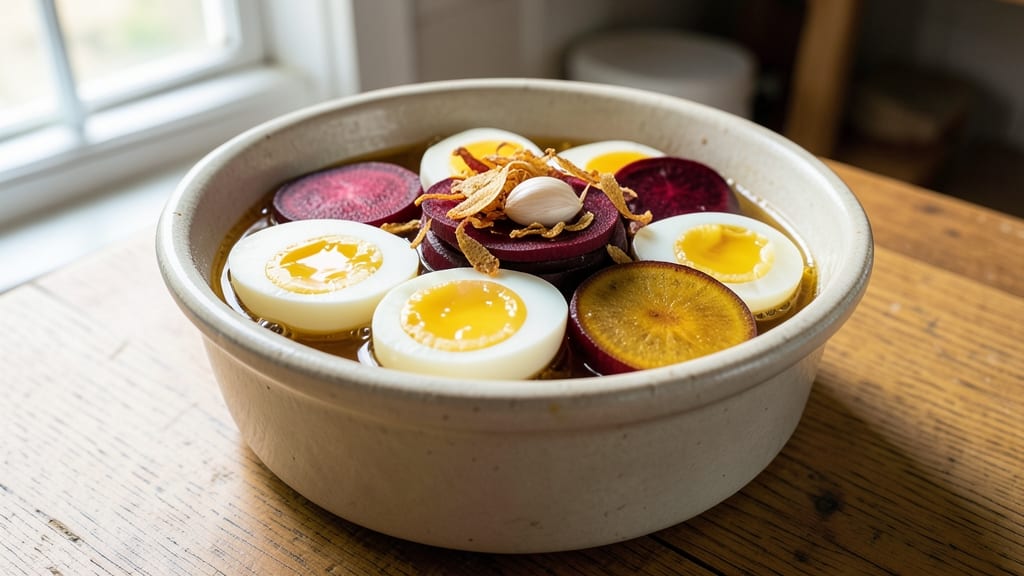
This sugar-free pickled eggs and beets recipe transforms simple ingredients into a vibrant, tangy dish that’s packed with probiotics and bold flavors—no sweetener required.
The secret lies in a carefully balanced vinegar brine that preserves the natural crunch of hard-boiled eggs and the earthy sweetness of beets without relying on sugar.
I developed this method after realizing how often traditional pickling recipes overlook the potential of vinegar’s natural acidity to enhance, rather than mask, the ingredients’ true taste.
The beauty of this recipe is its simplicity and versatility—just a few pantry staples and 15 minutes of prep work before the pickling process begins. The brine, infused with garlic, mustard seeds, and fresh dill, creates a flavor profile that’s both complex and refreshing.
Unlike store-bought versions, this method ensures no artificial additives or hidden sugars, making it a healthier choice without sacrificing depth of flavor. The fermentation process, when done correctly, also adds a subtle tang that elevates every bite.
By the time you’re ready to serve, you’ll have a dish that’s crisp, tangy, and visually stunning—perfect for breakfast platters, charcuterie boards, or as a side to grilled meats.
The eggs retain their firm texture while absorbing the briny, herby flavors, and the beets develop a satisfying crunch that pairs beautifully with their earthy undertones. This recipe isn’t just about pickling; it’s about reimagining how preserved foods can be both nutritious and delicious.
The key to success lies in proper fermentation safety—using a weighted brine to keep ingredients submerged and ensuring the jar remains anaerobic to prevent spoilage. With these steps, you’ll achieve a product that stays fresh for weeks in the refrigerator, ready to brighten any meal.
Let’s get started on this foolproof, sugar-free masterpiece.
Ingredients for pickled eggs and beets recipe no sugar
A balanced blend of vinegar, herbs, and earthy beets creates a sugar-free pickling masterpiece with vibrant crunch and tangy depth.
| Ingredient | Amount | Notes |
|---|---|---|
| Large Eggs 🥚 | 8 whole | Freshly laid, hard-boiled |
| Medium Beets 🍠 | 2 whole | Red or golden, peeled |
| White Vinegar 💧 | 2 cups | Distilled, 5% acidity |
| Water 💧 | 2 cups | Filtered preferred |
| Diamond Crystal Kosher Salt 🧂 | ½ cup | Fine grain preferred |
| Garlic Cloves 🧄 | 6 cloves | Fresh, peeled, halved |
| Mustard Seeds 🌶️ | 1 tbsp | Whole, yellow preferred |
| Fresh Dill 🌿 | ¼ cup | Chopped, stems removed |
| Black Peppercorns 🌶️ | 1 tsp | Freshly cracked |
| Red Wine Vinegar 🍷 | ½ cup | For depth of flavor |
| Bay Leaves 🌿 | 2 whole | Dried, standard size |
| Pickling Spice Blend 🌶️ | 1 tsp | Store-bought or homemade |
| Lemon Juice 🍋 | 1 tbsp | Freshly squeezed |
The quality of vinegar makes all the difference here—White Vinegar provides the sharp acidity needed for preservation, while Red Wine Vinegar adds complexity. Opt for distilled vinegar with at least 5% acidity, available at specialty stores like Whole Foods or Penzeys. Fresh dill should be bright green with no brown stems; if using dried, reduce to one-third the amount. For the beets, organic varieties from Trader Joe's or local farmers' markets ensure vibrant color and sweetness without added sugars. The garlic cloves should be firm and free of sprouts—freshly peeled adds more flavor than pre-minced.
No red wine vinegar? Apple cider vinegar works in a pinch, though it adds a slightly fruity note. Substitute dried dill at one-third the amount, but fresh is ideal for that bright herbal punch. Mustard seeds can be omitted if unavailable, though they add a delightful crunch. For the beets, golden beets offer a milder sweetness, while red beets provide a deeper color. If you can't find Diamond Crystal salt, Morton kosher salt is a suitable alternative. The pickling spice blend can be homemade with coriander, cloves, and allspice if you prefer full control over the flavor profile.
Store the pickled eggs and beets in an airtight jar in the refrigerator for up to 4 weeks, ensuring they remain submerged under the brine. The flavors develop over time, so they taste even better after 1 week of refrigeration. For longer storage, freeze the mixture for up to 3 months, though texture may soften slightly. When ready to serve, drain and rinse briefly to remove excess brine—this preserves the crispness of both the eggs and beets. The dish pairs beautifully with grilled meats or as a standalone appetizer.
Why You'll Love This Recipe
- Here’s what sold me: this keeps for weeks in the fridge, so I can toss a jar in my bag for work lunches or pack it for a hike. The eggs stay plump, the beets stay tender, and the vinegar brine keeps everything fresh—no sad, soggy leftovers here.
- I’ll be real: this recipe uses ingredients I already have. Eggs, beets, vinegar—all cheap and versatile. A single batch stretches into snacks, salads, or even a charcuterie board, and the leftovers? They disappear faster than I can say “second helping.”
Step-by-step instructions for preserving eggs and beets in vinegar
This method delivers vibrant, sugar-free pickles with balanced acidity and texture.
Prepare the Eggs and Vegetables for Preservation
Begin by hard-boiling the 8 whole large eggs. Place them in a saucepan and cover with cold water by at least 1 inch. Bring to a rolling boil over high heat, then immediately reduce to medium-low and simmer for exactly 10 minutes. Transfer eggs to an ice bath to stop cooking. Once cooled, peel carefully and set aside.
Peel the 2 whole medium beets and cut them into ½-inch thick rounds. The beets should be uniform in size to ensure even pickling. Place them in a separate bowl while you prepare the brine.
Create the Brine Solution with Precision
In a large non-reactive container (glass or food-grade plastic), combine the 2 cups white vinegar, 2 cups water, 0.5 cup diamond crystal kosher salt, 6 cloves halved garlic, 1 tbsp mustard seeds, 0.25 cup chopped fresh dill, 1 tsp freshly cracked black peppercorns, 0.5 cup red wine vinegar, 2 whole bay leaves, and 1 tsp pickling spice blend. Stir thoroughly until the salt fully dissolves and all spices are suspended evenly.
Add the 1 tbsp freshly squeezed lemon juice last, as its acidity will react with the metal in some containers. This solution should be tangy and aromatic, with visible flecks of dill and peppercorns throughout. The lemon juice adds brightness that complements the vinegar's sharpness.
Layer and Pack the Preservation Container
Arrange the peeled eggs and beet rounds in a single layer at the bottom of a clean quart-sized mason jar or airtight container. Pack them tightly but avoid crushing. Pour half of the prepared brine over the vegetables, ensuring every piece is submerged. This initial layering prevents floating and ensures even flavor distribution.
Add the remaining eggs and beets, alternating with the garlic cloves and bay leaves to infuse additional flavor. Pour the remaining brine until all ingredients are completely covered by at least ½ inch of liquid. The liquid should remain clear with no visible air pockets.
Seal and Cure for Optimal Texture
Seal the container tightly and store at room temperature for 48 hours. This initial curing period allows the vinegar to penetrate the eggs and beets, developing their signature tang. After 48 hours, refrigerate the preserved mixture to halt fermentation while maintaining crisp texture.
The eggs should remain firm with a slightly translucent yolk, while the beets will develop a tender yet crisp bite. The flavor profile will evolve over time, with the vinegar mellowing and the spices deepening. They will keep for up to 3 months in the refrigerator, with the beets becoming increasingly tender and the eggs developing a subtle complexity.
Pro Tips For Making Pickled Eggs And Beets Recipe No Sugar
- BOIL EGGS UNTIL COLD: The water should be fully boiling when you add eggs, then simmer for exactly 9 minutes—no peeking. I learned this the hard way: undercooked eggs get rubbery, overcooked ones turn chalky. Run them under cold water for 5 minutes afterward to stop cooking, or they’ll keep firming up in the brine.
- PEEL BEETS AFTER CHILLING: Roast or boil beets until fork-tender, then plunge them into ice water for 10 minutes. The shock stops cooking and makes peeling a breeze—no stubborn skins clinging like they do when you try to peel them hot. A damp paper towel helps wipe off the last bits without scrubbing.
- BRINE COOL BEFORE ADDING EGGS: Let your vinegar-water-salt mix cool to room temperature before cracking eggs into it. Cold brine sets egg whites into rubbery blobs; room temp keeps them tender. I used to rush this, and the eggs always turned out gummy—now they stay silky for days.
- USE FRESH VINEGAR: Old vinegar loses its punch, and this recipe relies on acidity to preserve and flavor. Check the date—if it’s been open more than 6 months, grab a fresh bottle. White vinegar should smell sharp, not dull. (Yes, even if the bottle says “distilled.”)
Storing and reheating this recipe
Refrigerator Storage
Store your pickled eggs and beets in a quart-sized mason jar or airtight container in the refrigerator for up to 4 weeks. The 2 cups white vinegar and 0.5 cup kosher salt in the brine create an environment that preserves both ingredients beautifully.
I always use glass containers—they’re non-reactive and maintain clarity, so you can see the vibrant colors of the beets and eggs. 💫
Keep the eggs and beets fully submerged under the brine at all times to prevent spoilage and maintain crisp texture. If they float, use a small weight like a sterilized bead or a folded paper towel to keep them down.
The 48-hour room-temperature cure before refrigeration ensures the flavors meld perfectly, so don’t skip this step!
Freezing Considerations
While this recipe isn’t designed for long-term freezing, you can freeze the mixture for up to 3 months if needed. Use freezer-safe glass jars or plastic bags with 1 inch of headspace to account for expansion.
Thaw in the refrigerator overnight before serving—this prevents texture loss in the eggs and beets. 🧊
Freezing may slightly soften the beets and eggs, so this method works best for short-term storage or if you’re prepping ahead for a large gathering. If you’re freezing, label the container with the date to track freshness.
Reheating for Crispness
There’s no need to reheat pickled eggs and beets—they’re best served cold or at room temperature. However, if you want to revive their crispness after refrigeration, place them in a single layer on a wire rack in the fridge for 1-2 hours.
This allows moisture to evaporate slightly, restoring that satisfying crunch. 🥚
For serving, drain the pickled eggs and beets and rinse briefly under cold water to remove excess brine. Pat them dry with a paper towel—this step enhances their texture and makes them even more enjoyable. Serve immediately for the best flavor and texture!
Flavor Evolution
The longer these pickled eggs and beets sit in the fridge, the more complex their flavors become. After 1 week, the vinegar’s acidity mellows slightly, and the spices—like the fresh dill and black peppercorns—develop deeper notes.
I find they taste best between 1 and 3 weeks of storage. 💡
If the beets start to soften too much, they’re still safe to eat but work better in dishes like salads or grain bowls rather than as a standalone appetizer. The eggs, however, stay firm for the full 4 weeks, making them perfect for snacking or adding to meals.
Nutrition facts
Frequently asked questions
Can I use apple cider vinegar instead of white vinegar?
Yes! Apple cider vinegar works perfectly—it adds a subtle fruity note that pairs beautifully with the beets and eggs. Just note the flavor will be slightly different, but still delicious. The acidity remains strong enough for safe preservation, so no adjustments to the recipe are needed.
Why do the eggs stay firm while the beets soften over time?
The eggs' hard-boiled texture is preserved by the vinegar's acidity, which acts as a natural preservative. Beets, however, naturally soften as they absorb the brine's moisture and flavors. This is normal—it's what gives them that tender, earthy bite. For extra crunch, try using thinner beet slices.
How do I prevent mold from forming on top of the brine?
Mold appears when ingredients aren't fully submerged. Always ensure the eggs and beets are covered by at least ½ inch of brine. Use a small weight like a sterilized bead or folded paper towel to keep them down. The 48-hour room-temperature cure also helps establish proper fermentation conditions.
Can I make this recipe without fresh dill?
If fresh dill isn't available, use one-third the amount of dried dill or substitute with 1 teaspoon celery seeds for a similar herbal note. The flavor will be slightly different but still aromatic. Just adjust to your taste preferences.
What's the best way to serve these pickled eggs and beets?
They're fantastic cold or at room temperature as a snack, appetizer, or side dish. Try serving them on a charcuterie board with crackers, or add them to grain bowls for extra crunch. For a refreshing twist, rinse briefly to reduce saltiness before serving.