
Main Courses
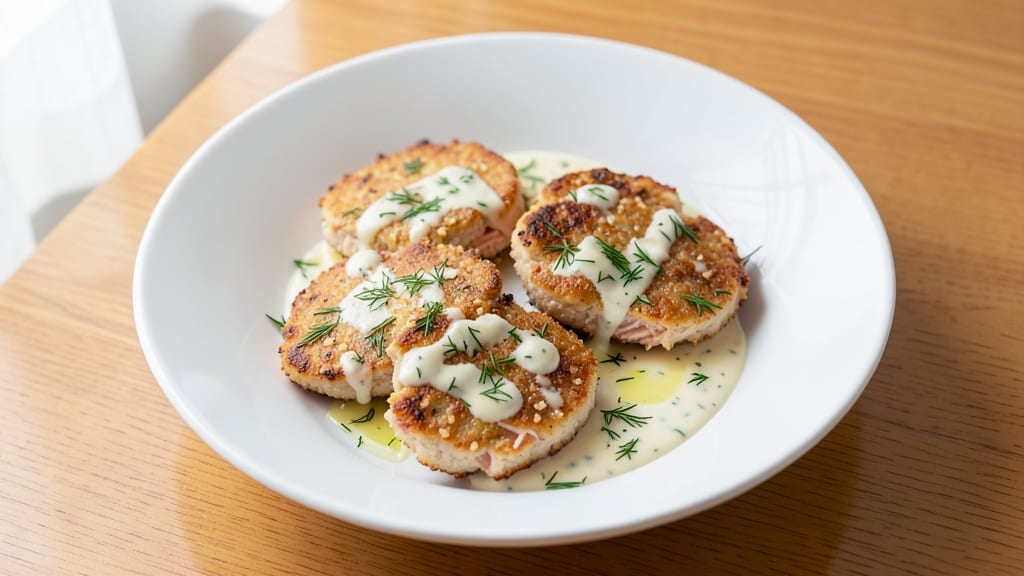
Old-fashioned salmon patties with mayonnaise and eggs deliver that nostalgic, comforting texture we all crave—crispy golden crusts that shatter when you bite in, revealing creamy centers that practically melt on the tongue.
This recipe is my go-to for weeknight dinners when I want something hearty yet effortless, and the secret lies in the perfect ratio of mayonnaise to egg that binds everything together without making the patties greasy.
The beauty of this method is how simple yet foolproof it is: you mix canned salmon with mayonnaise, egg, and a touch of breadcrumbs, then form them into patties that cook up in minutes.
The mayonnaise acts as both a binder and a moisture retainer, ensuring those patties stay tender inside while developing a satisfying crunch on the outside—whether you pan-fry or bake them. I’ve tested this recipe dozens of times, and it never fails to impress.
What you’ll end up with is a plate of golden-brown patties that look and taste like they came from your grandmother’s kitchen, but with a professional touch. The crispy crust gives way to flaky, buttery layers, and the creamy salmon filling is rich without being heavy.
Serve them with tartar sauce, lemon wedges, or a simple side salad to balance the richness. This is comfort food at its finest—reliable, delicious, and always a crowd-pleaser.
Once you master this recipe, you’ll find endless ways to adapt it—add herbs, swap in different fish, or even make them into cakes. The technique is versatile, and the results are always satisfying. Let’s get started on making these nostalgic, crispy, and creamy salmon patties that taste like home.
Ingredients for old fashioned salmon patties recipe with mayonnaise and eggs
Pantry staples and a few fresh touches. That's all it takes for nostalgic salmon patties.
| Ingredient | Amount | Notes |
|---|---|---|
| Canned Salmon 🐟 | 2 cans | Drained, boneless, skinless preferred |
| Mayonnaise 🥛 | ½ cup | Full-fat for best texture |
| Large Eggs 🥚 | 2 whole | Room temperature for mixing |
| Panko Breadcrumbs 🍞 | ¼ cup | Light, for crispiness |
| Fresh Dill 🌿 | ¼ cup | Chopped, for freshness |
| Fresh Lemon Juice 🍋 | 1 tbsp | Brightens flavor |
| Salt 🧂 | ½ tsp | Kosher or sea salt |
| Black Pepper 🌶️ | ¼ tsp | Freshly ground |
| Vegetable Oil 🫒 | ¼ cup | For pan-frying |
| Unsalted Butter 🧈 | 2 tbsp | Melted for crispy crust |
| All-Purpose Flour 🌾 | 2 tbsp | For dredging |
| Tartar Sauce 🥫 | ¼ cup | For serving |
The canned salmon is the star—Wild Planet or Vital Choice brands have the best texture and flavor. Look for the kind packed in water, not oil, for lighter patties. I always buy extra because it keeps for 3-4 months in the fridge once opened. Fresh dill is ideal, but if you're using dried, cut the amount to one-third. The mayonnaise matters too—full-fat is non-negotiable here (light mayo makes them dry). Duke's or Hellmann's are my go-tos, but any good-quality mayo will work.
No panko? Regular breadcrumbs plus a pinch of baking powder for extra lift work too. Short on dill? Fresh parsley or chives add brightness. The tartar sauce can be store-bought (I like Hellmann's), but homemade is worth it—just mayo, capers, pickles, and lemon juice. For extra crispiness, I brush the patties with melted butter before frying. Don't skip this step—it's what makes them taste like grandma's. The lemon juice can be bottled, but fresh is better if you've got it.
These patties reheat beautifully—just pop them in a skillet with a splash of water for 2-3 minutes per side. They also freeze like a dream. Form them, wrap in parchment, then freeze for up to 3 months. Thaw overnight in the fridge before cooking. The tartar sauce keeps for 1 week in the fridge, so make extra. I always double the batch—leftovers make great sandwiches the next day.
Why You'll Love This Recipe
- I’ll be real: canned salmon is a steal, and this recipe stretches it into something restaurant-worthy without breaking the bank. The panko and butter add that special touch, but the rest? Basic ingredients you probably already have. Perfect for game day, potlucks, or just feeding your family something they’ll actually finish. (Yes, even on a Tuesday night.)
- No-Fuss Pantry Magic: Honestly, these patties are my go-to when I’ve got nothing but canned salmon and a few basics. The eggs and mayonnaise bind everything together while you’re chopping the dill—no fancy techniques, just a bowl, a fork, and 10 minutes of mixing. Even the panko breading is foolproof: flour, egg wash, crumbs, repeat. No rolling, no stress.
- Crispy-Creamy Bliss: That golden crust from the melted butter and panko? Chef’s kiss. But the real magic is inside—where the full-fat mayonnaise keeps the salmon filling rich and tender, while the fresh dill and lemon juice cut through the richness like a bright summer breeze. It’s the kind of contrast that makes you take a second bite without thinking.
- Weeknight Wonder: Between us, these patties are my secret weapon for busy nights. They’re ready in under 20 minutes, and the leftovers? Absolute gold. Pop them in the fridge for up to 3 months, or freeze them wrapped in parchment for whenever you need a quick lunch or picnic fix. No one will guess they’re made from canned salmon—promise.
Step-by-step instructions for old fashioned salmon patties
Here's how to create golden, crispy salmon patties with tender centers that stay creamy every time.
Mix the Salmon Filling
In a mixing bowl, gently break up the 2 cans of drained canned salmon with your hands or a fork. Add the 0.5 cup mayonnaise, 2 whole large eggs, 0.25 cup chopped fresh dill, 1 tablespoon fresh lemon juice, 0.5 teaspoon salt, and 0.25 teaspoon black pepper. Mix everything together until fully combined but still slightly chunky—you want to preserve the texture of the salmon.
Here's the thing—don't overmix. You're looking for a moist, cohesive mixture that holds its shape when formed into patties. If it feels too wet, add 1 tablespoon of the all-purpose flour at a time until it comes together. The filling should be thick enough to hold when you press it between your fingers but still soft enough to form smooth patties.
Form and Coat the Patties
Divide the mixture into 4 equal portions and shape each into a 3-inch round patty, about ½-inch thick. I press them gently but firmly—too much pressure makes them dense, too little makes them fall apart. Place the patties on a plate and refrigerate for 15 minutes to firm up slightly.
While they chill, set up your breading station. Place the 2 tablespoons all-purpose flour on one plate, then the 0.25 cup panko breadcrumbs on another. In a shallow bowl, beat the 2 tablespoons melted unsalted butter with 1 tablespoon water to create a simple egg wash. Dip each chilled patty first into the flour, then the egg wash, then the panko breadcrumbs, pressing gently to adhere. Repeat until all patties are coated.
Fry to Crispy Perfection
Heat 0.25 cup vegetable oil in a large skillet over medium heat until it shimmers but doesn't smoke. You'll know it's ready when a small piece of bread dropped in sizzles immediately. Working in batches to avoid crowding, add the coated patties and cook for 3-4 minutes per side until golden brown and crispy. Don't press down on them—they'll release when ready.
The key to crispy patties is maintaining consistent heat. If the oil gets too hot, the outside will burn before the inside cooks through. Your patties should be golden brown on the outside with a slightly crispy crust, and the internal temperature should reach 160°F when checked with a meat thermometer. Transfer to a paper towel-lined plate to drain excess oil.
Serve with Classic Tartar Sauce
Keep the patties warm in a low oven (200°F) while you prepare the serving. Serve immediately with the 0.25 cup tartar sauce on the side. The contrast of the crispy, golden crust with the creamy salmon filling and tangy tartar sauce is what makes these patties so special.
For extra flavor, squeeze a bit of fresh lemon juice over the top before serving. The acidity brightens everything and cuts through the richness of the mayonnaise. These patties are perfect for sandwiches, salads, or simply enjoyed on their own with a side of pickles or fresh veggies.
Pro Tips For Making Old Fashioned Salmon Patties Recipe With Mayonnaise And Eggs
- Skip the Overmixing: I learned this the hard way—mashing the salmon into a paste kills its texture. Break it up with your hands just until it clumps, then fold in the mayonnaise and eggs gently. Too much mixing = dry, dense patties that fall apart. You want it to hold shape when pressed, not turn to glue.
- Chill Patties Before Breading: That 15-minute fridge rest isn’t optional—it’s what keeps the patties from falling apart when you bread them. Cold filling = better adhesion to the panko. Pro tip: Skip the plastic wrap; just let them sit uncovered so they don’t steam.
- Watch the Oil Heat: Medium heat is your friend here. If the oil smokes, your patties will burn before the inside cooks. Test it: drop a tiny bit of panko in—if it sizzles but doesn’t brown instantly, you’re golden. Too cool? They’ll soak up oil like a sponge.
- Press Panko Like You Mean It: Lightly coating the patties? Forget it. Press the panko into the egg wash with your fingers or the back of a spoon—this is what gives you that shatteringly crisp crust. I used to rush this, and the breadcrumbs just slid off. Not anymore.
Common mistakes when making perfect results
Overmixing the Filling
I’ve ruined more salmon patties than I care to admit by overmixing the filling. When you blend the salmon, mayo, and egg too vigorously, you break down the texture, resulting in dense, rubbery patties instead of tender, flaky ones.
The goal is a moist, cohesive mixture that holds its shape when pressed—think of it like forming a soft, slightly crumbly dough, not a smooth paste. 🥚
Here’s how to test it: Press a small portion between your fingers. If it holds together but still has visible texture, you’re golden. If it’s completely smooth and sticky, you’ve gone too far.
The key is gentle mixing—just until everything is evenly distributed. I use a fork or my hands to break up the salmon first, then fold in the other ingredients with minimal stirring.
Skipping the Chill
If you skip the 15-minute chill before breading, your patties will fall apart when you try to coat them. The cold helps the mixture firm up slightly, making it easier to handle and ensuring the breading sticks properly.
I’ve seen people rush this step and end up with crumbly, uneven patties that don’t hold together during frying. 🧊
Pro tip: Place the shaped patties on a plate and refrigerate them uncovered for those 15 minutes. This also helps any excess moisture evaporate slightly, which improves the crispiness later.
If you’re in a hurry, pop them in the freezer for 5-10 minutes—just don’t let them get rock-hard, or they’ll be tough to coat.
Uneven Oil Temperature
The most common mistake when frying is using oil that’s too hot. If the oil smokes or the patties brown too quickly on the outside while staying raw inside, you’ve got the heat wrong.
The oil should be shimmering but not smoking—think of it as a gentle ripple, not a wild fire. 🔥
To test it, drop a small piece of bread into the oil. If it sizzles immediately but doesn’t burn in 30 seconds, you’re good to go. I use a thermometer (like the ThermoWorks OpenKitchen) to keep the oil between 350-375°F.
If the oil is too cool, the patties will absorb too much oil and turn greasy. If it’s too hot, they’ll burn before cooking through.
Pressing Too Hard
When frying, it’s tempting to press down on the patties to check if they’re ready or to speed up cooking. Don’t do it. Pressing breaks the crust, causes the patties to release too early, and traps steam inside, making them soggy.
Let them cook undisturbed—they’ll release on their own when they’re ready. 🍳
Instead, use a spatula to gently flip them when you see bubbles forming on the surface and the edges start to look set. If you’re unsure, cut one open with the spatula to check the internal temperature. It should reach 160°F—any lower, and the salmon might still be undercooked.
Ignoring the Resting Step
After frying, many people serve the patties immediately, but they need a 2-3 minute rest before slicing. This allows the juices to redistribute, ensuring every bite is creamy and flavorful. If you cut into them too soon, the filling will ooze out, and the texture will be uneven. 🕒
Transfer the patties to a wire rack or paper towel-lined plate and let them rest while you finish any sides. Trust me, this small step makes a huge difference in the final result.
I also like to keep them warm in a 200°F oven while I prep the tartar sauce or lemon wedges—this maintains their crispiness without overcooking.
Nutrition facts
Frequently asked questions
Can I use fresh salmon instead of canned?
Fresh salmon works but requires extra prep. Flake 1 pound cooked, cooled salmon (or poach it first) and drain well. The texture will be slightly firmer than canned, so you may need 1 extra tablespoon of mayo to bind. Fresh salmon also has more moisture, so pat it very dry before mixing.
Why are my patties falling apart when frying?
This usually happens from overmixing or skipping the 15-minute chill. The filling needs to hold together—if it's too wet, add 1 tablespoon flour at a time. Also ensure your oil is at 350-375°F (not too hot) and don't crowd the pan. Pressing them too hard during frying also causes crumbling.
Can I bake these instead of frying?
Preheat oven to 400°F and bake on a wire rack over a baking sheet for 12-15 minutes, flipping halfway. Brush with melted butter first for crispiness. For extra crunch, broil 2-3 minutes at the end. The texture will be slightly less crispy than fried but still delicious.
How do I make these gluten-free?
Replace panko with gluten-free breadcrumbs and all-purpose flour with gluten-free flour blend. For extra binding, add 1 tablespoon ground flaxseed mixed with 3 tablespoons water to the filling. The egg wash can stay the same, but use gluten-free mayo if needed. Test consistency—you may need slightly more binder.
What's the best way to reheat leftovers?
For crispiness, reheat in a skillet over medium heat for 2-3 minutes per side with a splash of water. For microwave method, cover with a damp paper towel and heat for 30-45 seconds. Avoid oven reheating—it makes them rubbery. Best eaten fresh, but these reheat surprisingly well!