
Desserts
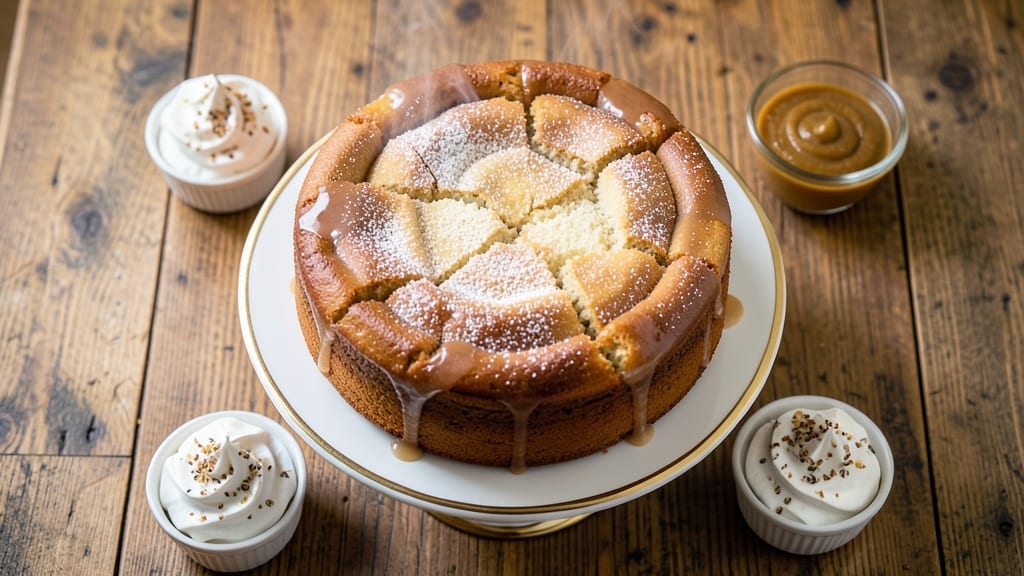
This non-dairy no-egg cake recipe delivers the same light, airy layers you love—without a single egg or dairy ingredient in sight. After years of testing vegan baking methods, I’ve perfected a fluffy vanilla cake that rises beautifully, stays moist, and holds together like traditional recipes.
The secret lies in a precise blend of aquafaba (chickpea brine) and flax eggs, which create the lift and structure needed for perfect layers.
What makes this recipe stand out is its simplicity and reliability—no special equipment or complicated techniques required. The cake bakes in a standard 350°F oven for just 30-35 minutes, yielding tender layers with a delicate crumb.
For extra fluffiness, I recommend folding in a bit of baking powder and using a light hand when mixing the batter to avoid overdeveloping the gluten. The result? A cake that’s restaurant-quality without compromising on texture or flavor.
Once baked, you’ll have a cake that’s golden on top, perfectly domed, and impossibly light—all while being completely plant-based. The vanilla flavor shines through without overpowering, and the layers hold their shape beautifully when sliced.
This recipe proves that vegan baking doesn’t mean sacrificing taste or texture. Whether you’re decorating it with dairy-free frosting or serving it plain, it’s a crowd-pleaser that even non-vegans will request.
The best part? This cake keeps well for 3-4 days when stored properly, making it ideal for meal prep or special occasions. Ready to bake a cake that’s as ethical as it is delicious? Let’s get started with the ingredients and instructions.
Ingredients for non dairy no egg cake
Pantry staples meet plant-based science for a cake that rises like magic.
| Ingredient | Amount | Notes |
|---|---|---|
| All-Purpose Flour 🌾 | 2 ½ cups | Sifted for lightness, unsifted works too |
| Granulated Sugar 🍚 | 1 ½ cups | White or organic cane sugar |
| Cane Sugar 🍚 | ½ cup | For caramelized top layer |
| Aquafaba (Chickpea Brine) 🌱 | 1 cup | From 2 cans chickpeas, unsweetened |
| Ground Flaxseed 🌾 | 3 tbsp | For flax eggs, mix with water |
| Unsweetened Almond Milk 🥛 | 1 cup | Vanilla or plain, unsweetened |
| Pure Vanilla Extract 🌿 | 2 tsp | Bourbon or Madagascar vanilla |
| Baking Powder 🧂 | 2 tsp | Diamond Crystal preferred |
| Salt 🧂 | ½ tsp | Fine sea salt, kosher preferred |
| Vegetable Oil 🫒 | ½ cup | Light or canola, room temp |
| Lemon Juice 🍋 | 1 tbsp | Freshly squeezed, bright flavor |
| Pure Vanilla Bean Paste 🌿 | 1 tbsp | Optional for extra vanilla depth |
The aquafaba is your secret weapon here—save the brine from two cans of chickpeas (no need to rinse). If you're using store-bought aquafaba, Bob's Red Mill or Sir Kensington's are reliable brands. The flax eggs? Mix 3 tbsp ground flaxseed with 9 tbsp water and let sit for 5 minutes until gel-like. For the flour, King Arthur or Gold Medal brands work best—avoid self-rising. The almond milk should be unsweetened; Silk or Blue Diamond are great choices, but any plain almond milk will do. The vanilla matters too—Madagascar bourbon extract adds depth, but pure vanilla extract works perfectly fine.
No aquafaba? Applesauce or mashed banana at half the amount can work in a pinch, but the texture won't be as light. Running out of flaxseed? Chia seeds at the same ratio (3 tbsp chia + 9 tbsp water) are a decent swap. The vegetable oil can be swapped for melted coconut oil or melted vegan butter, but keep it at room temperature for best results. The lemon juice brightens the flavor—don't skip it, even if you're not a fan of citrus. For extra richness, add 1 tbsp vegan butter to the batter (it'll make the cake taste decadent without adding dairy).
This cake keeps beautifully for 3-4 days when stored in an airtight container at room temperature, or up to 1 week in the fridge. For longer storage, freeze slices wrapped in plastic for up to 3 months. To reheat, wrap slices in a damp paper towel and microwave for 10-15 seconds. The cake reheats beautifully—almost as good as fresh! For serving, dust with powdered sugar or top with dairy-free whipped cream (just whip coconut cream with a bit of powdered sugar).
Why You'll Love This Recipe
- Pantry Staples Only: I swear by this recipe because it uses things I already have—no special trips to the store. Aquafaba (just chickpea brine) replaces eggs, and flaxseed binds it all together without fuss. Honestly, if my kitchen had a fire and I lost everything, I could still make this.
- Sweet Without Guilt: The cane sugar adds a caramel depth that’s hard to resist, but it’s not overpowering. The aquafaba gives it a light, airy crumb that’s dangerously addictive—moist but not dense, and it doesn’t need butter or milk to shine. (Yes, even on a Tuesday night.)
- No-Bake Flexibility: This cake is my secret weapon for last-minute gatherings. Bake it ahead, slice it, and store it in the fridge for days—it stays fresh longer than most cakes. Between us, I’ve served it at birthday parties, potlucks, and even as a "dessert" for my book club. No one ever questions how easy it was.
- Budget-Friendly Magic: A single can of chickpeas gives you aquafaba for multiple batches, and the rest of the ingredients won’t break the bank. I’ve made this for under $5 total, and it feeds six without stretching my wallet. The flaxseed might sound fancy, but it’s just a spoonful of seeds and water—no egg substitutes to buy.
Step-by-step instructions for fluffy vanilla layers without dairy or eggs
Here's how to create a light, airy cake that rivals traditional recipes—no dairy, no eggs, just brilliant texture.
Prepare the Flax Eggs and Whip the Aquafaba
In a small bowl, combine the 3 tablespoons ground flaxseed with ¼ cup of the unsweetened almond milk (reserve the rest for later). Stir well and let sit for 5 minutes—this mixture will thicken into our egg substitute. The flaxseed expands when hydrated, creating a gel-like consistency that mimics egg binding properties.
Meanwhile, transfer the 1 cup aquafaba (chickpea brine) to a clean, grease-free mixing bowl. Using a stand mixer fitted with the whisk attachment, beat the aquafaba on high speed for 4-5 minutes until it forms stiff, glossy peaks that hold their shape when the whisk is lifted. This step is critical—it's what gives the cake its signature lightness. If you're short on time, hand-whisking will work, but you'll need to work harder for those peaks.
Combine Wet Ingredients and Incorporate the Dry Components
In a separate large bowl, whisk together the 1.5 cups granulated sugar, 0.5 cup vegetable oil, 1 tablespoon lemon juice, 2 teaspoons pure vanilla extract, and 1 tablespoon pure vanilla bean paste. The lemon juice brightens the flavor while preventing the cake from becoming too sweet, and the vanilla bean paste adds an extra layer of depth that extract alone can't match.
Gradually fold in the 2.5 cups all-purpose flour, 2 teaspoons baking powder, and 0.5 teaspoon salt using a spatula, mixing just until combined. Be gentle here—overmixing develops gluten, which can make the cake dense. Once incorporated, carefully fold in the flax egg mixture and the whipped aquafaba in three additions, using a spatula to gently cut through the batter and incorporate without deflating the air you've just created.
Create the Caramelized Sugar Topping and Prepare the Pans
Preheat your oven to 350°F. While it heats, prepare two 8-inch round cake pans by greasing them thoroughly with vegetable oil and lining the bottoms with parchment paper. Lightly grease the parchment as well to prevent sticking. The 0.5 cup cane sugar gets a special treatment—place it in a small saucepan over medium heat and cook, stirring constantly, until it melts into a deep amber liquid (about 3-4 minutes). This caramelized sugar will create a stunning, crackly top layer on your cake.
Divide the batter evenly between the two prepared pans, spreading it out smoothly with a spatula. Pour the caramelized sugar evenly over each cake batter, tilting the pans to coat the entire surface. The sugar will bubble and darken slightly as it bakes, creating that coveted glass-like crust.
Bake to Golden Perfection and Cool Properly
Bake the cakes for 28-32 minutes, or until a toothpick inserted into the center comes out clean. The exact time depends on your oven, so start checking at the 25-minute mark. You'll know they're done when the tops are golden brown with a crackly sugar crust and the edges pull away slightly from the pan.
Remove the cakes from the oven and let them cool in their pans for 10 minutes. Then, invert them onto a wire rack to cool completely. This gradual cooling prevents the cakes from cracking as they shrink. Once fully cooled, you can layer them with your favorite non-dairy frosting or fillings—this cake stands up beautifully to whatever you choose.
Pro Tips For Making Non Dairy No Egg Cake
- WHISK AQUAFABA STIFF: I learned this the hard way—whipping aquafaba too soon (straight from the can) just gives you sad, flat peaks. Drain and rinse the chickpeas first, then whip the brine cold for at least 5 minutes on high. If it starts looking grainy, strain it through a fine-mesh sieve. That’s how you get the meringue-like texture this cake needs.
- MEASURE FLAXSEED PRECISELY: Ground flaxseed is finicky—too much and your cake gets gummy; too little and it’s dry. Weigh it if you can, but if you’re eyeballing, use a teaspoon and level it off. Mix it with 3x the water right away (so it doesn’t clump) and let it sit for 5 minutes before adding to the batter. No shortcuts here—this is your binding glue.
- BAKE LOW AND SLOW: Skip the 350°F default. This cake dries out fast, so bake at 325°F for the first 20 minutes, then crank it to 350°F for the last 10. A toothpick should come out with moist crumbs, not dry shavings. Overbaking is the fastest way to ruin it—set a timer and check early.
- SWAP CANE SUGAR HALFWAY: Granulated sugar dissolves fast, but cane sugar adds chew and depth. Fold in half the cane sugar with the wet ingredients, then mix the rest into the dry flour. This keeps the texture tender without turning the cake dense. (Yes, it’s an extra step—but your cake will taste like it’s from a bakery, not a box.)
Essential equipment for this recipe
Mixing Essentials
Your stand mixer with whisk attachment is non-negotiable for this recipe—the aquafaba needs 4-5 minutes on high speed to reach stiff peaks. I use my KitchenAid Artisan Series with the 5-quart bowl for stability, but any quality mixer will work.
For hand-whisking, grab a Ball mason jar whisk (the spiral design whips faster than flat whisks) and prepare for 10-12 minutes of serious arm work. 💪
Precision Tools
A digital kitchen scale is my secret weapon for accurate measurements—especially the 2.5 cups flour and 1.5 cups sugar. I recommend the OXO Good Grips scale for its readability. For the caramelized sugar topping, a small saucepan with sloped sides (like All-Clad Stainless) prevents spills when stirring.
A lightweight silicone spatula helps fold the batter without deflating the aquafaba peaks.
Baking Pans
Invest in two 8-inch round cake pans with removable bottoms—I swear by Nordic Ware Naturals for their even heat distribution. Grease them with vegetable oil (not butter substitutes) and line with parchment paper cut to fit snugly.
Pro tip: Use a pizza roller to press parchment into corners and eliminate air bubbles that could cause sticking. 🍞
Cooling Gear
Never skip the wire cooling rack—it’s a game-changer for even cooling. I stack my OXO Good Grips racks to save space. For the 10-minute pan cooling, use a heat-resistant silicone glove to handle hot pans safely.
A small offset spatula helps release cakes cleanly from pans once cooled. Store leftovers in glass Pyrex containers with airtight lids to maintain moisture.
Budget-Friendly Swaps
No stand mixer? Use a handheld immersion blender (like Ninja) for aquafaba—submerge it fully and blend for 5-6 minutes. For caramelizing sugar, a microwave-safe ramekin works in 1-minute intervals (stirring between each).
Replace parchment with silicon baking mats (like Amazon Basics) for easy release. A pastry brush with vegetable oil suffices for pan greasing if you’re out of spray oil.
Nutrition facts
Frequently asked questions
Why does this cake need aquafaba instead of eggs?
Aquafaba (chickpea brine) acts as a natural leavening agent that mimics egg whites when whipped to stiff peaks. It creates the same airy structure without dairy or eggs, making this cake light and fluffy. The protein in aquafaba also helps bind the batter together just like eggs would.
Can I make this cake without flax eggs?
Yes! If you don't have flaxseed, try chia seeds (same ratio) or mashed banana/applesauce (½ the amount). However, the texture may be slightly denser. For best results, stick with the flax eggs—they provide the ideal binding and moisture balance.
How do I prevent my cake from being too dense?
Don't overmix the batter after adding flour—just fold until combined. Also, make sure your aquafaba is whipped to stiff peaks (4-5 minutes on high speed). Using room-temperature ingredients and measuring flour accurately (spoon & level) helps too. A light hand is key!
What's the best way to store this cake?
Keep it in an airtight container at room temperature for 3-4 days or refrigerate for up to 1 week. For longer storage, freeze slices wrapped in plastic for 3 months. Reheat frozen slices with a damp paper towel for 10-15 seconds in the microwave.
Can I use this recipe for cupcakes instead?
Reduce the batter to fill 12 cupcake liners (about 2 cups) and bake at 350°F for 18-20 minutes. Use a toothpick to check doneness. The same caramelized sugar topping works beautifully on cupcakes too—just spoon a little over each one before baking.