
Desserts
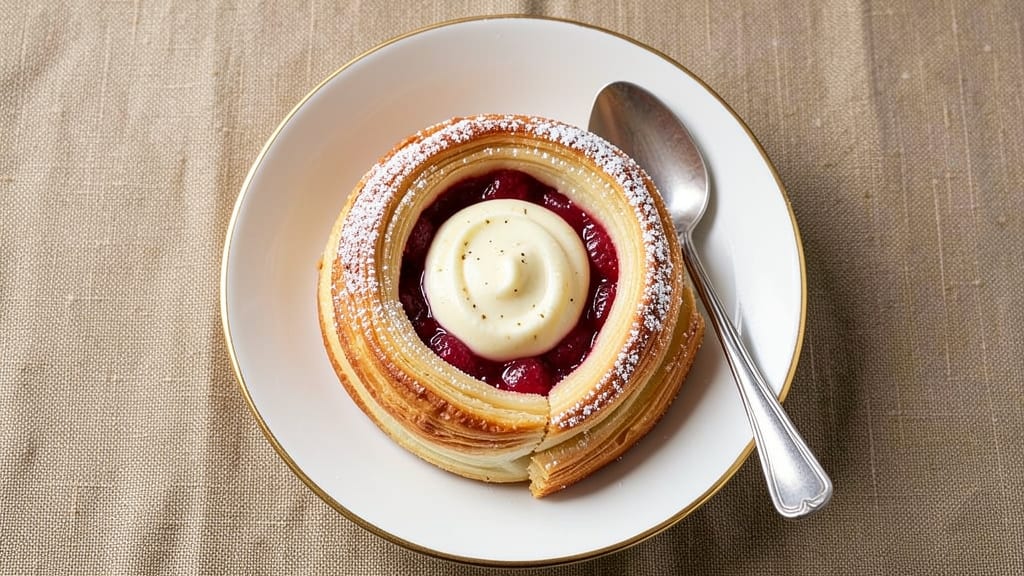
Creating a flaky jam roll without eggs is all about the right technique and a few clever substitutions that keep the layers tender and crisp. I’ve perfected this recipe after years of testing—no eggs means no compromise on that signature buttery, flaky texture you crave.
The secret lies in a precise blend of cold butter and flour, worked just until it comes together, then rolled and folded with precision.
This recipe uses aquafaba (chickpea brine) as the egg substitute, which adds moisture and structure without altering the pastry’s delicate nature. The dough rests briefly before rolling, ensuring it’s pliable enough to handle without cracking.
Once filled with jam and vanilla-infused cream, it bakes to a golden, crisp crust with a tender interior—proof that egg-free baking can still deliver restaurant-quality results.
What makes this jam roll truly special is the balance of textures: the flaky, buttery layers, the jam’s sweet-tart burst, and the vanilla cream’s velvety finish. It’s the kind of dessert that feels indulgent yet simple to make, perfect for impressing guests or treating yourself after a long week.
The method is foolproof, and the payoff is undeniably satisfying.
Whether you’re serving it warm with a dusting of powdered sugar or letting it cool slightly for cleaner slices, this jam roll is a showstopper. Let’s get started—your kitchen will smell like magic before the oven even finishes.
Ingredients for jam roll recipe without egg
Cold butter and flour create the flaky layers, while aquafaba binds it all without eggs.
| Ingredient | Amount | Notes |
|---|---|---|
| All-Purpose Flour 🌾 | 2 ½ cups | Sifted for light texture |
| Cold Unsalted Butter 🧈 | 1 cup | Cut into small cubes |
| Aquafaba 🥫 | ½ cup | From canned chickpeas |
| Granulated Sugar 🍚 | ¼ cup | For dough stability |
| Vanilla Extract 🌸 | 1 tsp | Pure vanilla preferred |
| Salt 🧂 | ½ tsp | Fine sea salt |
| Powdered Sugar 🍚 | ½ cup | For dusting |
| Raspberry Jam 🍓 | 1 ½ cups | Seedless preferred |
| Heavy Whipping Cream 🥛 | 1 cup | Full-fat for best texture |
| Vanilla Bean Paste 🌸 | 1 tsp | Or 0.5 tsp vanilla extract |
| Whole Milk 🥛 | 2 tbsp | For cream consistency |
| Cornstarch 🌾 | 1 tbsp | For cream stability |
The butter is non-negotiable—European-style or Plugrá from the grocery store’s refrigerated section has the highest fat content for flakiness. Cut it into 1/2-inch cubes and keep it cold until the last moment. Flour matters too: King Arthur or Gold Medal brands are ideal for their protein balance. Aquafaba should be fresh from canned chickpeas—the brine from canned beans works perfectly, but avoid reduced-sodium versions. For the jam, Mott’s or Bonne Maman are reliable, but homemade works even better. The vanilla extract should be pure, not imitation—Nielsen-Massey is a solid choice if you want to splurge.
No aquafaba? 1 tbsp corn syrup plus 1 tbsp water mimics its binding properties, though texture won’t be identical. Substituting butter with vegetable shortening saves calories but sacrifices flavor and flakiness. For the cream, heavy whipping cream is mandatory—light cream won’t hold its shape. The vanilla bean paste adds depth; if you only have extract, double the amount for intensity. The jam can be swapped for strawberry or apricot, but raspberry’s acidity balances the sweetness perfectly. For a gluten-free version, use a 1:1 gluten-free flour blend, but expect slightly denser layers.
The dough must rest 30-45 minutes before rolling—this ensures it’s pliable without tearing. Wrap it tightly in plastic and refrigerate if prepping ahead. The jam filling can be made 1 day in advance and stored in the fridge. For the cream, whip it just before assembling to avoid over-beating. Once baked, let the jam roll cool 10 minutes before slicing—this prevents the layers from falling apart. Store leftovers in an airtight container at room temperature for 2 days or freeze for 1 month. Reheat slices in the oven for 5 minutes at 350°F to restore crispness.
Why You'll Love This Recipe
- No-Egg, No-Stress Baking: The aquafaba replaces eggs without the fuss—no cracking shells, no overmixing, just whisking chickpea water until it’s frothy. That cold butter in the dough? It’s foolproof for flaky layers if you let it chill, and honestly, the dough comes together faster than I expected.
- Tart-Sweet Magic: The raspberry jam’s tang cuts through the creamy vanilla filling like a dream—no cloying sweetness here. That 1 tsp vanilla bean paste? It’s the secret to a flavor that tastes like a bakery, not a shortcut.
- Weeknight Flexibility: Make the jam filling the night before and store it in the fridge—no last-minute prep. Need a breakfast pastry? A dessert? This roll does both. (Yes, even on a Tuesday night.)
- Budget-Friendly Luxury: You’re using pantry staples—flour, butter, chickpeas—and still getting a dessert that feels special. The powdered sugar dusting at the end? That’s the cherry on top of a recipe that won’t break the bank.
Step-by-step instructions for jam roll recipe without egg
Here's how to create perfectly flaky layers and a velvety vanilla swirl using aquafaba instead of eggs.
Prepare the Vanilla Cream Filling
In a medium bowl, combine the 1 cup heavy whipping cream, 1 tsp vanilla bean paste, and 2 tbsp whole milk. Whisk gently until smooth and well incorporated. In a separate small bowl, whisk together 0.5 cup powdered sugar and 1 tbsp cornstarch until completely dissolved. Gradually pour the sugar mixture into the cream while whisking constantly.
Transfer the mixture to a stand mixer fitted with the whisk attachment. Beat on medium-high speed for 3-4 minutes until the cream forms stiff peaks that hold their shape when the whisk is lifted. The mixture should be thick enough to pipe but still light and airy. Here's the thing—don't overmix or the filling will become grainy. Stop as soon as you see those stiff peaks form.
Make the Aquafaba Dough
In a large mixing bowl, combine 2.5 cups all-purpose flour, 0.25 cup granulated sugar, 0.5 tsp salt, and 1 tsp vanilla extract. Whisk to evenly distribute the dry ingredients. In a separate bowl, whisk the 0.5 cup aquafaba until frothy, about 1 minute with a hand mixer on medium speed.
Cut the 1 cup cold unsalted butter into small cubes and add them to the dry ingredients. Using a pastry cutter or your fingers, work the butter into the flour until the mixture resembles coarse crumbs with some pea-sized butter pieces remaining. This is crucial for achieving those flaky layers. Pour the aquafaba over the flour mixture and gently stir with a wooden spoon until just combined. The dough will be shaggy but will come together when chilled.
Chill and Roll the Dough
Shape the dough into a rectangle about 12x10 inches on a lightly floured surface. Wrap tightly in plastic wrap and refrigerate for at least 1 hour or up to 24 hours. Chilling is non-negotiable—it prevents the butter from melting during rolling and ensures those signature flaky layers. The dough should be firm but still pliable when ready to roll.
Preheat your oven to 375°F while the dough chills. On a lightly floured surface, roll the chilled dough into a 12x18-inch rectangle, about 1/8-inch thick. This is where precision matters—too thick and your roll won't bake evenly; too thin and it may tear when spreading the jam. Brush the entire surface with 1 tbsp whole milk diluted with 1 tbsp water (this prevents the jam from soaking in too quickly).
Add Filling and Bake
Spread the 1.5 cups raspberry jam evenly over the brushed dough surface, leaving a 1-inch border around the edges. This border is critical—it prevents the filling from oozing out during baking. Using a piping bag fitted with a large star tip or a spoon, pipe the vanilla cream filling in a zigzag pattern over the jam, staying within the 1-inch border. The filling should be evenly distributed but not touching the edges.
Starting from the long side, carefully roll the dough tightly into a log, sealing the edge as you go. Place the roll seam-side down on a parchment-lined baking sheet. Bake for 35-40 minutes until the top is golden brown and the internal temperature reaches 200°F. The roll should be firm to the touch but still tender. If the top browns too quickly, loosely cover with foil after 20 minutes to prevent over-browning while ensuring the center cooks through.
Cool and Serve
Remove the jam roll from the oven and let it cool on a wire rack for 10 minutes. This resting period allows the filling to set slightly, making it easier to slice. Dust generously with 0.5 cup powdered sugar while still warm for that classic finish. For the best texture, serve slices at room temperature—this allows the filling to soften slightly and the layers to separate beautifully.
Each slice should reveal those signature flaky layers with a perfect balance of tart raspberry jam and sweet vanilla cream. The aquafaba dough holds its shape while delivering the same tender, melt-in-your-mouth texture as traditional egg-based pastries. This method proves that flaky, delicious results don't require eggs—just precise technique and quality ingredients.
Pro Tips For Making Jam Roll Recipe Without Egg
- CHILL THE BUTTER FIRST: I learned this the hard way—using slightly softened butter in the dough makes it gummy and hard to roll. Take the butter cubes straight from the fridge, toss them in flour, and let them sit for just 5 minutes before mixing. Cold butter creates pockets of steam, giving you that perfect flaky, tender crumb—no one wants a dense jam roll.
- WHIP AQUAFABA STIFF: Skip the egg whites, but don’t skimp on the aquafaba. Whip it until it forms stiff peaks—like meringue, but not quite as glossy. If it’s under-whipped, your dough will be tough; over-whipped? It’ll taste bland. Test it by flipping the bowl upside down—if nothing slides out, you’re golden.
- ROLL OUT THE DOUGH THIN: This isn’t the time for a thick, uneven layer. Roll the dough to ¼-inch thickness—any thicker, and the jam won’t bake evenly, leaving you with a soggy center. Use a ruler to check, and resist the urge to press down hard (that’s how you get tough pastry). A little flour on the rolling pin helps, but don’t overdo it or the dough will dry out.
- BAKE UNTIL GOLDEN, NOT DULL: The jam roll is done when the edges are golden, not when the center looks set. I used to pull mine out too early—it’d look done but taste underbaked. Bake until the top is a deep golden brown, and the edges pull away from the pan. If you’re unsure, crack it open: the jam should be warm but not runny.
Pro cooking tips for perfect results
Cold Butter Magic
This is where the flakiness begins: cold butter is non-negotiable for those signature layers. Cut 1 cup unsalted butter into ½-inch cubes and keep it refrigerated until you’re ready to incorporate it into the dough.
The key is to work quickly—once the butter warms up, it melts into the flour, destroying those delicate layers. I like to use European-style butter (like Plugrá) because it has a higher fat content, which translates to extra flakiness.
If you’re short on time, let the butter cubes sit in the freezer for 10 minutes before using them. 🧈
Dough Handling
The dough will feel shaggy at first—don’t panic! It’s supposed to look like a mess before it comes together. Work the butter into the flour until you have pea-sized pieces remaining; overworking here will turn your pastry tough. Once you add the aquafaba, stir just until combined.
The dough should hold together when pressed gently but still feel slightly crumbly. If it’s too sticky, chill it for an extra 15 minutes before rolling. I’ve ruined more than a few rolls by rushing this step—patience is your friend. ⏳
Rolling Precision
Roll the dough to a ⅛-inch thickness for even baking, but don’t press down too hard or you’ll squeeze out the butter. Use a rolling pin with even pressure, and rotate the dough ¼ turn after every few rolls to maintain an even shape.
If the dough starts to crack, simply press the edges back together—it’s normal! Brush the rolled-out dough with 1 tbsp milk + 1 tbsp water right before adding the jam. This creates a barrier so the jam doesn’t soak into the pastry too quickly, keeping the layers crisp. 🎨
Filling Technique
Spread the jam evenly but leave that 1-inch border—this is your insurance against messy overflow. For the vanilla cream, pipe it in a zigzag pattern over the jam, staying within the border.
If you don’t have a piping bag, use a spoon to spread the cream in thin, even lines. The goal is to create a thin, even layer so the filling doesn’t pool in one spot.
Pro tip: Chill the filling for 10 minutes before piping if your kitchen is warm—this keeps it from melting too soon. ✨
Baking Like a Pro
Bake at 375°F until the top is golden brown and the internal temperature hits 200°F (about 35-40 minutes). If the edges brown too quickly, loosely tent with foil after 20 minutes.
The roll is done when it’s firm to the touch but still tender—like a warm hug from your oven. Let it rest for 10 minutes before slicing, or the layers will fall apart. Trust me, this waiting time is worth it for that perfect first bite. 🔥
Troubleshooting Tips
If your jam roll turns out too dense, the dough was overworked or the butter wasn’t cold enough. For uneven layers, the rolling wasn’t consistent—practice makes perfect! If the filling oozes out, your border wasn’t wide enough or the cream was overwhipped.
And if the crust is pale, bake it 5 minutes longer or brush the top with a little milk before the final few minutes. Every kitchen is different, so adjust as needed—this is your recipe now. 💡
Nutrition facts
Frequently asked questions
Why does this recipe use aquafaba instead of eggs?
The aquafaba replaces eggs by providing moisture and binding properties without altering the delicate texture of the pastry. It creates the same tender, flaky layers while keeping the dough cohesive. Plus, it's a sustainable and budget-friendly alternative that works perfectly for this recipe!
Can I substitute aquafaba with something else if I don't have it?
Yes! You can use 1 tbsp corn syrup plus 1 tbsp water as a quick substitute, though the texture may be slightly different. For a more reliable option, try 1 tbsp applesauce or mashed banana—both add moisture and help bind the dough. Just keep in mind these alternatives may make the dough slightly denser.
How do I prevent the jam from soaking into the pastry?
Brush the rolled-out dough with a mixture of 1 tbsp milk and 1 tbsp water right before adding the jam. This creates a thin barrier that slows down absorption, keeping the layers crisp. Also, make sure to leave a 1-inch border around the edges when spreading the jam to avoid overflow.
What's the best way to store leftovers?
Store the jam roll in an airtight container at room temperature for up to 2 days. For longer storage, slice it into ½-inch cubes and keep it cold until serving. The jam filling can be made 1 day in advance and refrigerated separately. Reheat slices in the oven for 5 minutes at 350°F to restore crispness.
Why did my jam roll turn out dense instead of flaky?
Overworking the dough or using warm butter are the most common culprits. Keep the butter cold and work it into the flour until you have pea-sized pieces remaining. Also, avoid pressing too hard when rolling—aim for a ⅛-inch thickness. If the dough feels too sticky, chill it for an extra 15 minutes before rolling.