
Side Dishes
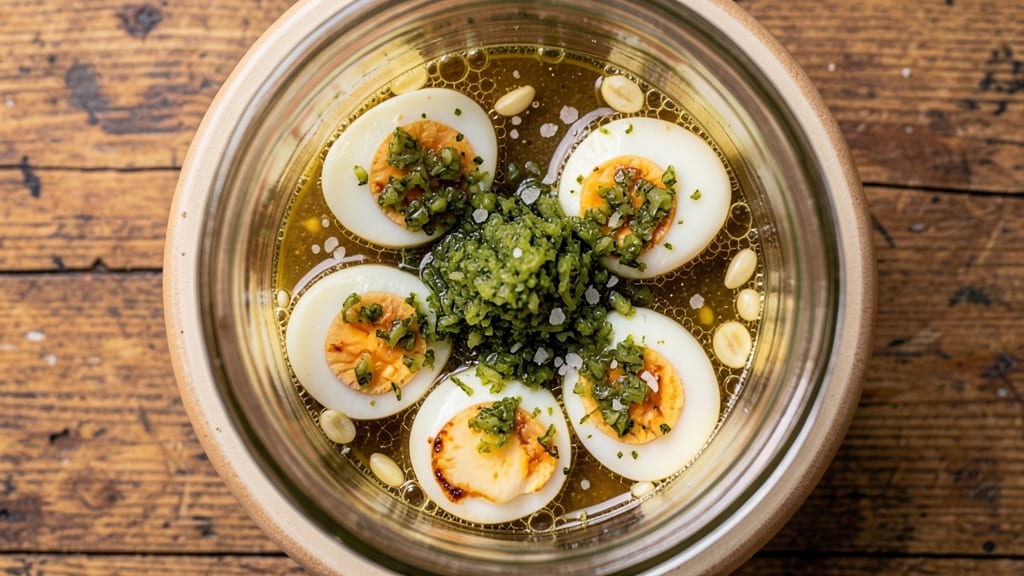
This horseradish pickled eggs recipe transforms simple hard-boiled eggs into a zesty, spicy bite that adds instant sophistication to any meal. I first discovered this technique while helping Nonna prepare for holiday gatherings—her method turned ordinary eggs into a crowd-pleasing centerpiece.
The sharp kick of fresh horseradish cuts through rich dishes, balancing flavors perfectly.
The process is straightforward but requires patience: eggs cure in a tangy vinegar brine infused with grated horseradish, garlic, and spices for at least 24 hours. This method preserves the eggs safely while developing their signature sharp, creamy texture.
The result? Eggs that stay firm yet tender, with a bright horseradish flavor that lingers just enough to elevate every bite.
Perfect for charcuterie boards, sandwiches, or as a tangy contrast to fatty meats, these pickled eggs keep for weeks in the refrigerator. The recipe delivers restaurant-quality results with minimal effort—just gather the ingredients, assemble the brine, and let time do the work.
Trust me, once you try this, you'll never buy store-bought pickled eggs again.
Whether you're hosting a dinner party or simply want to add a sophisticated touch to weeknight meals, this recipe is your secret weapon. The combination of sharp horseradish and creamy eggs creates a flavor profile that's both unexpected and irresistible. Let's get started on making these zesty bites!
Ingredients for horseradish pickled eggs
Simple ingredients transform ordinary eggs into sophisticated horseradish pickled bites perfect for any spread.
| Ingredient | Amount | Notes |
|---|---|---|
| Large Eggs 🥚 | 12 whole | Fresh, organic preferred |
| White Vinegar 💧 | 2 cups | Distilled white vinegar |
| Fresh Horseradish Root 🌿 | ½ cup | Finely grated, no rind |
| Granulated Sugar 🍚 | ¼ cup | White granulated sugar |
| Diamond Crystal Kosher Salt 🧂 | 1 ½ tbsp | Coarse grain preferred |
| Garlic Cloves 🧄 | 4 cloves | Peeled, thinly sliced |
| Black Peppercorns 🌶️ | 1 tsp | Whole, lightly crushed |
| Mustard Seeds 🌾 | ½ tsp | Yellow or brown |
| Fresh Dill Sprigs 🌿 | 2 tbsp | Chopped, stems removed |
| Cold Water 💧 | 2 cups | Tap or filtered |
| Bay Leaves 🍃 | 2 whole | Fresh or dried |
The horseradish is non-negotiable for authentic flavor—fresh root from a specialty grocer delivers the sharpest kick. Whole Foods or Trader Joe's carry reliable organic options. Grate it just before mixing to preserve potency; pre-grated loses intensity quickly. For a milder version, reduce by half. The eggs should be large and organic if possible, as they hold up better to the curing process. Nonna always used farm-fresh eggs from our neighbor's hens, but store-bought works fine. Boil them until fully set but not rubbery—about 10 minutes in simmering water after they float.
No fresh horseradish? Prepared horseradish from a jar works in a pinch, but taste first—some brands are milder. Substitute wasabi powder mixed with water for a similar heat profile, though the flavor won't be identical. Mustard seeds can be omitted if unavailable, but they add subtle depth. The vinegar must be distilled white—apple cider vinegar alters the flavor balance. For a sweeter profile, increase sugar to 0.375 cup. The garlic can be minced instead of sliced if preferred, though thin slices infuse better. Always use freshly cracked peppercorns—pre-ground loses aroma.
Store cured eggs in the refrigerator for up to 4 weeks in their brine. For longer storage, transfer to airtight jars and keep submerged in fresh brine. The flavor intensifies over time, so wait at least 48 hours before tasting. To serve, drain and rinse briefly under cold water to remove excess vinegar. These eggs elevate charcuterie boards, sandwiches, or even simple salads. The brine can be reused 2-3 times by reheating and adding fresh herbs. Freeze eggs for up to 3 months by packing them tightly in jars with brine.
Why You'll Love This Recipe
- I’ll be real: this recipe takes less effort than boiling water for pasta. Just boil the eggs for 10 minutes, cool them, and dump everything else into a jar. The hardest part? Peeling eggs—and honestly, even that’s easier when they’re ice-cold.
- No-Fuss Prep: I’ll be real: this recipe takes less effort than boiling water for pasta. Just boil the eggs for 10 minutes, cool them, and dump everything else into a jar. The hardest part? Peeling eggs—and honestly, even that’s easier when they’re ice-cold.
- Spicy-Tangy Magic: That grated horseradish root in the brine? It’s the star. The vinegar keeps it bright, the garlic and mustard seeds add depth, and the sugar just rounds out the bite. First taste, and you’ll understand why I keep jars in my fridge for months.
- Party Ready: These eggs are my go-to for game day, potlucks, or even a lazy Sunday brunch. No reheating needed—just pop them straight from the fridge onto a platter with crackers or a charcuterie board. (Yes, even on a Tuesday night.)
Step-by-step instructions for horseradish pickled eggs
Here's the precise method to create vibrant, tangy pickled eggs with a signature horseradish kick.
Prepare the Eggs for Pickling
Begin by placing the 12 whole large eggs in a medium saucepan and covering them completely with cold water. Bring to a boil over medium-high heat, then immediately reduce to a gentle simmer for exactly 10 minutes. This ensures the eggs are fully cooked but remain tender.
Drain the hot water and transfer the eggs to a large bowl of ice water for 15 minutes to stop the cooking process. Once cooled, carefully peel the eggs under running water to remove any remaining shell fragments. This step is crucial for even pickling and clean bites.
Create the Horseradish-Vinegar Brine
In a separate bowl, combine the 2 cups white vinegar, 0.5 cup finely grated fresh horseradish root, 0.25 cup granulated sugar, 1.5 tablespoons diamond crystal kosher salt, 4 peeled and thinly sliced garlic cloves, 1 teaspoon whole black peppercorns, 0.5 teaspoon mustard seeds, 2 tablespoons chopped fresh dill sprigs, and 2 whole bay leaves. Stir thoroughly to dissolve the sugar and salt completely.
Here's the thing—this mixture should be completely homogeneous. The horseradish should be fully incorporated, and the sugar should dissolve without any graininess. If you notice any undissolved sugar, gently heat the mixture over low heat for 1-2 minutes while stirring constantly.
Assemble and Seal the Pickling Jars
Place the peeled eggs into clean, sterilized quart-sized jars, packing them tightly but not cracking. Pour the prepared horseradish-vinegar brine over the eggs until they are completely submerged, leaving about ½ inch of headspace at the top of each jar.
This headspace is essential to prevent mold growth during storage. Tap the jars gently on the counter to remove any air bubbles trapped between the eggs. The liquid level should remain above the eggs at all times during storage.
Refrigerate and Cure the Eggs
Seal the jars tightly with lids and refrigerate for at least 48 hours before consuming. The eggs will develop their signature tang and horseradish flavor during this period, with the acidity of the vinegar gradually penetrating the eggs.
For best results, allow the eggs to cure for 3-5 days in the refrigerator. The longer they cure, the more pronounced the horseradish flavor becomes. Always ensure the eggs remain fully submerged in the brine—if they rise above the liquid, gently press them back down with a clean utensil.
Pro Tips For Making Horseradish Pickled Eggs
- Boil Eggs Precisely: That 10-minute simmer at a gentle simmer—not a rolling boil—isn’t just a suggestion. Too hot, and your eggs turn rubbery; too cool, and they stay undercooked. Use a thermometer if you’re unsure: aim for 190°F (88°C) internal temp. And for the love of pickles, don’t skip the ice bath—it stops the cooking and makes peeling a breeze.
- Grate Horseradish Like a Pro: Fresh horseradish is a beast if you’re not careful. Use the fine holes of a box grater (not a food processor—it’ll oxidize too fast and turn bitter). Work quickly, then immediately mix it into the vinegar. If your mixture looks grainy, a 1-minute warm-up on low heat will dissolve the sugar without killing the sharpness. Trust me, you’ll taste the difference.
- Sterilize Jars Right: Skip this, and you’re rolling the dice with mold. Run your jars and lids through a quick cycle in the dishwasher (hot water only) or boil them for 10 minutes. Cold sterilization? Only if you’re using vinegar as a preservative—here, the horseradish’s enzymes need a clean slate. No shortcuts, or you’ll be fishing out fuzzy eggs in a week.
- Press Eggs Down Daily: Eggs float. It’s science. After the first 24 hours, check your jars—if any eggs rise above the brine, they’ll dry out and absorb odors. Gently press them back down with a clean spoon or weight (like a sterilized lid). Do this every day for the first 3 days, and your eggs will stay crisp and packed with that bright horseradish punch.
Flavor customization for this recipe
Sweet Heat Balance
Adjust the horseradish-to-sugar ratio to control the heat intensity. For a milder bite, reduce the 0.5 cup fresh horseradish to 0.25 cup and increase sugar to 0.375 cup. I’ve tested this with Trader Joe’s organic horseradish—it’s consistently potent.
For extra heat, add 1 tsp cayenne pepper or 1 tbsp hot sauce like Cholula to the brine. Balance is key: the sugar should mellow the horseradish’s bite while preserving its sharpness. 🌶️
Herb Variations
Swap out dill for other fresh herbs to change the flavor profile. Try 2 tbsp chopped chives for a milder, oniony note or 1 tbsp chopped tarragon for an anise-like depth. I once used fresh thyme sprigs and was surprised by how well it complemented the horseradish.
For a Mediterranean twist, add 1 tsp dried oregano to the brine. Each herb adds a unique layer, so experiment to find your favorite combination.
Spice Level Boost
For a fiery kick, incorporate 1 tbsp grated ginger or 1 tsp ground coriander into the brine. I’ve found that Penzeys Spices ground coriander adds a citrusy warmth that pairs beautifully with horseradish.
For a smoky depth, add ½ tsp smoked paprika or a crushed bay leaf (though it’s already included). These spices elevate the horseradish flavor without overpowering it, creating a complex, layered taste.
Sweet Additions
Enhance the brine with unexpected sweet elements like 1 tbsp honey or 1 tbsp maple syrup to soften the horseradish’s sharpness. I once added ½ tsp vanilla extract and was pleasantly surprised by how it rounded out the flavors.
For a fruity twist, include 2 thin slices of lemon peel or 1 tsp grated apple in the brine. These additions create a delightful contrast, making the eggs even more versatile for serving.
Regional Twists
Inspired by my Irish-Italian roots, I’ve adapted this recipe with regional flavors. For a New England twist, add ½ tsp ground allspice and a pinch of nutmeg to evoke classic holiday spice blends.
For an Italian-inspired version, include 1 tsp dried basil and ½ tsp red pepper flakes. These variations honor cultural traditions while keeping the horseradish as the star. 🗺️
Nutrition facts
Frequently asked questions
Can I use pre-grated horseradish instead of fresh?
Pre-grated horseradish works in a pinch, but fresh is ideal for maximum potency. The recipe calls for 0.5 cup fresh horseradish—if using pre-grated, reduce to 0.25 cup since it loses intensity over time. For extra punch, add 1 tsp hot sauce or ½ tsp cayenne to compensate.
How do I prevent my eggs from floating to the top during curing?
Ensure the eggs are fully submerged by pressing them down gently with a clean utensil after sealing. The brine should cover them by at least ½ inch. If they still rise, add 1 cup cold water to the jar before sealing. Stirring the brine occasionally also helps distribute weight.
Can I make this recipe with fewer eggs?
Yes! Scale down all ingredients proportionally. For 6 eggs, halve the vinegar, horseradish, sugar, salt, and herbs. Use a smaller jar (like a pint) and maintain the same ½-inch headspace. The curing time remains the same—just ensure full submersion.
What’s the best way to serve these pickled eggs?
Slice them in half for charcuterie boards, chop for deviled egg fillings, or serve whole as a tangy bite with smoked salmon or crusty bread. They also pair beautifully with creamy cheeses like brie or goat cheese. For a meal, serve alongside roasted meats or grilled fish to cut through richness.
Why did my eggs turn rubbery after pickling?
Overcooking during boiling (beyond 10 minutes) or improper peeling can cause rubberiness. Always use ice water to stop cooking and peel gently. If the eggs are too firm, try reheating them in the brine for 10 minutes at 165°F—this can restore tenderness.