
Breakfast & Brunch
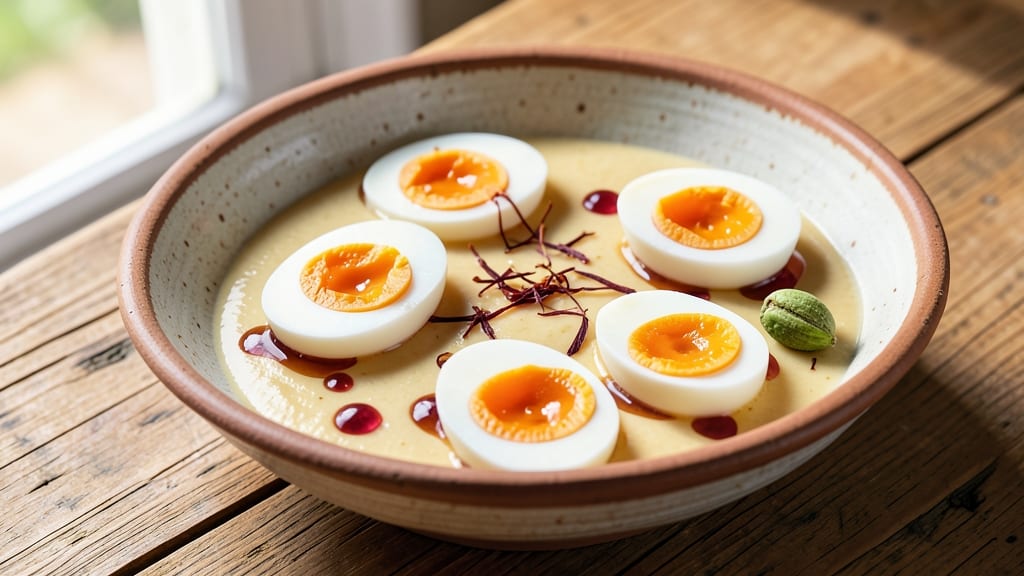
This egg ghotala recipe brings a taste of India’s festive tables to your kitchen, where silky yolk swirls dance in fragrant cardamom-infused milk. The dish transforms hard-boiled eggs into delicate, melt-in-your-mouth bites suspended in a sweetened, spiced syrup—perfect for celebrations or indulgent breakfasts.
I’ve perfected the technique to ensure the eggs stay intact while absorbing the aromatic essence of cardamom and saffron, creating a dessert that’s both elegant and comforting.
The magic lies in the balance: boiling eggs just enough to soften them without overcooking, then gently infusing warm milk with cardamom and sugar until it reaches the ideal consistency.
This isn’t just a recipe—it’s a tradition, often served during festivals like Diwali or weddings, where every bite carries the warmth of family gatherings. The result is a dish that’s light yet rich, with the yolk’s velvety texture contrasting beautifully against the lightly spiced syrup.
What you’ll achieve is a plate of golden eggs floating in a glossy, fragrant syrup that’s sweet without being cloying. The cardamom adds a subtle warmth, while saffron (if used) brings a luxurious depth that makes this dish feel truly special.
It’s the kind of treat that pairs perfectly with chai or as a standalone dessert—simple to prepare but impossible to resist once tasted.
For added texture, toasted nuts like almonds or pistachios can be sprinkled on top, or a pinch of rose water can elevate the aroma. The recipe scales effortlessly, making it ideal for sharing. Let’s create this timeless classic together—where tradition meets modern kitchen simplicity.
Ingredients for egg ghotala
Twelve ingredients transform humble eggs into a luxurious dessert where cardamom and saffron create magic.
| Ingredient | Amount | Notes |
|---|---|---|
| Large Eggs 🥚 | 4 whole | Hard-boiled, peeled, room temperature |
| Whole Milk 🥛 | 2 cups | Full-fat for optimal creaminess |
| Granulated Sugar 🍚 | ½ cup | White or raw cane preferred |
| Green Cardamom Pods 🌿 | 6 whole | Lightly crushed, seeds only |
| Saffron Threads 🌼 | ⅛ tsp | Optional, for luxurious aroma |
| Rose Water 🌸 | ¼ tsp | Pure, food-grade quality |
| Unsalted Butter 🧈 | 2 tbsp | Cold, cubed for texture |
| Toasted Almond Slices 🥜 | ¼ cup | For garnish, lightly toasted |
| Diamond Crystal Kosher Salt 🧂 | ¼ tsp | Fine grain for delicate seasoning |
| Vanilla Extract 🌸 | ½ tsp | Pure, high-quality preferred |
| Lemon Zest 🍋 | 1 tsp | Fresh, finely grated |
| Ground Cinnamon 🌿 | ¼ tsp | For subtle warmth |
| Heavy Cream 🥛 | ¼ cup | Optional, for silkier syrup |
The eggs are the foundation—boil them just until set (about 10-12 minutes) to maintain their delicate structure. For the cardamom, buy pods from a specialty spice shop like Burlap & Barrel or Penzeys for superior freshness; the seeds alone deliver that signature warmth. Saffron, if using, should be high-quality threads—Kashmiri saffron from Spicewalla is ideal, though any reputable brand works. The milk must be full-fat for the syrup's luxurious mouthfeel, and whole milk from grass-fed cows (like Organic Valley) adds depth. Toast your almonds in a dry pan until golden for maximum flavor—don’t skip this step as it elevates the dish.
No cardamom pods? Ground cardamom at half the volume works, though whole pods infuse better. Substitute saffron with a pinch of turmeric for color, though the flavor won’t match. Rose water can be tricky—use pure, food-grade (like Nabars or Al Wadi) to avoid artificial aftertastes. For a vegan version, replace butter with coconut oil and use coconut milk instead of whole milk, though the texture will differ. The heavy cream is optional but transforms the syrup into a velvety consistency—worth the extra cost for special occasions.
Store the eggs in the syrup refrigerated for up to 3 days—the flavors deepen over time. For longer storage, freeze the syrup separately and reheat gently before adding the eggs. The almonds and butter can be prepped ahead and stored in airtight containers for up to 1 week. When reheating, warm the syrup gently on low heat to preserve the eggs’ integrity. Serve chilled for the best texture, and garnish with toasted nuts just before serving to maintain crispness.
Why You'll Love This Recipe
- No-Fuss Ingredients: I keep a stash of eggs, milk, and cardamom in my pantry—this recipe uses what I already have. No last-minute grocery runs, no fancy tools, just a pot and a whisk.
- Golden Creamy Magic: That first sip? Warm, velvety milk with eggs cooked just enough to thicken—like a cross between custard and chai. The saffron turns it golden, and the cardamom? Pure aromatic bliss.
- Morning or Midnight Fix: I make it for breakfast when I’m running late, but honestly? It’s my go-to when I’m up late craving something comforting. No rules, just satisfaction.
- Budget-Friendly Luxury: A few eggs, a splash of milk, and a pinch of saffron stretch into multiple servings. It’s cheap enough to make daily, but feels special enough to serve guests. Win-win.
Step-by-step instructions for egg ghotala
Here's the method for crafting this luxurious dessert with its signature silky yolk swirls and aromatic cardamom essence.
Infuse the Milk with Cardamom and Saffron
In a medium saucepan, combine the 2 cups whole milk with the 6 whole green cardamom pods and 0.125 teaspoon saffron threads. Place over medium heat and bring to a gentle simmer, being careful not to let it boil vigorously. The cardamom should infuse its warm, slightly citrusy aroma into the milk within 5-7 minutes—you'll notice the liquid take on a pale golden hue and a subtle floral scent.
Once infused, immediately remove from heat and let steep for 10 minutes covered. This resting period allows the saffron to fully dissolve and the cardamom flavors to meld completely. Strain through a fine-mesh sieve into a clean bowl, pressing gently on the pods to extract every last drop of essence. Discard the solids and reserve the infused milk for the next step.
Prepare the Egg Yolk Base
In a separate heatproof bowl, whisk together the 4 whole large eggs (peeled and at room temperature) with the 0.5 cup granulated sugar until the mixture becomes pale and slightly thickened—this should take about 3-4 minutes of constant whisking. The eggs should triple in volume and develop a ribbony texture when the whisk is lifted. This step is critical for achieving the signature silky texture of ghotala.
Gradually pour in the infused milk while continuing to whisk, creating a smooth emulsion. Add the 0.25 teaspoon rose water, 0.5 teaspoon vanilla extract, and 1 teaspoon lemon zest, whisking until fully incorporated. The mixture should now be velvety smooth with a delicate floral aroma. Place this bowl over a pot of simmering water (bain-marie), ensuring the bottom of the bowl doesn't touch the water. Maintain a gentle simmer for 8-10 minutes, stirring constantly with a wooden spoon, until the mixture reaches 160°F and thickens enough to coat the back of the spoon.
Temper and Finish the Syrup
Remove the egg mixture from the bain-marie and let it cool slightly to 140°F—this prevents the eggs from scrambling when combined with the hot milk base. In a separate saucepan, heat the 2 tablespoons cold unsalted butter over low heat until melted, then whisk in the 0.25 cup heavy cream. Pour this butter-cream mixture into the egg preparation while whisking vigorously to temper the eggs.
Return the entire mixture to the bain-marie and cook for an additional 3-4 minutes, stirring constantly, until the syrup reaches 170°F and becomes thick enough to leave a distinct trail when drawn with a spoon. Remove from heat and stir in the 0.25 teaspoon diamond crystal kosher salt and 0.25 teaspoon ground cinnamon. The final syrup should be glossy with a luxurious sheen and a delicate balance of sweetness and spice.
Assemble and Serve
Transfer the finished syrup to serving glasses or bowls, allowing it to cool slightly to 120°F—this temperature creates the perfect swirl when the hard-boiled eggs are added. Using a spoon, gently press the 4 peeled hard-boiled eggs into the syrup, allowing them to sink to the bottom. The contrast between the warm syrup and cool eggs creates the signature swirling effect when served.
Garnish each serving with the 0.25 cup toasted almond slices and serve immediately while the syrup maintains its silky texture. The cardamom and saffron aromas should be prominent, with a subtle floral note from the rose water and bright citrus from the lemon zest. Each spoonful should reveal the marbled effect of the yolk swirls within the rich, fragrant syrup.
Pro Tips For Making Egg Ghotala
- Whisk Eggs Until Ribbon-Thin: Don’t just stir—whisk the eggs until they form a slow, thick ribbon when you lift the whisk. I learned this the hard way: under-whisked eggs make ghotala lumpy, even when cooked perfectly. A few extra seconds here makes all the difference in that silky texture.
- Bloom Saffron First: Soak the saffron threads in 2 tablespoons warm milk for 10 minutes before adding the rest. This extracts the color and aroma fully—skipping it means your ghotala will taste flat, even if you use double the threads. (Yes, even if you’re impatient like me.)
- Simmer Milk Gently: Heat the milk over low heat until it just begins to steam—no boiling. I used to rush this, and the milk would curdle when mixed with the eggs. A steady simmer keeps the milk creamy and ready to blend smoothly.
- Crush Cardamom Pods: Lightly crush the green cardamom pods with the flat side of a knife before adding them to the milk. This releases more flavor without turning the mixture bitter—whole pods just float there doing nothing. (Your future self will notice the difference.)
Best sauces and condiments for egg ghotala
Cardamom-Infused Syrup
The heart of egg ghotala lies in its cardamom-infused syrup, where the warm, citrusy notes of 6 crushed green cardamom pods meld with 2 cups whole milk over medium heat. Simmer gently for 5-7 minutes—never boil—to preserve the delicate flavors.
Strain through a fine-mesh sieve and let steep 10 minutes covered. This infusion transforms the milk into a fragrant base that carries the dish’s signature aroma. For extra luxury, add 0.125 tsp saffron threads during infusion—their golden hue and floral depth elevate the syrup to restaurant-quality. 🌿
Rose Water and Vanilla
After straining, fold in 0.25 tsp rose water and 0.5 tsp vanilla extract to introduce floral and sweet complexity. Use pure, food-grade rose water (like Nabars) to avoid artificial aftertastes. The vanilla rounds out the cardamom’s sharpness, while the rose water adds a subtle, elegant perfume.
For a citrusy brightness, whisk in 1 tsp lemon zest—this balances the richness and prevents the syrup from tasting one-note. Adjust ratios to taste: more rose water for floral intensity, more vanilla for warmth. ✨
Butter and Cream Finish
To achieve the dish’s silky texture, temper the eggs with 2 tbsp cold unsalted butter and 0.25 cup heavy cream—this creates a velvety, almost custard-like consistency. Heat the butter and cream together until melted, then whisk into the egg mixture while maintaining a gentle simmer.
The cream adds body without overpowering the cardamom, while the butter contributes a subtle richness. For a lighter version, reduce the cream to 0.125 cup or omit entirely, though the syrup will be slightly less luxurious. 🧈
Garnish Essentials
No egg ghotala is complete without toasted almond slices—lightly brown them in a dry pan for 2-3 minutes until fragrant. Their crunch contrasts the syrup’s silkiness and adds a nutty depth. For extra flair, sprinkle ground cinnamon (0.25 tsp) or a pinch of turmeric for color.
Reserve a few almonds for garnishing each serving to maintain crispness. Pro tip: Toast the nuts just before serving to preserve their aroma and texture. 🥜
Spiced Sugar Syrup
For a simpler syrup variation, replace the cardamom-infused milk with a spiced sugar syrup: combine 0.5 cup sugar with 0.25 cup water and 0.25 tsp ground cardamom, simmering until dissolved.
Cool to 120°F before adding the eggs. This method skips the infusion step but still delivers the dish’s essential sweet-spiced profile. Ideal for quick preparations or when fresh cardamom pods aren’t available. 🍯
Storage and Reheating
Store the assembled ghotala in an airtight container in the fridge for up to 3 days, though the eggs may soften slightly over time. For longer storage, freeze the syrup separately and reheat gently before adding the eggs.
To reheat, warm the syrup in a saucepan over low heat until 120°F, then stir in the eggs. Avoid microwaving—the uneven heat can cause the eggs to scramble. Serve chilled for the best texture and swirl effect. ❄️
Nutrition facts
Frequently asked questions
What makes egg ghotala different from regular custard desserts?
The key difference lies in its textural contrast—whole hard-boiled eggs are suspended in a fragrant, spiced syrup rather than being blended into a smooth custard. The cardamom-infused milk creates a lighter, more aromatic base, while the eggs provide a delicate, melt-in-your-mouth center when bitten into. This technique is inspired by traditional Indian desserts where eggs are often used to add richness without heaviness.
Can I make egg ghotala without saffron?
While saffron adds luxurious color and aroma, it's optional. For a budget-friendly version, simply omit it—the cardamom and rose water will still deliver the signature flavors. If you want golden color without saffron, use a pinch of turmeric (⅛ tsp)—it won't affect the taste but will give the syrup a beautiful hue. The dish will still be delicious and aromatic.
Why do the eggs need to be at room temperature before cooking?
Room-temperature eggs cook more evenly, preventing the outside from overcooking while the inside remains underdone. Cold eggs can cause uneven heat distribution in the syrup, leading to scrambled textures. To prepare them, place peeled eggs in warm water for 10 minutes before using. This step is crucial for achieving the signature silky yolk swirls that define this dessert.
How do I fix if the syrup becomes too thick or too thin?
If your syrup is too thick, gently reheat it over low heat while stirring, adding 1-2 tbsp warm milk at a time until it reaches the desired consistency. For a thinner syrup, whisk in 1-2 tbsp additional warm milk while cooking. The ideal texture should coat the back of a spoon but still flow smoothly when poured. Always work with low heat to prevent scrambling the eggs.
Can I prepare egg ghotala ahead of time for a party?
Yes! Assemble the dish 2-3 hours ahead and refrigerate in an airtight container. The flavors deepen over time, and the syrup will absorb into the eggs beautifully. For serving, let it sit at room temperature for 15-20 minutes before garnishing with toasted almonds to restore crispness. If making the syrup separately, store it in the fridge for up to 1 week—just reheat gently before adding the eggs.