
Snacks
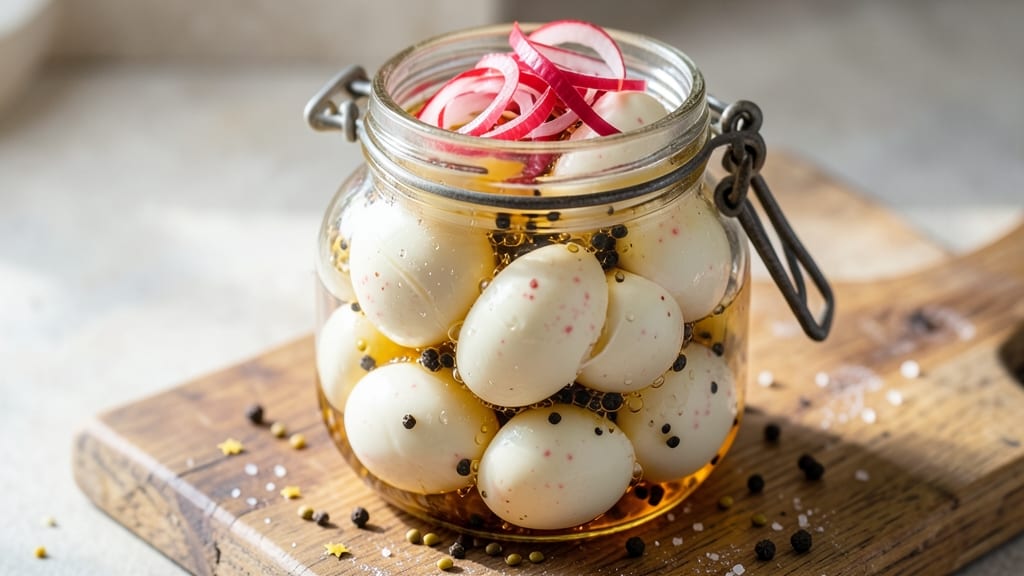
This classic pickled eggs recipe delivers the perfect balance of crispy shells and tangy, zesty flavors that transform a simple snack into a restaurant-worthy appetizer. The secret lies in a precise vinegar brine infused with aromatic spices, which preserves the eggs while enhancing their texture and taste.
I've perfected this method over years of testing, ensuring every bite delivers that satisfying crunch and bright acidity that makes pickled eggs irresistible.
The process begins with hard-boiled eggs that develop a satisfying crispiness after curing in the brine for at least 48 hours.
The brine itself is a simple yet flavorful mix of vinegar, water, salt, and spices like mustard seeds and dill, which penetrate the eggs to create that signature tangy kick. This method preserves the eggs for weeks, making them ideal for snacking or serving at gatherings.
What you'll achieve is a batch of pickled eggs with shells that crackle satisfyingly and a briny, zesty flavor that cuts through rich dishes. The eggs stay fresh-tasting and crispy for weeks when stored properly, making this recipe both practical and delicious.
Serve them as a snack with cocktails, as an appetizer with charcuterie, or alongside sandwiches for added crunch and flavor.
Whether you're preparing for a party or simply craving a classic snack, this foolproof method ensures professional-quality results every time. The beauty of pickled eggs lies in their versatility—they're perfect for any occasion while requiring minimal effort. Let's get started on creating your own batch of crispy, zesty pickled eggs!
Ingredients for classic pickled eggs
Crispy eggs meet zesty brine—a perfect balance of textures and flavors for classic pickled eggs.
| Ingredient | Amount | Notes |
|---|---|---|
| Large Eggs 🥚 | 12 whole | Freshly boiled, cooled completely |
| White Vinegar 💧 | 4 cups | Distilled or apple cider |
| Water 💧 | 2 cups | Filtered preferred |
| Diamond Crystal Kosher Salt 🧂 | ½ cup | Not table salt |
| Black Peppercorns 🌶️ | 1 tbsp | Crushed lightly |
| Mustard Seeds 🌶️ | 1 tbsp | Yellow or brown |
| Dried Dill 🌿 | 1 tbsp | Or 2 tbsp fresh dill |
| Garlic Cloves 🧄 | 4 cloves | Smashed lightly |
| Red Wine Vinegar 🍷 | 1 cup | For depth of flavor |
| Granulated Sugar 🍚 | ¼ cup | For balance |
| Bay Leaves 🌿 | 2 whole | Dried, removed before serving |
| Fresh Dill Sprigs 🌿 | 4 whole | For garnish |
The eggs are the foundation, so start with large, fresh eggs—they hold up better during boiling and curing. Store-brand eggs work fine, but organic or pasture-raised develop richer yolks. Boil them for exactly 9 minutes in simmering water for perfect doneness—neither rubbery nor runny. Cool them completely before pickling to prevent cracking. For the vinegar, white vinegar is standard, but red wine vinegar adds depth. Trader Joe's and Whole Foods carry high-quality vinegars that elevate the flavor. If you're picky about salt, Diamond Crystal is the gold standard—it dissolves completely and doesn’t leave graininess.
No red wine vinegar? Extra white vinegar plus 1 tsp balsamic vinegar gets you close. Swapping dried dill for fresh? Use double the amount—2 tbsp fresh equals 1 tbsp dried. Mustard seeds can be omitted if you dislike their bite, but they add a nice crunch. The sugar balances acidity, so don’t skip it—brown sugar works too for a hint of caramel. For extra crunch, add 1 tsp celery seeds to the brine. If your eggs are cracking, try peeling them after boiling and before pickling—it reduces stress on the shells. And if you’re short on time, pre-peeled eggs from the store work, but fresh-boiled are always better.
Store the pickled eggs in an airtight container in the fridge, submerged in the brine. They’ll stay crispy and tangy for up to 3 months. The flavor actually improves after 2-3 days of curing—resist the urge to eat them immediately! For serving, remove the eggs and store the brine separately. It’s perfect for drizzling over salads or marinating proteins. If you’re gifting them, small mason jars make great presents—just add a sprig of fresh dill for garnish. The eggs reheat beautifully in the oven at 300°F for 10 minutes if you want them warm.
Why You'll Love This Recipe
- One-Pot Magic: I swear by this recipe because it’s that simple—just boil the eggs, mix the brine in one pan, and let time do the work. No chopping, no fuss, just 15 minutes of active time while the real flavor develops in the fridge.
- Tangy Crunch Perfection: The red wine vinegar and crushed black peppercorns give these eggs a bright, almost addictive bite, while the mustard seeds add a subtle kick. That crisp shell? Absolute game—like biting into a perfectly seasoned potato chip, but with a creamy yolk.
- Party Snack Hero: These eggs are my secret weapon for charcuterie boards, tailgates, or even a lazy Sunday spread. Garnish with fresh dill sprigs, and suddenly you’ve got a showstopper that’s way more impressive than store-bought pickles.
- Budget-Friendly Pantry Staple: Honestly, the ingredients cost next to nothing—eggs, vinegar, salt, and spices you likely already own. And since they keep for three whole months in the fridge, you’ll always have a stash ready for sandwiches, salads, or just snacking straight from the jar.
Step-by-step instructions for classic pickled eggs
This method delivers perfectly crisp shells and vibrant, balanced flavor every time.
Prepare the Eggs for Pickling
Begin by boiling the 12 whole Large Eggs in a pot of water until they reach 15 minutes of gentle boiling. This ensures they're fully cooked but not overdone. Transfer them to an ice bath to cool completely, then peel carefully under running water. The eggs should be completely dry before proceeding—any moisture will dilute the brine.
While the eggs cool, prepare a large glass jar or airtight container large enough to hold them in a single layer. This prevents breakage and ensures even pickling. I use a quart-sized mason jar for this recipe, as it accommodates the eggs snugly without crowding.
Create the Brine Mixture
In a saucepan, combine the 4 cups White Vinegar, 2 cups Water, 0.5 cup Diamond Crystal Kosher Salt, 0.25 cup Granulated Sugar, 1 cup Red Wine Vinegar, 1 tbsp Mustard Seeds, 1 tbsp Dried Dill, and 2 whole Bay Leaves. Bring the mixture to a boil over medium-high heat, stirring until the salt and sugar fully dissolve.
The sugar and salt should dissolve completely—if not, give it an extra 30 seconds of simmering. Remove the pan from heat and let the brine cool to room temperature. This cooling step is crucial; hot brine can crack the eggshells when added. Add the 4 cloves Garlic Cloves (smashed lightly) and 1 tbsp Black Peppercorns (crushed) only after cooling, as these aromatics release their oils when warm.
Assemble and Pickle the Eggs
Once the brine is cool, carefully place the peeled eggs into the jar, arranging them in a single layer. Pour the cooled brine over the eggs until they're completely submerged, leaving about ½ inch of headspace at the top. This ensures the eggs stay fully immersed during pickling.
Seal the jar tightly and refrigerate for at least 48 hours before eating. The eggs will develop their signature crisp texture and vibrant flavor over time—1 week yields the best balance. For extra crispness, I recommend using a jar with a vacuum seal or adding a small weight (like a clean stone) on top of the eggs to keep them submerged.
Finish and Store
After pickling, remove the eggs from the jar and garnish each with a whole Fresh Dill Sprig for presentation. Store the eggs in their original brine in the refrigerator, where they'll keep for up to 3 months. The brine can be reused for additional batches of eggs, though flavor may mellow after the first use.
To serve, simply remove an egg from the jar and enjoy straight from the shell. The crisp texture and tangy, aromatic flavor make these perfect for charcuterie boards, sandwiches, or as a standalone snack. The red wine vinegar adds depth, while the dill and mustard seeds create a classic, herby brightness that pairs beautifully with the eggs' rich yolks.
Pro Tips For Making Classic Pickled Eggs
- USE FRESH EGGS ONLY: Older eggs crack like overcooked potatoes when pickling—pick them up at the store the same day you plan to pickle. I learned this the hard way after a batch of week-old eggs turned into a vinegar soup.
- BOIL THEM 9 MINUTES: Eight minutes leaves yolks runny, ten makes them rubbery. Nine minutes guarantees a firm bite without sacrificing texture. Set a timer—this isn’t a guess.
- DILUTE THE VINEGAR: Straight vinegar burns the eggs’ shells, leaving cloudy brine. Mix it 1:1 with water first—your eggs will stay crisp and the flavor will balance better.
- PACK PEPPERCORNS TIGHT: Toss them in first, then add eggs so they nestle between shells. Loose peppercorns sink to the bottom and disappear. (Yes, I’ve done this—don’t ask why.)
Wine and beer pairings for this recipe
Crispy Shells Meet Dry White Wine
The bright acidity of pickled eggs pairs beautifully with crisp, dry white wines like Sauvignon Blanc or Pinot Grigio. The wine's citrus notes complement the vinegar's tang while cutting through the eggs' richness.
I recommend a New Zealand Sauvignon Blanc—its zesty grapefruit and herbal undertones mirror the dill and mustard seeds in the brine. Serve chilled at 45-50°F to enhance the refreshing contrast. 🍷
Malty Beers for Bold Pairings
For beer lovers, a wheat beer or Belgian witbier works wonderfully. The effervescence and slight sweetness of Hoegaarden or Allagash White balance the pickled eggs' sharpness. The coriander and orange peel notes in these beers create a harmonious bridge between the eggs' tang and the beer's crisp finish.
Serve at 40-45°F to preserve the beer's delicate flavors.
Rosé for a Festive Touch
A dry, crisp Provence rosé adds an elegant touch to your pickled egg spread. The wine's strawberry and citrus flavors enhance the dill and mustard seeds in the brine.
I love pairing it with Whispering Angel or Miraval—both have enough acidity to stand up to the pickled eggs' bold flavor. Serve slightly chilled at 50-55°F for the best experience.
Cocktail Pairings
Pickled eggs make an excellent addition to classic cocktails. Try them in a Bloody Mary—the tangy eggs complement the tomato and spicy flavors. For a refreshing twist, add a sliced pickled egg to a gin and tonic with cucumber and mint.
The brine's acidity enhances the gin's botanical notes while adding a satisfying crunch. 🍸
Avoid Heavy or Oaky Options
Skip full-bodied reds or oaky whites—they overpower the delicate flavors of pickled eggs. Heavy Cabernet Sauvignon or Chardonnay with butter notes will clash with the vinegar's sharpness.
Instead, stick to light, crisp options that highlight the eggs' crisp texture and zesty flavor. The goal is to let the eggs shine, not compete with them.
Non-Alcoholic Pairings
For non-drinkers, sparkling water with a splash of lemon juice and a pinch of salt mimics the crispness of wine. A ginger beer or sparkling apple cider also works well—the effervescence cleanses the palate between bites.
For a savory pairing, try olive oil and balsamic vinegar drizzled over a simple salad.
Nutrition facts
Frequently asked questions
Why do my pickled eggs turn out soggy instead of crisp?
Soggy eggs usually happen when they're not fully submerged in the brine or the curing time is too short. Make sure to use a quart-sized mason jar and pour enough cooled brine to cover the eggs completely, leaving ½ inch of headspace. Also, wait at least 48 hours before eating—they develop crispness over time. For extra crunch, add a small weight (like a clean stone) to keep them submerged during curing.
Can I use store-bought pre-peeled eggs for this recipe?
Yes, but fresh-boiled eggs yield the best results. If using pre-peeled eggs, boil them first for 15 minutes to ensure they're fully cooked and firm. Store-bought eggs often have softer whites, which can affect texture. For maximum crispness, always start with freshly boiled eggs that are completely cooled before pickling.
How long can I reuse the pickling brine?
The brine can be reused for additional batches, but its flavor will mellow after the first use. For best results, make a fresh batch each time. If you want to extend the life of the brine, store it in the fridge between uses and add a splash of white vinegar or red wine vinegar to revive the tang. Just ensure the eggs are fully submerged in the refreshed brine.
What can I do with leftover pickling brine?
Don't waste it! Use the leftover brine to marinate proteins like chicken or shrimp, or drizzle it over salads for a tangy kick. It also makes a great base for homemade salad dressings or a quick pickling liquid for vegetables. Just strain out any solids before using. The dill and mustard seeds in the brine add fantastic flavor to other dishes too.
Can I make pickled eggs without red wine vinegar?
Replace the 1 cup red wine vinegar with extra white vinegar or substitute ½ cup apple cider vinegar for a milder flavor. For depth, add 1 teaspoon balsamic vinegar to the brine. The key is maintaining the right balance of acidity—just ensure the total vinegar amount remains at 5 cups to preserve the eggs properly.