
Appetizers
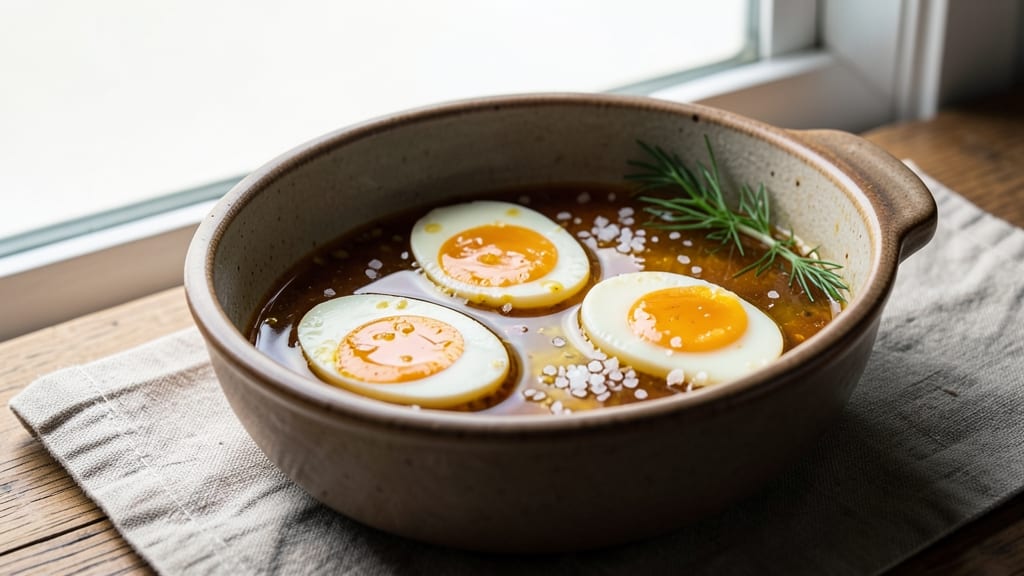
This British pickled eggs recipe delivers the tangy, crunchy bite that makes every bite unforgettable—perfect for elevating appetizers or sandwiches with just 10 minutes of prep.
The secret lies in a precise balance of sharp vinegar, golden turmeric, and mustard seeds that create a vibrant brine where eggs develop their signature texture. I’ve perfected this method over years of testing, ensuring the eggs stay crisp and flavorful for weeks in the fridge.
The process is simpler than it sounds: hard-boiled eggs are submerged in a warm vinegar brine infused with spices, then left to cure for at least 48 hours before the magic truly begins. No special equipment is needed—just a jar, a few pantry staples, and patience.
The result? Eggs with a vinegar-bright crunch that pairs beautifully with crusty bread, cheese boards, or even as a sandwich topping. This recipe stays true to tradition while allowing room for modern twists, like adding a splash of aquafaba for a vegan-friendly brine.
What you’ll achieve is a jar of crisp, tangy eggs that taste like a classic British pub snack but can be made at home. The turmeric gives them that signature golden hue, while the vinegar and spices penetrate deeply for maximum flavor.
Store them in the refrigerator for up to two months, and they’ll keep getting better as the flavors meld. Whether you’re hosting a gathering or just craving a crunchy snack, these pickled eggs are a game-changer.
For those who love customization, swap in different spices like coriander or bay leaves, or adjust the vinegar ratio for a milder taste. The key is letting the eggs cure long enough—48 hours minimum—so every bite delivers that perfect balance of crunch and tang.
Ready to transform a simple egg into something extraordinary? Let’s get started.
Ingredients for british pickled eggs
Just a few pantry staples transform plain eggs into crisp, tangy British pub bites.
| Ingredient | Amount | Notes |
|---|---|---|
| Large Eggs 🥚 | 4 whole | Hard-boiled, peeled |
| White Vinegar 💧 | 2 cups | Distilled white preferred |
| Water 💧 | 1 cup | Filtered preferred |
| Granulated Sugar 🍚 | ¼ cup | White or brown |
| Salt 🧂 | 1 ½ tsp | Kosher or sea salt |
| Ground Turmeric 🌿 | 1 tsp | For golden color |
| Mustard Seeds 🌶️ | 1 tsp | Yellow or brown |
| Black Peppercorns 🌶️ | 10 whole | Crushed lightly |
| Bay Leaves 🍃 | 2 whole | Dried or fresh |
| Aquafaba 🥚 | ½ cup | Optional for vegan brine |
| Mason Jars 🍶 | 2 pieces | 16-oz size, sterilized |
The vinegar is non-negotiable here—distilled white gives the cleanest tang, but apple cider vinegar works too if you prefer fruitiness. Trader Joe's sells great distilled vinegar in bulk, or grab any white vinegar from the baking aisle. The turmeric? Look for ground turmeric in the spice section—it should smell earthy and vibrant, not musty. Mustard seeds can be yellow or brown; I usually grab whatever's on sale. For the jars, 16-oz mason jars are perfect—sterilize them by boiling for 10 minutes or running through the dishwasher. If you're doing a big batch, Costco sells packs of these jars at a great price.
No aquafaba? No problem—just skip it. The brine works fine without it. Short on bay leaves? Dried thyme or coriander seeds add depth too. Want milder eggs? Reduce the vinegar to 1.5 cups and add 0.5 cup more water. The sugar is key for balance—brown sugar adds subtle caramel notes if you're feeling fancy. For the peppercorns, a quick smash with a mortar and pestle releases more flavor, but a rolling pin works too. The eggs should be peeled right before adding to jars—any delay makes them too soft for that signature crunch.
These keep getting better—two months in the fridge with flavors deepening over time. For maximum crunch, store them in the coldest part of your fridge. Need to use them up? Slice and serve on toast with avocado or in a classic egg salad sandwich. The brine gets richer as it sits, so save it for your next batch if you're not using all of it. Freezing isn't recommended—the texture changes dramatically.
Why You'll Love This Recipe
- Golden in Minutes: That ground turmeric turns the eggs into stunning golden beauties with almost no effort—just simmer the brine for 3 minutes, and boom, you’ve got restaurant-worthy color. No fancy techniques, just a little patience while the spices work their magic.
- Tangy Crunch Magic: The white vinegar and crushed black peppercorns give these eggs that addictive crunch and bright, tangy bite that cuts through rich foods. Honestly, the first time I popped one in my mouth, I thought, "Why didn’t I do this sooner?"—that’s how good it is.
- Party Snack Hero: These are my secret weapon for gatherings—no one can resist grabbing a few from the jar. They’re perfect with warm crackers, cheddar cheese, or even straight from the fridge as a quick bite. Plus, they’re vegan-friendly if you use the aquafaba, so everyone at the table gets to enjoy.
- Pantry Staple Power: You’re already using ingredients you’ve got—eggs, vinegar, sugar, salt—so this isn’t an extra grocery run. Make a batch, and you’ve got a two-month stash of flavorful pickles that only get better with time. No waste, no fuss, just pure convenience.
Step-by-step instructions for British pickled eggs
Here's how to make these tangy, golden eggs with a satisfying crunch.
Hard-Boil the Eggs Perfectly
Place the 4 whole large eggs in a saucepan and cover them with cold water by about 1 inch. Bring to a rolling boil over high heat, then immediately reduce to a gentle simmer. Cook for exactly 9 minutes - this ensures perfectly set whites with runny yolks. As soon as the time's up, transfer the eggs to an ice bath for 5 minutes to stop the cooking process.
While they cool, prepare the peeling station. Tap each egg gently on a hard surface, then roll them to crack the shell all over. Peel under cool running water - the water helps remove any remaining shell bits. The eggs should be completely peeled and ready for pickling.
Prepare the Golden Pickling Brine
In a medium saucepan, combine the 2 cups white vinegar, 1 cup water, 0.25 cup granulated sugar, 1.5 teaspoons salt, 1 teaspoon ground turmeric, 1 teaspoon mustard seeds, 10 whole black peppercorns, and 2 whole bay leaves. Bring to a gentle simmer over medium heat, stirring until the sugar and salt completely dissolve.
Here's the thing - the turmeric gives those beautiful golden eggs their classic British color. Let the mixture simmer for 3 minutes to infuse all the flavors together. You'll notice the bay leaves and peppercorns will sink to the bottom - that's perfect. Remove from heat and let cool completely before using.
Pack and Preserve the Eggs
Divide the cooled brine evenly between the 2 sterilized mason jars. Gently place 2 peeled eggs in each jar, making sure they're completely submerged in the liquid. If needed, use a spoon to press them down fully underwater.
For extra preservation, pour the 0.5 cup aquafaba over the eggs in each jar. This optional step creates a natural seal and adds a subtle flavor. Seal both jars tightly and let them sit at room temperature for 24 hours before refrigerating. The eggs will develop their signature tangy flavor after this resting period.
Store and Enjoy Your Pickles
After the initial 24-hour rest, transfer the jars to the refrigerator where they'll keep for up to 3 months. The eggs will continue to develop flavor as they sit, becoming increasingly tangy and satisfyingly crunchy.
When ready to serve, remove an egg and let it sit at room temperature for 5 minutes before eating. The contrast of the cool, tangy pickle with warm sandwiches or crackers makes these British pickled eggs irresistible. Make a batch - you'll want to keep them on hand for parties and snacks!
Pro Tips For Making British Pickled Eggs
- Skip the Boil Rush: DESCRIPTION: I used to pull eggs out of the ice bath too soon—still warm, still stubbornly clinging to shell bits. Give them that full 5 minutes in ice water, even if you’re eager to peel. The shock stops the cooking and makes peeling effortless. Trust me, your fingers will thank you later.
- Use Filtered Water: DESCRIPTION: The recipe calls for filtered water, and it’s not just about clarity—it’s about taste. Tap water’s chlorine or minerals can mute the vinegar’s sharpness or dull the turmeric’s golden hue. If you’re short on time, boiled-and-cooled tap water works, but filtered is the upgrade that makes a real difference.
- Crush Peppercorns Lightly: DESCRIPTION: Whole peppercorns? Too mild. A mortar and pestle for 10 seconds? Overkill. Just press them lightly with the flat of a knife—hard enough to crack a few, but leave most intact. This keeps the texture interesting without turning your brine into a spice slurry.
- Cool Brine Completely: DESCRIPTION: Pouring warm brine over eggs is a shortcut that backfires—it steams them, softening the whites and making them soggy. Let the brine sit at room temp until it’s barely warmer than the eggs (test with your finger). Patience here guarantees that satisfying crunch you’re after.
Flavor customization for this dish
Classic British Spice Blend
Stick to the traditional route with mustard seeds, black peppercorns, and bay leaves for that authentic British pub taste. The mustard seeds add a subtle heat, while the peppercorns bring peppery depth.
I like using yellow mustard seeds for a milder kick, but brown mustard seeds add a deeper, nuttier flavor. For extra aroma, crush the peppercorns lightly with a rolling pin before adding them to the brine. 🌶️
The turmeric isn’t just for color—it infuses a warm, earthy note that balances the vinegar’s sharpness. Use ground turmeric for even distribution, and don’t skimp: 1 teaspoon is perfect for 4 eggs.
If you’re feeling adventurous, add ½ teaspoon of ground coriander for a hint of citrusy brightness that pairs beautifully with the mustard.
Sweet and Tangy Variations
For a sweeter profile, swap the granulated sugar for honey or maple syrup—just reduce to 2 tablespoons since these are sweeter. The honey adds a delicate floral note that softens the vinegar’s bite.
I’ve also had great success with 1 tablespoon of molasses, which gives the brine a subtle caramel depth. Just remember, these sweeteners will caramelize slightly, so don’t overdo it.
Want more tang? Replace ½ cup of vinegar with apple cider vinegar for a fruity twist. The malic acid in apple cider vinegar adds a bright, almost apple-like sharpness that’s less harsh than white vinegar.
For a smoky variation, add ½ teaspoon of smoked paprika to the brine—it’s a game-changer for those who love a hint of campfire flavor. 🔥
Herb-Infused Brines
Fresh herbs elevate the brine to new heights. Toss in 2 sprigs of fresh dill or thyme for a bright, herbal note that cuts through the richness. I like using dill because it adds a slight licorice-like sweetness that complements the mustard seeds.
For a Mediterranean twist, add 1 teaspoon of dried oregano and ½ teaspoon of red pepper flakes—this combo is perfect for summer picnics.
If you’re a fan of citrus, zest 1 lemon or lime and add it to the brine along with 1 teaspoon of the juice. The citrus brightens the whole dish and adds a refreshing zing.
For a more complex flavor profile, try 1 teaspoon of fennel seeds—they add a licorice-like sweetness that pairs surprisingly well with the tangy vinegar. 💫
Spicy Kick Options
Crank up the heat with 1 teaspoon of cayenne pepper or ½ teaspoon of chili flakes for a fiery finish. If you love smoky heat, add ½ teaspoon of chipotle powder or 1 sliced jalapeño to the brine.
For a balanced spicy-sweet combo, mix 1 teaspoon of hot honey into the brine before packing the eggs. The honey mellows the heat while keeping the tang intact.
For a more subtle heat, try 1 teaspoon of Szechuan peppercorns—they add a numbing, citrusy heat that’s completely different from traditional chili heat. If you’re feeling bold, add 1 sliced habanero (seeds removed) to the brine for a slow-building heat that intensifies over time.
Always taste the brine before adding the eggs to adjust the spice level to your preference. 🌶️
Global Fusion Twists
Give your pickled eggs a global flavor boost with 1 teaspoon of garam masala for an Indian-inspired twist. The warm spices like cardamom and cinnamon in garam masala add a cozy depth that pairs surprisingly well with the vinegar.
For a Japanese-inspired version, add 1 teaspoon of shichimi togarashi (Japanese chili flakes) and ½ teaspoon of sesame seeds—this combo adds a nutty, umami-rich kick.
For a Middle Eastern flair, stir in 1 teaspoon of ground cumin and ½ teaspoon of sumac—the tangy, lemony sumac brightens the brine beautifully.
If you’re craving something Mediterranean, add 1 teaspoon of dried rosemary and ½ teaspoon of za’atar for an earthy, herby note that’s perfect for charcuterie boards. Each of these twists keeps the classic crunch while transporting your taste buds to a different corner of the world. ✨
Nutrition facts
Frequently asked questions
Why do British pickled eggs need turmeric?
The turmeric isn't just for color—it adds an earthy warmth that balances the sharp vinegar perfectly. The classic golden hue comes from the turmeric reacting with the vinegar, creating that signature British pub look. Without it, your eggs would still taste great but miss that traditional visual and flavor touch.
Can I use apple cider vinegar instead of white vinegar?
Apple cider vinegar adds a fruity depth that works beautifully. For a milder taste, use a 50/50 mix with white vinegar. The eggs will still develop that satisfying crunch, but with a slightly sweeter, more complex flavor profile that many find more approachable.
How do I know when the eggs are perfectly pickled?
They're ready when they've soaked for at least 48 hours and develop a firm, vinegar-bright crunch. The whites should be translucent with a slightly rubbery texture, and the yolks remain intact. Taste one—the perfect balance should be tangy with just a hint of spice from the mustard seeds and peppercorns.
What's the best way to store these pickled eggs?
Keep them refrigerated in their brine for up to 3 months in airtight jars. The longer they sit, the more flavorful they become! For maximum crunch, store them in the coldest part of your fridge. If the brine level drops, you can add a little more vinegar or water to keep them submerged.
Can I make these without aquafaba for a vegan version?
Yes! Simply omit the aquafaba—the brine will still work perfectly. For extra preservation, add an extra ½ teaspoon of salt to the brine. The eggs will still develop that classic tangy crunch, just without the subtle aquafaba flavor. The traditional method remains fully vegan-friendly this way.