
Main Courses
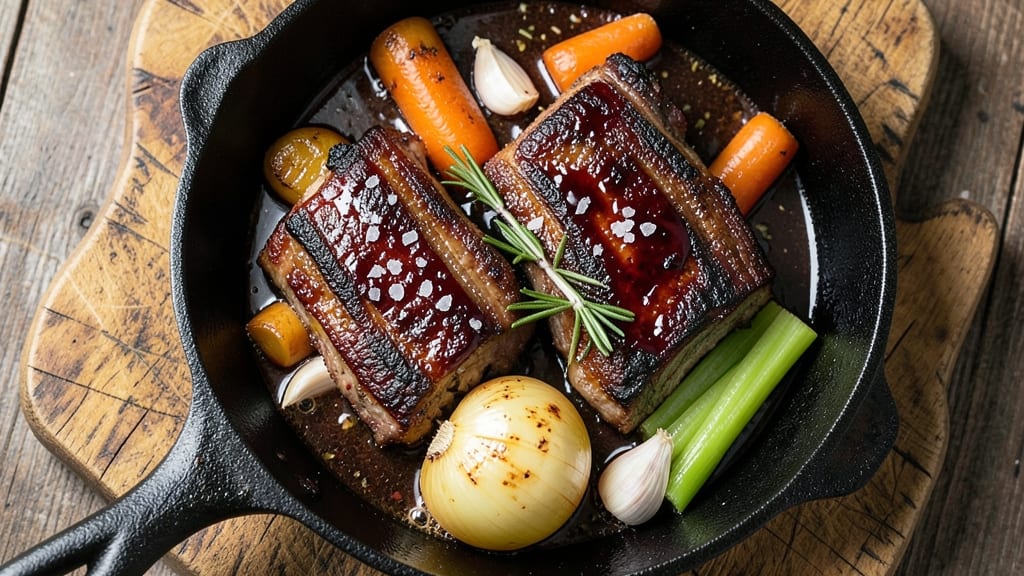
Cooking short ribs on a Big Green Egg transforms tough cuts into melt-in-your-mouth perfection with a crispy bark that locks in smoky flavor. This recipe leverages the Egg's precision heat control to achieve fall-off-the-bone tenderness while creating that coveted caramelized crust—something that's nearly impossible with conventional grills.
I've perfected this method over countless backyard cookouts, where the Egg's ability to maintain steady temperatures makes all the difference.
The process begins with a 24-hour marinade that tenderizes the meat and builds deep flavor, followed by a two-zone cooking approach that ensures both smoky development and proper searing.
The Big Green Egg's ceramic construction retains heat exceptionally well, allowing you to hold ribs at the ideal 225°F for hours without temperature swings. This consistency is what separates backyard cooking from restaurant-quality results.
By the time you slice into these ribs, you'll find meat that practically dissolves at the touch, encased in a crispy, caramelized exterior that adds texture and depth. The smoky aroma alone will draw everyone to the table, but the first bite delivers on that promise of restaurant-worthy tenderness.
This recipe isn't just about cooking short ribs—it's about mastering the Big Green Egg's capabilities to create a dish that's impossible to resist.
Serve these ribs with classic sides like creamy mashed potatoes or a tangy coleslaw to soak up every last bit of that smoky, savory sauce. The Egg's versatility means you can adapt this technique to other cuts as well, making it a foundational method for any serious backyard chef.
Ingredients for big green egg short rib
Pantry staples meet Big Green Egg magic for ribs that practically melt in your mouth.
| Ingredient | Amount | Notes |
|---|---|---|
| Beef Short Ribs 🥩 | 4 lb | Bone-in, 2-2.5 inches thick |
| Yellow Onion 🧅 | 1 whole | Yellow or red, sliced |
| Carrots 🥕 | 4 whole | Medium, peeled and chopped |
| Celery Stalks 🌿 | 4 whole | Fresh, chopped |
| Garlic Cloves 🧄 | 8 cloves | Fresh, minced |
| Beef Broth 💧 | 2 cups | Low-sodium preferred |
| Red Wine 🍷 | 1 cup | Bold, dry variety |
| Tomato Paste 🍅 | ½ cup | Canned, smooth |
| Apple Cider Vinegar 🍎 | ¼ cup | For marinade tang |
| Brown Sugar 🍚 | ½ cup | Light or dark |
| Smoked Paprika 🌶️ | 2 tbsp | For deep smokiness |
| Ground Black Pepper 🌶️ | 1 tbsp | Freshly cracked |
| Kosher Salt 🧂 | 1 tbsp | Diamond Crystal preferred |
| Extra-Virgin Olive Oil 🫒 | ¼ cup | For searing |
| Wood Chips 🌳 | 1 package | Hickory or cherry |
The ribs are everything here. Bone-in, 2-2.5 inches thick cuts from the chuck or plate section give you that perfect balance of meat and collagen. Costco or Whole Foods usually have them pre-cut, but if you're buying a whole packer, ask the butcher to trim them evenly. Look for good marbling—those little white flecks of fat are what make the meat tender. I've found USDA Choice or Prime works best, though Select can work if you marinate longer. Don't skimp on the size—thicker ribs hold up better to the long cook and develop that crispy bark we're after.
No red wine? Beef broth with an extra splash of balsamic vinegar works in a pinch, though the acidity won't be as balanced. The tomato paste can be swapped for crushed San Marzano tomatoes if you're feeling fancy, but the paste gives you that concentrated umami punch without extra liquid. Fresh thyme or rosemary would elevate this, but dried works at half the amount. For the wood chips, hickory gives classic smokiness, but cherry adds a hint of sweetness that pairs beautifully with the ribs. If you can't find hickory, oak or pecan will still give you great results—just soak those chips for at least 30 minutes before using.
Marinate the ribs overnight in the fridge—they'll thank you. The sauce keeps for 5 days in the fridge, so make extra for leftovers. These ribs reheat beautifully—just warm them in the Egg with a splash of broth. For the wood chips, store them in an airtight container in the freezer to keep them dry. The sauce thickens as it cools, so thin it with a little water or broth if needed when reheating. These ribs are worth the effort—every bite delivers that perfect contrast of crispy bark and tender meat.
Why You'll Love This Recipe
- One-Pot Magic: I swear by this recipe when I’m too tired to wash pots. Toss everything—short ribs, onions, carrots, celery, and garlic—into the Big Green Egg, add some broth, and let it slow-cook. No chopping boards, no straining, just hands-off perfection.
- Deep, Rich Payoff: That first bite? The short ribs fall apart with a crispy edge, and the mirepoix (onions, carrots, celery) soaks up all the beefy, garlicky goodness. It’s the kind of dish where every spoonful tastes like you spent hours in the kitchen—even though you didn’t.
- Weeknight to Weekend: Between us, this recipe works for everything. Too busy? It’s a set-it-and-forget-it weeknight dinner. Hosting? The same method feeds a crowd with minimal extra effort. Honestly, I’ve served it at BBQs, potlucks, and lazy Sundays—no one ever questions it.
- Budget-Friendly Luxury: Short ribs can be pricey, but this recipe stretches them far. The veggies (onions, carrots, celery) bulk it up, and leftovers reheat like a dream—better the next day, if you ask me. I’ll be real: it’s my go-to for feeding the family without breaking the bank.
Step-by-step instructions for Big Green Egg short ribs
Here's how to transform tough short ribs into melt-in-your-mouth perfection with that coveted crispy bark.
Build the Dry Rub and Sear the Ribs
In a small bowl, combine the 2 tablespoons smoked paprika, 1 tablespoon kosher salt, 1 tablespoon ground black pepper, and ½ cup brown sugar. This dry rub is your flavor foundation - the smoked paprika gives depth, the sugar creates caramelization, and the salt enhances all flavors. Pat the 4 lb beef short ribs completely dry with paper towels (this is critical for bark formation), then generously coat each rib with the rub mixture, pressing it into the meat so it adheres well.
Heat your Big Green Egg to 400°F with the 1 package wood chips (hickory or cherry) for smoking. Once the temperature stabilizes, add ¼ cup extra-virgin olive oil to the grill grate and let it get smoking hot. Place the rubbed ribs on the grill, fat-side down, and sear undisturbed for 8-10 minutes until they develop a deep golden-brown crust. Flip once and sear the other side for another 8-10 minutes. The ribs should be well-browned but not cooked through - you're building that flavorful bark now, not finishing the meat.
Prepare the Smoky Marinade
While the ribs sear, chop the 1 whole yellow onion into ¼-inch pieces, dice the 4 whole carrots and 4 whole celery stalks into ½-inch chunks, and mince the 8 cloves garlic. In a large bowl, whisk together the 1 cup red wine, 2 cups beef broth, ½ cup tomato paste, ¼ cup apple cider vinegar, and the chopped vegetables. This marinade will infuse the ribs with complex flavors while breaking down the connective tissue for tenderness.
Transfer the seared ribs to the marinade bowl, ensuring they're fully submerged. Cover and let them marinate at room temperature for 30 minutes, then transfer to the refrigerator and marinate for an additional 4-6 hours (overnight works best). The acidity in the vinegar and wine will tenderize the meat while the aromatics build deep flavor. Don't skip this step - the marinade is what transforms tough ribs into fall-apart perfection.
Slow Smoke to Tenderness
Remove the ribs from the marinade (reserve the liquid for later) and return them to the Big Green Egg. Set the temperature to 250°F and smoke the ribs for 3-4 hours, turning occasionally and adding more wood chips as needed to maintain a steady smoke. The ribs are done when they reach an internal temperature of 195-203°F and the meat is fork-tender with a slight resistance (this is the "probe test" - the meat should fall apart when pressed with a fork).
Here's where the magic happens: when the ribs hit 165°F, wrap them tightly in aluminum foil with all the reserved marinade. This "Texas crutch" technique helps push them through the stall (where evaporation causes the temperature to plateau) while keeping them moist. Return them to the smoker for another 1-2 hours until they reach the target temperature. The bark should remain crispy while the meat becomes incredibly tender.
Rest and Serve
Once the ribs reach 203°F, remove them from the smoker and let them rest for 15-20 minutes before serving. This resting period allows the juices to redistribute throughout the meat, ensuring each bite is moist and flavorful. The bark will remain crispy while the interior becomes even more tender. To serve, slice between the bones or pull the meat away from the bone - it should fall apart with minimal effort, revealing that beautiful pink smoke ring beneath the crispy exterior.
Serve the ribs with the reduced marinade (simmer it in a saucepan for 10 minutes to thicken) spooned over the top. The combination of crispy bark, tender meat, and rich sauce creates a dish that's perfect for feeding a crowd or saving leftovers for sandwiches the next day. The key to success lies in that perfect balance of high-heat searing for bark and low-and-slow smoking for tenderness - and this method delivers every time.
Pro Tips For Making Big Green Egg Short Rib
- SEAR IN BATCHES: That big green egg can’t handle all the ribs at once—crowding steams instead of sears. Split them into two groups and work in 10-minute shifts. You’ll get a proper crust, not sad, gray meat.
- CHAR THE VEGETABLES: Toss chopped onions, carrots, and celery in the empty egg first—high heat for 5 minutes until they darken. That caramelized flavor is the backbone of the dish, not just filler.
- SKIP THE BOIL-OVER: Deglaze with broth after removing the ribs—don’t let the fond burn into a bitter sludge. A splash of cold water first loosens it up, so you scrape up every last bit.
- PRESS FOR JUICE: When plating, press the ribs with a spatula for 10 seconds—it releases all that rendered fat and gelatin. Your sauce will cling better, and the meat stays juicy, not dry.
Dietary considerations for this recipe
Gluten-Free Adaptation
The beauty of this recipe is how easily it adapts to gluten-free needs—no substitutions are required in the marinade or rub itself. The smoked paprika, brown sugar, and kosher salt already create a flavorful crust without any gluten-containing ingredients.
For extra security, use a dedicated cutting board and utensils to avoid cross-contamination with gluten-containing foods during prep. The Big Green Egg's precision heat ensures the ribs develop that perfect bark without relying on gluten-based binders. 🌾
Dairy-Free Considerations
This recipe is naturally dairy-free, but if you're serving with sides, opt for dairy-free alternatives like cashew sour cream or coconut yogurt> for dipping. The marinade's rich flavors stand on their own, so no dairy is needed to enhance the ribs.
For extra richness, a drizzle of olive oil> or a splash of red wine reduction> adds depth without dairy. The crispy bark and tender meat are the stars here—no dairy required! 🥛
Low-Carb/Keto Options
To make this keto-friendly, skip the brown sugar> in the dry rub and replace it with ½ cup erythritol or monk fruit sweetener>. The ribs will still develop a caramelized crust thanks to the Maillard reaction> from the searing process.
The marinade remains perfectly low-carb with its red wine, beef broth, and apple cider vinegar> base. Serve with cauliflower mash> or a simple zucchini noodle salad> to keep it under 5g net carbs per serving>.
The Big Green Egg’s even heat distribution ensures tender results without added sugars. 🥩
Allergen-Friendly Swaps
For nut allergies, avoid any added nut-based thickeners in the sauce—stick to the original marinade reduction. If you're avoiding sulfites> (common in dried spices), use fresh garlic, onion, and celery instead of powdered forms.
For FODMAP-sensitive> diners, reduce the onion and garlic> to 2 cloves> and ¼ cup onion>, respectively. The Big Green Egg’s ability to maintain steady temperatures means even these modified ingredients will yield perfectly tender ribs.
Always check labels on wood chips> for potential allergens like tree nuts. 🌿
Protein-Packed Boost
This recipe is already a protein powerhouse with about 60g protein per serving>, but you can enhance it further by adding 1 tbsp collagen peptides> to the marinade for extra amino acids.
For a high-protein meal prep> version, double the batch and store in glass airtight containers> for up to 5 days>. The Big Green Egg’s efficient cooking means you can prepare a full week’s worth of meals in one session.
Pair with roasted Brussels sprouts> or a spinach salad> to round out the protein-to-fiber ratio. 💪
Nutrition facts
Frequently asked questions
How long should I marinate the short ribs for maximum tenderness?
The 24-hour marinade is ideal for breaking down connective tissue, but even 8-12 hours will yield impressive results. The acidity in the red wine and apple cider vinegar works overtime to tenderize the meat, while the aromatics infuse deep flavor. For best results, don't exceed 48 hours—longer marinating can start to "cook" the meat slightly and dilute flavors.
Can I use bone-in or boneless short ribs for this recipe?
This recipe is specifically designed for bone-in short ribs (2-2.5 inches thick), as the bones add natural collagen that enhances tenderness and flavor. Boneless ribs will cook faster and may not develop the same rich sauce. If you must use boneless, reduce the cooking time by 30-45 minutes and monitor closely to avoid drying out. The Big Green Egg's even heat helps maintain moisture regardless.
What's the best way to maintain crispy bark on the ribs?
Start by patting the ribs completely dry before applying the rub—moisture is the enemy of crispy bark. Sear them at 400°F until deeply browned, then smoke at 250°F without wrapping until they hit 165°F. Only wrap them in foil with marinade at this point to preserve that caramelized crust. The Big Green Egg's ceramic construction helps maintain consistent temperatures, which is key for bark integrity.
How do I know when the ribs are fully cooked?
Use the probe test: insert a meat thermometer into the thickest part of the meat (avoiding bone). They're done when they reach 203°F and the meat falls apart easily when pressed with tongs. The smoke ring (pinkish hue beneath the bark) is a visual cue of perfect doneness. If you're unsure, cut into one rib—juices should run clear, not red or pink.
Can I make this recipe in a regular grill instead of a Big Green Egg?
Yes, but with adjustments. A charcoal grill can work, but maintaining the 250°F smoking temperature is challenging without the Egg's precision. Use a two-zone fire (hot side for searing, cool side for smoking) and monitor temperatures closely with a probe thermometer. Expect longer cook times and potential temperature fluctuations. The Egg's ceramic construction holds heat better, making it ideal for this low-and-slow technique.