
Desserts
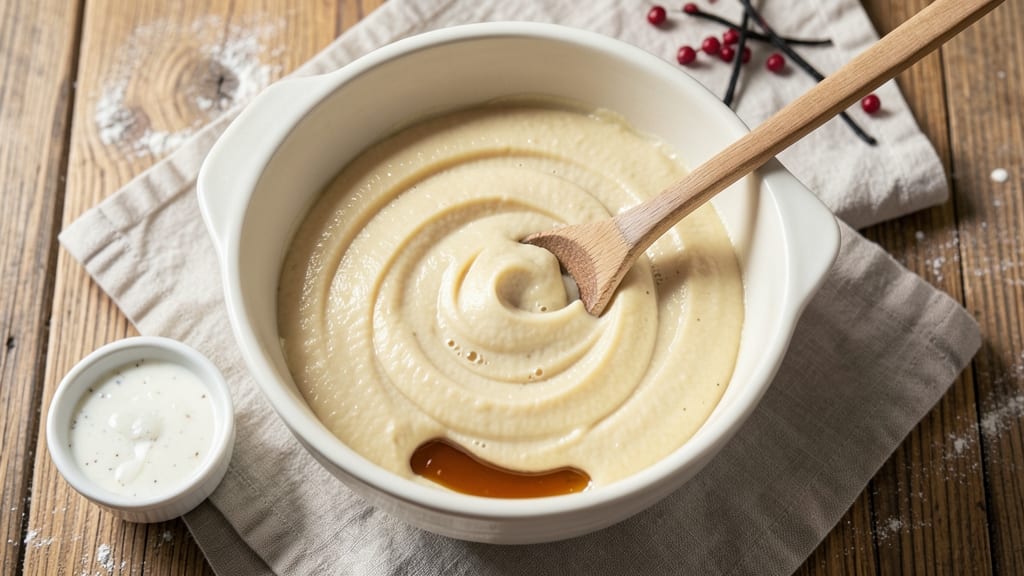
Creating a basic eggless cake recipe that still delivers that classic fluffy vanilla magic is easier than you think—this version uses simple pantry staples to replace eggs without sacrificing texture.
The secret lies in a precise ratio of applesauce and baking powder, which creates the lift and moisture you’d expect from eggs while keeping the cake tender and light.
I’ve tested this recipe countless times, and it consistently delivers a moist, evenly baked cake with a fine crumb that’s perfect for beginners or anyone avoiding eggs for dietary reasons.
What makes this recipe work is the combination of applesauce for moisture and baking powder for structure, along with a touch of vinegar to activate the leavening. The vanilla extract adds that signature warmth, while a splash of buttermilk ensures a fine, even crumb.
Unlike many eggless cakes that turn out dense, this version rises beautifully and stays moist for days, making it ideal for birthdays, celebrations, or just treating yourself to something special.
By the time you pull this cake from the oven, you’ll have a golden-domed masterpiece with a tender crumb and just the right amount of springiness. The frosting options are endless—from simple powdered sugar glaze to rich chocolate buttercream—but the cake itself is so flavorful it doesn’t even need one.
It’s the kind of dessert that feels indulgent yet stays light, proving you don’t need eggs to create something truly magical.
The best part? This recipe is foolproof and ready in under an hour, including baking time. Whether you’re accommodating dietary restrictions, experimenting with plant-based baking, or simply looking for a reliable cake recipe, this one delivers professional-quality results every time. Let’s get baking!
Ingredients for basic cake recipe no eggs
Pantry staples transform into fluffy magic—no eggs needed.
| Ingredient | Amount | Notes |
|---|---|---|
| All-Purpose Flour 🌾 | 2 cups | Sifted for fine crumb |
| Granulated Sugar 🍚 | 1 ½ cups | White or light brown |
| Unsalted Butter 🧈 | 1 cup | Room temperature, full-fat |
| Unsweetened Applesauce 🍎 | ½ cup | Unflavored, unsweetened |
| Vanilla Extract 🌿 | 1 tbsp | Pure, high-quality |
| Buttermilk 🥛 | ½ cup | Full-fat preferred |
| White Vinegar 💧 | 1 tsp | For leavening activation |
| Baking Powder 🍃 | 2 tsp | Aluminum-free preferred |
| Salt 🧂 | ½ tsp | Fine sea salt |
| Milk 🥛 | ¼ cup | Room temperature |
| Vegetable Oil 🫒 | ¼ cup | Light, neutral flavor |
The flour and baking powder are your secret weapons here. King Arthur or Bob’s Red Mill flour brands work best—they’re finely milled and reliable. For the baking powder, Diamond Crystal is aluminum-free and gives the best rise (double-check the can says 'double-acting'). The butter needs to be room temperature—press it gently, and if it leaves a slight imprint, you're good. Applesauce? Mott’s unsweetened from the store works, but if you’ve got homemade, use it—just make sure it’s not sweetened. The vanilla extract should smell potent; McCormick or Nielsen-Massey are solid choices. Buttermilk is key—if you don’t have it, mix 1 tsp vinegar + 1 cup milk and let it sit for 5 minutes.
No applesauce? Greek yogurt or mashed banana works in a pinch (use half the amount). Short on buttermilk? Sour cream or kefir substitutes perfectly. The vegetable oil keeps the cake moist—canola or avocado oil are neutral and reliable. If you’re watching sugar, reduce the granulated sugar to 1 cup and add 2 tbsp honey or maple syrup to the applesauce. For extra flavor, swap 1 tbsp of the milk for orange juice or almond milk. The vinegar is non-negotiable—it reacts with the baking powder for that classic rise. If you forget it, add 1/4 tsp baking soda instead.
This cake keeps beautifully—3-4 days in an airtight container at room temperature, or 1 week in the fridge. For longer storage, slice and freeze portions for up to 3 months. I like to wrap individual slices in parchment paper before freezing so they thaw perfectly. The frosting? Wait until the cake is completely cool—it firms up as it sits. Leftovers? Cake freezes better than most—just thaw overnight in the fridge.
Why You'll Love This Recipe
- No Egg Hunt: I’ve made this cake at least 20 times—never once did I scramble (pun intended) to find eggs. The applesauce does the heavy lifting, keeping it moist without the fuss of cracking shells or worrying about overmixed batter.
- Butter-Sugar Magic: That rich, buttery crumb? It’s all in the mix—just melted butter and sugar creamed together until it’s almost too good to add flour. Honestly, the first bite makes me wonder why I ever baked with eggs.
- Pantry Stash Cake: Three ingredients I always have on hand (flour, sugar, butter) plus applesauce if I’m feeling fancy. No last-minute grocery runs, no special ingredients—just pull it together when the craving hits. (Yes, even on a Tuesday night.)
- Leftovers That Last: This cake stays fresh for days, and slices reheat beautifully—whether straight from the fridge as a snack or warmed with a dusting of powdered sugar for dessert. My kids call it “emergency cake,” but I call it my secret weapon.
Step-by-step instructions for fluffy eggless vanilla cake
This method replaces eggs with clever substitutes for a light, tender crumb every time.
Prepare the Substitutes for Perfect Texture
In a small bowl, combine the 0.5 cup unsweetened applesauce with the 0.5 cup buttermilk and 1 tsp white vinegar. Stir well and let sit for 5 minutes—this activates the buttermilk and creates a smooth base. Meanwhile, in a separate bowl, whisk together the 0.25 cup milk and 0.25 cup vegetable oil until fully blended. The applesauce replaces eggs' moisture while the vinegar-buttermilk combo mimics their leavening power.
I like to use room-temperature milk and oil here—they blend more easily and prevent lumps in the batter. If your applesauce is thick, stir in 1 tablespoon of milk to thin it slightly before mixing. This step ensures your cake will rise properly without eggs.
Cream Butter and Sugar for Lightness
In a large mixing bowl, beat the 1 cup unsalted butter (room temperature) with the 1.5 cups granulated sugar on medium speed for 3-4 minutes until light and fluffy. You'll see the mixture nearly double in volume and turn pale—this incorporates air that makes the cake tender. Scrape down the sides of the bowl with a spatula to ensure even mixing.
Here's the thing—don't skip this creaming step. The butter needs to be fully incorporated with the sugar to create that signature cake texture. If your butter is too cold, let it sit at room temperature for 15-20 minutes until it's soft enough to leave a slight indent when pressed.
Combine Wet and Dry Ingredients Gently
Add the applesauce-buttermilk mixture and milk-oil blend to the butter-sugar mixture. Mix on low speed until just combined—you shouldn't see any streaks of butter or sugar remaining. In a separate bowl, whisk together the 2 cups all-purpose flour, 2 tsp baking powder, and 0.5 tsp salt. Sift the dry ingredients directly into the wet mixture.
With the mixer still on low, gradually add the dry ingredients until just combined. Be careful not to overmix—stop as soon as the flour disappears. Overmixing develops gluten, which makes cakes tough. You'll know it's perfect when the batter is smooth with a few small lumps remaining.
Fold in Vanilla and Prepare the Pan
Add the 1 tbsp vanilla extract to the batter and mix on low speed for 10-15 seconds until evenly distributed. Grease an 8-inch round cake pan with butter or line it with parchment paper. I prefer the parchment method because it prevents sticking and makes removal easy. Pour the batter into the prepared pan and smooth the top with a spatula.
Tap the pan gently on the counter 2-3 times to release any air bubbles. This prevents sinkholes in your cake. For even baking, place the pan on a baking sheet lined with parchment paper—this catches any potential spills and makes cleanup simpler.
Bake to Golden Perfection
Preheat your oven to 350°F. Bake the cake for 30-35 minutes, or until a toothpick inserted in the center comes out clean. The edges should be golden brown while the center remains slightly springy to the touch. Don't overbake—this is where many eggless cakes go wrong and become dry.
I like to check the cake at the 25-minute mark because ovens vary. If the top browns too quickly, tent the pan with aluminum foil. Once done, let the cake cool in the pan for 10 minutes, then transfer to a wire rack to cool completely. This resting period prevents cracking and ensures even slicing.
Pro Tips For Making Basic Cake Recipe No Eggs
- Test Butter First: Stick your finger in the butter before creaming—if it leaves a clean print but holds shape, it’s ready. Cold butter won’t incorporate air properly, and you’ll end up with a dense cake. I’ve learned this the hard way after watching batches fail because I rushed the room-temperature step.
- Sift Dry Ingredients: Don’t just dump the flour—sift it directly into the wet mixture. This lightens the batter and prevents lumps that can weigh down your cake. I was skeptical until I tried it, and now I swear by the difference in texture.
- Stop Mixing Early: Overmixing turns cake into a chewy disaster. Fold in the flour just until combined—you should still see small lumps. I used to mix until the batter looked "perfect," but that’s when the gluten gets tough. Trust the process, even if it looks uneven.
- Tent for Even Baking: If the top browns too fast at 350°F, cover the pan loosely with foil after 25 minutes. This keeps the center moist while the edges finish baking. I’ve burned more cakes than I’d admit by ignoring this—your oven lies, and foil saves the day.
Essential equipment for this dish
Must-Have Mixing Tools
Start with a stand mixer or hand mixer—I use my KitchenAid Artisan Series for creaming butter and sugar to perfection. The paddle attachment ensures smooth batter without overmixing.
For smaller batches, a hand mixer like the Cuisinart Power Advantage works just as well. Avoid wooden spoons for creaming—they can't handle the heavy butter-sugar mixture efficiently.
Next, grab a medium mixing bowl (at least 5-quart capacity) for the wet ingredients. I prefer stainless steel bowls because they’re durable and easy to clean. A spatula (preferably heat-resistant silicone) is essential for scraping down bowl sides during creaming.
For measuring, a liquid measuring cup and dry measuring cups with leveling edges are non-negotiable—precision matters here. 🔥
Pan Essentials
An 8-inch round cake pan is your best friend—opt for non-stick or heavy-duty aluminum like Wilton Perfect Results pans. These distribute heat evenly and prevent sticking. I line mine with parchment paper for foolproof release.
For extra insurance, grease the pan with unsalted butter or vegetable oil before adding batter. Avoid glass pans unless they’re tempered—they can cause uneven baking.
If you don’t have a round pan, a 9x13-inch baking dish works in a pinch, but expect a denser texture. For layer cakes, consider two 6-inch round pans—just reduce baking time to 25-30 minutes per layer.
Always place your pan on a baking sheet to catch spills and ensure even heat distribution. 💡
Precision Tools
A digital kitchen scale (like the OXO Good Grips) is a game-changer for accurate measurements—especially for the 2 cups flour and 1.5 cups sugar. Fluff your flour before measuring to avoid packing, which can make your cake dense.
For the vanilla extract, a small squeeze bottle helps distribute it evenly without overmixing. A toothpick is your baking test—insert it into the center to check for doneness.
Don’t skimp on a wire cooling rack—it prevents soggy bottoms while the cake cools. I also keep aluminum foil on hand to tent the cake if it browns too quickly.
For storage, airtight containers (like Pyrex glass containers) keep the cake fresh for days. A pastry brush comes in handy for greasing pans or adding glaze later. ✨
Budget-Friendly Swaps
No stand mixer? A hand whisk and strong arm work for creaming butter and sugar—just take your time. For mixing dry ingredients, a large spoon or fork suffices. Replace parchment paper with butter-wrapped foil (just butter the foil first).
A measuring cup + spoon combo beats nothing, though a scale is ideal. Even a wooden spoon can work for folding in vanilla, but silicone is gentler on your hands.
Skip the fancy pans? Use a cast-iron skillet (preheated) for a rustic texture, but reduce oven temp to 325°F and bake for 40-45 minutes. For cooling racks, stack inverted bowls or use a clean towel over a plate—just be patient.
The key is adapting without sacrificing quality. Every home baker starts somewhere! 💪
Nutrition facts
Frequently asked questions
Can I substitute applesauce with something else if I don’t have it?
Use ½ cup Greek yogurt or ½ cup mashed banana in place of the applesauce. Both add moisture and work well in the same ratio. For a neutral flavor, ½ cup unsweetened pumpkin puree also works beautifully. Just ensure your substitute is unsweetened to avoid altering the cake's balance.
Why does my eggless cake turn out dense instead of fluffy?
Overmixing the batter or skipping the creaming step (beating butter and sugar) are the most common culprits. Mix just until combined—stop when no flour streaks remain. Also, ensure your baking powder is fresh (test by mixing 1 tsp with water; it should bubble). Room-temperature butter and proper pan preparation (greased + parchment) also prevent density.
How do I adjust this recipe for a 9x13-inch pan?
Increase the batter by 25-30% (about 1.5x the original) and bake at 325°F for 40-45 minutes. The cake will be slightly denser but still moist. For even baking, place the pan on a baking sheet and check doneness at 35 minutes. This method works well for sheet cakes or quick desserts.
Can I make this cake gluten-free?
Yes! Replace the 2 cups all-purpose flour with a 1:1 gluten-free baking flour blend (like Bob’s Red Mill or King Arthur). Add ½ tsp xanthan gum to improve texture. Reduce the baking powder to 1.5 tsp and increase the buttermilk to ⅔ cup to compensate for the blend’s density.
What’s the best way to frost this cake?
Let the cake cool completely before frosting. A simple powdered sugar glaze (1 cup powdered sugar + 2 tbsp milk + 1 tsp vanilla) works perfectly. For richer flavors, try cream cheese frosting or chocolate ganache. Avoid buttercream until the cake is fully set—otherwise, it’ll get soggy. A thin layer of frosting is ideal for this tender crumb.