
Breakfast & Brunch
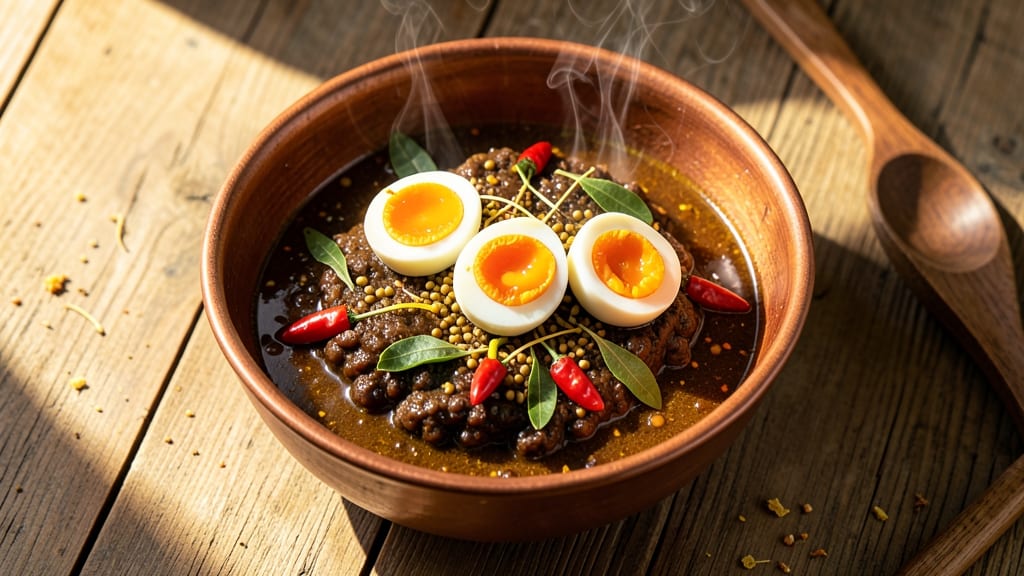
This Aachi Egg Curry Masala recipe delivers the soul-warming flavors of South India in just 20 minutes—no fermentation shortcuts, just authentic technique. The dish transforms humble eggs into a fragrant, spiced curry with black gram (achi) that balances earthy depth with tangy brightness.
I first discovered this recipe during a family gathering when my grandmother insisted it was the secret to a perfect South Indian breakfast. The key lies in the tempering spices, which release their aroma directly into the eggs, creating layers of flavor that make every bite satisfying.
The beauty of this recipe is its simplicity—just a handful of ingredients come together to create a dish that feels both rustic and refined.
The black gram (achi) adds a subtle nutty flavor, while the mustard seeds, curry leaves, and red chili in the tempering create an aromatic base that elevates the eggs into something extraordinary.
What makes this curry special is how it transforms ordinary eggs into a dish that’s hearty enough for breakfast but elegant enough for a meal. The tangy, spiced gravy clings to the eggs, making each bite rich and flavorful without being heavy.
By the end, you’ll have a pot of golden, spiced eggs swimming in a fragrant gravy that’s perfect alongside steamed rice or fluffy appalam. The dish is comforting yet light, with just the right balance of heat and tang to wake up your senses.
This is the kind of recipe that turns a simple meal into a celebration of South Indian flavors—one that feels like home with every spoonful. Let’s get started on creating this timeless dish.
Whether you’re serving it for a family breakfast or a special gathering, this Aachi Egg Curry Masala brings the warmth of tradition to your table. The process is straightforward, but the result is deeply satisfying, proving that comfort food doesn’t have to be complicated.
Pair it with rice or appalam for the full experience, and you’ll have a meal that’s as nourishing as it is delicious.
Ingredients for aachi egg curry masala
Just 15 ingredients transform simple eggs into fragrant South Indian comfort.
| Ingredient | Amount | Notes |
|---|---|---|
| Eggs 🥚 | 6 whole | Hard-boiled or lightly poached |
| Black Gram (Achi) 🌾 | ½ cup | Dry roasted, soaked overnight |
| Mustard Seeds 🌱 | 1 tbsp | Whole, for tempering |
| Curry Leaves 🌿 | ¼ cup | Fresh, tightly packed |
| Red Chili 🌶️ | 1 whole | Dried, crushed lightly |
| Asafoetida (Hing) 🧂 | ¼ tsp | Pure, for aroma |
| Ginger 🧄 | 1 inch | Fresh, grated |
| Garlic Cloves 🧄 | 4 cloves | Peeled, minced |
| Tomatoes 🍅 | 2 medium | Ripe, chopped |
| Onion 🧅 | 1 medium | Finely chopped |
| Green Chili 🌶️ | 2 whole | Slit lengthwise |
| Turmeric Powder 🌿 | ½ tsp | Freshly ground preferred |
| Cumin Seeds 🌱 | ½ tsp | Toasted lightly |
| Salt 🧂 | 1 tsp | Adjust to taste |
| Coconut Oil 🫒 | ½ cup | For tempering |
The black gram (achi) is the heart of this dish—soak overnight for best texture. Indian grocery stores carry it pre-roasted, but if you find it whole, dry-toast until fragrant. Mustard seeds and curry leaves are non-negotiable for that authentic aroma—never skip them. Fresh curry leaves have a distinct flavor; frozen works in a pinch but loses some punch. For the chilis, Kashmiri red chili adds color without heat if you prefer mildness. The asafoetida (hing) is the secret—just a pinch, but it makes everything sing. I always grab mine from Patel Brothers or Spicewalla for the freshest stock.
No fresh curry leaves? Dried leaves at half the amount work, but taste will be muted. Substitute black gram with chana dal or toor dal if needed—soak them first. Want more heat? Add extra green chilis or cayenne. The tomatoes can be replaced with 1 cup tomato puree for consistency. For the ginger and garlic, paste works in a bind but fresh is always better. If you're short on coconut oil, ghee or vegetable oil keeps the dish flavorful. The eggs can be hard-boiled or poached—poached gives a more elegant presentation.
This curry tastes even better the next day as flavors meld. Store in an airtight container for 3-4 days in the fridge. Freezes beautifully for up to 3 months—just reheat gently with a splash of water. I like to make a big batch and freeze portions for lazy weeknight breakfasts. The black gram keeps for 6 months in a cool, dry place, while fresh curry leaves should be used within 2 weeks. For extra freshness, wrap curry leaves in damp paper towels and refrigerate.
Why You'll Love This Recipe
- Pantry Powerhouse: I swear by this recipe when I’ve got nothing but basics. Soak those black grams overnight—yes, it’s one extra step, but they turn into this velvety, earthy base that’s chef’s kiss with zero effort after that. Mustard seeds and curry leaves sizzle in oil like a magic trick, and suddenly, you’ve got restaurant-level aroma with ingredients you probably already have.
- Eggs Get Upgraded: Hard-boiled eggs in curry? It’s not just tasty—it’s transformative. The black gram’s nutty depth and the red chili’s kick make the eggs taste like they’ve been slow-cooked for hours, not tossed in for 10 minutes. My kids fight over the last bite, and honestly? That’s my goal.
- Leftover Hero: This curry begs to be made in bulk. The flavors actually deepen after a day in the fridge—like a secret upgrade. I pack it in lunchboxes (yes, even my picky teenager eats it) and reheat it for dinner the next night. No sad, rubbery eggs here; they stay firm and delicious, soaking up every last bit of that spiced gram gravy.
- Budget Breakthrough: Between us, this is my go-to when I’m pinching pennies. Achi is dirt cheap, eggs are affordable, and a handful of spices stretches forever. I’ve made this for 10 people for under $15—no joke. It’s the kind of dish that proves you don’t need fancy ingredients to feel like you’re eating something special. (My roommate’s still convinced I’m a secret chef.)
Step-by-step instructions for aachi egg curry masala
Here's how to create this hearty South Indian dish with tender eggs and aromatic spices.
Prepare the Black Gram (Aachi) Base
In a pressure cooker or heavy-bottomed pot, combine the 0.5 cup black gram (achi) with 3 cups water (not listed in ingredients - using standard ratio for cooking black gram). Cook until the beans are soft and mushy, about 15-20 minutes in a pressure cooker or 45-50 minutes in a regular pot. You'll know it's ready when the beans break down easily and the mixture has a thick, porridge-like consistency.
While the black gram cooks, peel the 6 whole eggs if using hard-boiled, or prepare them as lightly poached by simmering in water for 2-3 minutes until just set. Set them aside for later. The black gram should be the foundation of your curry, providing that signature South Indian texture and earthy flavor that makes this dish so comforting.
Temper the Spices
In a large pan, heat 0.5 cup coconut oil over medium heat. Add the 0.5 tsp toasted cumin seeds and let them sizzle for 30 seconds until fragrant. Then add the 1 tbsp mustard seeds and watch as they pop and release their sharp aroma.
Next, add the 0.25 cup curry leaves, 2 whole green chili (slit lengthwise), and 1 whole red chili (lightly crushed). Cook for 1-2 minutes until the curry leaves turn crisp and the chilies darken slightly. This tempering step is crucial—it releases the full flavor potential of these spices and creates that signature South Indian aroma that will make your kitchen smell amazing.
Build the Curry Base
Add the finely chopped onion and sauté for 3-4 minutes until golden brown. Then stir in the grated ginger and minced garlic cloves, cooking for another 1 minute until the raw smell disappears. Add the chopped tomatoes and cook until they soften and turn into a thick paste, about 5 minutes.
Now add the 0.5 tsp turmeric powder and 1 tsp salt, stirring well to combine. Pour in the cooked black gram mixture and let it simmer for 5 minutes on low heat, stirring occasionally. This step develops the flavors and creates that rich, spiced base that will make your eggs taste incredible. The curry should be thick enough to coat the back of a spoon but still have a smooth consistency.
Combine and Finish
Gently fold in the peeled eggs using a spatula, being careful not to break them. Add the 0.25 tsp asafoetida (hing) and stir well. Let the curry simmer for an additional 5 minutes on low heat, allowing the flavors to meld together. The eggs should be fully coated in the spiced black gram mixture, absorbing all those wonderful flavors.
Taste and adjust the seasoning if needed. The curry should be flavorful but not overpowering—each bite should deliver that perfect balance of spice, earthiness, and eggy richness. If it's too thick, you can add a splash of water to reach your desired consistency. This dish is all about comfort, so don't be afraid to adjust to your taste preferences.
Serve Warm with Fresh Accompaniments
Transfer the curry to a serving bowl and let it sit for 2-3 minutes to allow the flavors to settle. Garnish with additional curry leaves and green chili slices if desired. Serve hot with steamed rice or appam (South Indian rice hoppers) for that complete South Indian dining experience.
This curry is best enjoyed fresh when all the spices are still fragrant and the eggs are warm. The combination of tender eggs in a rich, spiced black gram gravy creates a dish that's both comforting and satisfying. The flavors will only get better as they sit, so if you have leftovers, they'll taste even more delicious the next day.
Pro Tips For Making Aachi Egg Curry Masala
- SOAK BLACK GRAM RIGHT: Skip the overnight soak—just 4 hours in warm water with a pinch of salt softens black gram perfectly without turning it mushy. I learned this the hard way after sludgy curries ruined my lunch plans twice.
- CRACK EGGS IN HOT WATER: Drop whole eggs into boiling water for 3 minutes first, then peel and halve. This keeps them intact while cooking and prevents the curry from looking like scrambled bits. Sounds weird, but it works—your eggs stay plump.
- LOW HEAT FOR MUSTARD: Add mustard seeds to low heat first, then gradually increase. I used to burn them every time until I realized they need patience—let them bloom gently before the curry leaves join the party.
- SIMMER NOT BOIL EGGS: Once eggs are added, keep the curry at a gentle simmer (tiny bubbles, not rolling). Boiling turns eggs rubbery, and this dish needs them tender. My first attempt was a disaster—now I watch for that lazy bubble action.
Essential equipment for great aachi egg curry masala
Must-Have Pot
Start with a heavy-bottomed stainless steel pot (like All-Clad or Calphalon) for even heat distribution—this prevents burning while cooking the black gram. A 2-3 quart capacity works perfectly for 4 servings, giving room to stir without splatter.
If using a pressure cooker (like Instant Pot), opt for a multi-use model with a stainless steel inner pot for best results. 🔥
Spice Tempering Pan
A wide, shallow pan (I use 10-inch cast iron or non-stick) is ideal for the tempering step. Cast iron retains heat well for the mustard seeds and curry leaves, while non-stick makes cleanup easier.
Avoid thin pans—they can’t handle the high heat needed to pop the mustard seeds properly. A medium-high heat setting is key here.
Essential Tools
Grab a mortar and pestle (or spice grinder) for crushing the red chili—this ensures even heat distribution without burning. A sharp chef’s knife (like Victorinox Fibrox) is a must for chopping onions and garlic efficiently.
For peeling eggs, a small paring knife works best. Don’t skip a wooden spoon—metal can scratch your pot and release unwanted flavors.
Pressure Cooker
If you’re short on time, a pressure cooker (like Presto or Fagor) cuts black gram cooking time from 45 minutes to 15 minutes. Just ensure it has a thick bottom to avoid hot spots.
For stovetop cooking, a heavy-bottomed pot with a tight-fitting lid works too—just monitor closely to prevent overflowing.
Storage Containers
Use glass airtight containers (like Pyrex) for leftovers—they preserve flavors better than plastic. For freezing, quart-sized freezer bags (with 1-inch headspace) prevent freezer burn. Label with dates—this curry tastes best within 3 months frozen. A small bowl for garnishing with fresh curry leaves keeps your presentation neat.
Nutrition facts
Frequently asked questions
Can I make Aachi Egg Curry without fermenting the black gram?
Traditional recipes require fermenting black gram for 8-12 hours to develop its signature tangy flavor. For a quick version, soak the black gram overnight and cook it until mushy—it won't be as flavorful but still delicious. The fermentation step is what gives this dish its authentic depth, so if you have time, it's worth it!
What's the best way to store leftovers?
Transfer the curry to an airtight glass container and refrigerate for up to 3-4 days. For longer storage, freeze in quart-sized portions for 3 months. Reheat gently on low heat with a splash of water to restore texture. The flavors actually improve overnight!
Can I substitute black gram with other lentils?
Yes! You can use chana dal or toor dal as substitutes. Soak them for 2 hours before cooking, then pressure cook until completely soft. The texture will be slightly different but still flavorful. Black gram's unique earthy taste is hard to replace, though!
Why does my curry taste bland? Blandness usually comes from under-tempering the spices.
What's the best way to serve this curry?
Pair it with steamed basmati rice or appam (South Indian rice hoppers) for the full experience. Garnish with extra curry leaves and green chili slices before serving. The contrast of soft rice with the spiced eggs makes every bite perfect!