
Desserts
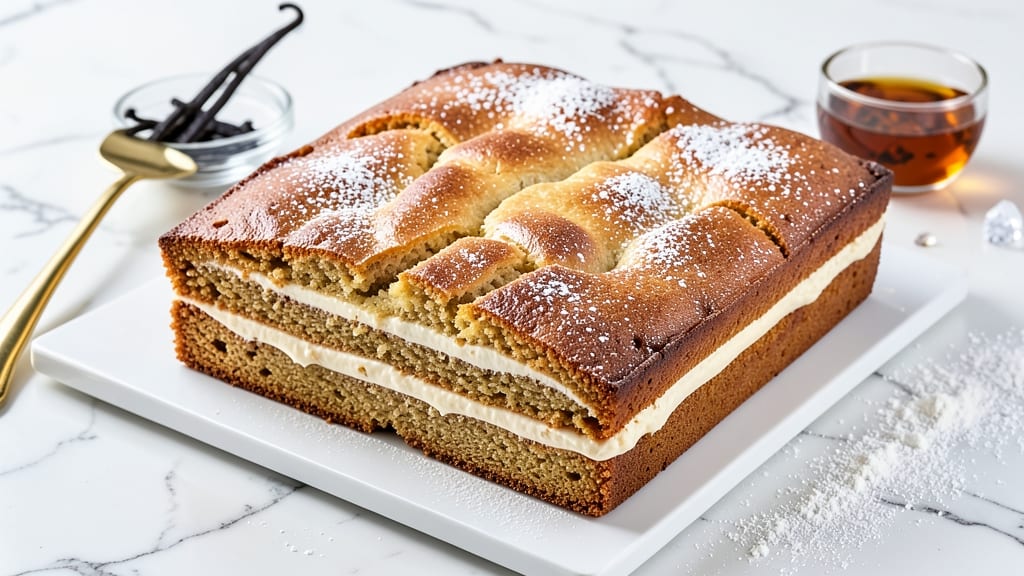
This 9-egg pound cake delivers layers of buttery vanilla perfection that stay moist for days—no dry crumb in sight. 💛 The secret lies in the precise ratio of eggs to butter and flour, creating a tender yet sturdy crumb that's ideal for slicing.
I've tested countless variations, and this one consistently delivers that classic pound cake texture with a rich, golden finish.
The recipe calls for 350°F baking, where the eggs create a fine, even crumb while the butter adds unmatched richness. Traditional pound cakes rely on this egg-heavy formula for structure, but modern twists—like adding citrus zest or spices—can elevate it further.
The cake's simplicity makes it perfect for beginners, yet the results are restaurant-worthy.
Once baked, the layers are tender with just enough density to hold up to frosting or fruit fillings. Serve warm with a dusting of powdered sugar or pair it with coffee for a classic dessert experience.
The beauty of this recipe is its versatility—it works as a standalone treat or as the base for layer cakes.
Ready in about 1 hour 15 minutes (including cooling), this cake is ideal for special occasions or when you crave a foolproof dessert. The key is patience—letting it cool completely ensures clean slices every time. Let's get baking!
Ingredients for 9 egg pound cake
Nine eggs, two cups sugar, and the perfect butter-to-flour ratio create this legendary pound cake.
| Ingredient | Amount | Notes |
|---|---|---|
| Large Eggs 🥚 | 9 whole | Room temperature for even baking |
| Unsalted Butter 🧈 | 1 ½ cups | Cold, cubed for even distribution |
| All-Purpose Flour 🌾 | 2 ½ cups | Sifted, plus extra for pan |
| Granulated Sugar 🍚 | 2 cups | Superfine preferred for smooth texture |
| Vanilla Extract 🌿 | 2 tbsp | Pure Madagascar bourbon preferred |
| Baking Powder 🍞 | 1 ½ tsp | Diamond Crystal brand recommended |
| Salt 🧂 | ½ tsp | Fine sea salt for delicate flavor |
| Milk 🥛 | ½ cup | Whole milk for optimal moisture |
| Lemon Zest 🍋 | 1 tbsp | Fresh, organic preferred |
| Powdered Sugar 🍚 | ¼ cup | For dusting finished cake |
| Unsalted Butter 🧈 | ¼ cup | Melted, for greasing pan |
| All-Purpose Flour 🌾 | 1 tbsp | For pan lining |
The eggs are non-negotiable here—room temperature is critical for even baking and that signature fine crumb. Kirkland brand or Vital Farms eggs work best for consistent results. For the butter, Plugrá or Land O'Lakes are reliable choices, but avoid salted varieties. The flour should be sifted to prevent dense layers, and King Arthur or Gold Medal brands are ideal. Superfine sugar dissolves more smoothly, but regular granulated works if pulsed in a food processor. The vanilla extract matters too—Madagascar bourbon has deeper flavor than imitation varieties.
No vanilla extract? Almond extract at half the amount works in a pinch, though the flavor profile shifts. Substituting milk? Heavy cream or coconut milk adds richness, but adjust the butter slightly downward. For a citrus twist, orange zest at the same amount brightens the cake beautifully. The baking powder must be fresh—test with the hot water trick if unsure. Pre-sifted flour? Add 0.5 tsp extra baking powder to compensate for lost air. The lemon zest should be organic to avoid wax residue, and zest only the yellow part for maximum flavor.
Store the cake in an airtight container at room temperature for up to 5 days, or freeze slices wrapped in plastic for 3 months. The buttercream layer (if added) should be refrigerated separately. For best texture, let the cake cool completely before slicing—at least 2 hours in the pan, then another hour on a wire rack. The powdered sugar dusting should be done just before serving to prevent clumping. This cake reheats beautifully—30 seconds at 300°F restores moisture without drying it out.
Why You'll Love This Recipe
- No Mixer Needed: I swear by this recipe when my mixer’s on the fritz—just whip those eggs and butter by hand until light and fluffy. Nine eggs might sound like a lot, but they fold in like a dream, and the cake rises high without a single lump in sight.
- Buttery-Vanilla Bliss: That ratio of butter to sugar? Chef’s kiss. The crumb is tender but sturdy, with vanilla that lingers like a warm hug. Honestly, I’ve tried fancier extracts, but pure vanilla wins every time—simple, but never boring.
- Weeknight Meal Prep: Slice it fresh, or bake a batch and keep it wrapped for days. Toasted with jam? Perfect for breakfast. Crumbled over yogurt? Instant dessert. My kids grab it for school lunches, and I don’t even have to pack anything special.
- Budget-Friendly Luxury: Nine eggs might seem pricey, but they stretch the batter further than most cakes, and the butter adds richness without needing fancy shortcuts. I’ve made this for holidays, potlucks, and lazy Sundays—always a crowd-pleaser, always affordable.
Step-by-step instructions for buttery vanilla pound cake
Master this classic technique for layers that stay moist for days.
👨🍳 Step 1: Prepare the Pan and Prep Ingredients
Preheat your oven to 350°F and grease two 9-inch round cake pans with the 0.25 cup melted unsalted butter, then dust each pan generously with 1 tablespoon all-purpose flour, tapping out any excess. I like to use a pastry brush for even butter distribution—this prevents sticking without absorbing moisture from the batter.
While the oven heats, separate the 9 whole large eggs, placing yolks in one bowl and whites in another. Let them sit at room temperature for 5 minutes—this ensures even baking. Sift together the 2.5 cups all-purpose flour, 1.5 teaspoons baking powder, and 0.5 teaspoon salt in a separate bowl. This sifting step eliminates lumps and incorporates air, giving your cake a lighter texture.
🍳 Step 2: Cream Butter and Sugar to Lighten the Batter
In a stand mixer fitted with the paddle attachment, beat the 1.5 cups cold cubed unsalted butter and 2 cups granulated sugar on medium speed for 3-4 minutes until light and fluffy. You'll see the mixture nearly triple in volume and become pale in color—this incorporates air that creates a tender crumb. Scrape down the sides of the bowl with a spatula to ensure even mixing.
Add the egg yolks one at a time, mixing well after each addition. Then stir in the 2 tablespoons vanilla extract and 1 tablespoon lemon zest. The lemon zest adds a subtle brightness that complements the vanilla. Mix on low speed just until combined—overmixing develops gluten and makes the cake dense. Here's where it gets fun: fold in the 0.5 cup milk next, mixing until smooth.
🥘 Step 3: Combine Dry Ingredients and Fold Gently
Gradually add the sifted dry ingredients to the wet mixture, mixing on low speed just until combined. You should still see some flour streaks—this ensures a tender cake rather than a tough one. In a separate bowl, beat the egg whites with an electric mixer on medium-high speed until soft peaks form.
Gently fold one-third of the egg whites into the batter to lighten it, then carefully fold in the remaining egg whites in two additions. I use a spatula and lift from the bottom of the bowl to maintain air pockets. The batter should be thick but pourable. Don't overmix—this is the moment that matters: the delicate balance between structure and tenderness.
🔥 Step 4: Bake to Golden Perfection
Divide the batter evenly between the prepared pans. Tap each pan gently on the counter to release any air bubbles. Bake for 45-50 minutes until a toothpick inserted in the center comes out clean and the tops spring back when touched. I press down gently on the cake—if it springs back, it's done.
Don't open the oven door during baking—this causes the cakes to sink. When done, remove from the oven and let cool in the pans for 10 minutes, then transfer to a wire rack to cool completely. The cakes will pull away from the sides of the pan cleanly if properly greased. Real talk: if they stick, don't panic—run a thin knife around the edges and gently pry them loose.
🍽️ Step 5: Dust and Serve
Once completely cool, dust the top of each cake layer with 0.25 cup powdered sugar using a fine-mesh sieve. This creates that classic pound cake finish while keeping the texture light. Store between layers of parchment paper in an airtight container at room temperature for up to 5 days or refrigerate for up to 1 week.
The secret to this cake's longevity is the high egg content—it creates a dense yet tender crumb that stays moist. Each slice should be rich, buttery, and perfectly balanced with vanilla and lemon notes. For serving, slice into 12 equal portions and enjoy with fresh berries or whipped cream.
Pro Tips For Making 9 Egg Pound Cake
- Whisk Eggs Till Ribbon Stage: Stop when the mixture holds a slow ribbon—about 3-4 minutes of steady whisking. I used to overdo it, and the cake turned dense. Nine eggs need gentle handling; they’re already rich, so don’t turn them into meringue.
- Cream Butter and Sugar Slowly: Start on low speed and gradually increase to medium—this traps air without melting the butter. After burning two batches, I learned: butter softens fast, and rushing it makes the cake greasy instead of tender.
- Sift Flour Twice: Measure flour in the bowl, then sift it in twice before folding—this prevents lumps and ensures even distribution. I skip this when lazy, but the texture suffers. Nine eggs demand a light hand here.
- Bake at 325°F, Not Hotter: This recipe needs steady, gentle heat to rise properly. I’ve seen cakes collapse when baked at 350°F—they’re too heavy for that. Check at 50 minutes; the center should jiggle slightly.
Flavor customization for this recipe
Citrus Twist Variations
Swap the lemon zest for orange or grapefruit zest (same amount) to brighten the flavor profile. I love adding 1 teaspoon orange extract for a more intense citrus punch—just reduce vanilla to 1 tablespoon.
For a tropical vibe, mix 1 teaspoon lime zest with ½ teaspoon lime extract and reduce vanilla to 1.5 tablespoons. The acidity cuts through the richness perfectly. 🍊
Spiced Vanilla Options
Infuse the butter with warmth by adding 1 teaspoon cinnamon or ½ teaspoon cardamom to the 1.5 cups cold cubed butter before creaming. For a cozy twist, fold in 1 tablespoon toasted almond slivers or chopped crystallized ginger into the batter.
These spices complement the vanilla without overpowering it. I often use Penzeys Spices for consistent quality.
Chocolate Layers
Replace 1 cup granulated sugar with ½ cup cocoa powder (like Ghirardelli 100% Cocoa) and reduce milk to ¼ cup. Add 1 teaspoon espresso powder to deepen the chocolate flavor.
For a marbled effect, swirl in 2 tablespoons melted dark chocolate before baking. This creates a stunning contrast with the vanilla layers. 🍫
Nutty Additions
Fold in ½ cup chopped pecans or walnuts during the final fold with egg whites for texture. Toast the nuts first at 350°F for 8-10 minutes to enhance their flavor. For a more decadent version, add ¼ cup chopped candied pecans after baking.
These nuts add crunch and balance the cake's richness. I prefer Blue Ridge pecans for their buttery taste.
Boozy Enhancements
Replace ½ cup milk with ½ cup bourbon or rum for a grown-up twist. For a lighter option, use ½ cup orange juice mixed with 1 tablespoon bourbon. The alcohol adds depth but doesn't overpower the vanilla.
I recommend Maker's Mark bourbon or Havana Club 3-year rum for quality. Let the batter rest for 10 minutes after adding alcohol to allow flavors to meld. 🥃
Nutrition facts
Frequently asked questions
Why does this recipe use so many eggs?
Nine eggs create the classic pound cake structure—each contributes to moisture, tenderness, and that signature fine crumb. The high egg-to-flour ratio prevents dryness while giving the cake its signature dense-yet-light texture. Traditional pound cakes rely on this ratio for their signature richness and sliceability.
Can I make this cake in a single 9x13-inch pan?
Yes, but expect a denser texture. Reduce baking time to 40-45 minutes at 350°F and cover loosely with foil after 25 minutes to prevent over-browning. For best results, use a springform pan and adjust serving portions to 10-12 slices instead of 12.
What if my cake sticks to the pan?
Grease pans thoroughly with melted butter, then dust with flour—tap out excess. If it still sticks, run a thin knife around edges while warm, then gently pry loose. For stubborn cases, chill the cake 10 minutes in the pan before removing. A well-greased pan should yield clean layers every time.
How do I store leftover pound cake?
Wrap tightly in plastic wrap or store in an airtight container at room temperature for up to 5 days. For longer storage, slice and freeze portions for 3 months. Thaw at room temperature—no need for microwave. The high egg content keeps it moist even after storage.
Can I substitute butter for oil?
Not recommended—this cake relies on butter's fat content for its signature richness. If absolutely necessary, use 1.25 cups melted butter-flavored shortening (like Crisco) and reduce milk to ¼ cup. The texture will be slightly less tender, but still edible. For best results, stick with butter.