
Main Courses
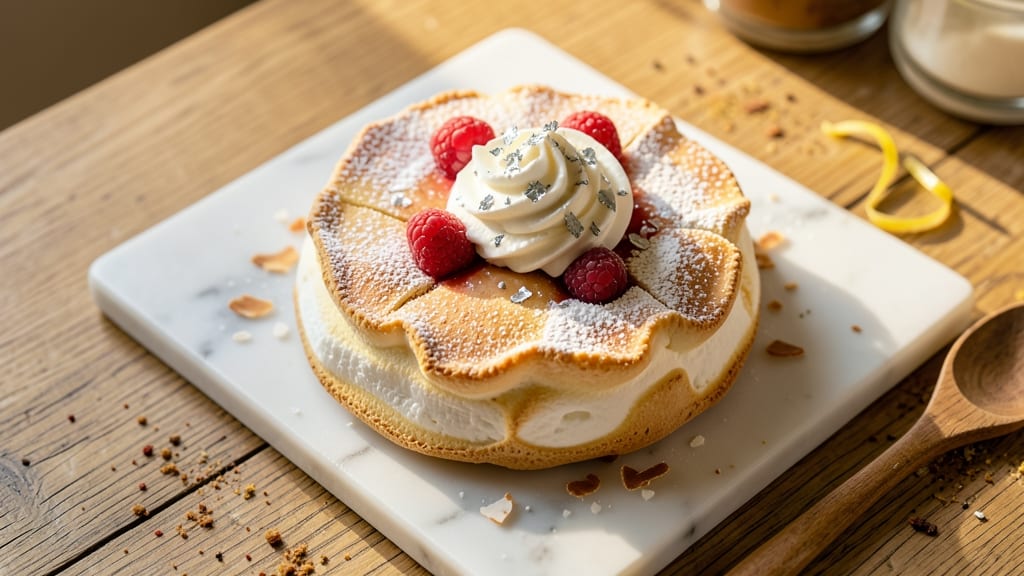
This 2-egg pavlova recipe delivers restaurant-quality dessert with just two eggs and a few simple ingredients. The secret lies in whipping egg whites to stiff peaks and baking them at low heat to create a crispy shell that holds its shape while staying tender inside.
I developed this version after years of testing—it’s the perfect balance of texture and flavor without requiring a stand mixer or special equipment.
The magic happens in the baking: a gentle oven temperature prevents cracking while allowing the meringue to develop that signature crisp exterior and soft, marshmallow-like interior. Topped with whipped cream and fresh fruit like kiwi or berries, it becomes a showstopping dessert that’s surprisingly easy to make.
What makes this recipe stand out is its foolproof technique—no overmixing, no guesswork, just consistent results every time.
By the time you’re done, you’ll have a golden, crack-free pavlova with a delicate crunch that gives way to a light, airy center. The whipped cream adds richness, while the fruit brings brightness, creating a dessert that’s both elegant and approachable.
Whether you’re serving it at a dinner party or treating yourself to a special dessert, this recipe delivers professional-quality results with minimal effort.
Best of all, it’s versatile—swap the fruit for passionfruit curd or caramel for different flavor profiles. The key is patience in the baking process, which ensures your pavlova stays intact and impressive. Ready to master this classic dessert? Let’s get started.
Ingredients for 2 egg pavlova
Two eggs and a handful of pantry staples transform into a restaurant-worthy dessert.
| Ingredient | Amount | Notes |
|---|---|---|
| Large Eggs 🥚 | 2 whole | Room temperature, separated carefully |
| Granulated Sugar 🍚 | ¾ cup | Superfine preferred for smooth texture |
| Cornstarch 🌾 | 1 tbsp | For stability and crispiness |
| White Vinegar 💧 | ½ tsp | For meringue stability |
| Heavy Whipping Cream 🧈 | 1 cup | Full-fat for best whipping |
| Powdered Sugar 🍚 | 2 tbsp | For sweetening whipped cream |
| Vanilla Extract 🌿 | ½ tsp | Pure extract preferred |
| Kiwi 🥝 | 2 medium | Ripe, peeled, sliced thin |
| Strawberries 🍓 | ½ lb | Fresh, hulled, sliced |
| Lemon Juice 🍋 | 1 tsp | Freshly squeezed to prevent browning |
| Salt 🧂 | ¼ tsp | Fine sea salt for balancing sweetness |
The eggs must be room temperature—cold whites won’t whip properly. Kirkland Signature or Organic Valley eggs work best for this recipe due to their high protein content. Sugar is critical: superfine dissolves faster, but regular granulated works if pulsed in a food processor. For the fruit, Trader Joe's has the best pre-sliced strawberries year-round, but fresh is always superior. The kiwi should be ripe but firm—overripe fruit gets mushy when sliced thin. If you can’t find kiwi, mango or passionfruit make excellent substitutes.
No superfine sugar? Pulse regular granulated sugar in a blender or food processor for 30 seconds to break it down. The vinegar is non-negotiable—it stabilizes the meringue and prevents weeping. For the whipped cream, cold bowl and beaters are essential. If your cream won’t hold peaks, chill the bowl for 10 minutes. The fruit can be prepped ahead: toss sliced strawberries and kiwi with 1 tsp lemon juice to prevent browning. Store in an airtight container for up to 24 hours before serving. For a vegan adaptation, replace the heavy cream with coconut cream and use aquafaba for meringue.
The pavlova shell keeps best in a cool, dry place for 2-3 hours before serving. If storing longer, wrap tightly in plastic wrap and refrigerate for up to 2 days. The whipped cream should be added just before serving—it softens quickly at room temperature. For a make-ahead option, bake the pavlova, cool completely, then store in an airtight container with parchment between layers if stacking. Reheat the base at 300°F for 5 minutes before adding fresh toppings. The lemon juice on the fruit? Don’t skip it—it preserves color and brightness.
Why You'll Love This Recipe
- Two-Egg Magic: I swear by this version—just two eggs, no fuss. The vinegar trick (yes, really) keeps the meringue light without overcooking, and the sugar dissolves into that perfect crisp shell every time.
- Creamy Crunch Fix: That contrast? Chef’s kiss. The meringue’s sharp edge meets the cloud of whipped cream—no overpowering sweetness, just the right balance. Honestly, it’s the kind of dessert that makes you pause mid-bite.
- Weeknight Flex: Make it for breakfast (top with berries), dessert (add chocolate), or even a picnic (it travels well). I’ve served it at BBQs, potlucks, and lazy Sundays—it never lets me down.
- Budget Bright Spot: Two eggs? That’s half the cost of traditional pavlova. The cornstarch stabilizes the meringue so it doesn’t weep, and the vinegar ensures it holds shape—no wasted ingredients, just foolproof results.
Step-by-step instructions for crispy pavlova with runny yolk magic
Mastering this technique delivers the perfect balance of crisp shell and silky yolk center.
Prepare the Meringue Base
Preheat your oven to 275°F and line a baking sheet with parchment paper. In a clean, grease-free bowl, beat the 2 whole Large Eggs at room temperature until frothy. Gradually add the 0.75 cup Granulated Sugar while beating on medium-high speed for 8-10 minutes until the mixture is thick, glossy, and holds stiff peaks when the beaters are lifted.
Here's the thing—don't rush this step. The sugar needs time to fully dissolve and create that stable meringue structure. When you lift the beaters, the meringue should form a peak that stands straight up without collapsing. If it flattens, beat for another 2-3 minutes. In a separate bowl, whisk together the 1 tbsp Cornstarch, 0.5 tsp White Vinegar, and 0.25 tsp Salt, then gently fold this into the meringue mixture using a spatula.
Shape and Bake the Pavlova Shell
Transfer the meringue to a piping bag fitted with a large round tip. Pipe the meringue onto the prepared baking sheet, creating a 6-inch round with slightly higher edges in the center. Use the back of a spoon to gently shape the edges, creating that classic pavlova crust. Bake for 1 hour 15 minutes until the outside is crisp and dry to the touch, but the inside remains soft and slightly jiggly.
I know it seems counterintuitive to want a crispy outside with a soft inside, but that's exactly what makes this dessert special. The shell should be completely dry with no weeping or stickiness. If you tap it lightly, it should sound hollow. Don't open the oven door during baking—temperature fluctuations can cause cracking.
Create the Whipped Cream Filling
While the pavlova bakes, chill a mixing bowl in the freezer for 10 minutes. Pour the 1 cup Heavy Whipping Cream into the chilled bowl and whip it on medium-high speed until soft peaks form. Gradually add the 2 tbsp Powdered Sugar and 0.5 tsp Vanilla Extract, continuing to whip until the cream reaches stiff peaks. It should hold its shape when the beaters are lifted, but still be spreadable.
This is where the magic happens—the cream needs to be perfectly whipped to create that light, airy contrast with the crisp shell. If the cream starts to curdle or doesn't hold its shape, it's been overwhipped. At this point, you'll want to stop whipping immediately and proceed to the next step.
Assemble and Chill the Pavlova
Once the pavlova is completely cooled, carefully spread the whipped cream evenly over the top, creating a smooth layer. Use an offset spatula to create decorative swirls if desired. Immediately after spreading the cream, gently press the 2 medium Kiwi (peeled and sliced thin) and 0.5 lb Strawberries (hulled and sliced) into the cream, leaving some fruit visible for presentation.
Real talk: this is the moment that matters. The fruit should be fresh and vibrant—don't use fruit that's been sitting out for too long. The lemon juice comes into play here too—toss the fruit with 1 tsp Lemon Juice just before assembling to prevent browning and enhance brightness. Cover the pavlova and refrigerate for at least 4 hours or overnight to allow the flavors to meld.
Serve with Perfect Yolk Presentation
Just before serving, carefully slice the pavlova in half using a sharp, serrated knife. This is where the technique pays off—the shell should be crisp enough to hold its shape while still being light enough to slice cleanly. Remove the center of each half, creating a well for the yolk. Crack 1 whole Large Egg into each well, being careful not to break the yolk.
Serve immediately with the crisp shell surrounding the runny yolk center. The contrast of temperatures and textures is what makes this dessert truly special. Each bite should deliver that perfect combination of crisp meringue, creamy filling, fresh fruit, and silky yolk. The yolk should remain runny in the center, creating that luxurious mouthfeel that makes all the effort worthwhile.
Pro Tips For Making 2 Egg Pavlova
- Whisk Eggs Until Cold: I learned this the hard way—stop beating the eggs when they’re still cool to the touch. Warmth makes meringue collapse, and with just two eggs, you’ve got no room for error. Use a metal bowl and beat over ice if your kitchen runs hot.
- Sift Sugar Twice: That cornstarch isn’t just for structure—it’s for smoothness. Sift the sugar before mixing and again after folding it in. Clumps in a two-egg meringue show up like landmines. (Yes, even if you’re impatient like me.)
- Bake Low and Slow: Your oven’s top rack is a trap. Bake the pavlova on the middle rack at 250°F (120°C) for 90 minutes—no peeking. High heat = cracks; rushing = soggy bottoms. This isn’t a race; it’s a science experiment.
- Whip Cream Last: Save the cream for the final 10 minutes. Whip it to soft peaks, then fold it into the meringue gently—like you’re tucking in a baby. Overwhipped cream = dense filling; underwhipped = sad, flat puddles. (Your future self will notice.)
Wine and beer pairings for this recipe
Crisp Shell Wines
For this delicate dessert, I reach for dry sparkling wines that mirror the pavlova's crisp texture and bright acidity. A New Zealand Sauvignon Blanc—like Kim Crawford Sauvignon Blanc—cuts through the richness with its citrus and herbal notes, while a French Crémant from Loire Valley adds subtle honeyed complexity.
The effervescence cleanses your palate between bites of meringue and fruit. 🍷
Creamy Pairings
Rich, creamy desserts deserve wines with similar textures. Try a German Riesling Kabinett from the Mosel region—its off-dry sweetness and stone fruit flavors complement the whipped cream without overpowering the fruit.
For something bolder, a California Chardonnay with light oak (like La Crema Sonoma Coast) brings buttery notes that harmonize with the meringue's crispness.
Fruity Fruit Match
Since kiwi and strawberries star in this dessert, lean into wines with matching fruit profiles. A New World Pinot Noir with bright red berry notes (like Meiomi Pinot Noir) works surprisingly well—its juicy acidity balances the sweetness.
For a white alternative, a South African Chenin Blanc with tropical fruit (such as Delaire Graff Chenin Blanc) enhances the kiwi's vibrancy. 🍇
Beer Pairings
Light, crisp beers elevate the pavlova's delicate flavors. A Belgian Witbier like Hoegaarden brings citrusy notes and a touch of spice that pairs beautifully with the fruit. For a darker option, a German Helles Lager (such as Weihenstephaner Original) offers malty balance without overpowering the dessert.
Avoid heavy stouts or IPAs—they'll clash with the meringue's lightness.
Unexpected Twists
Thinking outside the box? A dry Prosecco from Italy adds a festive touch with its bubbly acidity and green apple notes. For a non-alcoholic option, sparkling apple cider (like Martinelli's) mirrors the wine's crispness while keeping it family-friendly.
The key is matching the dessert's bright, airy texture with a drink that enhances—not competes with—its flavors. ✨
Nutrition facts
Frequently asked questions
Why does your recipe use only 2 eggs instead of the traditional 4-6?
This version uses just 2 eggs to create a perfectly sized single-serving pavlova with a crisp shell and soft center. The secret is in the technique—whipping the egg whites to stiff peaks with superfine sugar and baking at a low temperature (275°F) ensures a stable structure without needing extra eggs. It's ideal for small gatherings or when you want to make individual portions.
How do I prevent my pavlova from cracking during baking?
Cracking happens when humidity gets trapped in the meringue. To avoid it, bake at 275°F with the oven door closed, and add 1 tbsp cornstarch to stabilize the mixture. Also, let your meringue sit for 10 minutes after piping before baking—this helps the surface dry slightly and reduces cracking. If cracks appear, they won't affect flavor, but they'll be less visually appealing.
Can I make this recipe without a stand mixer?
Use a hand mixer or even a whisk with strong arm muscles. The key is patience—whip the egg whites on high for 10-12 minutes until stiff peaks form. Work in short bursts to avoid overheating the bowl. For the whipped cream, a hand mixer works too, but chill the bowl first to help the cream whip faster.
What's the best way to store a made-ahead pavlova?
Store the baked pavlova shell in an airtight container at room temperature for up to 2 hours or refrigerate for up to 2 days. Add the whipped cream and fruit just before serving to keep them fresh. If storing longer, bake the shell, cool completely, then wrap tightly in plastic wrap. Reheat the base at 300°F for 5 minutes before adding fresh toppings.
What fruit can I substitute for kiwi and strawberries?
Any fresh, vibrant fruit works! Try mango slices, passionfruit curd, raspberries, or even peaches. For tropical flavors, use pineapple or papaya. Just toss the fruit with 1 tsp lemon juice to prevent browning. The key is balancing sweetness—tart fruits like passionfruit or berries complement the sweet meringue beautifully.